Kintaikyo Bridge
Kintaikyo Bridge Movies


Basic Information
- Spot Name
- Kintaikyo Bridge
- Location
- 〒741-0062 1 Iwakuni, Iwakuni City, Yamaguchi Prefecture
- Access
- From JR Sanyo Main Line Iwakuni Station, take the Iwakuni Bus bound for Shin-Iwakuni Station for 15 minutes, and get off at Kintaikyo Bridge. It's just a short walk from there.
- Parking
- Parking available
- Business Hours
- 8:00 AM to 5:00 PM
- Fees
- Adults (middle school students and above) 310 yen, elementary school students 150 yen.
- Contact Information
- Phone Number:0827-29-5107
- Official Website
Map
Detailed Information
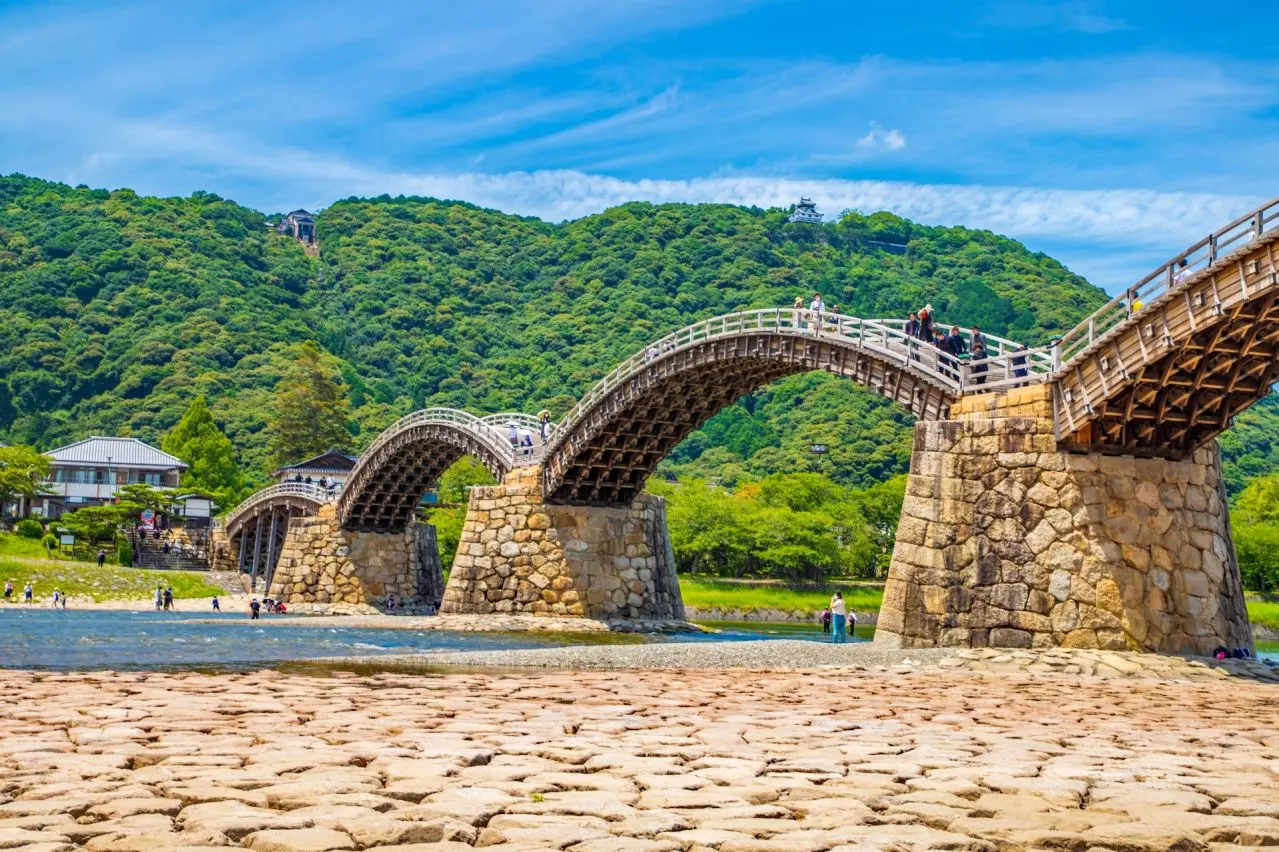
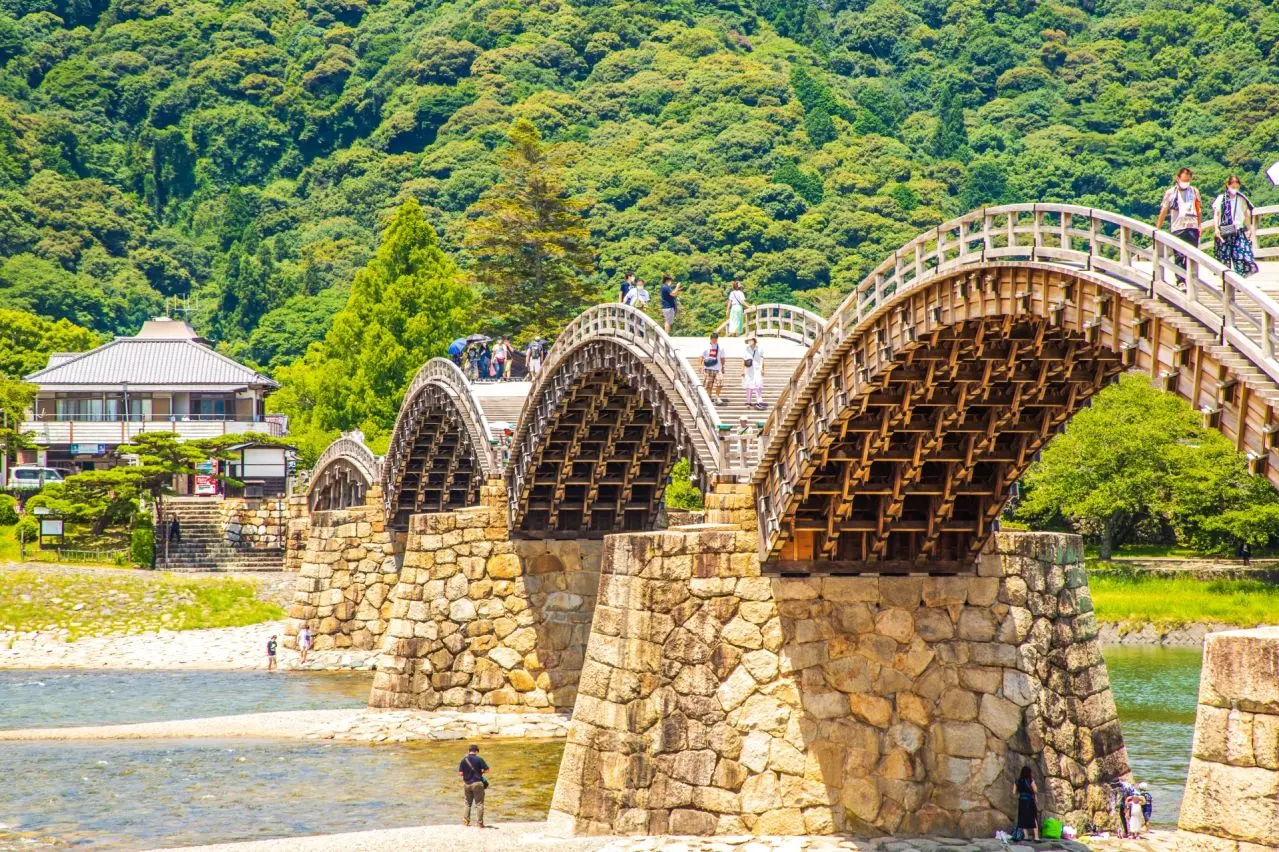
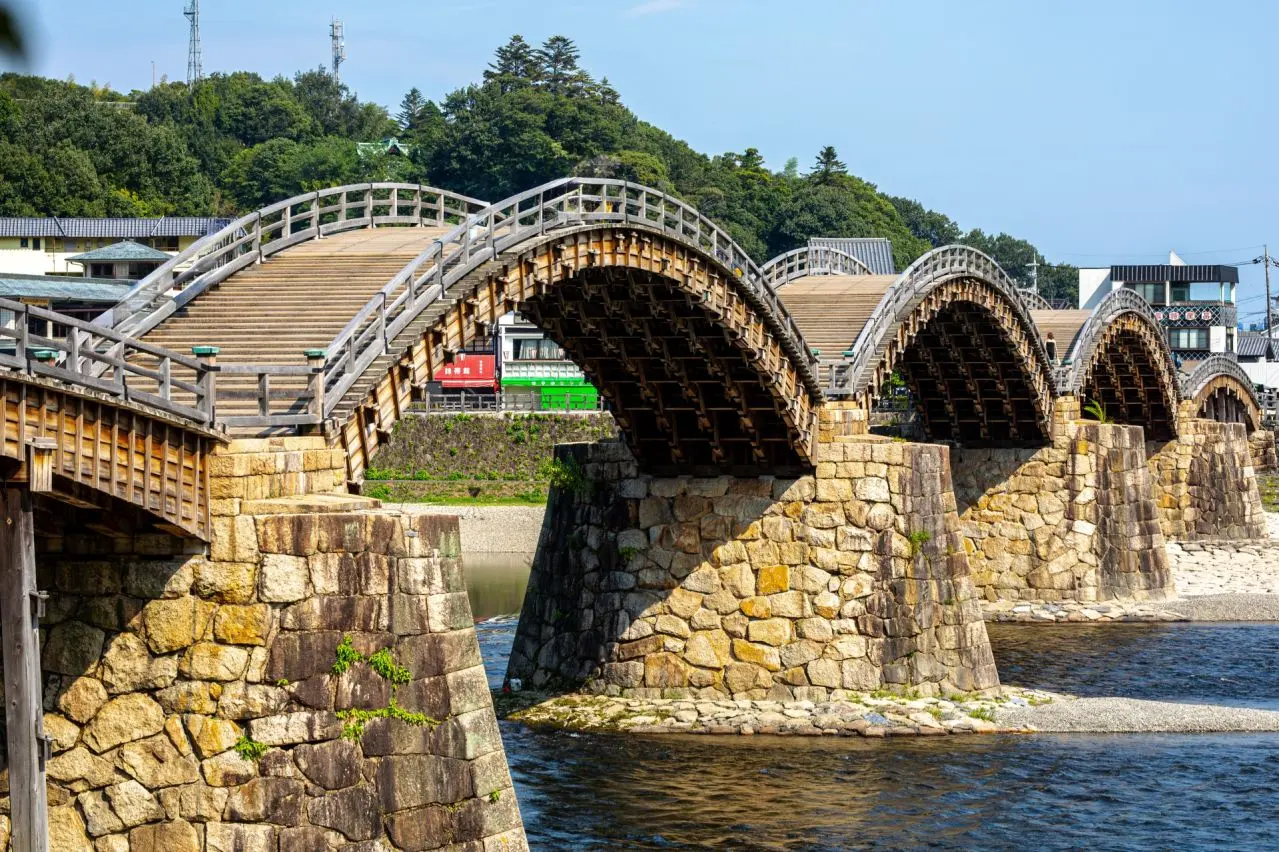
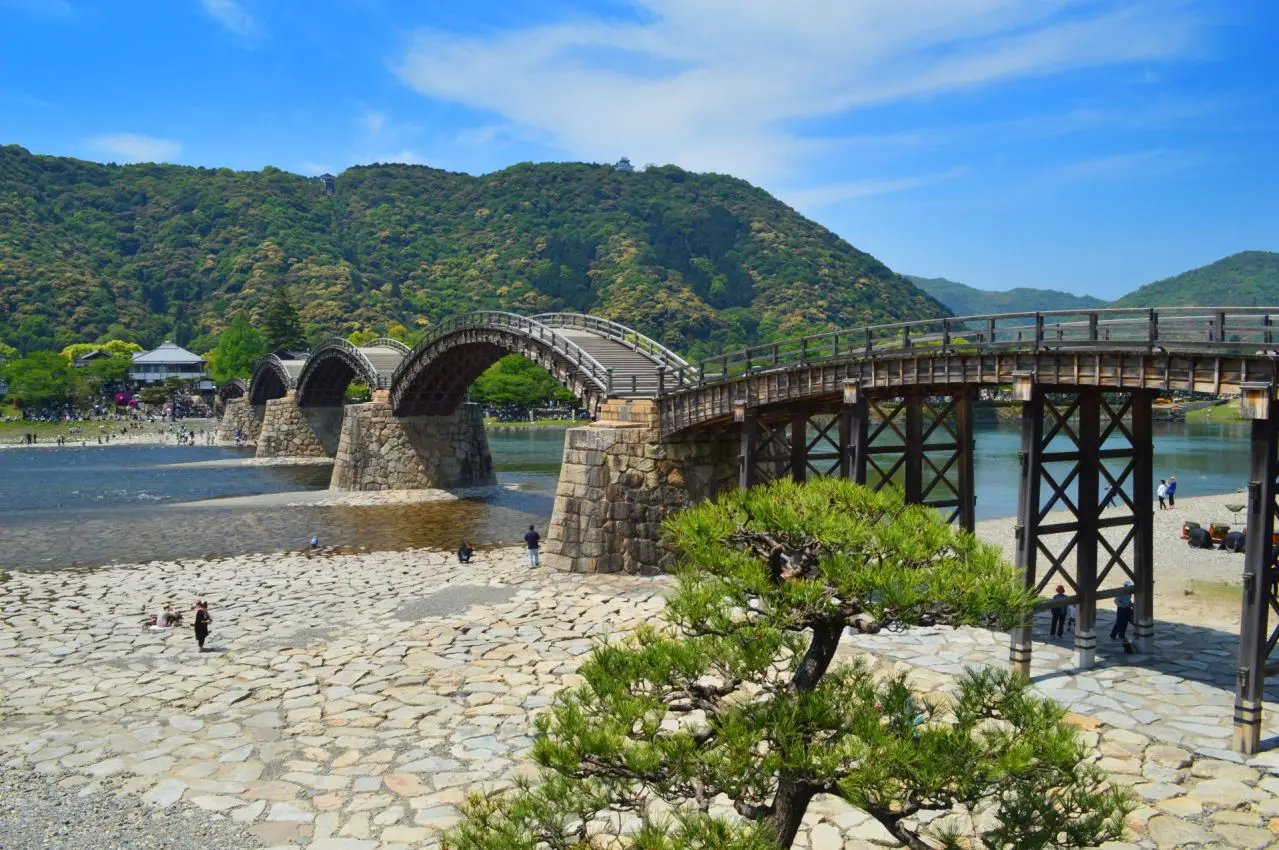
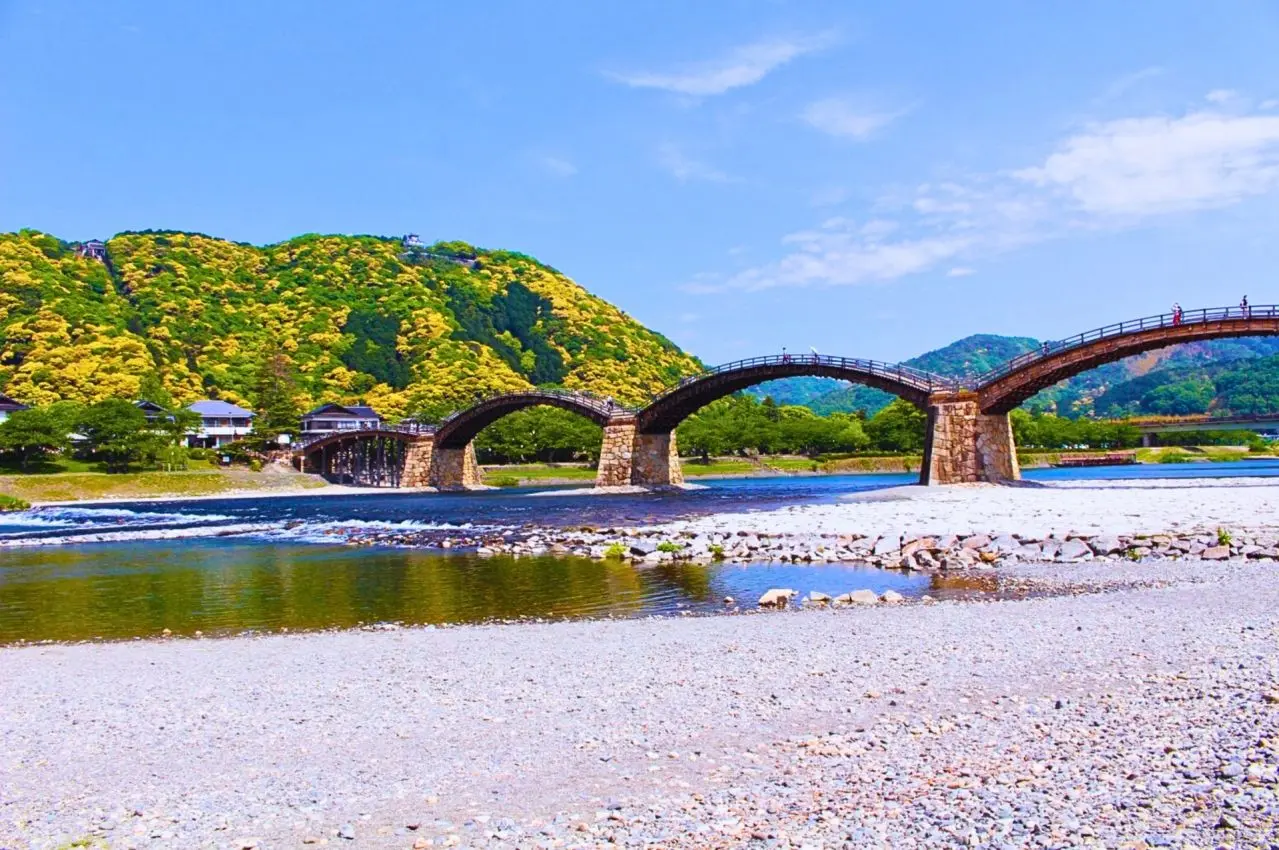
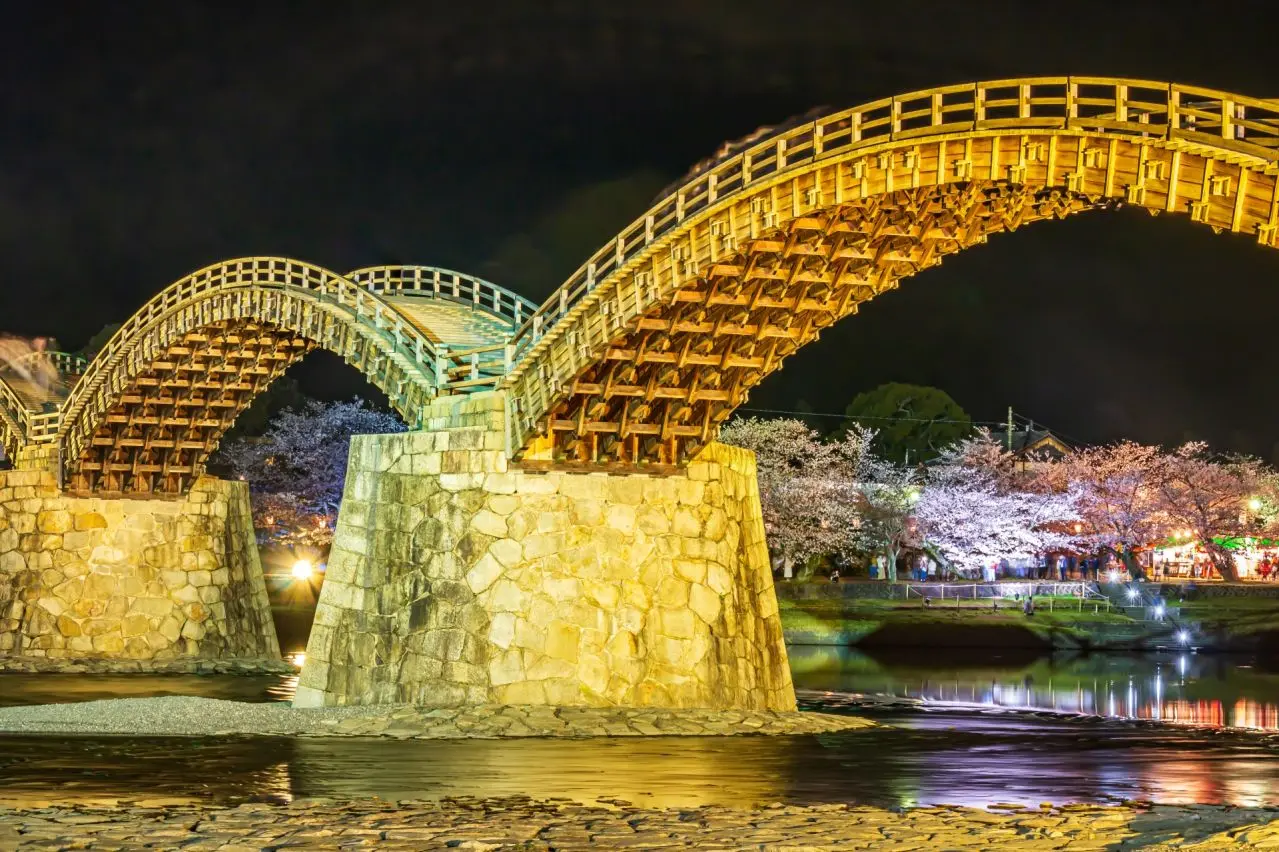
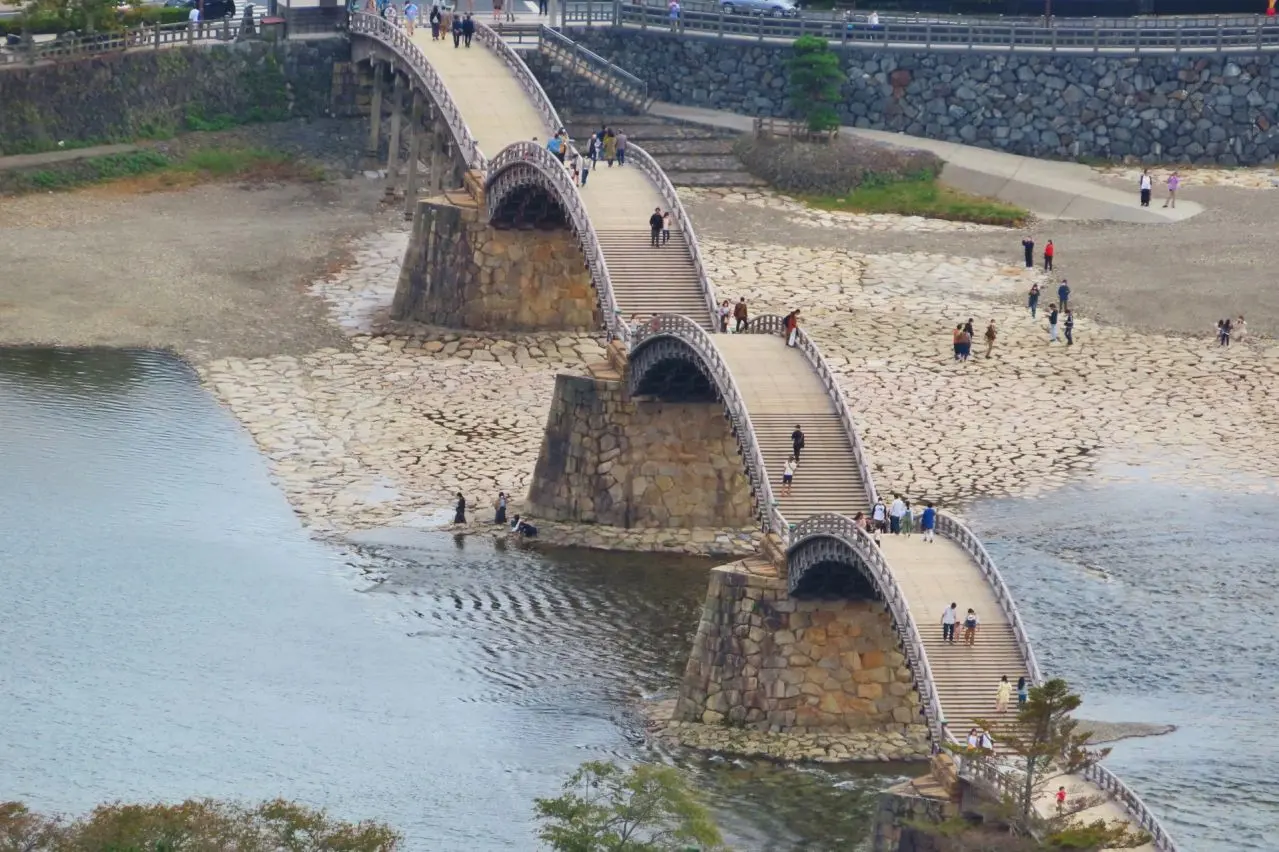
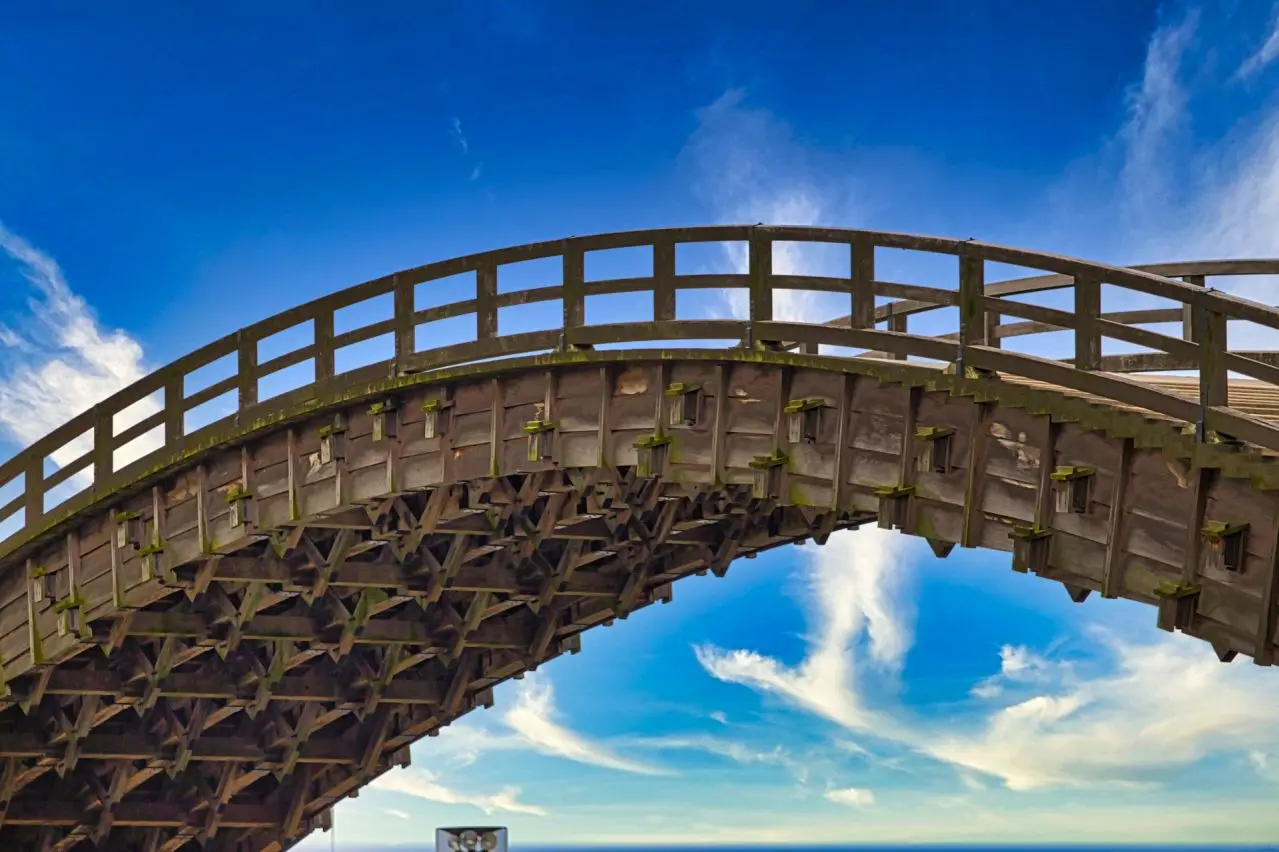
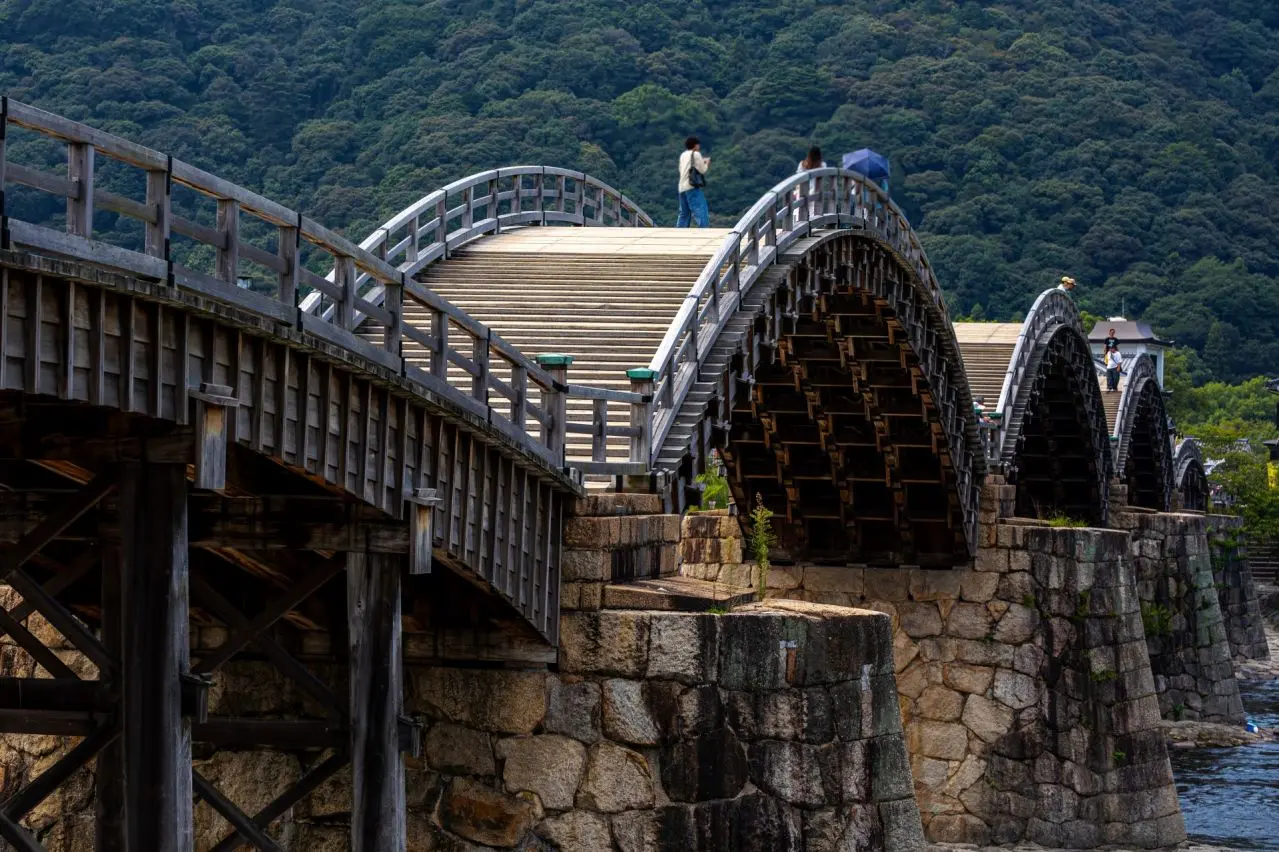
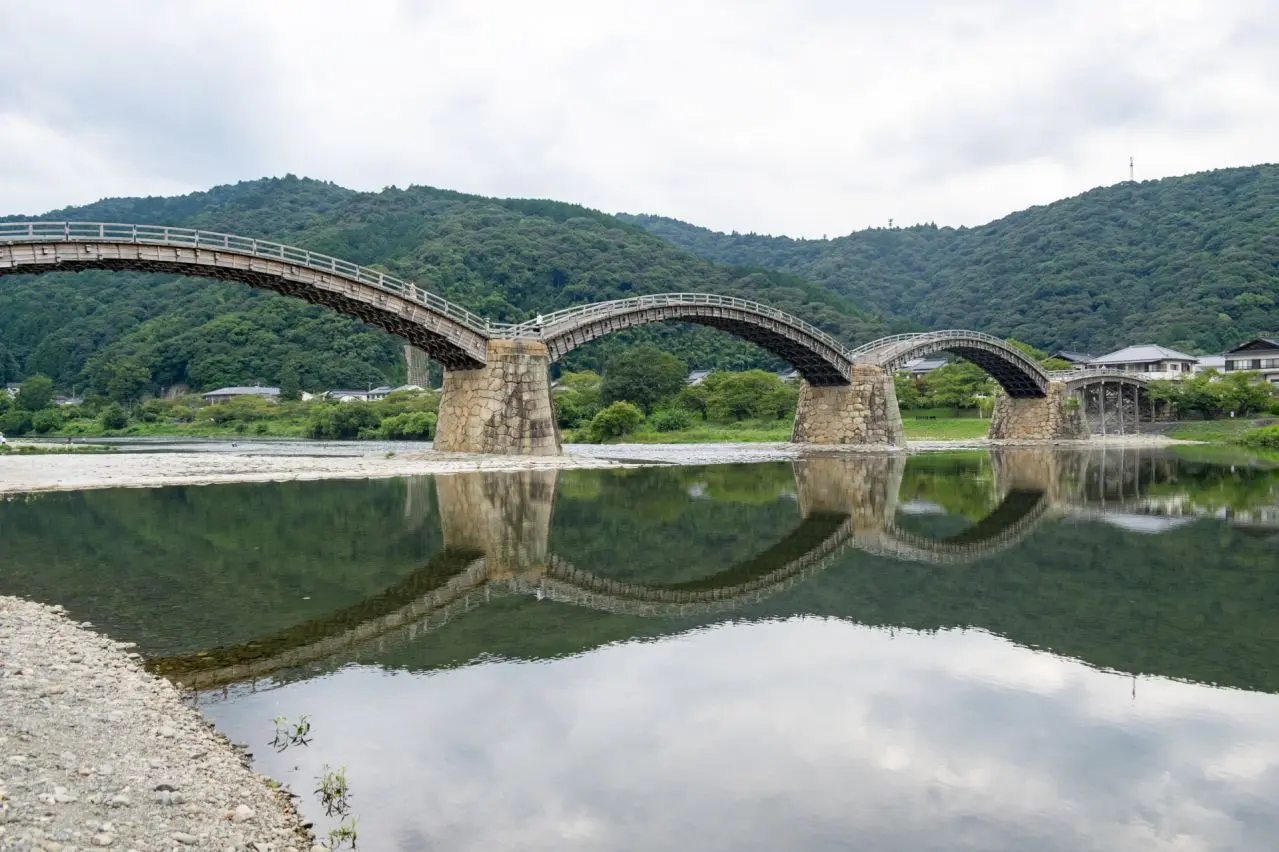
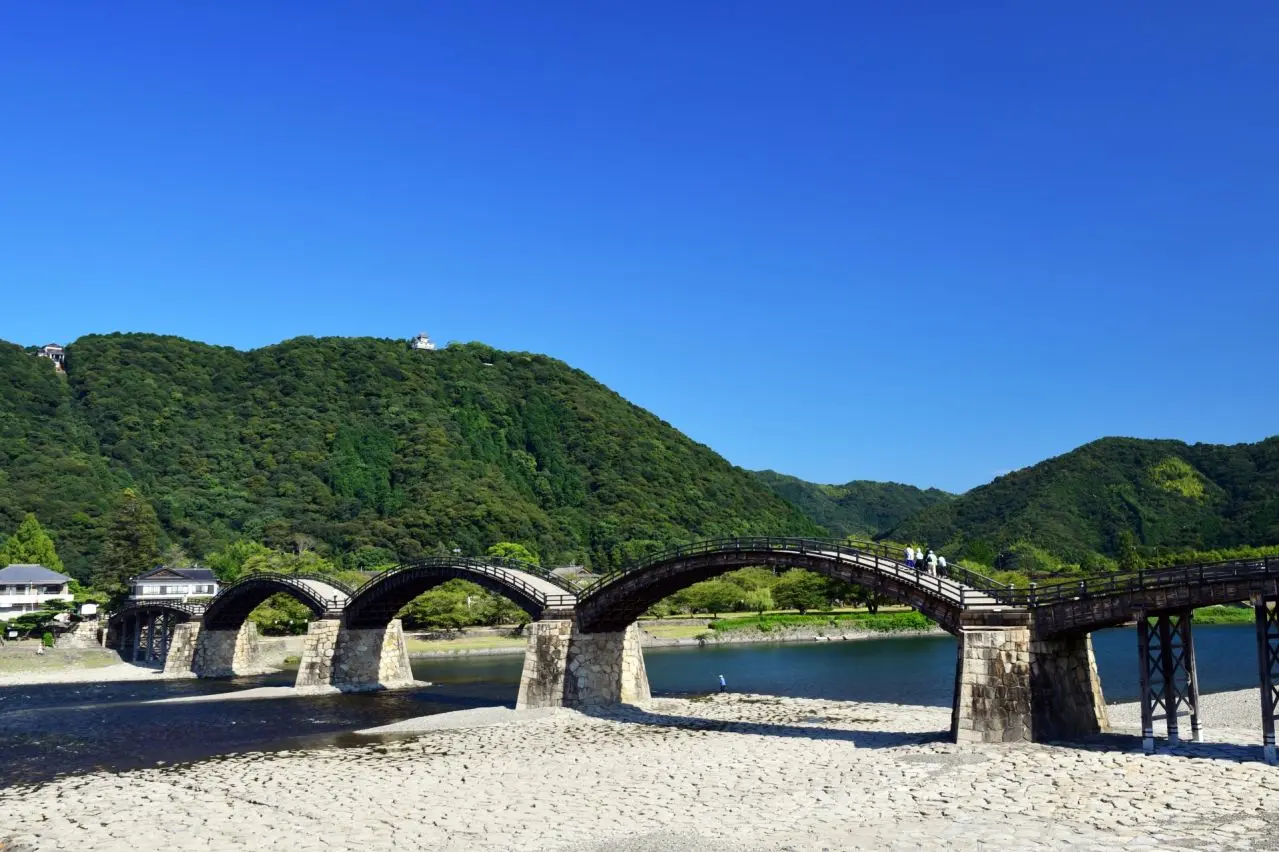
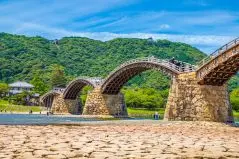
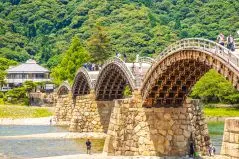
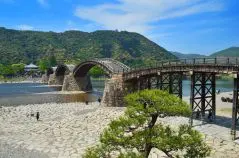
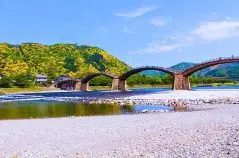
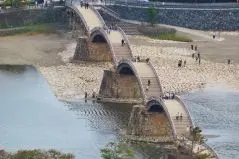
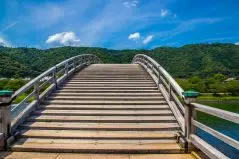
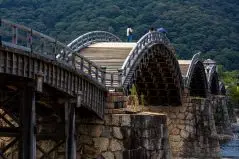
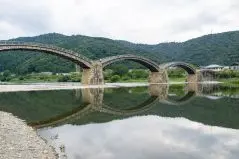
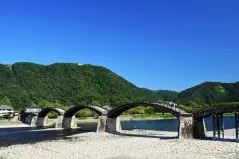
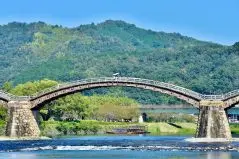
Kintaikyo Bridge, spanning the Nishiki River in Iwakuni City, Yamaguchi Prefecture, is one of Japan’s most celebrated wooden bridges. It is approximately 193.3 meters long, or about 210 meters along the length of its deck, and about 5 meters wide. Its most distinctive feature is its beautiful five-span structure, consisting of three central arches and curved bridges on either side. Counted as one of Japan’s Three Great Bridges, it has also been designated a Place of Scenic Beauty by the Japanese government. Known worldwide as one of the few large-scale wooden arch bridges of its kind, Kintaikyo continues to captivate visitors with its graceful appearance and advanced architectural craftsmanship.
Kintaikyo Bridge was first built in 1673, during the early Edo period. Hiroyoshi Kikkawa, the third lord of the Iwakuni domain, commissioned its construction out of a strong desire to create “a bridge that would not be washed away by floods.” At the time, the castle town of Iwakuni was divided by the Nishiki River, making a bridge essential for the movement of local residents. However, the bridges that had existed until then were washed away whenever floods occurred, and building a more durable bridge had long been a major challenge.
It is said that, while studying bridge construction, Hiroyoshi gained inspiration from illustrations of bridges spanning West Lake in Hangzhou, China. The result was an innovative design featuring four piers in the river, with five connected spans built in succession. Although the completed bridge was washed away by a flood, it was rebuilt the following year with several improvements. It then remained standing for an impressive 276 years, until it was washed away by Typhoon Kijia in 1950.
The bridge suffered extensive damage in the 1950 typhoon, but citizens strongly called for it to be restored in wood. In 1953, it was rebuilt as the wooden bridge seen today. Since then, regular repairs and reconstructions have been carried out while preserving traditional methods. Beginning in 2002, the “Heisei Reconstruction Project” was undertaken, during which deteriorated timbers were replaced with new Japanese cypress. The bridge was beautifully restored in 2004. Such regular restoration is also part of a traditional maintenance system that has continued since the Edo period.
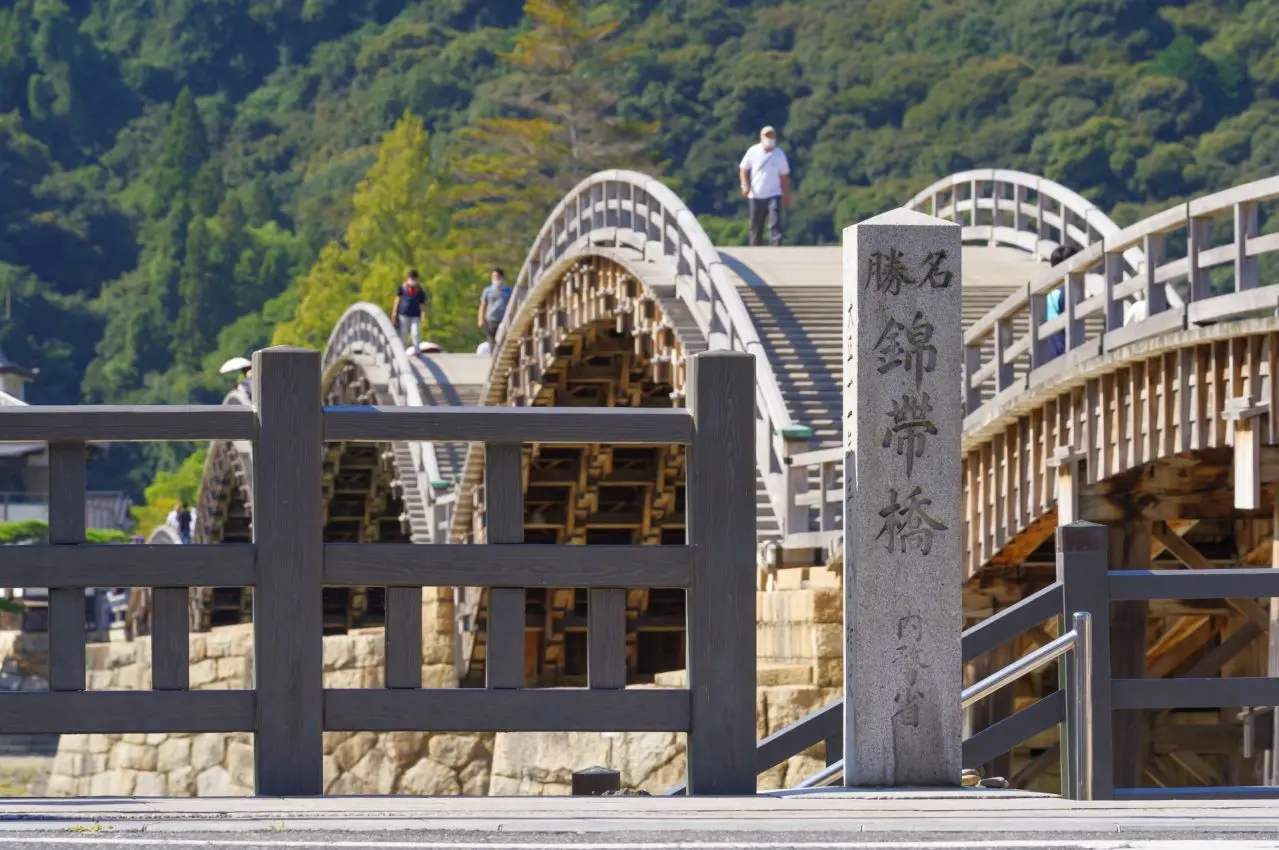
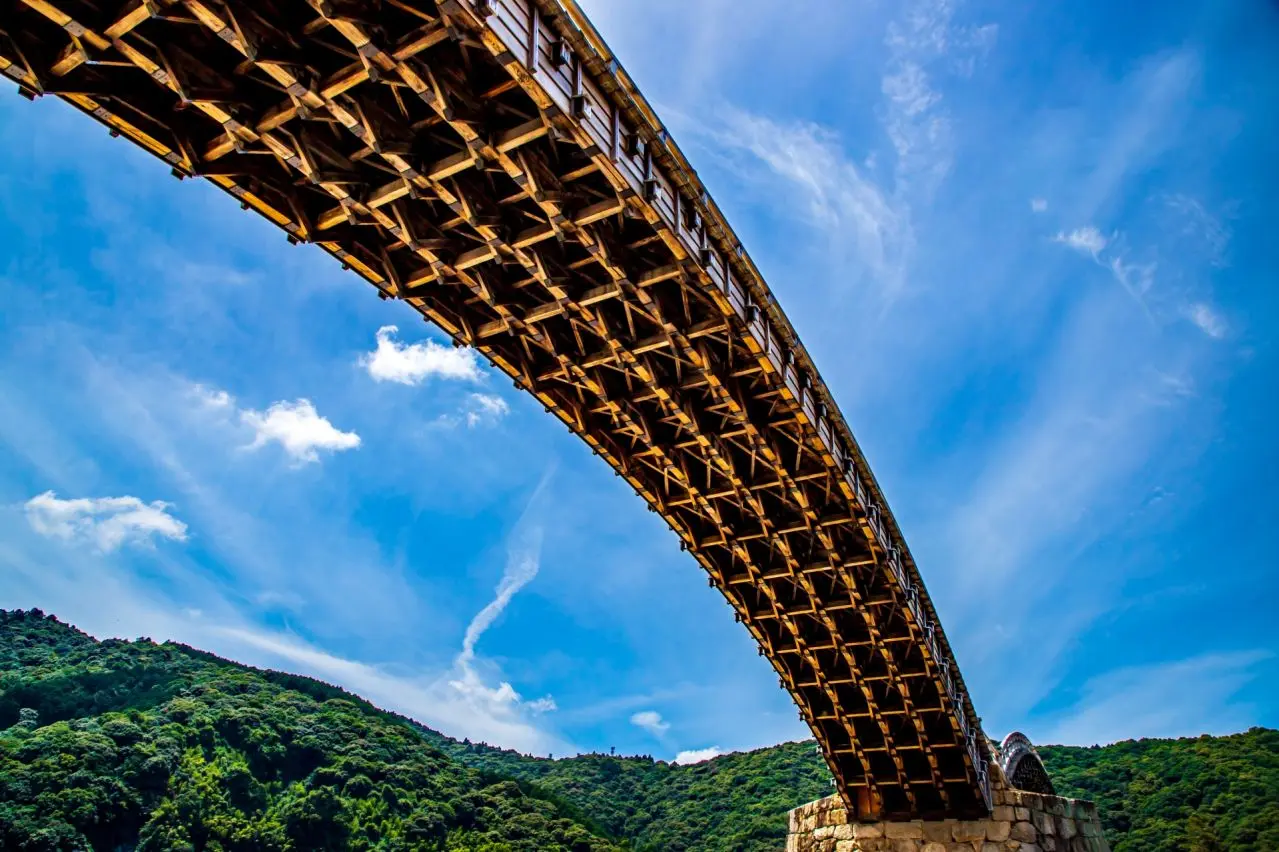
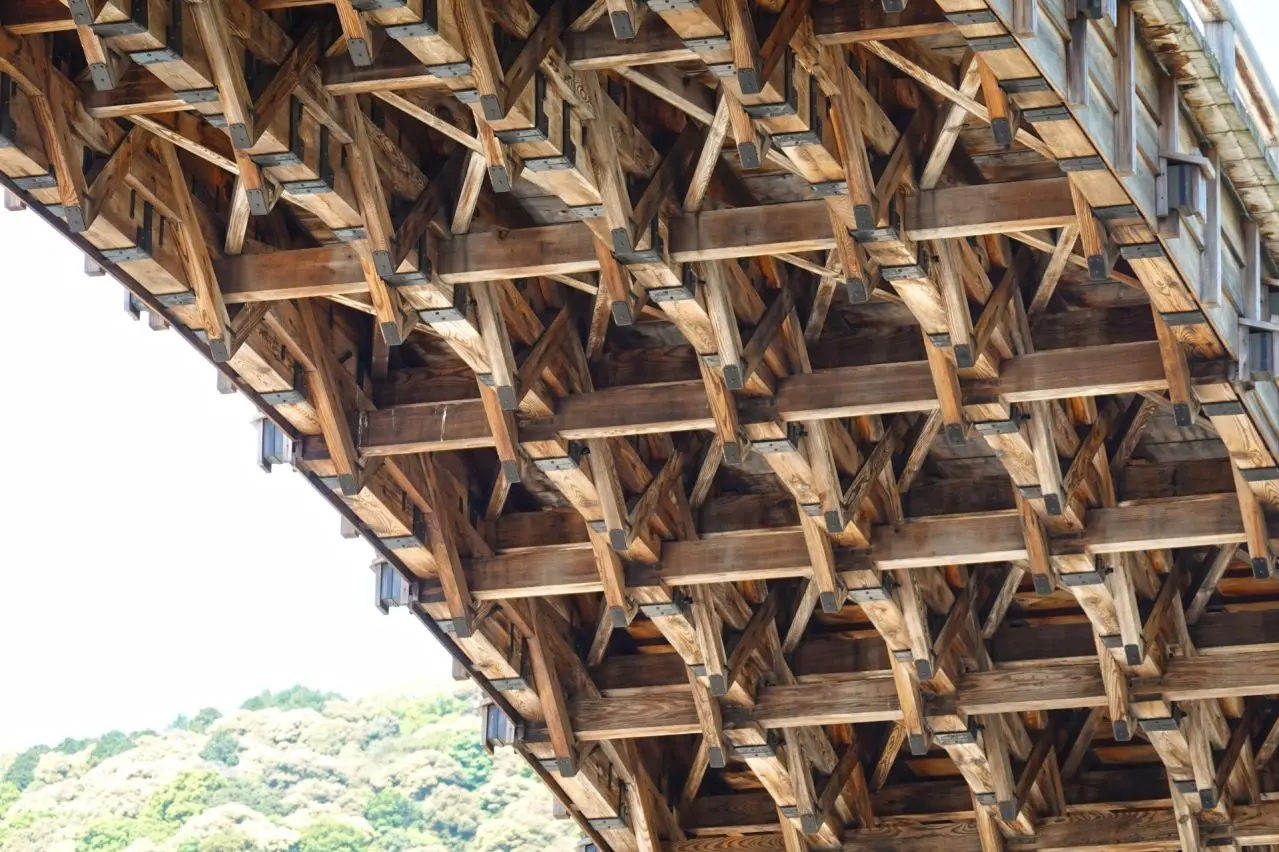
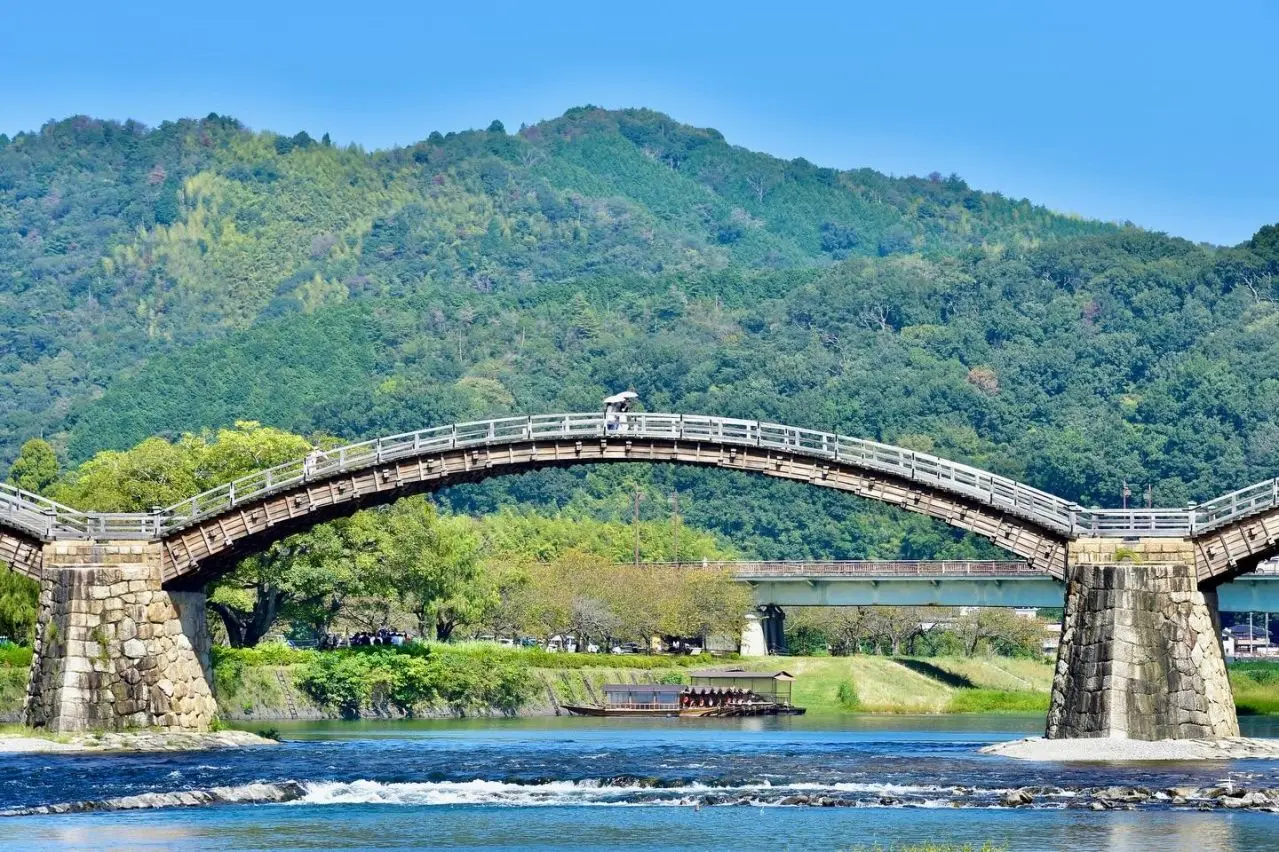
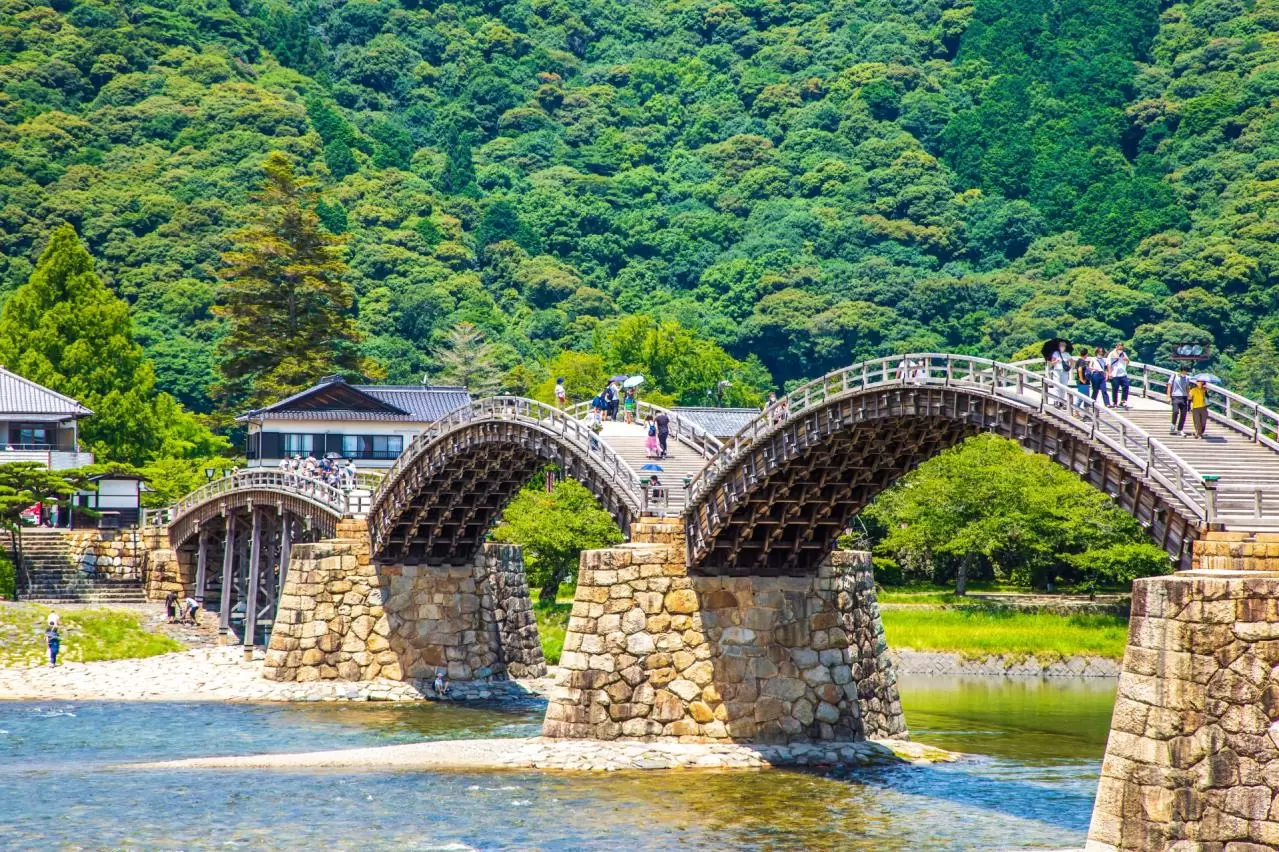
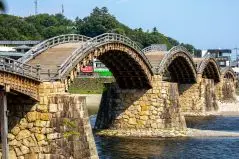
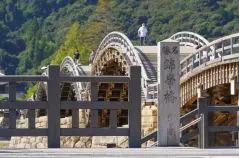
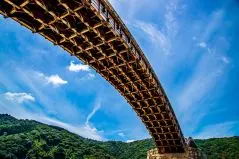
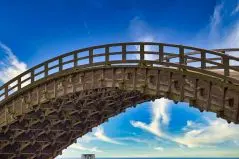
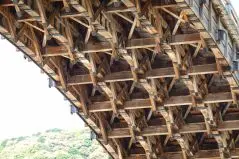
The most remarkable feature of Kintaikyo is its intricate wooden framework. Very few nails are used in the bridge; instead, the timber is skillfully assembled using metal fittings known as makigane and kasugai. This joinery technique creates a highly strong structure in which the timbers distribute forces among one another. In particular, the three central arches form steep curves, and their elegant lines combine functional beauty with artistic appeal. Even from the perspective of modern bridge engineering, the structure is regarded as exceptionally rational and highly refined.
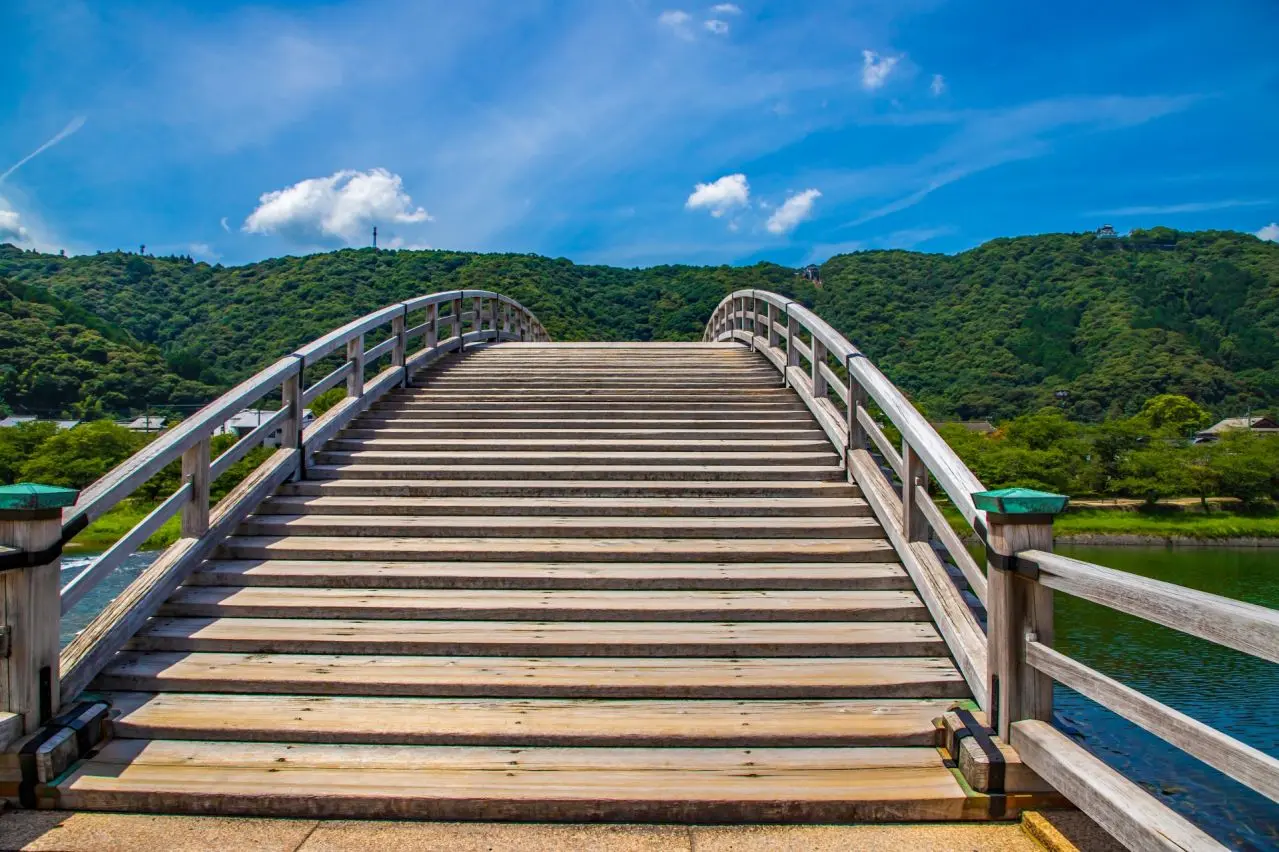
When crossing the bridge, visitors discover that the central arches are steeper than expected, allowing them to experience the unique changes in elevation and distinctive charm of a wooden bridge. The stepped deck has been designed to make walking easier, and from the bridge, visitors can enjoy panoramic views of the clear waters of the Nishiki River and the surrounding mountains. Looking up from beneath the bridge also provides an opportunity to observe its geometrically assembled wooden framework at close range and appreciate the sophistication of its construction. Another popular way to view Kintaikyo is from a yakatabune sightseeing boat. The sight of the five-span bridge reflected across the surface of the river is exceptionally beautiful.
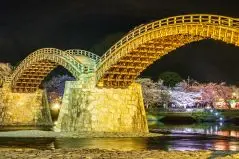
Kintaikyo is also famous for offering a different scenic experience in every season. In spring, approximately 1,500 cherry trees burst into bloom, and the area has been selected as one of Japan’s 100 Best Cherry Blossom Viewing Sites. The landscape created by the cherry blossoms and Kintaikyo is extraordinarily beautiful, and the illuminated blossoms at night are especially enchanting. The Kintaikyo Bridge Festival is also held in spring, bringing the area to life with daimyo processions, Iwakuni taiko drumming, and other events.
In summer, the brilliant fresh greenery is reflected in the landscape, while visitors can enjoy traditional attractions unique to the Nishiki River, including cormorant fishing and fireworks festivals. In autumn, the natural forests around Mount Shiroyama turn vivid shades of red and yellow, creating spectacular foliage around the bridge. In winter, a tranquil landscape covered in snow unfolds, giving the bridge an entirely different appearance. Seasonal nighttime illuminations also create a magical atmosphere unlike that of the bridge during the day.
Today, Kintaikyo is one of Iwakuni’s leading tourist attractions and draws visitors from throughout Japan and around the world. The surrounding area is home to many historic sites, including Iwakuni Castle and Kikko Park. With convenient access from the Hiroshima area, it has become one of the most representative tourist destinations in the Chugoku region.
In recent years, efforts to seek World Heritage status for Kintaikyo have attracted attention, as its historical value, distinctive structure, and the preservation of traditional craftsmanship have received high praise. More than 350 years after its original construction, Kintaikyo remains one of Japan’s finest bridges, cherished as a living testament to the passion of the people who dreamed of building “a bridge that would not be washed away” and to the outstanding skills of generations of craftsmen.
Yamaguchi Tourist Attractions
View List

Akiyoshi Cave
Akiyoshido Cave, located in Mine City, Yamaguchi Prefecture, is one of Japan's largest limestone caves, extending 100 meters underground within Akiyoshidai Quasi-Nat...

Shoka Sojuku
The private school "Matsushita Village School," established by the thinker Yoshida Shoin during the Bakumatsu period, is registered as a UNESCO World Heritage Site. ...

Hofu Tenman-gu
Bōfu Tenmangū is the first Tenmangū shrine in Japan, founded in 904, dedicated to Sugawara no Michizane. It is one of the three major Tenjin shrines in Japan, alongs...

Tsunoshima Bridge
The Tsunoshima Bridge, located in Shimonoseki City, Yamaguchi Prefecture, is one of Japan's most beautiful bridges, having opened in 2000. Spanning a total length of...

Akiyoshi Cave
Akiyoshidai, one of Japan's largest karst plateaus, is a special natural monument located in Mine City, Yamaguchi Prefecture, designated as a national park in 1955. ...

Motonosumi Shrine
The breathtaking spot "Motonosumi Shrine" in Yamaguchi Prefecture was established in 1955 by a local fisherman, Osamu Okamura, who received a message from a white fo...

Hagi Castle Town
Hagi Castle Town is a historic area that developed around Hagi Castle, which was built by Mori Terumoto in 1604. This town retains a strong atmosphere of the Edo per...