Hofu Tenman-gu
Hofu Tenman-gu Movies


Basic Information
- Spot Name
- Hofu Tenman-gu
- Location
- 〒747-0029 14-1 Matsuzakicho, Hofu City, Yamaguchi Prefecture
- Access
- 15 minutes on foot from JR Sanyo Line Hofu Station.
Approximately 10 minutes from Sanyo Expressway "Hofu Higashi-Nishi IC." - Parking
- Approximately 500 vehicles.
- Business Hours
- 6:00 AM to 8:00 PM (last admission)
- Contact Information
- Phone Number:0835-23-7700
- Official Website
Map
Detailed Information
Hōfu Tenmangū is a Shinto shrine located in Matsuzaki-chō, Hōfu City, Yamaguchi Prefecture. It enshrines four deities, including Sugawara no Michizane, widely revered as the deity of learning, as well as Ame no Hohi no Mikoto, Takehano-dori no Mikoto, and Nomino Sukune. Said to have been founded in 904, it is known as the first Tenmangū shrine established in Japan. Among the approximately 12,000 Tenmangū shrines across the country, it holds a place of special importance and is counted as one of the “Three Great Tenjin Shrines of Japan,” along with Kitano Tenmangū in Kyoto and Dazaifu Tenmangū in Fukuoka.
The origins of Hōfu Tenmangū date back to the Heian period. Sugawara no Michizane was born into a family of scholars and was exceptionally gifted in learning from an early age. It is said that he composed a Japanese poem at the age of five, leaving behind these verses:
“How beautiful the plum blossoms are,
their crimson color so bright;
I wish I could place them
upon my own face.”
As he grew older, he gained renown in the field of scholarship, becoming a Monjōshō at the age of 18 and a Monjō Hakase, or Doctor of Letters, at 33. His sincere approach to politics also earned him the deep trust of Emperor Uda, and he eventually rose to the position of Minister of the Right. However, due to false accusations made by the powerful courtier Fujiwara no Tokihira and others, he was unjustly condemned and, in 901, was demoted and exiled to Dazaifu in Kyushu.
On his way to Dazaifu, Michizane stopped at Katsuma-no-Ura in the province of Suō, present-day Yamaguchi Prefecture. The provincial governor of Suō at the time, Haji no Nobusada, was a member of the same clan as Michizane and is said to have welcomed him warmly. Comforted by Hōfu’s beautiful scenery, Michizane reportedly expressed the wish, “This place is still connected to the capital by land. If possible, I would like to live here and wait for news of my innocence.”
Later, on February 25, 903, Michizane died in Dazaifu, still filled with sorrow over his unjust exile. Around the same time, a divine light is said to have appeared at Katsuma-no-Ura in Hōfu, while auspicious clouds drifted over Mount Sakadare, now known as Mount Tenjin. The people regarded these phenomena as a sign that Michizane’s spirit had returned. In 904, responding to his wish, they built a shrine in Matsuzaki and enshrined him there as “the Shrine of Matsuzaki.” This marked the beginning of Hōfu Tenmangū. For this reason, it is known as “Fusō Kanbyō Saisho,” meaning the first Tenjin shrine in Japan.
The other enshrined deities—Ame no Hohi no Mikoto, Takehano-dori no Mikoto, and Nomino Sukune—are ancestral deities of the Sugawara clan and are worshipped alongside Michizane. Nomino Sukune is also known as the progenitor of sumo wrestling and has a deep connection with Japanese culture.
Hōfu Tenmangū is particularly famous as a shrine for academic achievement and success in entrance examinations. During the examination season, many students and their families visit from all over Japan, and numerous ema wooden prayer plaques bearing their wishes are hung throughout the grounds. Amulets and other items for success in examinations are also popular. The “Gōkaku Omamori,” a set containing a lucky headband, pencil, and protective amulet, is especially sought after. In addition to academic success, the shrine is believed to offer blessings for family safety, business prosperity, protection from misfortune, safe childbirth, good health, and longevity.
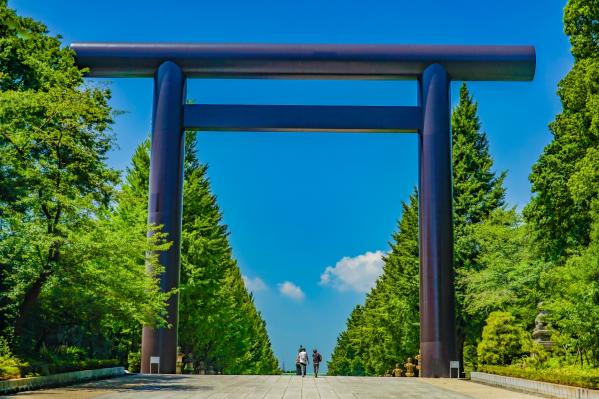
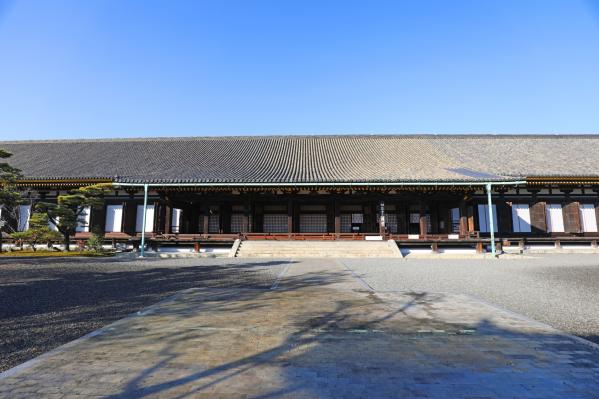
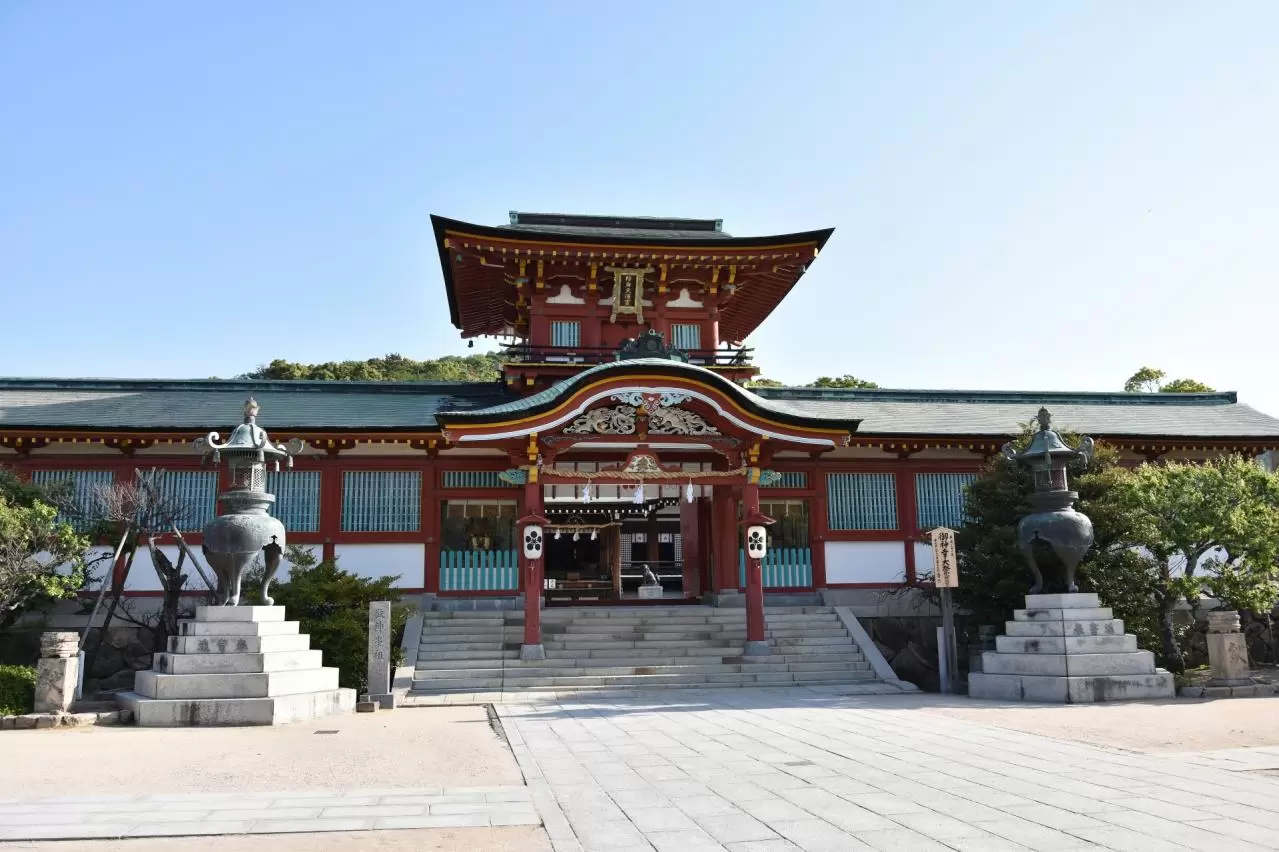
The shrine grounds contain many points of interest. The beautiful vermilion-lacquered two-story gate is considered one of the symbols of Hōfu Tenmangū. Its imposing presence at the top of the stone steps creates a particularly striking impression. In contrast, the main sanctuary features a serene design centered on unpainted wood and exudes a solemn atmosphere. The current shrine buildings were reconstructed in 1963, while retaining traditional architectural styles. The main sanctuary, heiden offering hall, worship hall, and Shunpūrō are registered tangible cultural properties of Japan, and many prefecturally designated cultural properties and historic sites also remain within the grounds.
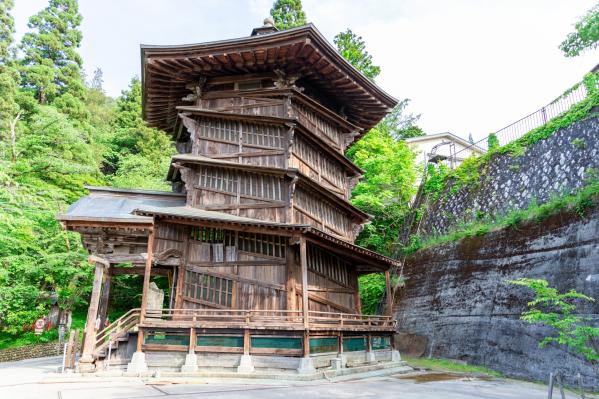
The shrine grounds are also home to a distinctive building called Shunpūrō. Construction originally began as a five-story pagoda, but changes in the times led to a modification of the planned design, resulting in the multi-storied tower structure seen today. From the upper floor, visitors can enjoy panoramic views of Hōfu City and the Seto Inland Sea.
In addition, the History Museum, or Treasure Hall, displays valuable ancient documents, treasures, illustrated scrolls depicting the shrine’s origin, and other artifacts handed down at Hōfu Tenmangū. Visitors can learn more about Tenjin worship and the history of Hōfu Tenmangū. At the tea house Hōshōan, guests can enjoy matcha and spend a peaceful moment in quiet surroundings.
Hōfu Tenmangū is also known as a famous destination for viewing plum blossoms. Because Sugawara no Michizane deeply cherished plum trees, approximately 1,100 plum trees representing around 16 varieties have been planted within the shrine grounds. They bloom beautifully every year from February through March. During the plum blossom season, the “Plum Blossom Festival” is held, featuring special goshuin stamps with plum motifs and the distribution of “Shusse-ume,” or “success plums.” This is one of the most popular times to visit, as the shrine grounds become filled with the fragrance of plum blossoms.
The “ox,” which has a close connection with Michizane, is another symbol of Hōfu Tenmangū. Within the grounds stands a statue of an ox known as the “Wish-Granting Ox,” which is said to make wishes come true when rubbed. Every February, the “Ushi-kae Shinto Ritual” is held. In this traditional event, the person who draws the live ox is given the role of sacred ox during the Goshinkō Festival.
Another major feature of Hōfu Tenmangū is the large number of festivals and events held throughout the year. On New Year’s Day, many worshippers visit for hatsumōde, the first shrine visit of the year. On the fourth Saturday of November, the Goshinkō Festival, also known as the Hadaka-bō Festival, takes place. Regarded as one of Japan’s most unusual festivals, it features men dressed in white loincloths carrying the Ojjiro-kochi portable shrine in a powerful procession through the nighttime streets. The spectacle is immensely impressive and has become one of Hōfu’s representative traditional events.
Other seasonal festivals include the Kinayū Festival, the Rice-Planting Festival, the Nagoshi Ritual, and the Gotanshin Festival, all of which preserve the faith and traditions of the local community. During the final years of the shogunate, anti-shogunate activists also visited this area, making it one of the settings associated with the Meiji Restoration.
For more than a thousand years, Hōfu Tenmangū has continued to attract the faith and devotion of the people. In addition to its importance as a shrine dedicated to the deity of learning, it offers many attractions, including beautiful plum blossoms, historic buildings, and traditional festivals. Today, it remains one of Yamaguchi Prefecture’s leading landmarks and is beloved by worshippers and tourists alike.
Yamaguchi Tourist Attractions
View List
Akiyoshi Cave
Akiyoshidai, one of Japan's largest karst plateaus, is a special natural monument located in Mine City, Yamaguchi Prefecture, designated as a national park in 1955. ...

Motonosumi Shrine
The breathtaking spot "Motonosumi Shrine" in Yamaguchi Prefecture was established in 1955 by a local fisherman, Osamu Okamura, who received a message from a white fo...

Tsunoshima Bridge
The Tsunoshima Bridge, located in Shimonoseki City, Yamaguchi Prefecture, is one of Japan's most beautiful bridges, having opened in 2000. Spanning a total length of...

Akiyoshi Cave
Akiyoshido Cave, located in Mine City, Yamaguchi Prefecture, is one of Japan's largest limestone caves, extending 100 meters underground within Akiyoshidai Quasi-Nat...

Hagi Castle Town
Hagi Castle Town is a historic area that developed around Hagi Castle, which was built by Mori Terumoto in 1604. This town retains a strong atmosphere of the Edo per...

Kintaikyo Bridge
One of Japan's three famous bridges, the Kintai Bridge, is a wooden five-arch bridge measuring approximately 193.3 meters in length, located in Iwakuni City, Yamaguc...

Shoka Sojuku
The private school "Matsushita Village School," established by the thinker Yoshida Shoin during the Bakumatsu period, is registered as a UNESCO World Heritage Site. ...