Nara National Museum
Basic Information
- Spot Name
- Nara National Museum
- Location
- 〒630-8213 50 Noboriōji-cho, Nara City, Nara Prefecture, Japan
- Access
- About a 15-minute walk from Kintetsu Nara Station, or take the Nara Kotsu "City Circular" bus (outer loop) from JR Nara Station or Kintetsu Nara Station and get off at "Himuro Shrine / National Museum," which is right nearby.
- Parking
- Please use the nearby paid parking facilities.
- Business Hours
- 9:30 AM to 5:00 PM (Admission until 30 minutes before closing)
- Regular Holiday
- Every Monday (the following day if it's a holiday, and the day after the end of consecutive holidays). December 28 to January 1.
- Fees
- General: 700 yen, University students: 350 yen *Special exhibitions are charged separately.
- Contact Information
- Phone Number: 050-5542-8600
- Official Website
Map
Detailed Information
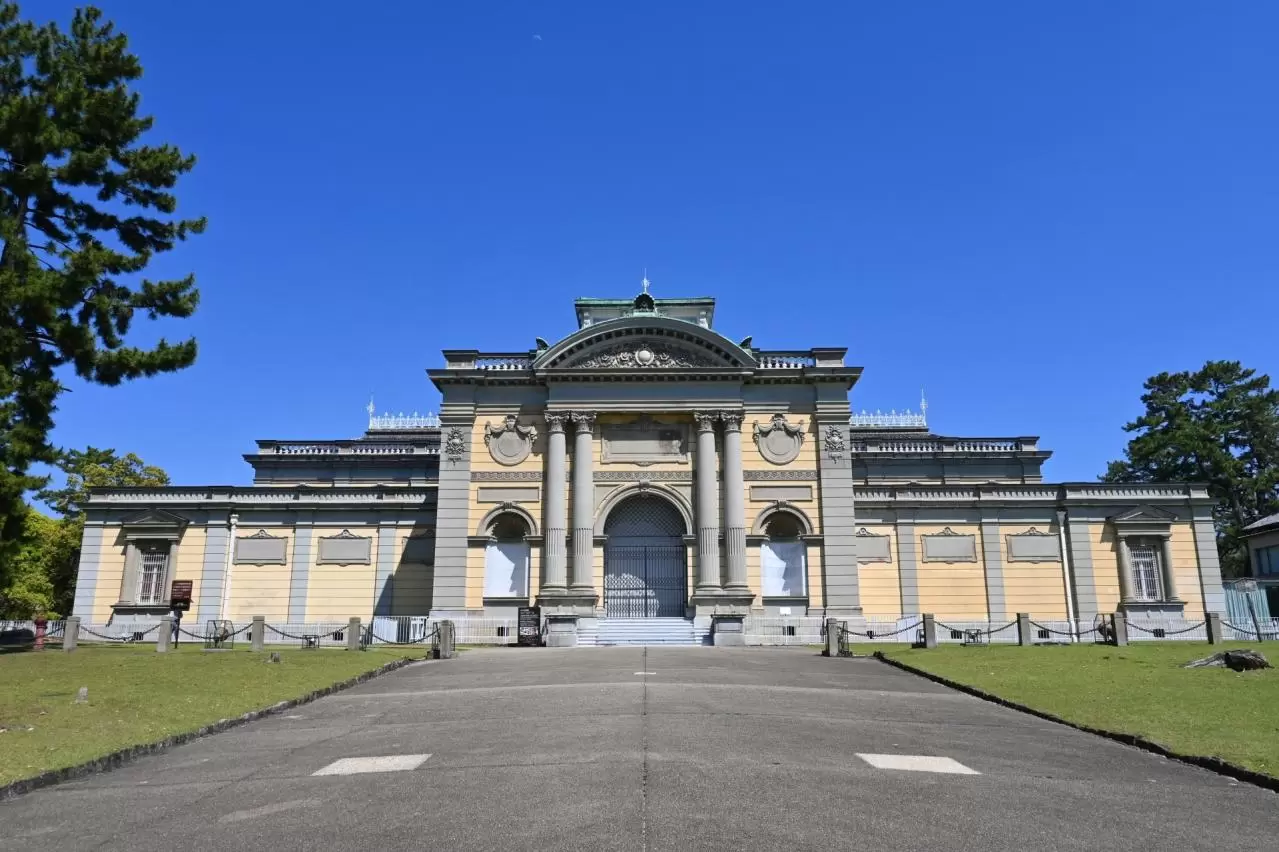
Nara National Museum is a national museum located in Nara Park in Nara City, Nara Prefecture, set within a historic environment surrounded by World Heritage sites such as Todaiji Temple, Kofukuji Temple, and Kasuga Taisha Shrine. It opened in 1895 as the “Imperial Nara Museum” and was established as one of the Imperial Museums alongside those in Tokyo and Kyoto. In 2025, it marked the 130th anniversary of its opening, and over its long history it has played a central role in the protection and study of Japan’s cultural properties.
The main building, known as the Nara Buddhist Sculpture Hall, was completed in 1894 and renovated from the former main building. Designed by modern architect Katayama Tokuma, it is a representative mid-Meiji brick Western-style structure and an important cultural property designated by the Japanese government in 1969. Its stately and elegant exterior is itself a work of art. It is also sometimes illuminated at night, offering a different charm from that of daytime.
Nara National Museum is renowned as a “temple of Buddhist art,” housing and exhibiting many outstanding works centered on Buddhist art and crafts. In particular, the Nara Buddhist Sculpture Hall permanently displays around 100 Buddhist statues, including national treasures and important cultural properties, chiefly works created from the Asuka period through the Kamakura period. It is known as one of the most substantial Buddhist sculpture displays in Japan. These statues allow visitors to observe delicate carving techniques and stylistic differences across periods up close, providing a systematic understanding of the development of Buddhist art.
Its exhibitions are held year-round as the “Masterpieces Exhibition,” with a selection of the collection regularly rotated. In the East Wing and West Wing, special exhibitions and special displays are held several times a year, offering more theme-focused presentations. Among these, the most notable is the “Shosoin Exhibition,” held every autumn.
This exhibition presents selected treasures from the approximately 9,000 items preserved in the Shosoin Repository at Todaiji Temple. It offers a rare opportunity to view cultural properties rich in international character, including cherished items associated with Emperor Shomu and handicrafts that came to Japan via the Silk Road, up close, and has become a major event attracting many visitors from across the country.
The museum was founded in response to the need to protect cultural properties that were at risk of dispersal amid the social changes following the Meiji Restoration. In 1874, the Nara Exhibition Company was established, and an exhibition held in the Great Buddha Hall of Todaiji Temple heightened public awareness of cultural property protection, eventually leading to the museum’s opening in 1895. Since then, through the growing number of deposits from temples and shrines and the expansion of storage facilities, it has continued its preservation, investigation, and research of cultural properties to this day.
As for its facilities, in addition to the Nara Buddhist Sculpture Hall, the East Wing and West Wing have been developed, and the buildings are connected by underground passageways. In 1972, a new wing designed by architect Yoshimura Junzo was completed, and in 1997 the East Wing was added, steadily enhancing the museum’s functions to meet the needs of each era.
The museum also includes a museum shop and restaurant, and its Buddhist Art Research Center allows visitors to consult specialized materials by prior reservation. Educational and outreach activities such as guided tours and workshops are also offered, enabling visitors to engage with Buddhist art in a variety of ways.
Nara National Museum is not merely an exhibition facility; it also serves as a core research institution responsible for the preservation and study of cultural properties. Working in cooperation with temples and shrines, it conducts surveys and restoration of cultural assets and shares the results widely through its exhibitions. Through these activities, it continues to convey to the present the appeal of art born from Buddhist faith, along with the history and culture that underlie it.
Moreover, after visiting the museum, touring nearby Todaiji Temple and Kasuga Taisha Shrine allows visitors to connect the knowledge gained from the exhibits with the actual cultural properties, leading to a deeper understanding. Together with the natural scenery of Nara Park and the presence of deer, the museum’s ability to make one feel the breath of a culture that has continued since ancient times is one of its unique attractions.
Nara National Museum Movies


Nara Tourist Attractions
View List
Todai-ji Temple
Todai-ji is one of Japan's most renowned temples, founded during the Nara period in the capital of that era, Heijo-kyo, as a kokubunji (provincial temple). The most ...


Kasukadai Shrine
Kasuga-taisha Shrine was established in the second year of Jingo-Keiun (768) and the current shrine buildings were completed in the early Heian period in 794. It flo...

Horyu-ji Temple
Hōryū-ji is a temple founded by Prince Shōtoku in the 14th year of Suiko (606 AD), and it is currently registered as a UNESCO World Heritage Site. Established as Oka...

Heijo Palace Ruins
The Heijo Palace Site is the center of Heijo-kyo, which was relocated from Fujiwara-kyo in 710, and it was registered as a UNESCO World Heritage Site as "Cultural Pr...

Isuien Neiraku Art Museum
Isui-en is a representative Japanese garden in Nara, designated as a national scenic spot. It features two distinct gardens: the "前園" (Maezono) created during the ...

Tōshōdaiji
Tōshōdai-ji is a temple founded by the Tang dynasty monk Jianzhen in the Nara period, established in 759 (the 3rd year of Tenpyō Hōji) at the former residence of Pri...