A shrine linked to Uesugi Kenshin
Located on the former Yonezawa Castle grounds, it offers a chance to pay your respects while exploring the history of the Uesugi clan.
AI Summary
This is an AI-generated summary. Please check the official information for opening hours, fees, and closed days.
A celebrated shrine in Yonezawa dedicated to Uesugi Kenshin, where you can explore samurai history amid changing seasonal scenery.
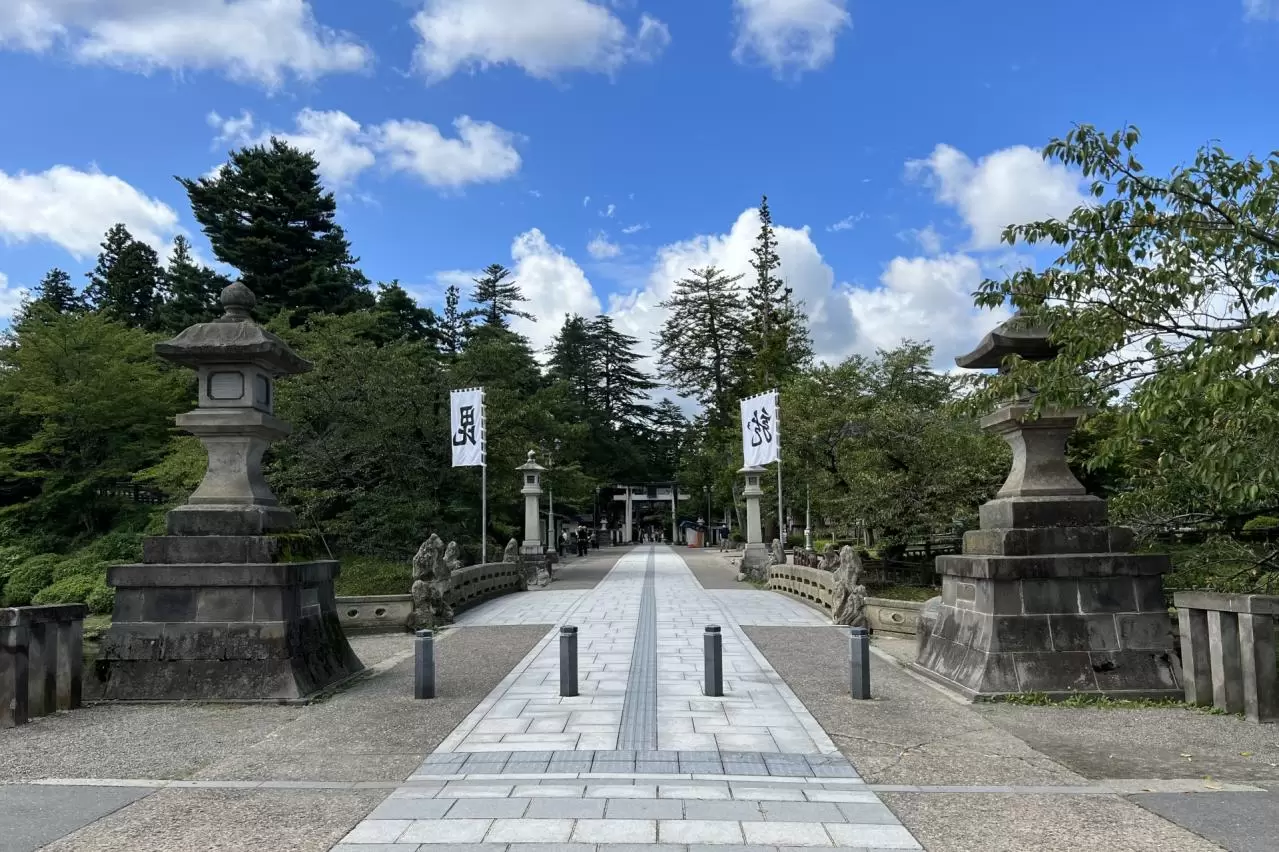
Set on the site of Yonezawa Castle, Uesugi Shrine is closely linked to the history of the Uesugi clan. Look for the “毘” and “龍” battle flags on Maizuru Bridge and exhibits at Keishoden. Cherry blossoms and the winter Snow Lantern Festival add seasonal appeal. A visit to nearby Matsugasaki Shrine offers more insight into the Uesugi family’s legacy.
Located on the former Yonezawa Castle grounds, it offers a chance to pay your respects while exploring the history of the Uesugi clan.
The “毘” and “龍” flags and exhibits associated with Naoe Kanetsugu are among the memorable sights.
The shrine takes on a different character with spring cherry blossoms, the Yonezawa Uesugi Festival, and the winter Snow Lantern Festival.
After visiting Uesugi Shrine, walk to Keishoden and Matsugasaki Shrine for a fuller introduction to the history of the Uesugi clan.
History and Origins
Uesugi Shrine is a shrine dedicated to the famed Sengoku-period warlord Uesugi Kenshin, and stands on the former site of the main bailey of Yonezawa Castle. Kenshin passed away unexpectedly in 1578 at Kasugayama Castle in Echigo, and his remains were enshrined in the Buddhist manner. Later, when Uesugi Kagekatsu was transferred to Yonezawa via Aizu, the mausoleum was also moved into Yonezawa Castle.
After the Meiji Restoration, the shrine was changed from Buddhist to Shinto rites. In 1876, Kenshin and the revered lord who revived the Yonezawa domain, Uesugi Yozan, were enshrined together, and the shrine was renamed Uesugi Shrine and classified as a prefectural shrine. In 1902, in recognition of its imperial loyalty, it was elevated to the rank of Bekkaku Kanpeisha, a special government-supported shrine. At that time, Yozan was separately enshrined at the subsidiary Matsugasaki Shrine.
In the Yonezawa Great Fire of 1919, many buildings including the main hall were destroyed. However, in 1923, the shrine was rebuilt based on the design of Dr. Chuta Ito, a Yonezawa native and Japan’s leading authority on shrine architecture, completing the present shrine buildings. The grounds cover about 6,300 tsubo on the former main bailey site of old Yonezawa Castle, offering beautiful seasonal scenery throughout the year. The annual festival is held on April 29, the date of Kenshin’s death.
Scenery and Highlights
On Maizuru Bridge spanning the approach path, the military banners “Bi” and “Ryu,” symbols of the Uesugi army, fly in the wind.
“Bi” represents Bishamonten, the deity worshipped by Kenshin.
“Ryu” symbolizes Fudo Myo-o and is said to have been raised as the signal for a full-scale army-wide assault.
These banners reflect Kenshin’s deep Buddhist faith and symbolize his devotion to the two supreme deities in battle.
Within the grounds is the Uesugi Shrine Keishoden, which houses and exhibits family heirlooms of the Uesugi clan and important cultural properties. In particular, the helmet engraved with the character “Ai” (“love”) belonging to the brilliant strategist Naoe Kanetsugu is famous and a must-see for history enthusiasts.
Annual Events and Festivals
Spring cherry blossoms: About 200 cherry trees are planted within the shrine grounds and along the moat, reaching full bloom from mid- to late April and delighting visitors.
Yonezawa Uesugi Festival (April 29–May 3): The grand armored procession known as the Uesugi Parade, featuring over a thousand participants, and the reenactment of the Battle of Kawanakajima, considered the largest battle in Sengoku history, draw crowds and make this the largest festival in Yonezawa.
Uesugi Snow Lantern Festival (second Saturday and Sunday of February): More than 300 snow lanterns and as many as 1,000 snow bonbori are lit with candles, creating a magical winter night.
Connection to Matsugasaki Shrine
Very close to Uesugi Shrine stands the subsidiary Matsugasaki Shrine. Here, Uesugi Yozan—the lord known for the saying, “If you try, it will be done; if you do not try, it will not be done”—is enshrined. Visiting both Uesugi Shrine and Matsugasaki Shrine allows visitors to more deeply appreciate the history and spirit of the Uesugi clan.
Uesugi Shrine enshrines Uesugi Kenshin, celebrated as the greatest warlord of the Sengoku period, while also preserving the history and culture of the Uesugi family. With its valor and faith symbolized by magnificent military banners, the legacy of strategy represented by the heirlooms of Naoe Kanetsugu, and the seasonal beauty of cherry blossoms and snow lantern festivals, it is a special place where history, culture, and nature come together. When visiting Yonezawa, it is truly a power spot not to be missed.
Located in Sakata City, Yamagata Prefecture, "Sankyo Warehouse" has served as a rice storage facility since its establishment in 1893. Its unique structure features ...
The Mogami River in Yamagata Prefecture offers the "Mogamigawa Basho Line Boat Ride," where you can enjoy seasonal scenery throughout the year. This boat ride, like ...
Takabatake Winery is located in Takabatake Town, Yamagata Prefecture, and is a representative brewing region in Tohoku. Takabatake Town boasts the largest shipment v...
The Yamagata Prefectural Museum, known as Buntokan, is a building constructed in the style of British Neo-Renaissance in 1916. Until 1975, it served as the center of...
Zao Ropeway is located in Zao Onsen, Yamagata City, and offers visitors and outdoor enthusiasts beautiful nature throughout the four seasons. It starts from the Zao ...
Honma Art Museum was established in 1947 as Japan's first private art museum after World War II, based on the honma family's villa "Seienkaku" and the garden "Tsurum...


![【山形県 米沢市】上杉神社さんぽ [4K]](https://i.ytimg.com/vi/nYeLi_uHCfA/mqdefault.jpg)