White-walled warehouses
The row of Meiji-era rice storehouses evokes Sakata’s distinctive history.
AI Summary
This is an AI-generated summary. Please check the official information for opening hours, fees, and closed days.
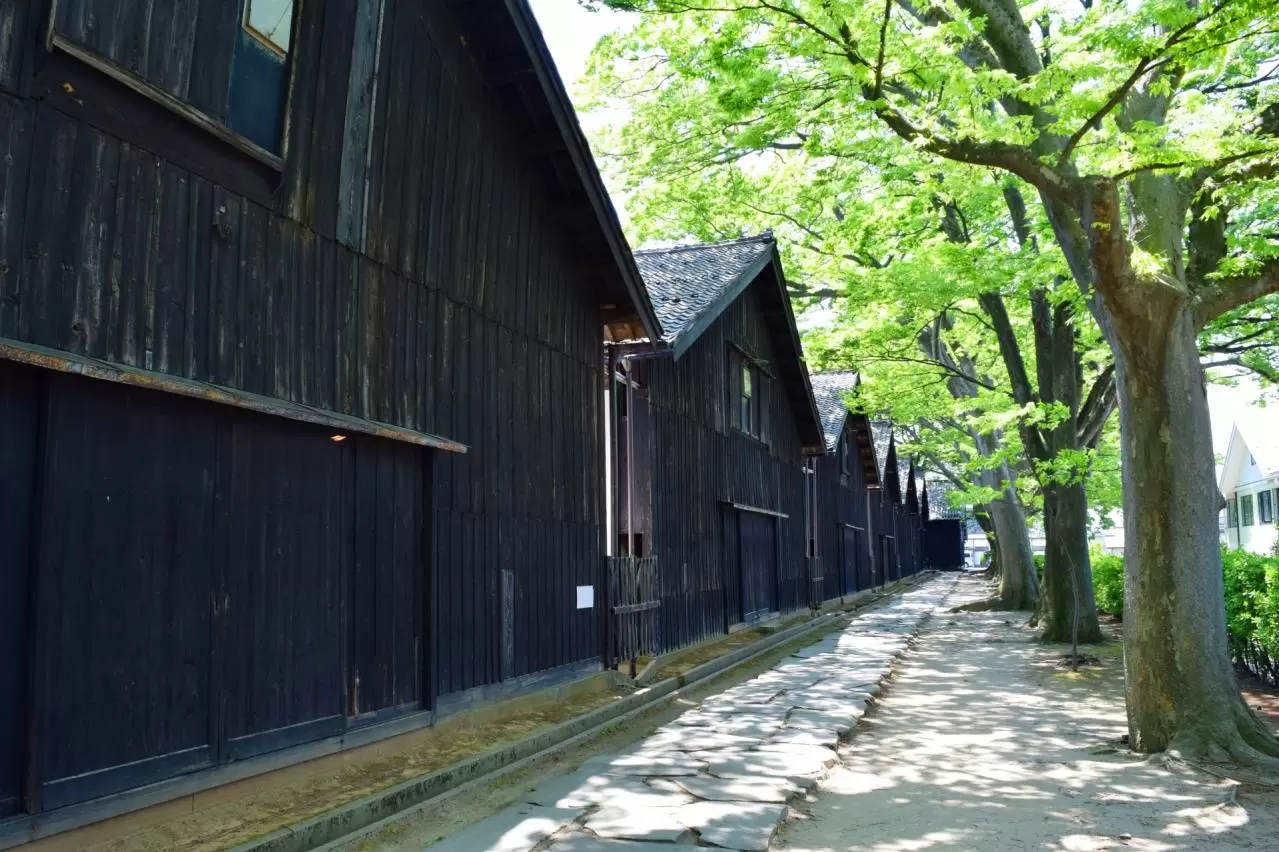
A historic group of white-walled rice warehouses framed by a beautiful row of zelkova trees in Sakata.
Built in the Meiji period, the Sankyo Warehouses stored rice and feature a clever double-roof design and a shady zelkova-lined avenue. Set beside the Mogami River, the site is easy to explore in a short visit, with an information facility where you can learn about Sakata’s history.
The row of Meiji-era rice storehouses evokes Sakata’s distinctive history.
The avenue changes with the seasons, with fresh green leaves and snowy views especially striking.
The peaceful setting beside the Mogami River is easy to enjoy and photograph on a stroll.
After exploring the Sankyo Warehouses, take a relaxed walk nearby to enjoy Sakata’s port-town scenery.
“Sankyo Soko,” located in Sakata City, Yamagata Prefecture, is a rice storage warehouse built in 1893, led by the Sakai family, former lords of the Shonai Domain, as an attached warehouse for the Sakata Rice Exchange. It stands on “Sankyo Island,” between the Mogami River and the Ainiida River, making it an extremely convenient base for loading and unloading rice by boat. The enormous group of white-plastered earthen storehouses remains a symbol of Sakata’s history to this day.
Structure and Features
Sankyo Soko is a low-temperature warehouse designed to protect rice from summer heat and humidity, using a double roof and a row of zelkova trees planted behind it.
Double roof: A space is left between the storehouse and the roof to improve ventilation, allowing heat from the rice bales to escape and blocking heat from direct sunlight.
Zelkova avenue: It serves to shield the warehouses from strong winds from the Sea of Japan and the summer sun, helping maintain a stable temperature inside. Today, more than 100-year-old zelkova trees line the area, offering beautiful seasonal scenery throughout the year.
Originally, 14 buildings were constructed, but 12 remain today. Of these, nine were actually used as rice warehouses until 2022, with a storage capacity of approximately 10,800 tons (180,000 bales).
Historical Value
Sankyo Soko long served as a base for storing and distributing Shonai rice, and “Sankyo rice” was highly regarded as top-quality rice, praised as the best in Japan even in central markets. Strict inspections upon receipt and clever climate-control measures were key factors in preserving the rice’s quality.
Its historical value was recognized when it was designated a National Historic Site on March 26, 2021. Although it ended its 129-year role as a rice warehouse in autumn 2022, the buildings have been preserved and continue to serve as a symbol of Sakata.
Attractions for Visitors
Warehouse Group and Zelkova Avenue
The row of white plaster storehouses with triangular roofs, together with the zelkova avenue stretching behind them, is a popular photogenic landscape. It offers different expressions with each season—fresh greenery, autumn colors, snowy scenery, and evening twilight—and is illuminated at night, creating a magical atmosphere.
Filming Location for Films and TV Dramas
Sankyo Soko is also known as a filming location for NHK’s morning drama “Oshin” and the film “Departures,” attracting many tourists.
Facilities and Exhibits
Shonai Rice Historical Museum (Building No. 1): Exhibited materials and agricultural tools related to rice, but is currently closed for the time being while building safety is being confirmed.
Sakata Yume no Kura (Buildings No. 11 and 12): This facility included a local products center and restaurant, but it closed in February 2025 and relocated to Iroha Kura Park in March of the same year.
Sankyo Soko Information Center (former site of Building No. 12): Opened in April 2025, it introduces the history, architectural value, and highlights of the historic Sankyo Soko through panel exhibits.
Cultural Significance of Sankyo Soko
As a symbol of Shonai, a major rice-producing region, Sankyo Soko enhanced the brand value of Shonai rice and made a significant contribution to the development of the local economy. Its preservation and use also represent an important effort to connect the region’s history and culture to the future.
Sankyo Soko is a symbol of Shonai’s rice culture that has continued since the Meiji era, and it conveys the essence of traditional warehouse architecture shaped by the wisdom of earlier generations. While protected as a National Historic Site, it also captivates many visitors as a tourist destination. The landscape created by the zelkova avenue and the row of white-walled storehouses is truly one of a kind, speaking of Sakata’s history and culture.
The Mogami River in Yamagata Prefecture offers the "Mogamigawa Basho Line Boat Ride," where you can enjoy seasonal scenery throughout the year. This boat ride, like ...
The Uesugi Shrine, established at the ruins of Yonezawa Castle, enshrines Uesugi Kenshin, regarded as the strongest warlord of the Sengoku period. It is known as a p...
Hojusan Risseiji, commonly known as Yamadera, is one of Japan's renowned spiritual sites. Founded in the second year of the Jōgan era (860) by the third head of the ...
Zao Ropeway is located in Zao Onsen, Yamagata City, and offers visitors and outdoor enthusiasts beautiful nature throughout the four seasons. It starts from the Zao ...
The Haguro Five-Story Pagoda is a historic structure considered to be the oldest in the Tohoku region, located at the entrance to the "Ichi no Saka" on the approach ...
The "Sake Brewing Museum Tokko no Sakagura" in Yonezawa City is located in an environment well-suited for sake brewing, blessed with abundant water and high-quality ...