Art across the city
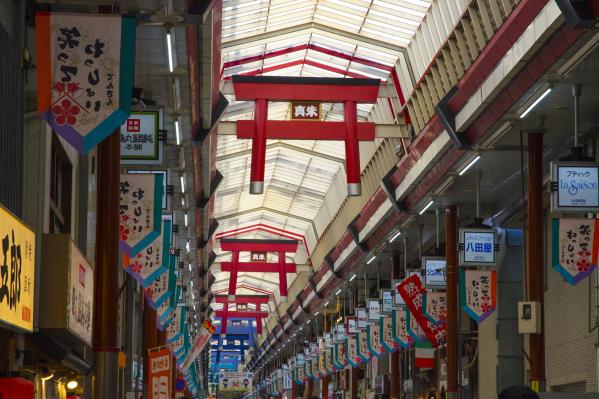
The museum connects with Government Office Street, making the walk itself part of the art experience.
AI Summary
This is an AI-generated summary. Please check the official information for opening hours, fees, and closed days.
Discover contemporary art as you explore the city, with plenty of striking photo opportunities and surprises along the way.
Towada Art Center is a contemporary art museum designed to be enjoyed as part of the city, centered around Government Office Street. Its memorable permanent works by artists such as Yayoi Kusama and Ron Mueck can be viewed both indoors and outdoors. It’s approachable even if you don’t usually visit museums, though it’s best to allow extra time if you want to take in the works at a leisurely pace.
The museum connects with Government Office Street, making the walk itself part of the art experience.
Large-scale pieces by artists such as Yayoi Kusama and Ron Mueck are among the highlights.
Works are displayed outside as well as in the galleries, adding variety even to a shorter visit.
After visiting the museum, take a stroll along Government Office Street to enjoy the art in the surrounding area as well.
Towada Art Center opened in April 2008 as the core facility of “Arts Towada,” an art-based urban revitalization project promoted by Towada City in Aomori Prefecture. Facing “Government Street,” the city’s symbolic avenue, the museum offers visitors a new art experience as part of a unique initiative that envisions the entire city as a museum.
Features of the Architecture and Layout
The building was designed by internationally acclaimed architect Ryue Nishizawa. In Towada Art Center’s configuration, each artwork is given its own independent exhibition room, and the rooms are connected by glass-walled corridors. This layout gives the museum the appearance of a streetscape, allowing visitors to enjoy a distinctive experience of “walking through the city as they explore art.”
Some exhibition rooms feature large glass openings, creating a sense of openness as if the works are displayed toward the town. With artworks installed both inside and outside the museum, the building, the city, art, and everyday life blend naturally into a single space.
Permanent Exhibitions and Artists
Large three-dimensional works by contemporary artists active in Japan and abroad are permanently displayed inside the museum and in the “Art Plaza” across the street, leaving a strong impression on visitors. Notable artists and works include the following:
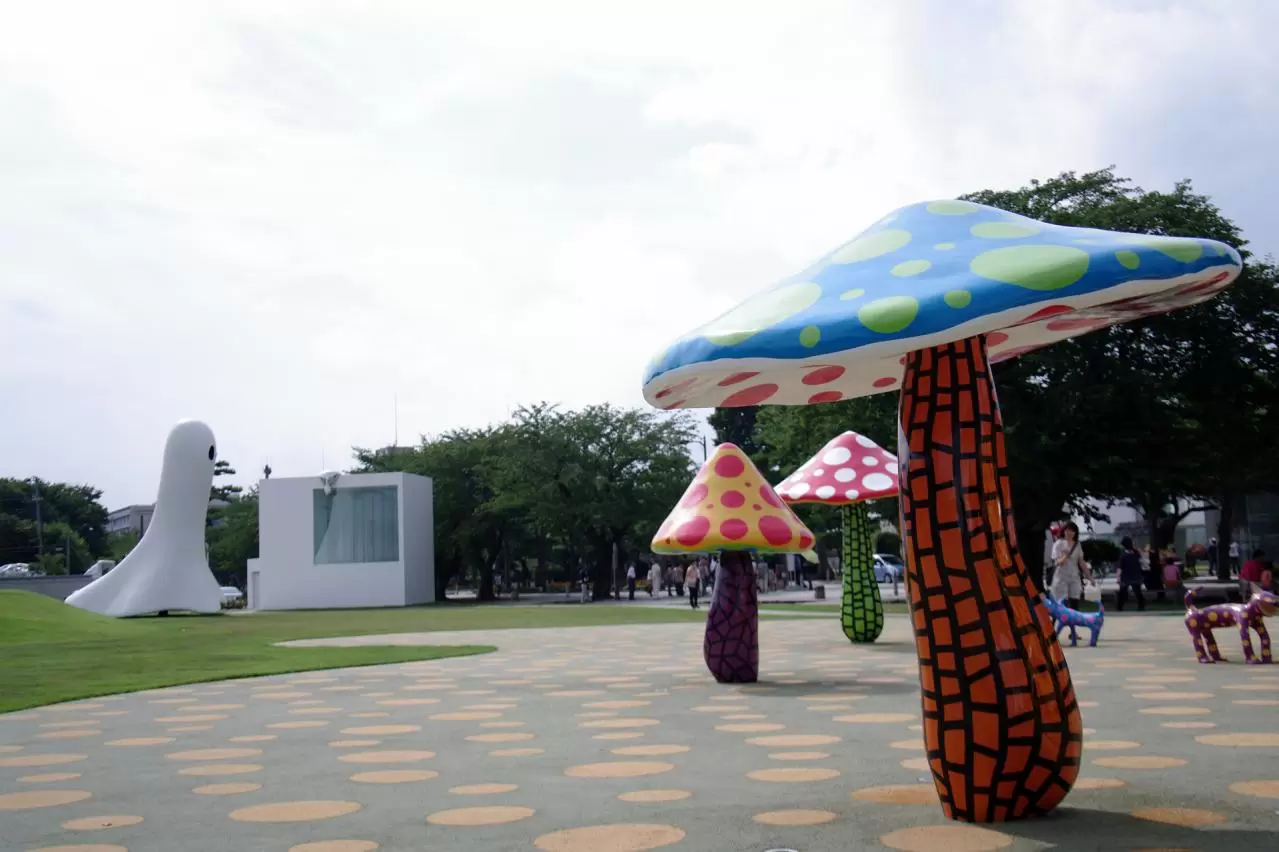
Yayoi Kusama, Love Forever, Singing in Towada
A work characterized by vivid, pop-style polka dots, it has become an iconic symbol of the museum.
Ron Mueck, Standing Woman
A larger-than-life human sculpture with astonishingly realistic texture and presence that overwhelms viewers.
Yoshitomo Nara, Yorosikugirl 2012
A child figure with an expressionless yet emotionally resonant face that evokes a unique sense of familiarity.
Chiharu Shiota, Reflection of Time and Space
An installation work composed as if weaving the space with threads.
Kohei Nawa, PixCell-Deer #52
A taxidermied deer covered with transparent spheres, questioning the relationship between matter and image.
Leandro Erlich, Building—Buenos Aires
An experiential installation that creates visual illusion using mirrors.
These works are not confined to the exhibition rooms; they also extend into the courtyard, rooftop, stairwells, and outdoor spaces in front of the museum, offering new discoveries with every visit.
The Arts Towada Project
“Arts Towada” is a community-building project that treats Government Street as a “museum in its entirety,” with the art center as its core and artworks distributed throughout the city center.
The project was born out of the challenge of urban hollowing caused by government reorganization and the consolidation or abolition of public offices, which left many vacant lots in the city center. By turning that problem on its head, the initiative began with the idea of bringing new value and vitality to the city through art.
In 2010, the Art Plaza was developed, and in 2014 the project area was expanded to include the central shopping street. Throughout the city, “street furniture” sculptures that also function as benches, along with public art that brings comfort and delight to residents and visitors, are placed in various locations.
Mission and Vision of the Museum
Towada Art Center is not merely a place to display artworks; it is committed to enriching society and people’s future through art. It is managed under the following principles:
To present the finest works of contemporary art and share Towada City with the world as an attractive cultural city.
To encourage exchange with the local community and the interaction of creativity, bringing intellectual stimulation to the economy and daily life.
To offer the experience of the entire city becoming one museum, and to infuse art into everyday life.
Initiatives for Sustainability
Based on the SDGs and international guidelines, the museum is also actively working to reduce its environmental impact.
Since 2021, the museum has converted its lighting to LED to promote energy savings.
Special exhibitions are limited to twice a year to reduce energy consumption associated with exhibition changes and artwork transportation.
In anticipation of certification under GSTC (Global Sustainable Tourism Council), the international standard for sustainable tourism, the museum is also collaborating with local organizations.
As shown by data indicating that about 70 percent of visitors come from outside Aomori Prefecture, the museum also plays an important role as a tourism hub for Towada City and contributes to revitalizing the entire region.
Towada Art Center is a rare contemporary art museum in Japan that embodies the philosophy of “changing a city through art.” Rather than being merely a place to view artworks, it offers visitors surprise and discovery, while creating opportunities to encounter the region’s nature, history, and culture. As a creative space where art, the city, and people come together as one, it continues to evolve today.
Sukayu Onsen is a traditional hot spring area with a history of about 300 years, located on the slopes of Mount Hakkoda. It is particularly famous for its large mixe...
The Oirase Stream is a two-star tourist attraction in the Michelin Green Guide, featuring a breathtaking 14 km stretch of stream. Everywhere you walk, you are captiv...
On the west coast of the Shimokita Peninsula, in Sai Village, lies a breathtaking spot known as "Fukue Cape." A series of white-green odd-shaped rocks stretch for ab...
The Hakkoda Ropeway is a stunning spot to enjoy the magnificent nature of the Hakkoda Mountains. Since its opening in October 1968, it continues to attract visitors ...
Lake Towada is a magnificent and beautiful caldera lake, featuring an expansive panorama that reflects the seasonal landscapes like a mirror on its tranquil surface....
The Aomori Museum of Art features a design that merges Jomon and modern styles with its pure white exterior. Designed by architect Jun Aoki, it draws inspiration fro...
Hirosaki City Apple Park spans approximately 9.7 hectares and features 80 varieties of apple trees with a total of 2,300 trees. From early August to mid-November, vi...
Tsugaru Han Neputa Village is a facility where you can fully experience Tsugaru culture, including the attractions of the Hirosaki Neputa Festival. It features impre...


![【青森県 十和田市】十和田市現代美術館さんぽ [4K]](https://i.ytimg.com/vi/wGY0O6eFD4s/mqdefault.jpg)