A National Treasure castle keep
One of only five castle keeps in Japan designated as National Treasures, with significant historical value.
AI Summary
This is an AI-generated summary. Please check the official information for opening hours, fees, and closed days.
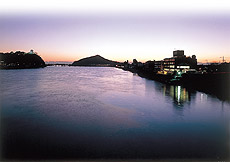
One of Japan’s oldest surviving wooden castle keeps, Inuyama Castle is known for its views over the Kiso River.
One of only five castle keeps in Japan designated as National Treasures, Inuyama Castle has great historical value as a surviving wooden structure. Explore its historic interior, then take in the Kiso River and surrounding scenery from the top floor. It also pairs well with a walk through the old castle town.
One of only five castle keeps in Japan designated as National Treasures, with significant historical value.
Enjoy open views across the Kiso River and the surrounding town.
Combine your visit with a stroll through the historic streets nearby for an easy half-day outing.
After visiting Inuyama Castle, stroll through the old castle town before continuing to other nearby sights for a relaxed history-focused outing.
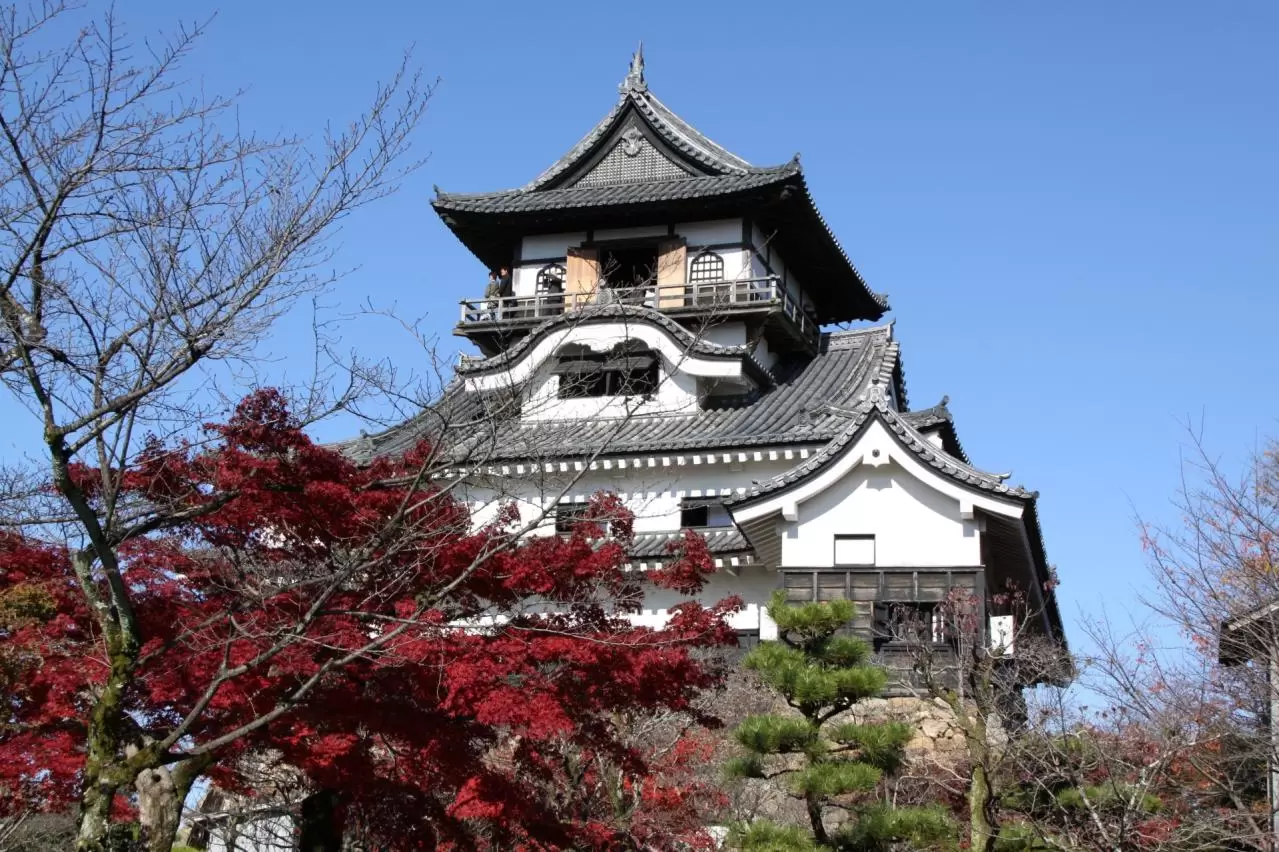
Inuyama Castle, located in Inuyama City, Aichi Prefecture, is one of only five national treasure castle keeps in Japan. It is also counted among the 12 surviving original castle keeps and is highly valued for its historical importance as the oldest surviving wooden keep in Japan.
Also known as “Hakutei Castle,” its name is said to have been inspired by the Tang poem “Early Departure from Baidi City” by Li Bai. During the Edo period, the Confucian scholar Ogyu Sorai likened the appearance of Inuyama Castle, standing along the Kiso River, to Baidi City in China.
Because Inuyama Castle was built on a small hill along the Kiso River, the view from the top floor of the keep stretches across the Kiso River, Mount Ontake, Gifu Castle, and even the skyscrapers of Nagoya, offering a magnificent panorama of the Nobi Plain.
2. Castle Construction and Sengoku-Era History — A Turbulent Sequence of Lords Beginning with the Oda Clan
◆ The Castle’s Founding by Oda Nobuyasu
The origins of Inuyama Castle date back to the Muromachi period. The site originally had Kinoshita Castle, and in the Tenmon era (the first half of the 16th century), it is said to have been developed by Oda Nobuyasu, an uncle of Oda Nobunaga.
Nobuyasu died in battle while taking part in an attack on Mino Province, after which his son, Oda Nobukiyo, became the lord of the castle.
◆ Conflict Within the Oda Clan
Oda Nobukiyo came into conflict with Oda Nobunaga over territory, and eventually Inuyama Castle fell. After that, Ikeda Tsuneoki, a retainer who pledged loyalty to Nobunaga, became the castle lord.
◆ Confusion After the Honnō-ji Incident
When Oda Nobunaga was killed in the Honnō-ji Incident in 1582, Inuyama Castle became the residence of Nakagawa Sadanari, a retainer of Oda Nobukatsu. However, while opposing Toyotomi Hideyoshi, the castle was seized in a surprise attack by Ikeda Tsuneoki.
This event is known as a prelude to the Battle of Komaki and Nagakute, fought between the forces of Toyotomi Hideyoshi and the allied forces of Oda Nobukatsu and Tokugawa Ieyasu. The battle lasted about eight months and ended with a truce. Inuyama Castle was then returned to the Oda Nobukatsu side, and Nakagawa Sadanari again became its lord.
◆ Frequent Changes of Lords Under the Toyotomi Regime
Later, Oda Nobukatsu was exiled for disobeying Toyotomi Hideyoshi’s orders, and the lords of Inuyama Castle changed frequently. Located at a strategic point on the border between Owari and Mino, Inuyama Castle played an important role throughout the Sengoku period as a base for territorial control.
3. After Sekigahara and the Edo Period — Inuyama Castle under the Naruse Family
After the Battle of Sekigahara, around 1601 (Keicho 6), the castle grounds of the present-day Inuyama Castle are said to have been developed by Ogasawara Yoshitsugu.
◆ The Naruse Family’s Rule
From 1617 (Genna 3), Naruse Masanari, a chief retainer of the Owari domain, became lord of Inuyama Castle, and the Naruse family continued to serve as castle lords until the end of the Edo period. Throughout the Edo period, Inuyama Castle was carefully preserved and handed down by the Naruse family.
◆ Crisis and Restoration from the Meiji Period Onward
After the Meiji Restoration, Inuyama Castle came under the ownership of Aichi Prefecture, and many structures other than the keep were dismantled. Furthermore, in 1891 (Meiji 24), the Nobi Earthquake caused severe damage, and the keep was partially destroyed.
However, on the condition that it be repaired, the castle was returned free of charge to the Naruse family, and the keep was carefully restored. Later, in 1952 (Showa 27), it was designated a National Treasure, once again recognized for its historical value.
◆ Japan’s Only Privately Owned Castle
Inuyama Castle was long managed as the private castle of the Naruse family and was known as “the only privately owned castle in Japan.” In 2004 (Heisei 16), it was transferred to the Inuyama Castle Hakutei Bunko Public Interest Foundation, and it continues to be preserved under public management today.
4. The Structure and Features of Inuyama Castle — The Charm of a Watchtower-Style Keep
The keep of Inuyama Castle is a watchtower-style tenshu with three stories, four floors, and two basement levels, and it is believed to have taken its present form from the late 16th to early 17th century.
◆ First and Second Floors of the Keep
On the first floor, four rooms are arranged in the center, surrounded by passageways known as mushabashiri.
The second floor contains the “armory room,” with weapon racks installed, and it also has mushabashiri. This rational structure, designed with combat in mind, remains strongly evident today.
◆ The Appeal of the Top Floor
After passing through the attic level on the third floor, visitors reach the fourth floor, the top level. Here, there is a corridor called a mawarien, and stepping outside allows a 360-degree view. On a clear day, one can experience the scenery of the Nobi Plain at the same perspective once enjoyed by the warlords.
5. Exterior Features — A Beautiful Keep of Dignified Elegance
The exterior of Inuyama Castle’s keep is also notable for its design.
◆ Roof Ornamentation
Curved karahafu gables are placed on the north and south sides, while triangular irimoya gables are arranged on the east and west sides, creating a refined and dignified appearance.
◆ Exterior Wall Construction
The first and second floors use okabe-style construction, in which the pillars are not visible from the outside, while the top floor uses shinkabe-style construction, which exposes the pillars and beams. This shift emphasizes the prestige of the top floor.
◆ Kato Windows
The outer walls of the top floor feature katomado windows. These are not opening windows but decorative ones, serving to enhance the elegance of the keep.
6. The Sacred Tree Protecting Inuyama Castle — Osugi-sama
On the east side of the keep stands a sacred tree known as “Osugi-sama.” It was once a giant cedar taller than the keep itself and was believed to protect the castle from lightning.
Although the cedar died around 1965, it is still venerated as a sacred tree, wrapped with a sacred rope and carefully enshrined.
7. Seasonal Beauty — A Famous Castle Surrounded by Cherry Blossoms and Autumn Leaves
In spring, around 400 cherry trees bloom in full splendor along the Kiso River area centered on Inuyama Castle, allowing visitors to enjoy the beautiful scenery created by the castle and the river.
In autumn, in addition to the colorful foliage in the plaza in front of the keep, the stone-paved approach to the castle is enveloped in arches of autumn leaves, captivating all who visit.
8. The Castle Town and Sogamae — A Historic Streetscape Alive with History
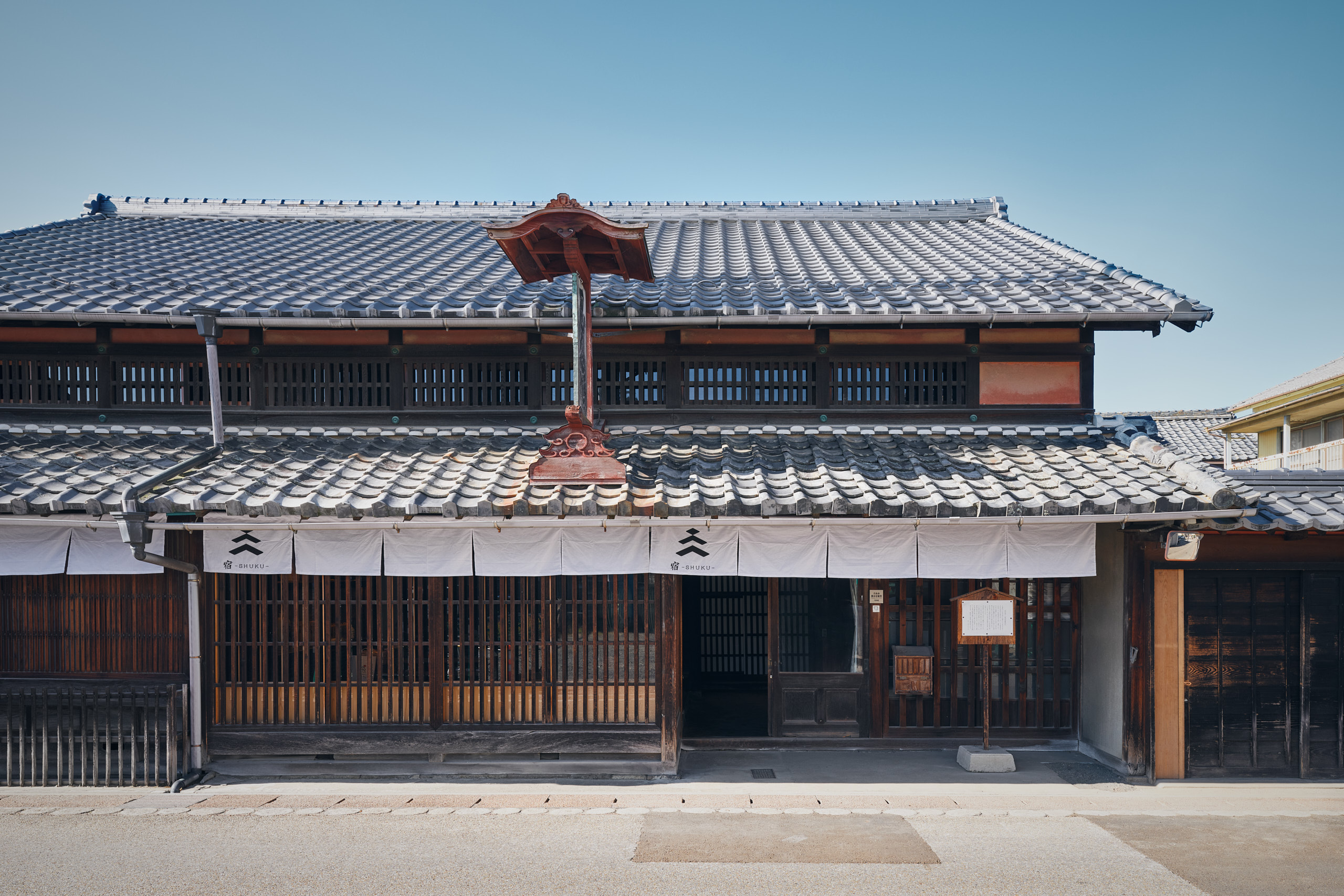
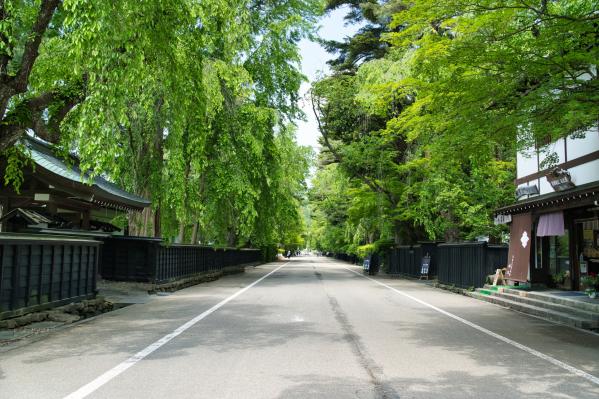
Inuyama Castle has a “sogamae” castle structure integrated with the castle town, and in the past the entire castle town was surrounded by a moat. Even today, the castle town retains old streetscapes, allowing visitors to feel the flow of history through a leisurely walk.
There are also many nearby tourist attractions such as Meiji Mura, and Inuyama Castle is beloved by many as a place where people can experience history and culture up close.
"Flight of Dreams" is a unique commercial complex located at Chubu Centrair International Airport in Japan. Its main attraction is the first Boeing 787 (ZA001), whic...
Laguna Ten Bosch is a Japanese integrated resort located in the naturally rich Mikawa Bay. It features the theme park "Lagunasia," shopping and dining facilities at ...
Okazaki Castle is a historic landmark located in Okazaki City, Aichi Prefecture, Japan, and is especially known as the birthplace of Tokugawa Ieyasu. According to le...
Tokugawaen is a Japanese garden designed in the style of a pond and garden stroll, located at the site of the Ozoneshi residence built by Mitsutomo, the second lord ...
The Tokugawa Art Museum is an art museum located in Nagoya City that broadly introduces Japanese history and culture. It opened in 1935 and showcases over 10,000 val...
Nagoya Port Aquarium is a popular tourist destination located at the Nagoya Port Garden Wharf, divided into two areas: the South Building and the North Building. The...
Osu Shopping District is located on the south side of the bustling Sakae area in Nagoya city and is a vibrant “melting pot” of diverse industries, cultures, and even...


![[アラフィフ女子ソロキャンプ] おすすめ観光スポット😊国宝犬山城と城下町🍡](https://i.ytimg.com/vi/OwH_l1vr5Vg/mqdefault.jpg)
![[愛知観光]国宝 犬山城](https://i.ytimg.com/vi/YM3EMgYxp10/mqdefault.jpg)