Miho Museum
Miho Museum Movies
![[vlog]MIHO MUSEUMでお花見🌸│滋賀県信楽町でたくさんのタヌキさんに出会えた日🍃](https://i.ytimg.com/vi/079zfcD6goE/mqdefault.jpg)


Basic Information
- Spot Name
- Miho Museum
- Location
- 〒529-1814 300, Momotani, Taashiro, Shigaraki-cho, Koka City
- Access
- By JR Biwako Line, get off at "Ishiyama," then take a bus for 50 minutes to Miho Museum (operated by Teisan Kōnan Transportation).
15 minutes from the Shin-Meishin Expressway "Shigaraki IC," 20 minutes from "Kusatsu-Tatagami IC," 30 minutes from Meishin Expressway "Ritto IC" and Keiji Bypass "Seta-Higashi IC," and 35 minutes from Meihan National Route "Mibuno IC." - Parking
- Approximately 300 cars.
- Business Hours
- 10:00 AM - 5:00 PM (Last admission until 4:00 PM)
- Regular Holiday
- Closed on Mondays during the opening period; if it coincides with a public holiday, it will be closed on the following weekday; closed outside the opening period.
- Fees
- Adults: 1,300 yen, High school and university students: 1,000 yen, Free for junior high school students and below.
- Contact Information
- Phone Number: 0748-82-3411
- Official Website
Map
Detailed Information
MIHO MUSEUM is an art museum located in the lush mountains of Shigaraki in southern Shiga Prefecture. It opened in November 1997 and was founded based on the philosophy of its creator, Mihoko Koyama, who hoped to make the world a more beautiful, peaceful, and enjoyable place through art.
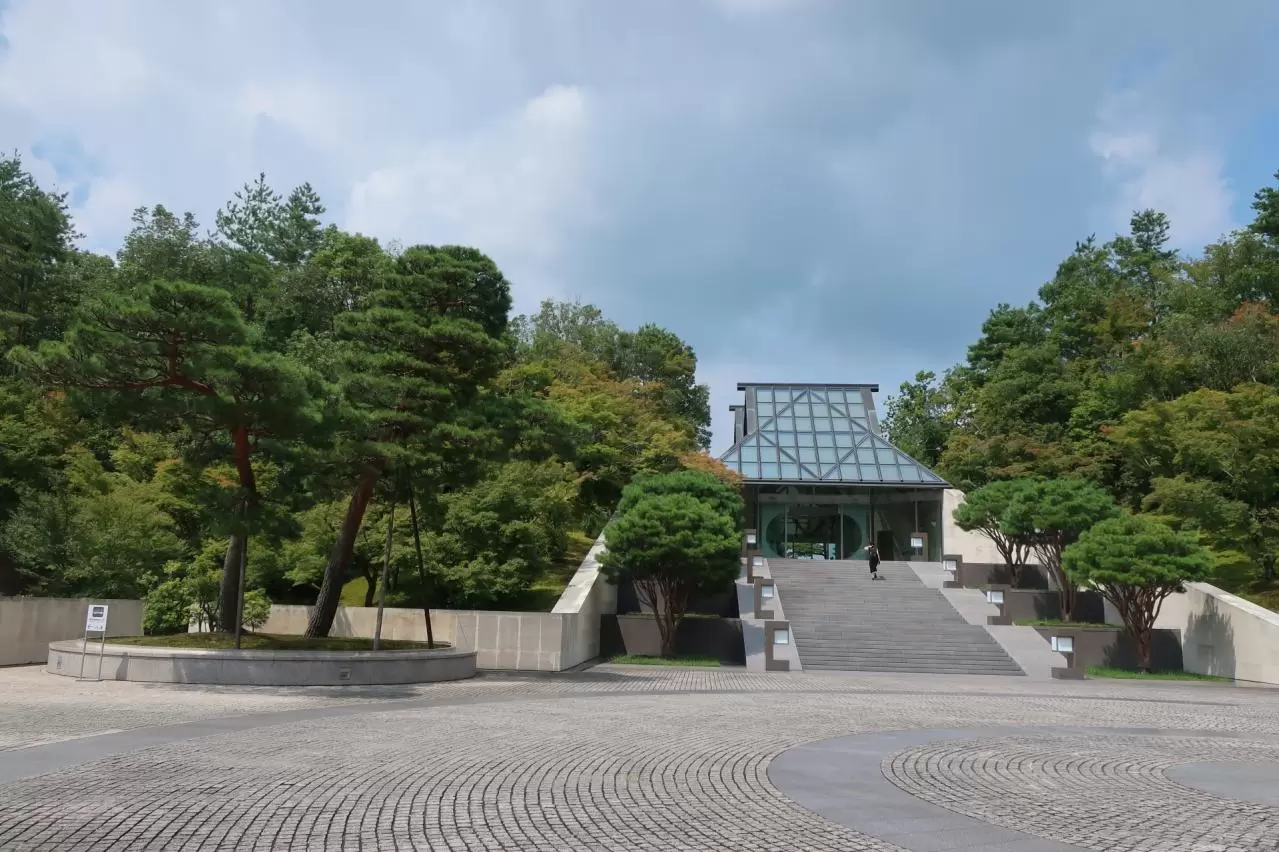
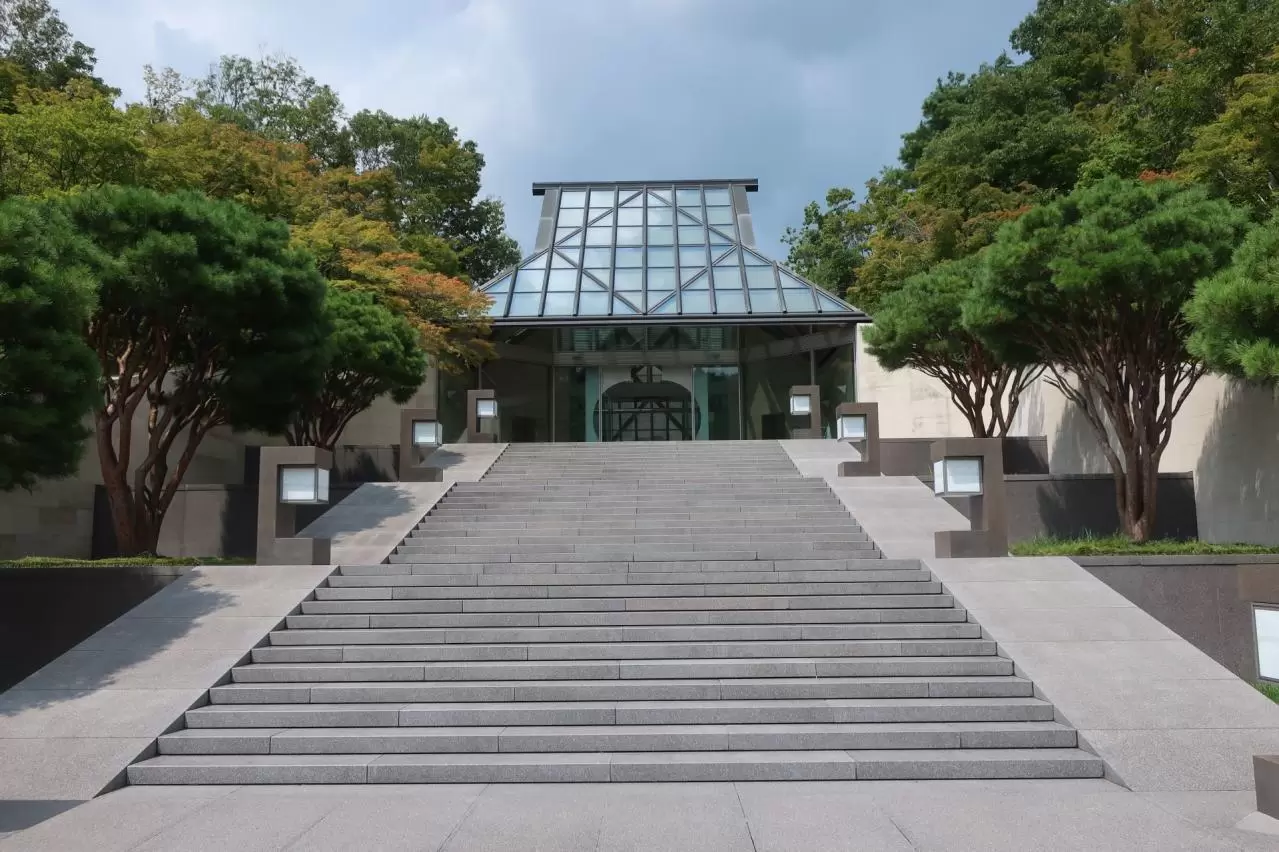
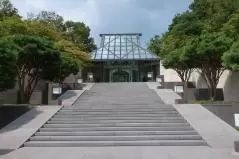
The museum’s greatest feature is its design by the world-renowned architect I.M. Pei. Known for works such as the glass pyramid at the Louvre Museum in France, MIHO MUSEUM is also one of the few buildings he designed in Japan. Its design is inspired by “Tōgenkyō,” the utopian paradise described in the Chinese classic The Peach Blossom Spring, and reflects concepts such as harmony between nature, architecture, and artworks, as well as a fusion of East and West.
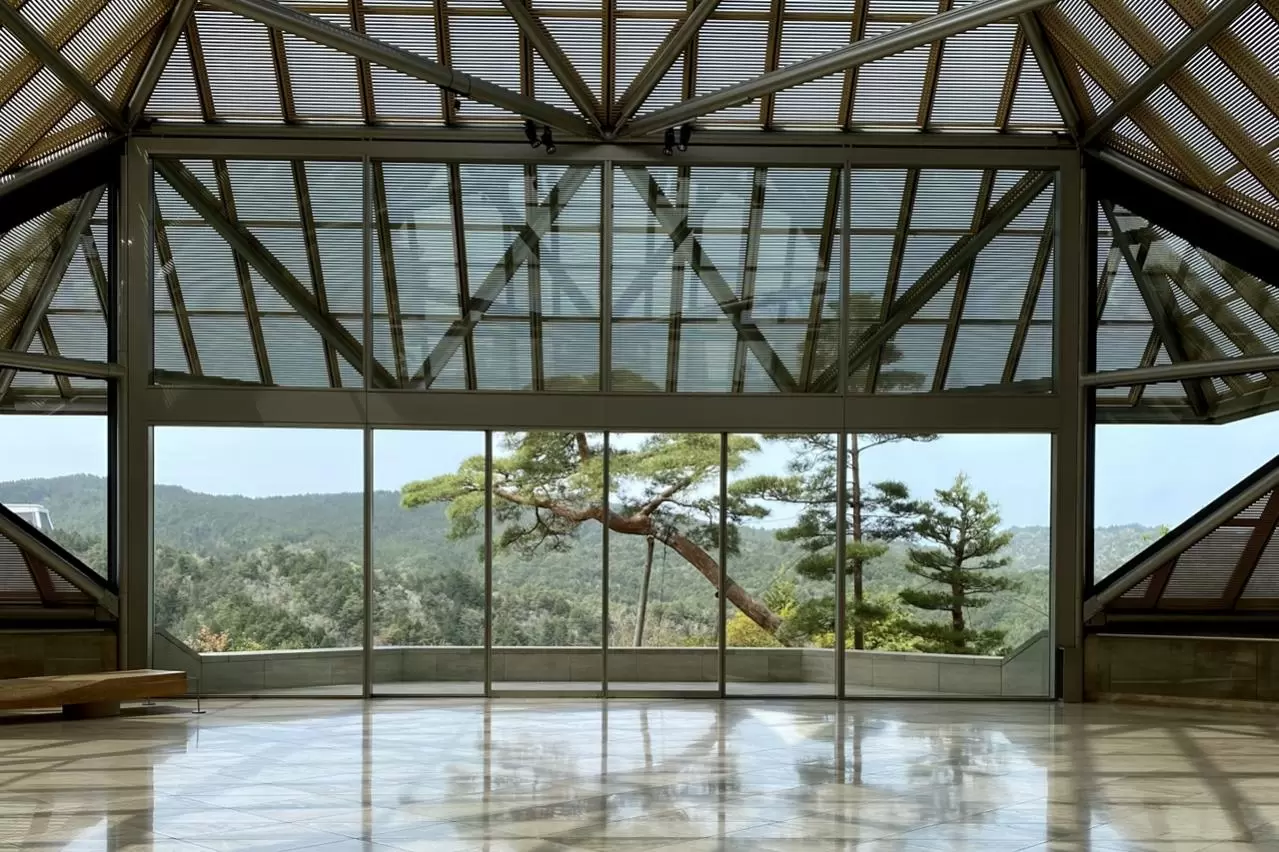
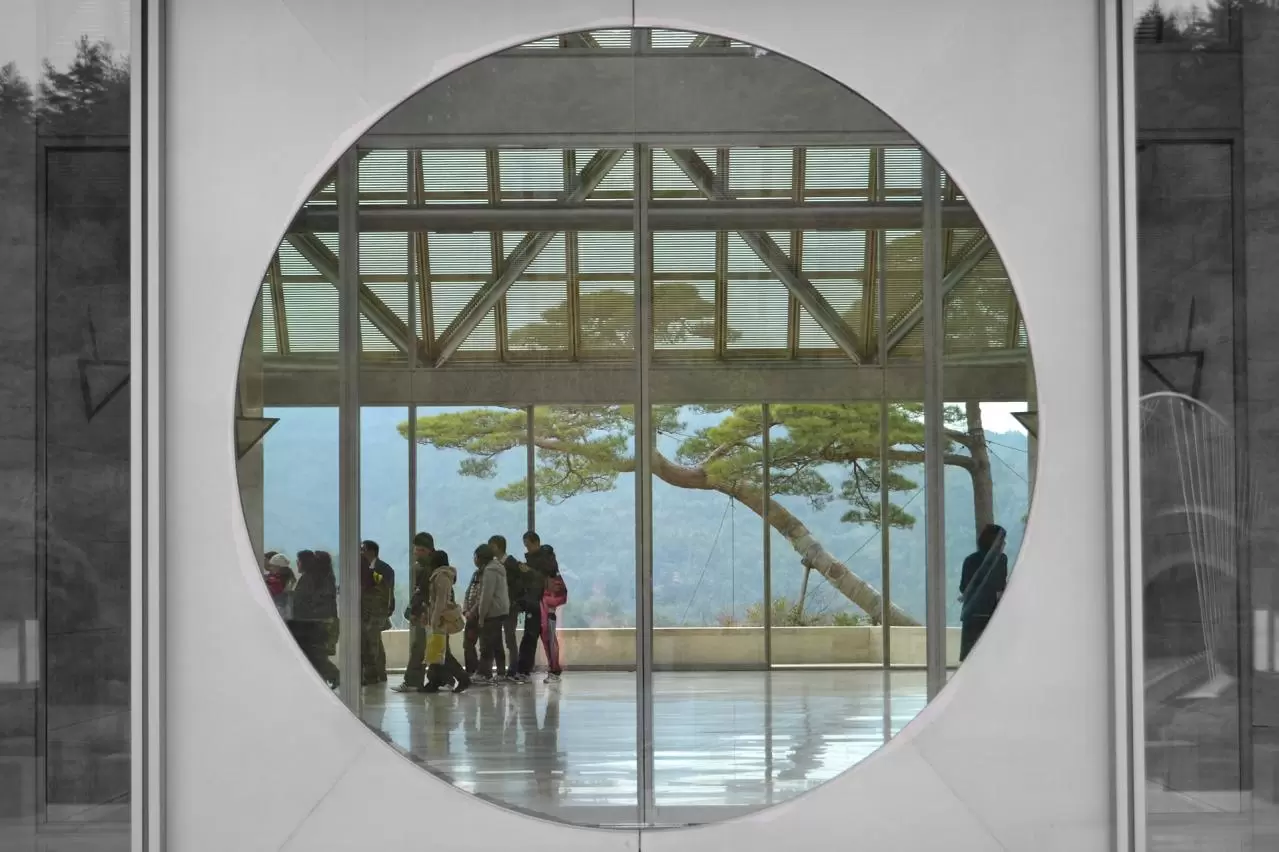
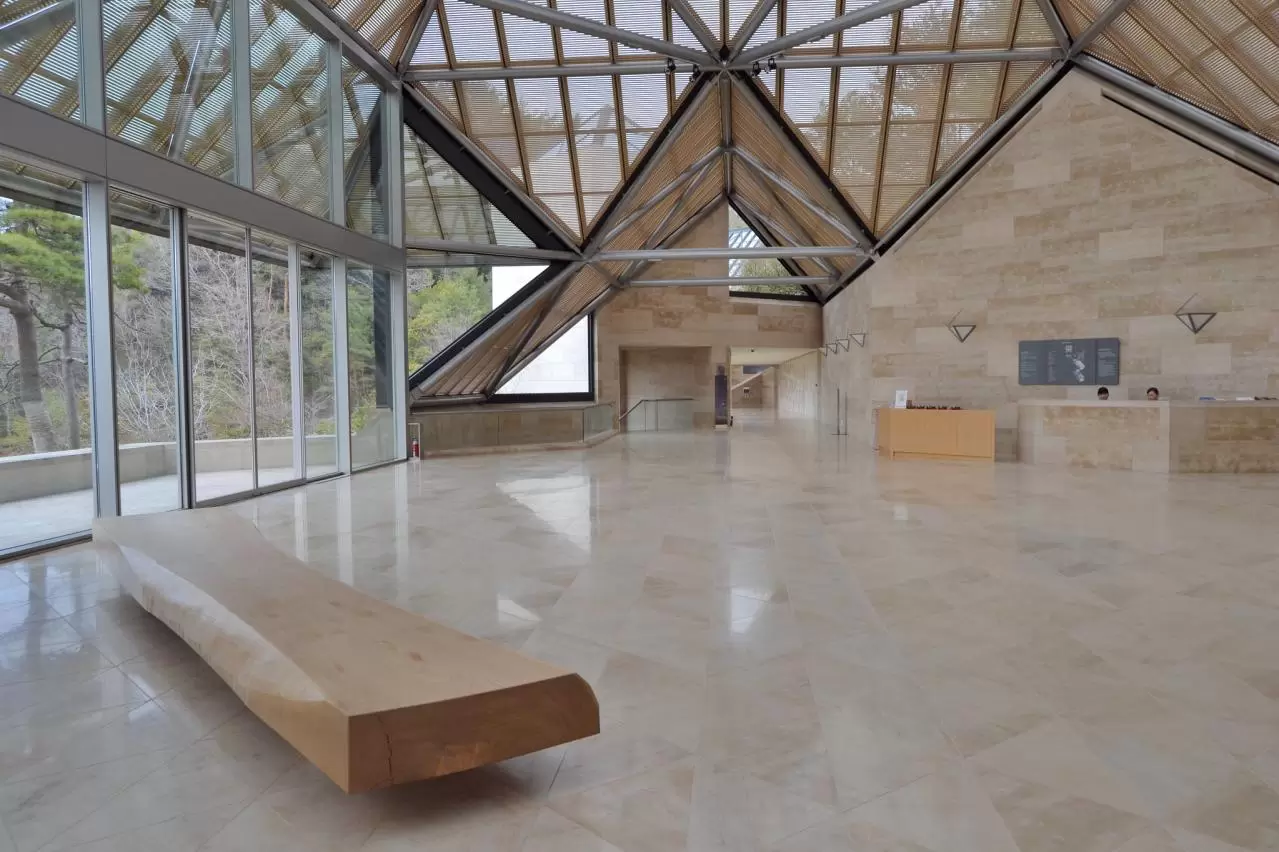
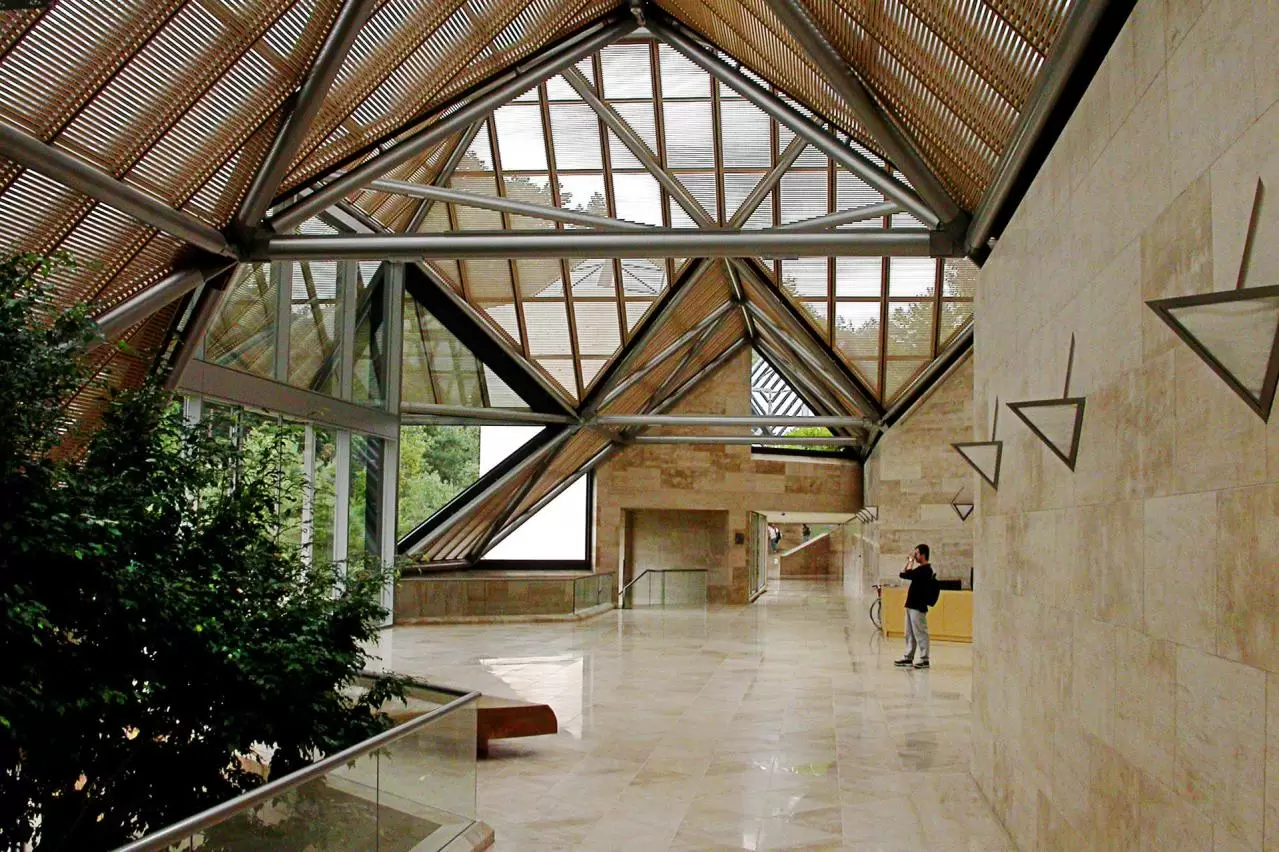
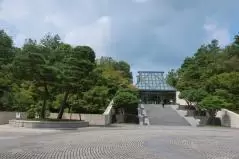
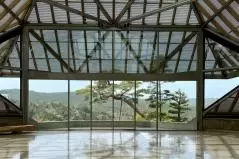
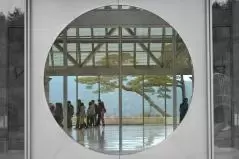
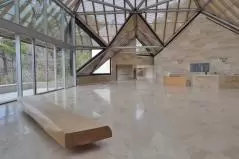
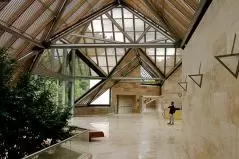
The building was carefully designed to blend into the surrounding natural environment, with more than 80 percent of its total volume buried underground. As a result, its exterior does not disturb the mountain scenery and instead seems to merge into nature. Inside, the entrance welcomes visitors with natural light pouring in through the glass roof and a sweeping panoramic view of the mountains, creating an open and dreamlike atmosphere.
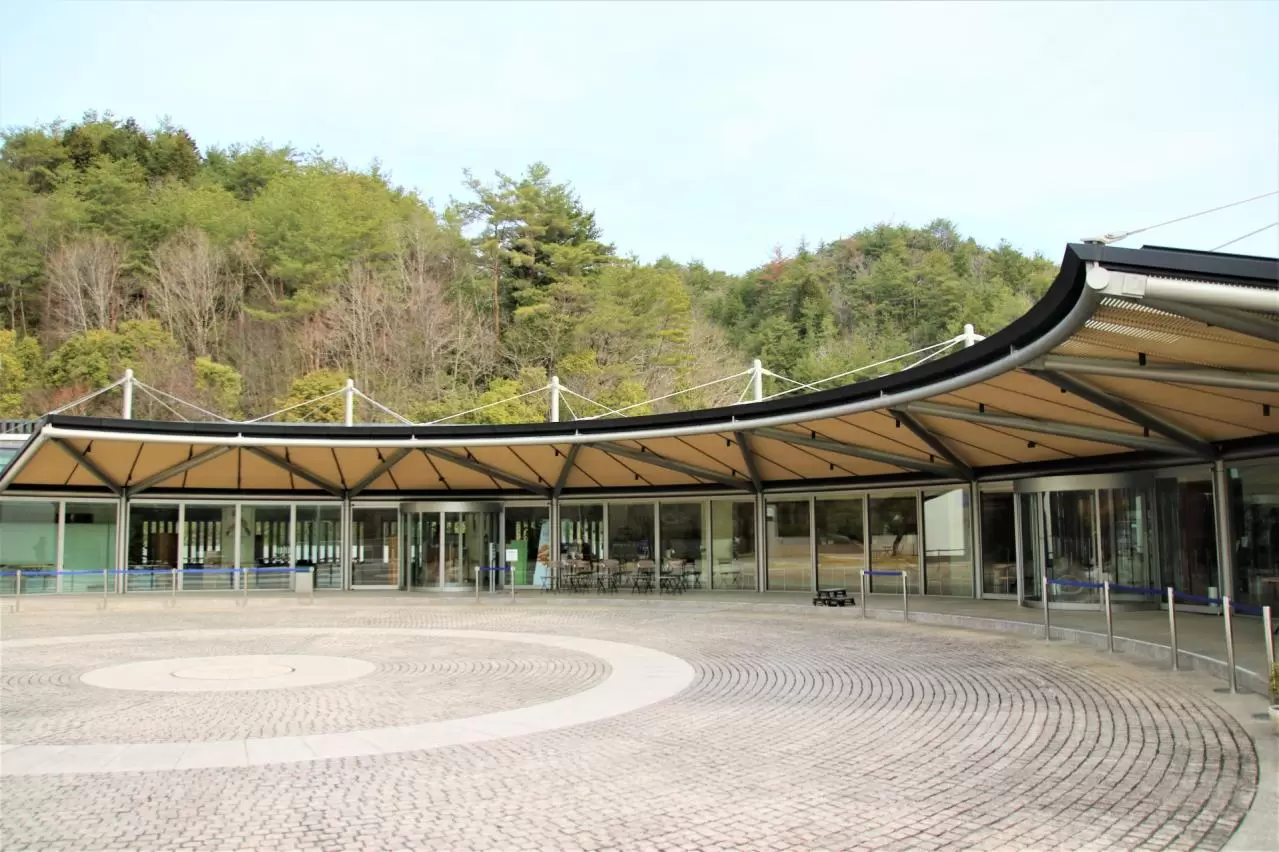
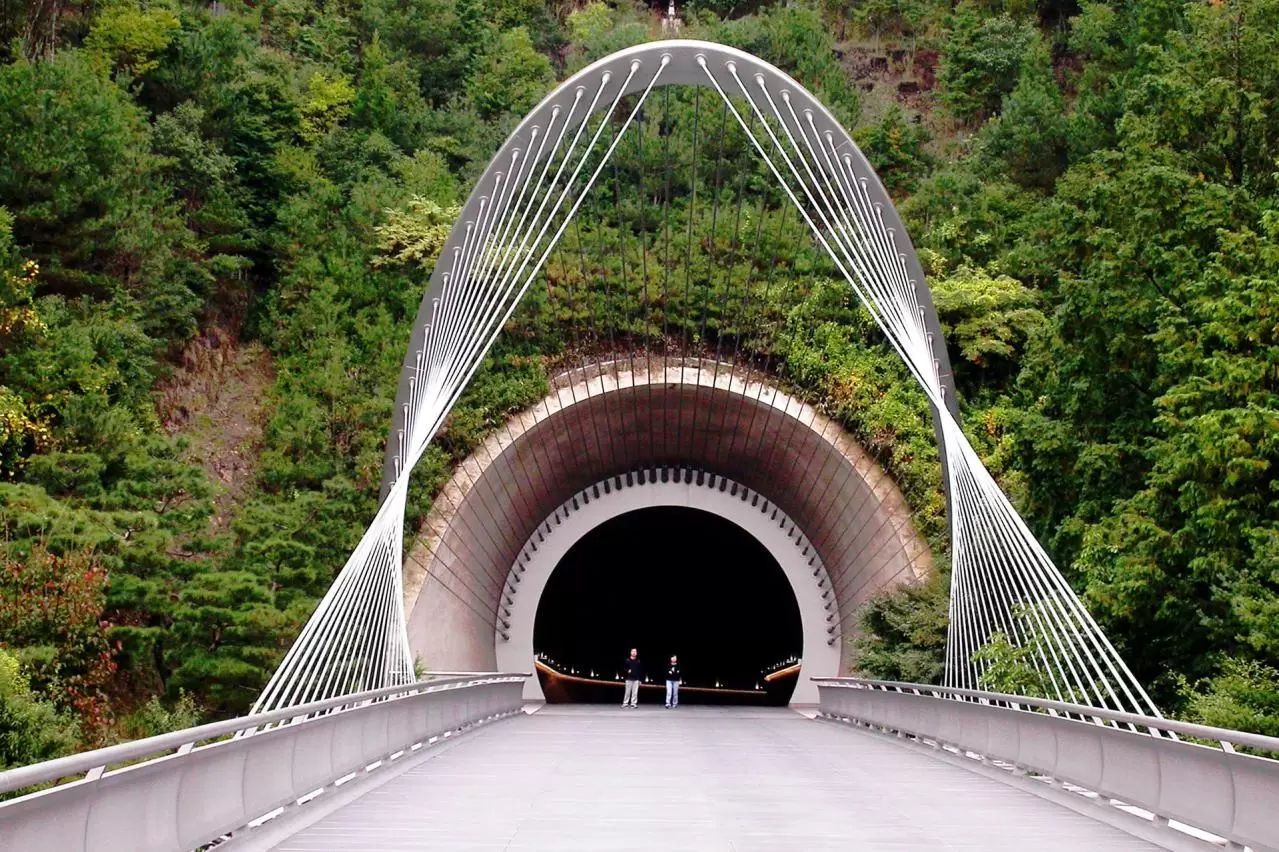
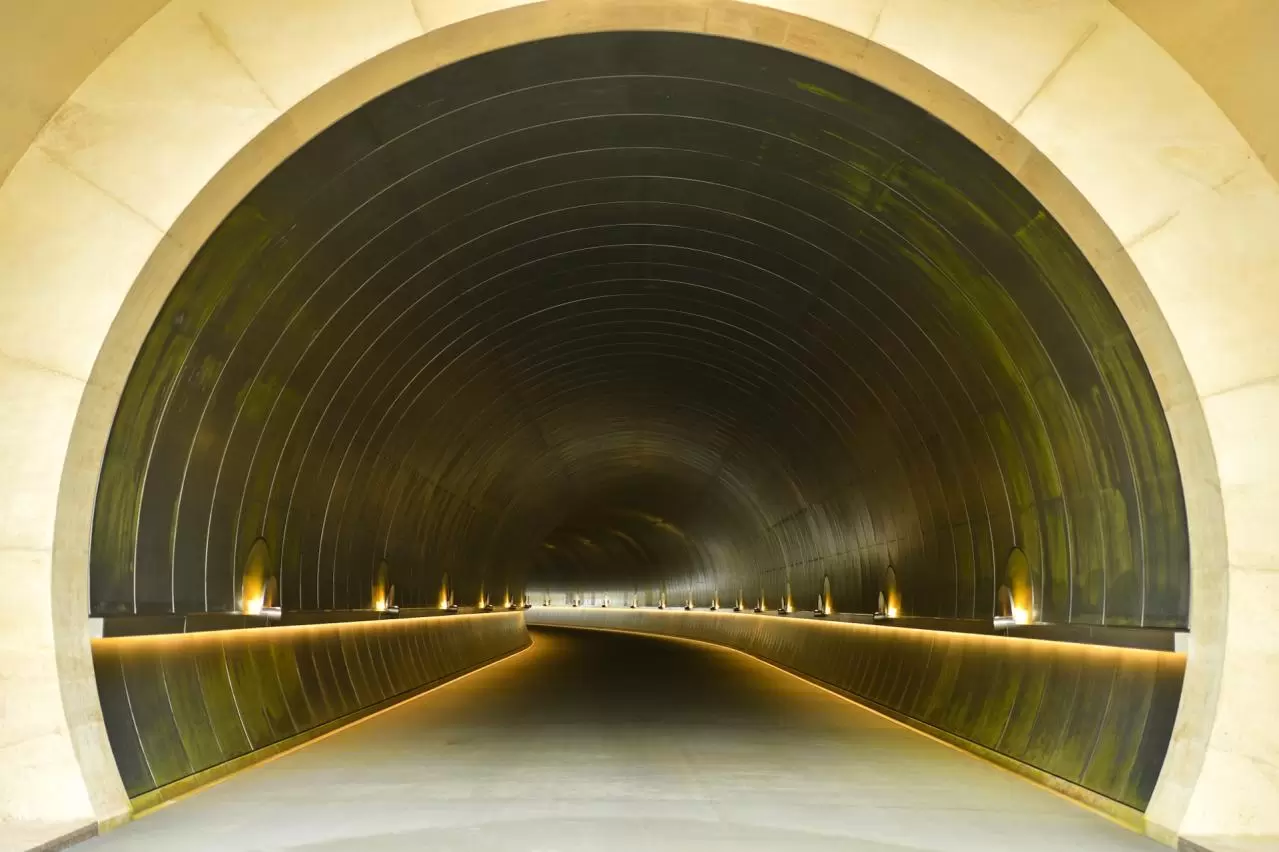
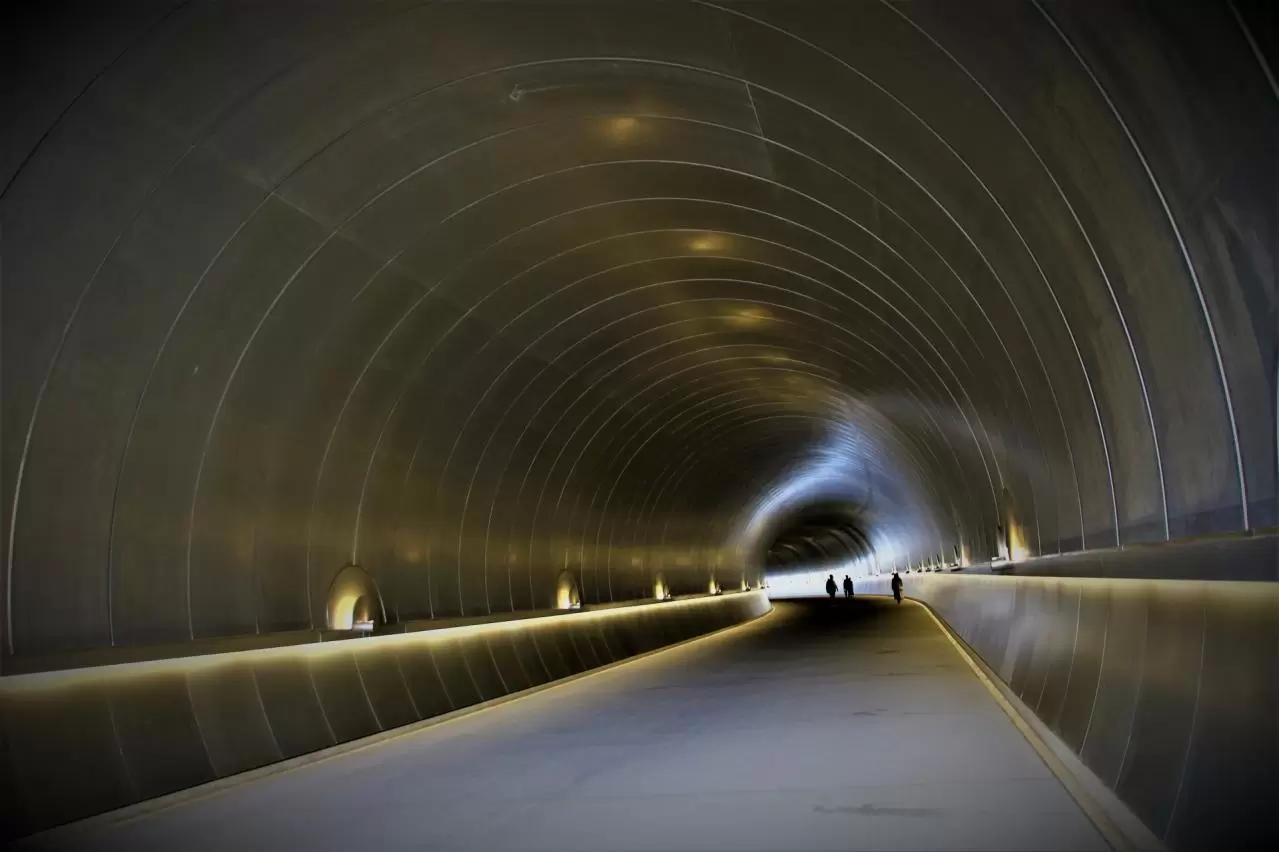
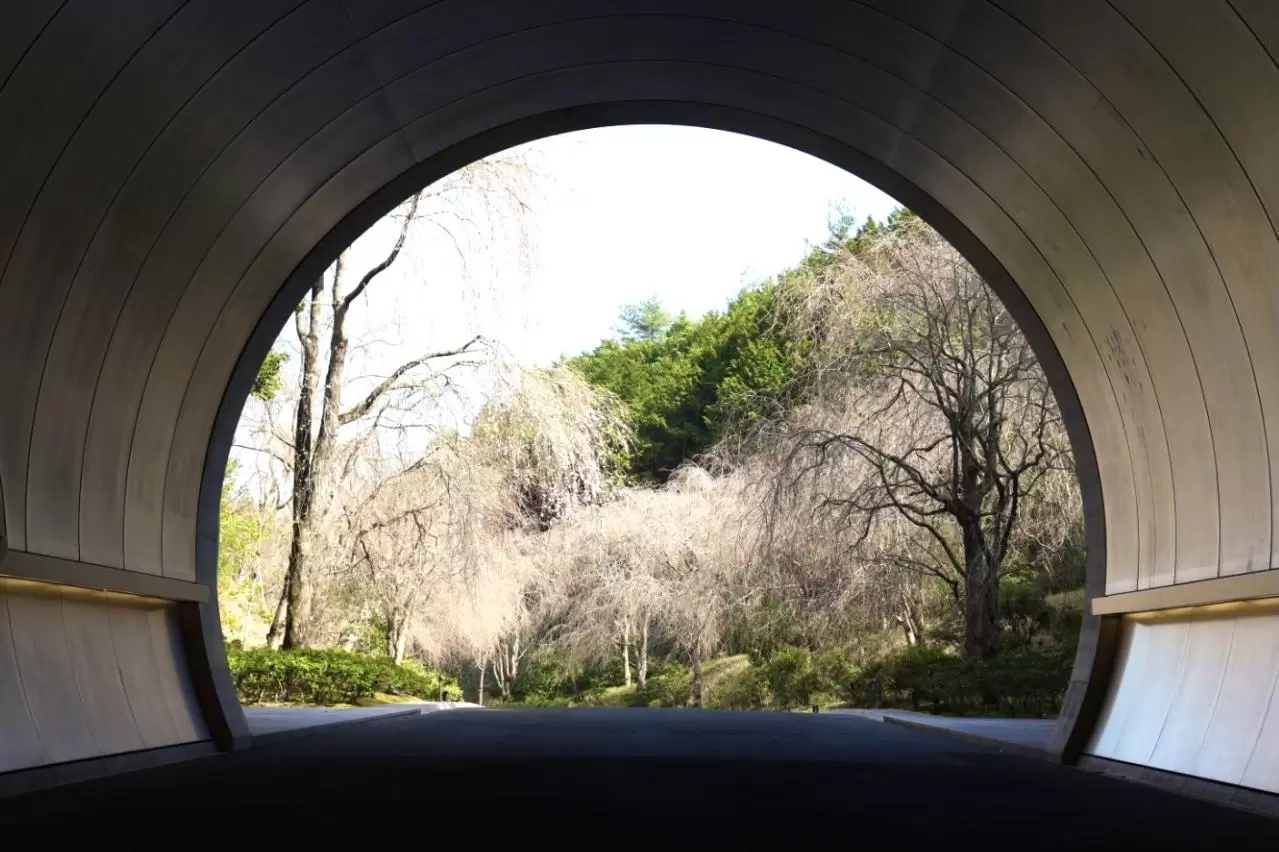
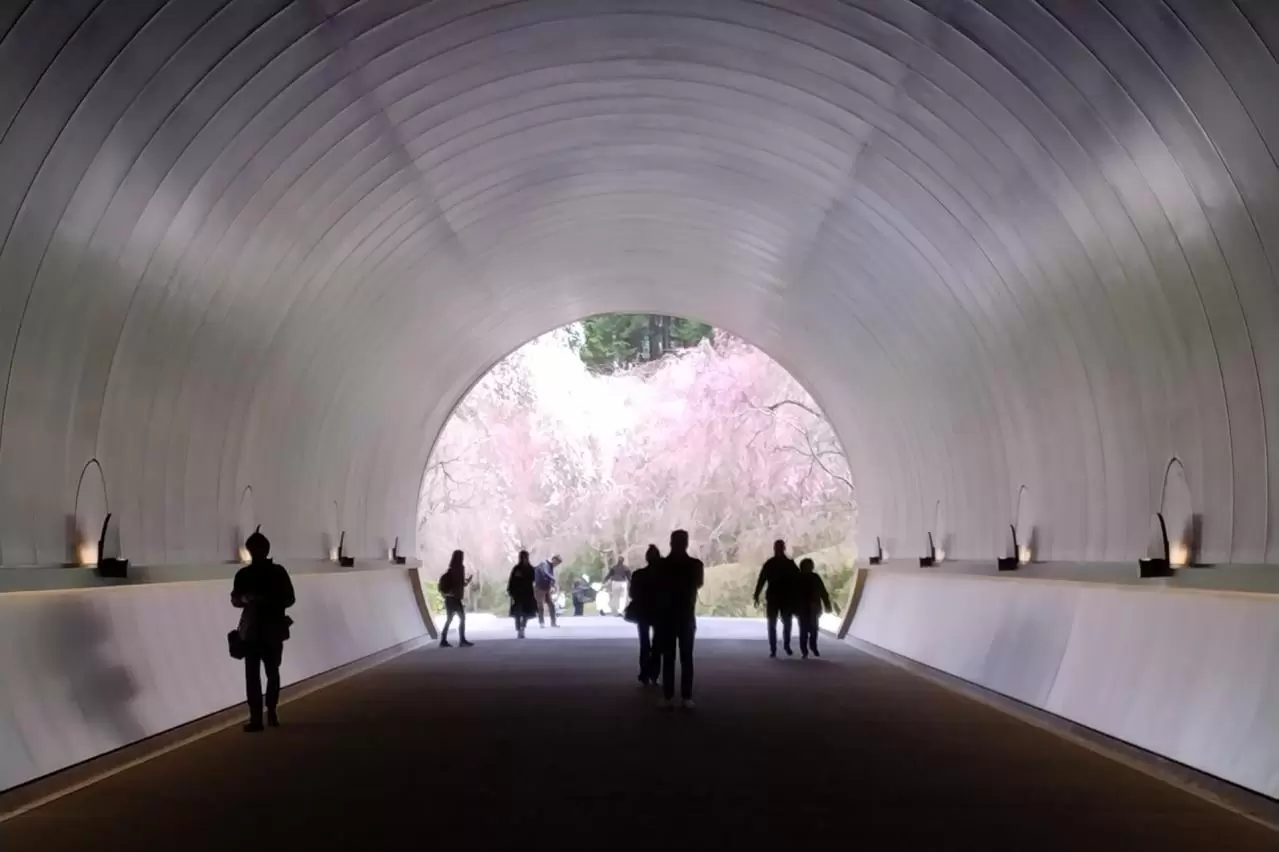
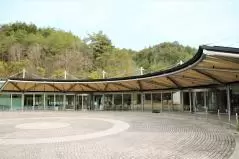
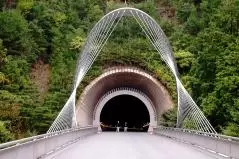
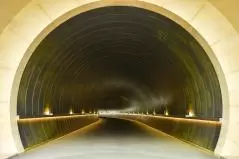
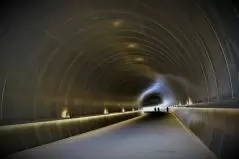
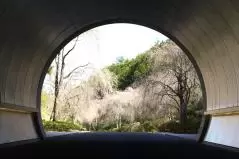
The approach to the museum is also one of its major attractions. From the reception building to the museum building, visitors walk about 500 meters along a route that takes them past a row of weeping cherry trees in spring, through a fantastical stainless-steel tunnel, and across a 120-meter suspension bridge. This sequence creates the impression of journeying into Tōgenkyō itself, leaving a strong and lasting impression on visitors.
The collection comprises around 3,000 works, mainly ancient art from Egypt, Greece, Rome, West Asia, South Asia, and China, along with a broad range of Japanese Buddhist art and tea ceremony art. About 250 works are on display at any given time, allowing visitors to experience the civilizations and cultures of the world across regions and eras. In addition, special exhibitions are held each open season in spring, summer, and autumn.
The museum also includes a restaurant, café, and museum shop. The restaurant, in particular, serves dishes made with ingredients grown using “Shumei Natural Agriculture,” a no-fertilizer, no-pesticide farming method, reflecting the museum’s commitment to the idea of “beauty from within.”
MIHO MUSEUM is a place where visitors can experience not only works of art, but also diverse forms of beauty through architecture, nature, and food. Together with the scenery of each season, it offers an extraordinary and tranquil experience—truly a museum like a modern-day Tōgenkyō.
Shiga Tourist Attractions
View List

Metasequoia Namiki
The Metasequoia Avenue in Makino Town, Takashima City, Shiga Prefecture, features approximately 500 metasequoias planted along a 2.4 km stretch, creating a beautiful...

Sagawa Art Museum
The Sagawa Art Museum is located on the shores of Lake Biwa and is known as the "museum that floats on water." The design of the museum harmonizes with the vast wate...

Oumi Shrine
Omi Shrine is a shrine dedicated to Emperor Tenchi, located at the site of the ancient capital of Omi Otsu Palace, where Emperor Tenchi established his court. He is ...

Lake Biwa Terrace
Biwa Lake Valley is located at an elevation of 1,100 meters on the summit of Mt. Uchimi, offering a spectacular view of Lake Biwa. Visitors can reach the summit in a...

Hachimanbori
Yahata-bori is a waterway built during the Azuchi-Momoyama period by Toyotomi Hidetsugu to support the castle town of Yahata-yama. It played a significant role in th...

Hikone Castle
Hikone Castle is a flatland castle built in the early Edo period, utilizing Hikone Mountain (Kinkiyama) for its construction. The castle still retains its national t...

Mount Hiei Enryakuji
Hieizan Enryaku-ji is the head temple of the Tendai sect, located at the border of Kyoto and Shiga, with a history spanning over 1,200 years. It began when Saicho es...