Mount Hiei Enryakuji
Mount Hiei Enryakuji Movies


![【滋賀観光】比叡山坂本エリアを歩く☆前半 [Shiga Sightseeing] Walking in Hieizan Sakamoto Area1](https://i.ytimg.com/vi/u91Ep_LdYl0/mqdefault.jpg)


Basic Information
- Spot Name
- Mount Hiei Enryakuji
- Location
- 〒520-0116 4220 Sakamoto Hongo, Otsu City, Shiga Prefecture, Japan
- Access
- From Keihan Sakamoto Hieizan-guchi Station, it's a 10-minute walk to Cable Sakamoto Station. Take the Sakamoto Cable for 11 minutes and then, after getting off at the last stop, walk for 10 minutes.
- Parking
- 120 vehicles
- Business Hours
- 8:30 AM to 4:30 PM (closing time may vary depending on the season)
- Fees
- Common ticket for three areas: Adults 1,000 yen, junior and senior high school students 600 yen, elementary school students 300 yen.
National Treasure Hall (Treasure Museum): Adults 500 yen, junior and senior high school students 300 yen, elementary school students 100 yen. - Contact Information
- Phone Number:077-578-0001
- Official Website
Map
Detailed Information
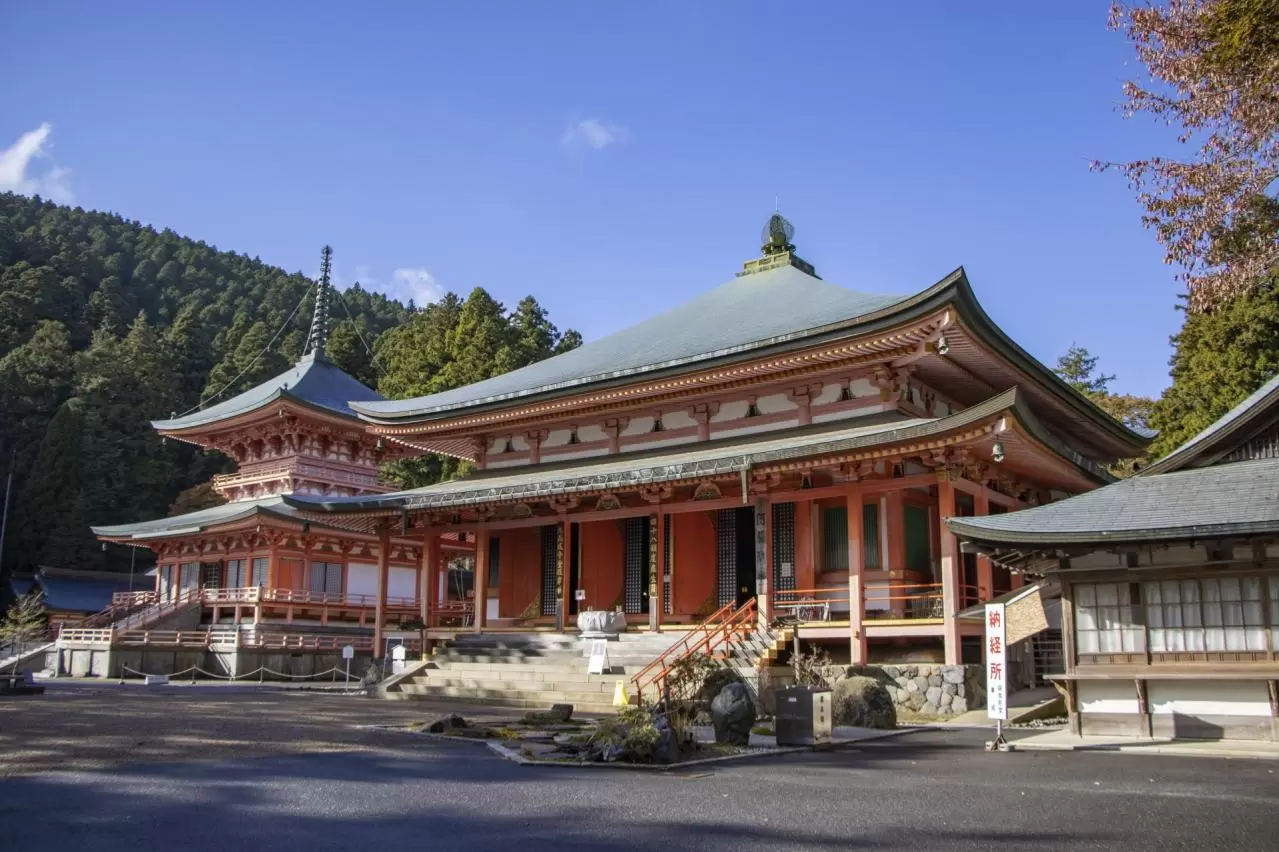
Enryaku-ji Temple on Mount Hiei is the head temple of the Tendai sect, with its precincts covering the entire Mount Hiei, located on the border between Kyoto and Shiga prefectures. Within the vast grounds of some 1,700 hectares on Mount Hiei, which rises to an elevation of 848 meters, more than 100 halls and pagodas are scattered throughout the area.
Its history spans more than 1,200 years, beginning in 788, at the end of the Nara period, when the young Saicho built a simple hermitage on Mount Hiei. It was originally called Ichijo Shikan-in, and later came to be known as Enryaku-ji during the Enryaku era, a name it retains today.
In 1994, it was registered as a UNESCO World Heritage Site as part of the Historic Monuments of Ancient Kyoto, and it continues to attract many worshippers and tourists from both Japan and abroad.
Role as the “Mother Mountain” of Japanese Buddhism
Enryaku-ji has played an extremely important role in the development of Japanese Buddhism. After the founding of the Tendai sect, it flourished for a long time as one of the central institutions in Japan’s religious world, alongside Kongobu-ji Temple on Mount Koya.
In particular, it is known as the “Mother Mountain of Japanese Buddhism” because great monks such as Honen, Shinran, Dogen, and Nichiren—who founded various Japanese Buddhist schools—trained here. It was not merely a temple, but also a place for cultivating human talent.
History and Reconstruction
Enryaku-ji developed greatly during the Heian period and was once so large it was called “Eizan Sanzembo” (“3,000 temples of Mount Hiei”). However, in 1571 during the Sengoku period, it was burned down in a conflict with Oda Nobunaga, and many halls and pagodas were destroyed.
Afterward, reconstruction advanced with the support of Toyotomi Hideyoshi and Tokugawa Ieyasu, and many of the buildings seen today were rebuilt from that period onward. Even now, many of its structures are designated National Treasures or Important Cultural Properties.
The Beauty of Nature and Scenic Views
Mount Hiei is also known as a scenic destination surrounded by rich natural beauty. From the summit, visitors can take in panoramic views of Lake Biwa to the east and the cityscape of Kyoto to the west, enjoying beautiful scenery throughout the seasons.
The autumn foliage is especially spectacular, and the views of Kyoto and Lake Biwa seen through the maple leaves are truly exceptional. The grounds, surrounded by cedar trees, are filled with a solemn atmosphere, allowing visitors to feel deep tranquility and the weight of history.
The Three Areas: Toto, Saito, and Yokawa
The precincts of Enryaku-ji are broadly divided into three areas: Toto, Saito, and Yokawa.
Toto (the center of Enryaku-ji)
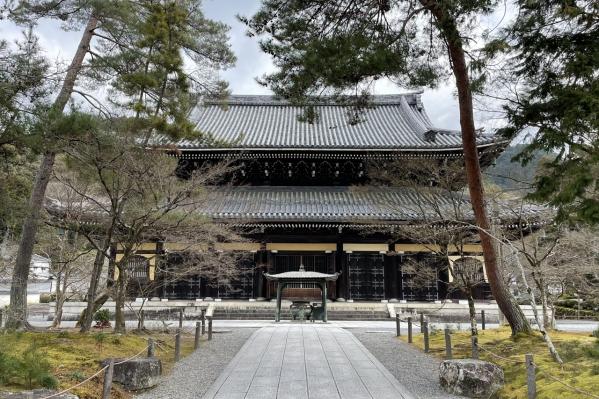
Toto is the birthplace of Enryaku-ji and its most important area. Centered around the main hall, Konpon Chudo, it contains many historic buildings.
Konpon Chudo houses the “Eternal Dharma Lamp,” said to have been lit continuously for more than 1,200 years, making it a symbol of Enryaku-ji. Other highlights include the Daikodo and Amida-do, both Important Cultural Properties.
Saito (a place of history and training)
Saito is located north of Toto and contains Shaka-do, the oldest existing building at Enryaku-ji. It is also home to Jodo-in, where Saicho’s remains rest, as well as facilities where visitors can experience monastic training, giving the area a particularly solemn atmosphere.
Yokawa (a sacred place wrapped in silence)
Yokawa, the deepest of the three areas, is a quiet space surrounded by nature. Its main hall, Yokawa Chudo, is notable for its stage-style architecture, and it also includes Shiki Kodo, said to be the birthplace of omikuji fortune slips.
Main Highlights
- Konpon Chudo: The main hall of Enryaku-ji and a National Treasure.
- Eternal Dharma Lamp: A sacred lamp said to have been burning for more than 1,200 years.
- Daikodo: An Important Cultural Property where the founders of various Buddhist sects are enshrined.
- Amida-do: A hall for memorial services for ancestors.
- Monjuro: The gate tower at the entrance to Enryaku-ji.
- Hokke Sohonin Toto: A symbolic pagoda prayed to for national peace and security.
Access and Experiences
Enryaku-ji on Mount Hiei is relatively easy to access by cable car, ropeway, or driveway. Buses also operate within the mountain area, making it efficient to visit each section.
In addition, places such as the Enryaku-ji Kaikan offer experiences like zazen meditation and sutra transcription, providing visitors with opportunities to engage with Buddhist culture (※may be unavailable depending on the season).
Summary
Enryaku-ji Temple on Mount Hiei is a center of Japanese Buddhism with more than 1,200 years of history, and a special place where religion, history, and nature come together. As the “Mother Mountain of Japanese Buddhism,” it has produced many great monks and continues to pass down its spirit and traditions today.
Its vast precincts, rich natural surroundings, and numerous historic buildings make it one of Japan’s most representative cultural heritage sites, offering visitors deep inspiration and insight.
Shiga Tourist Attractions
View List
Hachimanbori
Yahata-bori is a waterway built during the Azuchi-Momoyama period by Toyotomi Hidetsugu to support the castle town of Yahata-yama. It played a significant role in th...

Lake Biwa Terrace
Biwa Lake Valley is located at an elevation of 1,100 meters on the summit of Mt. Uchimi, offering a spectacular view of Lake Biwa. Visitors can reach the summit in a...

Hikone Castle
Hikone Castle is a flatland castle built in the early Edo period, utilizing Hikone Mountain (Kinkiyama) for its construction. The castle still retains its national t...


Oumi Shrine
Omi Shrine is a shrine dedicated to Emperor Tenchi, located at the site of the ancient capital of Omi Otsu Palace, where Emperor Tenchi established his court. He is ...

Miho Museum
MIHO MUSEUM, opened in 1997, is an art museum designed by the world-renowned architect I.M. Pei. The design theme is "paradise," providing a mystical space where nat...

Metasequoia Namiki
The Metasequoia Avenue in Makino Town, Takashima City, Shiga Prefecture, features approximately 500 metasequoias planted along a 2.4 km stretch, creating a beautiful...

Sagawa Art Museum
The Sagawa Art Museum is located on the shores of Lake Biwa and is known as the "museum that floats on water." The design of the museum harmonizes with the vast wate...