Yushien Garden
Yushien Garden Movies


Basic Information
- Spot Name
- Yushien Garden
- Location
- 〒690-1492 1260-2 Namiiri, Yakumachi, Matsue City, Shimane Prefecture, Japan
- Access
- Take the Ichibata Bus from JR Matsue Station to Sakai Port Station for 25 minutes, and get off at Yushi-en.
- Parking
- 50 buses, 300 ordinary cars.
- Business Hours
- 9:00 AM to 5:00 PM (closing time may vary depending on the season)
- Regular Holiday
- December 30th and December 31st.
- Fees
- Adults: 800 yen - 1,400 yen
Elementary to high school students: 400 yen - 700 yen
*Prices may vary depending on the season. - Contact Information
- Phone Number:0852-76-2255
- Official Website
Map
Detailed Information
Yushien is one of the largest stroll-style Japanese gardens in the San’in region, located on Daikonshima Island in Yatsuka-cho, Matsue, Shimane Prefecture. Created to make the most of the island’s rich natural surroundings in Lake Nakaumi, the garden has become a leading tourist attraction in an area known as the home of peonies and Korean ginseng.
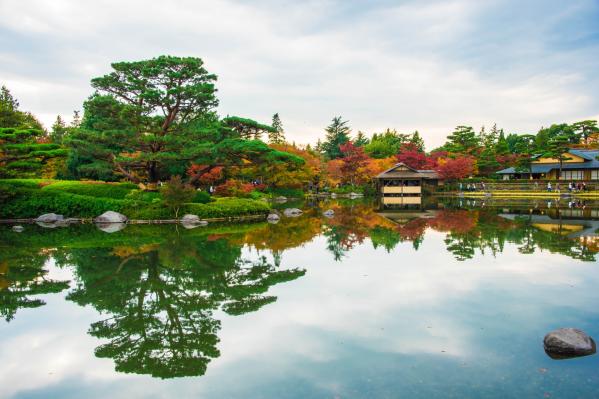
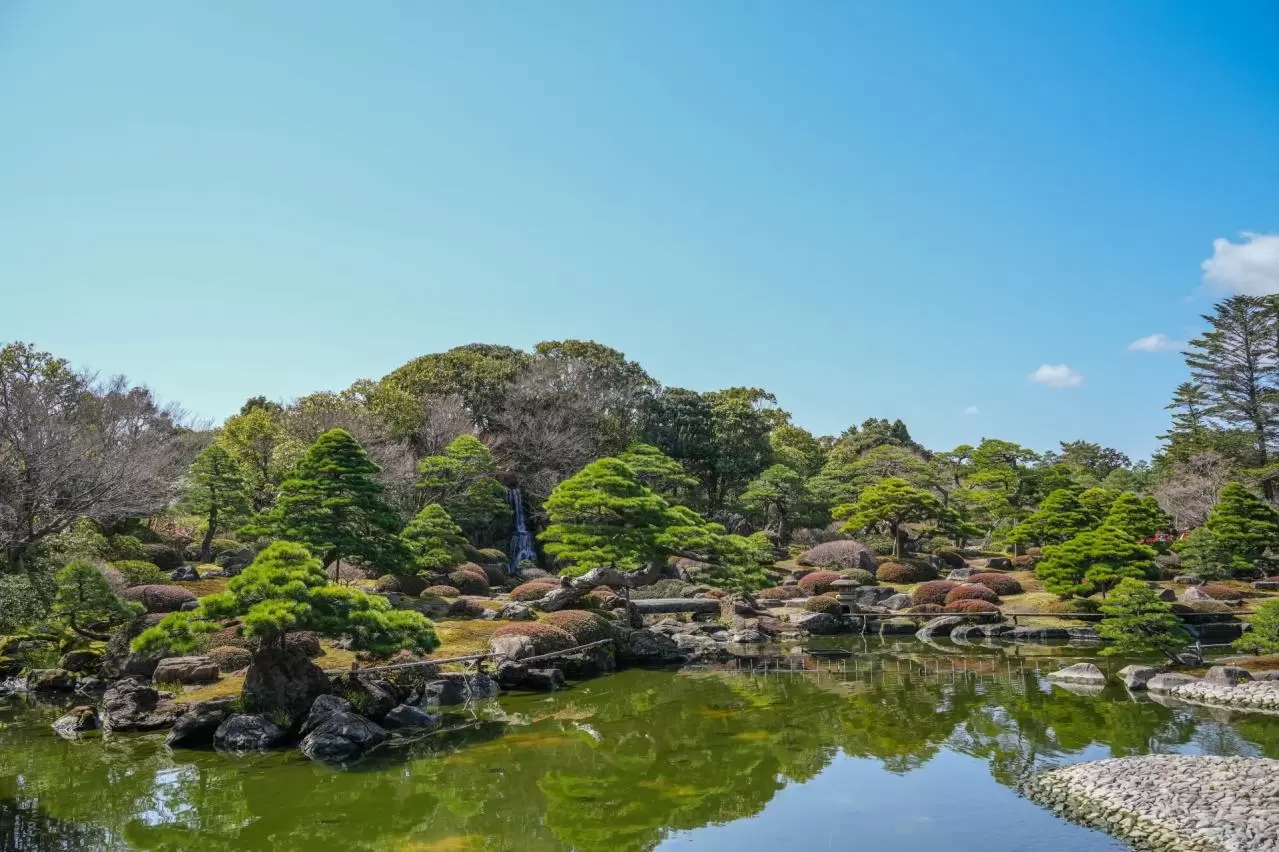
The vast grounds cover approximately 12,000 tsubo, or about 40,000 square meters. Ponds, waterfalls, artificial hills, and carefully arranged stone features create a beautiful miniature landscape that captures the natural scenery of the Izumo region. The ever-changing combination of seasonal flowers and traditional Japanese garden scenery attracts many visitors throughout the year.
## History of Yushien
Construction of Yushien began in 1967 under its first owner, Sakae Kadowaki, and the garden opened in 1970.
At the time, Daikonshima Island had not yet become the tourist destination it is today. The garden was planned as part of an effort to promote local development and tourism. It is said that the name “Yushien” was inspired by the name of Sakae Kadowaki’s father, Yuzo, who dreamed of building a Japanese garden. The name carries the meaning of “a garden that carries on Yuzo’s aspirations.”
Expansion and improvements continued after the garden opened, and the foundation of the present-day garden was established over approximately eight years. Developed according to the guiding principles of harmony, tranquility, elegance, and color, Yushien is now highly regarded as one of the leading Japanese gardens in the San’in region.
## A Garden Expressing the Natural Beauty of Izumo
Yushien is a stroll-style Japanese garden with ponds that recreates the topography and natural scenery of the Izumo region in miniature.
At the center of the garden stands an artificial hill modeled after Mount Daisen. At its foot lies a pond representing Lake Nakaumi and Lake Shinji. A gorge and waterfalls inspired by “Oni no Shitaburui,” a scenic spot in Okuizumo Town, Shimane Prefecture, have also been recreated.
The water flowing through the garden represents the rivers of the Izumo region, creating a design that evokes the majestic cycle of nature as the water eventually flows into the Sea of Japan.
Lava rocks formed by the volcanic activity unique to Daikonshima Island have also been placed throughout the garden, creating a distinctive landscape.
## A Famous Peony-Viewing Destination
Yushien is known throughout Japan as a renowned destination for viewing peonies.
Daikonshima Island is one of Japan’s leading peony-growing regions, with a history dating back to the middle of the Edo period. It remains one of the country’s major peony-producing areas, and at Yushien, peonies are carefully cultivated as a symbol of the region’s cultural heritage.
In spring, vibrant peonies bloom throughout the garden, enveloping the entire grounds in a festive and colorful atmosphere.
## 30,000 Peonies Floating on the Pond
The greatest highlight of Yushien is “Sanmanrin no Chisen Botan,” or “30,000 Peonies Floating on the Pond,” held from late April to early May.
Approximately 30,000 peony blossoms are floated across the surface of the central pond, covering the water with red, white, and pink flowers.
The scene resembles a carpet of flowers and has become one of Yushien’s most iconic seasonal traditions. The event attracts many tourists and photography enthusiasts from across Japan.
## The Peony Pavilion: Enjoy Peonies All Year Round
Peonies normally bloom in spring, but Yushien has a facility called the “Peony Pavilion,” where visitors can enjoy beautiful peonies throughout the year.
Inside the pavilion, temperature control, flowering adjustments, winter-blooming peonies, and forcing cultivation techniques make it possible to enjoy peonies regardless of the season.
Special exhibitions by garden designers and floral artists active in Japan and abroad are also occasionally held, offering visitors a glamorous space where peonies and art come together.
## Flowers for Every Season
In addition to peonies, Yushien offers a variety of flowers throughout the year.
In spring, visitors can enjoy peonies and azaleas; in early summer, Japanese iris; in summer, fresh green maple leaves and water lilies; in autumn, colorful foliage; and in winter, winter-blooming peonies and snowy landscapes.
One of Yushien’s greatest attractions is that it offers beautiful scenery no matter when it is visited.
## Summer Mist Garden
During the summer, dry mist systems are installed throughout the garden, creating the “Mist Garden.”
Shrouded in mist, the garden takes on a dreamlike atmosphere, allowing visitors to enjoy a refreshing stroll while escaping the heat. It has become a popular seasonal event unique to summer.
## Autumn Foliage Illuminations and Winter Light Displays
In autumn, the garden’s colorful foliage is illuminated at night.
The garden takes on a fantastical appearance unlike its daytime scenery, with reflections of the autumn leaves on the water and garden lights creating a beautiful view.
In winter, an illumination event based on the theme of Japanese aesthetics is held. The enchanting space, where a traditional Japanese garden is combined with artistic lighting, is highly popular and is one of Yushien’s distinctive attractions.
## The Culture of Unshu Ginseng
Daikonshima Island is famous not only for its peonies but also as a production center for Korean ginseng.
During the Edo period, Harusato Matsudaira, the seventh lord of the Matsue domain—also known as Fumai—encouraged the cultivation of Korean ginseng as part of his industrial development policies. Daikonshima subsequently became one of Japan’s leading production areas.
Yushien introduces the history and culture of Unshu ginseng and offers products and menu items made with ginseng.
## The Ginseng Tea Café
The garden is home to the Ginseng Tea Café.
Visitors can enjoy tea, sweets, and drinks made with Korean ginseng. The café is popular as a place where guests can experience the flavor of Korean ginseng in a familiar and approachable way.
Skincare products containing natural ingredients such as Korean ginseng, peony, and chamomile are also sold and are well received as souvenirs.
## Restaurants and Shops
Yushien has several dining facilities.
Visitors can enjoy Izumo soba made with locally produced buckwheat flour, regional cuisine featuring ingredients from Shimane, and traditional kaiseki meals.
The shops also offer peony-related products, Korean ginseng products, and local specialties from Shimane Prefecture.
## Access
Yushien is located on Daikonshima Island in Lake Nakaumi and is easily accessible from central Matsue and Sakaiminato.
It is also conveniently located for visiting nearby attractions such as Matsue Castle, the Adachi Museum of Art, and Mizuki Shigeru Road, making it one of the popular destinations for sightseeing in the San’in region.
## Conclusion
Yushien is one of the largest stroll-style Japanese gardens in the San’in region, extending across Daikonshima Island. Its beautiful grounds express the natural scenery of the Izumo region and are filled with seasonal flowers. In particular, “30,000 Peonies Floating on the Pond,” held from late April to early May, is an astonishingly beautiful spectacle.
The garden offers many seasonal attractions, including the Peony Pavilion, where visitors can enjoy peonies year-round; the summer Mist Garden; autumn foliage illuminations; and winter light displays. Visitors can also experience the culture of Unshu ginseng at the Ginseng Tea Café and enjoy local cuisine.
With its superb fusion of nature, flowers, gardens, and culinary culture, Yushien continues to attract visitors throughout the year as one of Shimane Prefecture’s premier garden tourism destinations.
Shimane Tourist Attractions
View List
Matsue Castle
Matsue Castle is one of the 12 existing tenshu in Japan and was designated as a national treasure in 2015. It is also known as "Chidori Castle," and its black main k...

Adachi Museum of Art
Adachi Museum of Art is located in Yasugi City, Shimane Prefecture, and was opened in 1970 by a local entrepreneur, Zenko Adachi. This museum houses works by modern ...

Lake Shinji
Shinji Lake, located to the west of Matsue City, is one of Japan's top 100 scenic spots, renowned especially for its stunning sunsets. As a brackish lake, it is home...

Iwami Ginzan Silver Mine World Heritage Center
When visiting Iwami Ginzan, it's highly recommended to first stop by the Iwami Ginzan World Heritage Center. Here, you can learn about the history of Iwami Ginzan, i...

Tamatsukuri Onsen
Tamatsukuri Onsen is one of the oldest hot springs in Japan, established during the Nara period, and is widely known as a beauty hot spring. The "Izumo no Kuni Fudok...

Izumo Taisha Shrine
Izumo Taisha, located in Izumo Province (Shimane Prefecture), is widely known as the deity of matchmaking. This shrine enshrines Ōkuninushi no Ōkami, and many people...

Izumo Hinomisaki Lighthouse
Izumo Hinomisaki Lighthouse is located about a 20-minute drive from Izumo Taisha Shrine. Standing at a height of 63.30 meters above sea level and 43.65 meters to the...

Yaegaki Shrine
Yaegaki Shrine is known as the deity of matchmaking in Izumo, with Susanoo and Inada-hime as the main deities. The mirror pond on the shrine grounds is popular among...