Kurashiki Ivy Square
Kurashiki Ivy Square Movies


![[ 宿泊レポ ]倉敷アイビースクエア|ノスタルジックな日本遺産に泊まる✨🌿|モデレートツイン|朝食|倉敷美観地区](https://i.ytimg.com/vi/fCuOMNPIi0k/mqdefault.jpg)


Basic Information
- Spot Name
- Kurashiki Ivy Square
- Location
- 〒710-0054 7-2 Honmachi, Kurashiki City, Okayama Prefecture, Japan
- Access
- 20 minutes on foot from JR Sanyo Main Line Kurashiki Station. Approximately 20 minutes from Kurashiki IC on the Sanyo Expressway or Hayashima IC on the Seto Chuo Expressway.
- Parking
- Approximately 120 vehicles.
- Business Hours
- It varies by each spot.
- Regular Holiday
- None
- Contact Information
- Phone Number: 086-422-0011
- Official Website
Map
Detailed Information
Kurashiki Ivy Square is a multipurpose cultural complex located in the Kurashiki Bikan Historical Quarter of Kurashiki City, Okayama Prefecture. It is known for its beautiful red-brick buildings covered in ivy and is one of Kurashiki’s leading tourist attractions. Today, it is a popular destination featuring a hotel, restaurants, cultural facilities, and hands-on workshops. Originally, however, the site was used as the headquarters and factory of Kurashiki Spinning, now known as Kurabo, which was built during the Meiji period.
The Kurashiki Bikan Historical Quarter is famous for its streets lined with white-walled buildings, but Kurashiki Ivy Square is also a symbolic example of industrial tourism, conveying the history of Kurashiki’s modern industries to the present day.
## History of Kurashiki Ivy Square
### The Former Site of a Magistrate’s Office during the Edo Period
The site where Kurashiki Ivy Square now stands was once home to the Kurashiki Magistrate’s Office during the Edo period.
Following the Battle of Sekigahara in 1600, the area became a tenryō, or territory under the direct control of the Tokugawa shogunate. In 1642, the Kurashiki Magistrate’s Office was established here. Kurashiki flourished as a logistics center that took advantage of water transportation on the Takahashi River, developing as a major distribution center for cotton, rice, and other goods.
### Construction of Kurashiki Spinning during the Meiji Period
During the Meiji period, Japan pursued modernization, and the spinning industry became an important sector. In Kurashiki, efforts were made to revitalize the local economy, and in 1889, the head office and factory of the former Kurashiki Spinning, now Kurabo, were built on the site of the former magistrate’s office.
The factory was constructed of red brick and was considered an advanced modern factory at the time. Its architecture featured distinctive sawtooth roofs, designed to make efficient use of natural light.
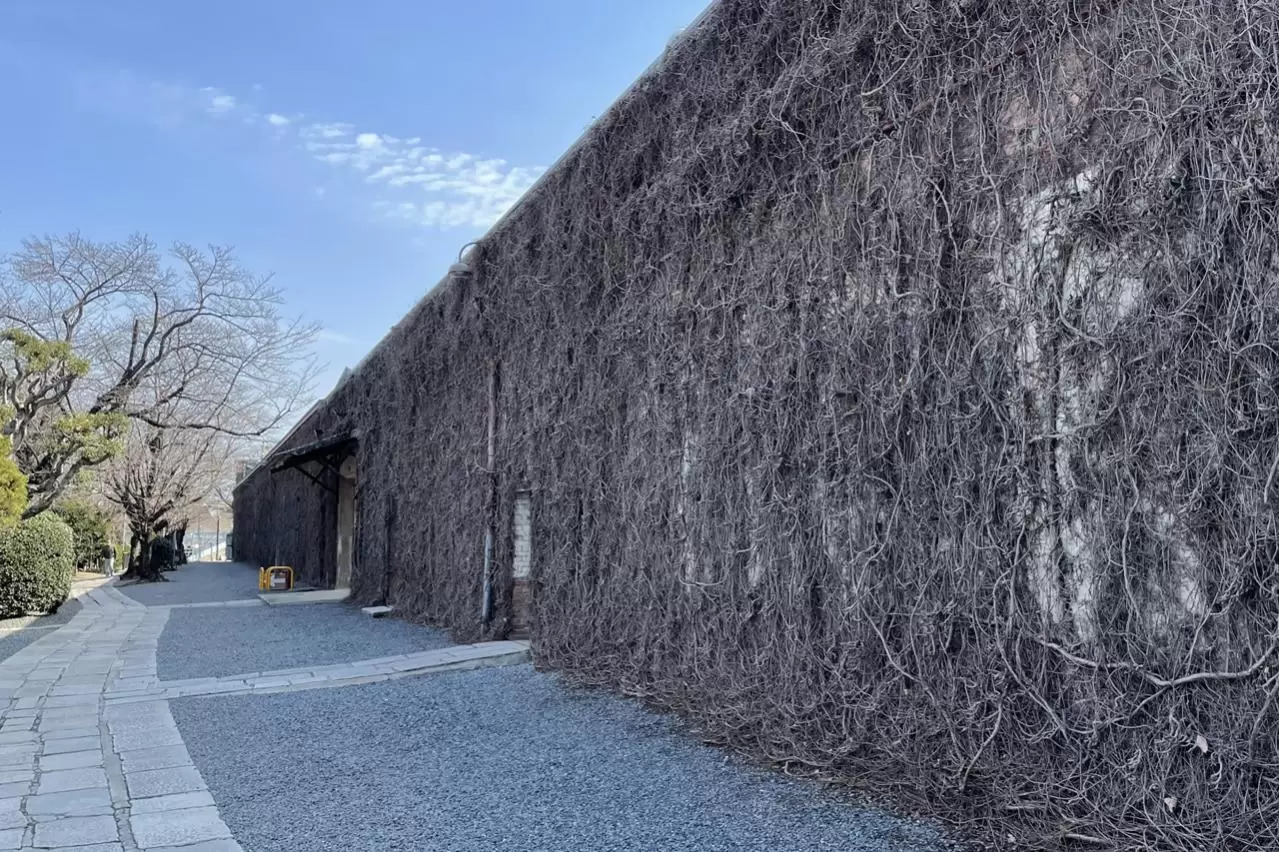
The ivy that has become the site’s symbol was planted during the factory era to help regulate the temperature. In summer, its dense leaves blocked the sunlight, while in winter, the leaves fell away and allowed sunlight to reach the brick walls. In this way, the ivy helped regulate the temperature through the power of nature.
It is said to have been planted in accordance with the philosophy of Magosaburo Ohara, who advocated creating a comfortable working environment in harmony with nature.
### From Factory to Multipurpose Cultural Complex
After the war, the factory ceased operations and was used as a warehouse. However, a large-scale redevelopment project was undertaken to preserve and make use of the historically valuable red-brick buildings.
Renovation work was carried out in 1973, and the following year, in 1974, the site reopened as Kurashiki Ivy Square, a multipurpose cultural complex featuring a hotel and cultural facilities.
It is considered one of Japan’s pioneering examples of the conversion of industrial architecture to new uses. Rather than demolishing the factory buildings, the project preserved their historical value while giving them new functions, earning widespread acclaim.
Today, the site has been recognized by the Ministry of Economy, Trade and Industry as part of Japan’s Heritage of Industrial Modernization and has become a popular destination visited by many tourists.
## Features of Kurashiki Ivy Square
### Red Brick and Ivy
The most distinctive feature of Kurashiki Ivy Square is its unique scenery created by the combination of red brick and ivy.
The appearance changes with the seasons. From spring through summer, vivid green ivy covers the red-brick walls. In autumn, the leaves turn color, while in winter, the beautiful texture of the brickwork stands out.
The landscape of red-brick buildings more than 130 years old covered in ivy creates a nostalgic and romantic atmosphere, attracting many hotel guests and tourists from throughout Japan. The site is also affectionately known as the “Ivy of Dreams.”
### Architecture Preserving the Atmosphere of the Meiji Period
Many buildings from the Meiji-era spinning factory have been preserved and repurposed within the complex.
The brick buildings, sawtooth roofs, and stone-paved courtyards retain the appearance of the past, allowing visitors to experience the atmosphere of Japan’s modernization simply by walking through the grounds.
Another major appeal is the way these historic buildings continue to be used as modern hotels and cultural facilities while preserving their original character.
## Main Facilities
### Hotel
Kurashiki Ivy Square is also a popular accommodation destination.
The guest rooms make use of the historic brick architecture and feature a nostalgic, relaxing atmosphere. Some rooms overlook the courtyard, allowing guests to enjoy a leisurely stay while experiencing the ambiance of the Meiji period.
The hotel attracts many guests from across Japan.
### Kurabo Memorial Hall
The Kurabo Memorial Hall was established in 1969 as part of a commemorative project celebrating the 80th anniversary of Kurabo’s founding.
It was originally created as a facility for employee education, but it has been open to the public since 1971.
Inside, exhibits present the history of Kurabo from its founding in 1888 to the present day, as well as the development of Japan’s spinning industry in chronological order.
The exhibition facility makes use of a traditional earthen-walled warehouse that was originally used to store raw cotton when the company was founded. The building itself therefore possesses considerable historical value.
Spinning machines and other materials used during the period are also on display, allowing visitors to learn about Japan’s modern industrial history.
### Aimi Kobo
At Aimi Kobo, visitors can take part in hands-on activities such as pottery making and indigo dyeing.
Guests can create original works as souvenirs of their trip, and completed pieces can also be shipped to their homes.
The workshop also includes a gallery and a shop selling local crafts, folk art, and other handmade goods.
### Ivy Gakuen
Ivy Gakuen makes use of a historic brick building constructed in 1889.
Today, it serves as an exhibition hall and gallery, hosting a variety of special exhibitions and cultural events.
### Orgel Musée
Orgel Musée occupies an office building that was used during the site’s time as a spinning factory.
The facility displays valuable antique music boxes, including cylinder music boxes and disc music boxes.
Music-box concerts are also held, allowing visitors to enjoy their beautiful tones.
At the adjoining shop, visitors can even have a music box made featuring a song of their choice.
## The Appeal of Kurashiki Ivy Square
The appeal of Kurashiki Ivy Square lies in the way it brings together history, industry, culture, and accommodation in a single space rather than serving merely as a tourist facility.
The site embodies a rich history that began with the magistrate’s office during the Edo period, continued with the spinning factory that supported Japan’s modernization during the Meiji period, and lives on today through its cultural facilities.
Amid the scenery created by red brick and ivy, visitors can experience Kurashiki’s industrial heritage while enjoying a wide range of activities, including pottery workshops, accommodation, dining, and cultural events.
It is a valuable destination where visitors can experience another aspect of Kurashiki’s history—its identity as a modern industrial city—which differs from the white-walled streets of the Bikan Historical Quarter.
#Townscape/Bikan Historical Quarter #Cultural assets/historic sites
Okayama Tourist Attractions
View List
Okayama Castle
Okayama Castle, also known as "Ujo" (Crow Castle), was built in 1597 by Ukita Hideie, a vassal of Toyotomi Hideyoshi. It features a unique three-story, six-floor asy...

Washuzan Observation Deck
Washu Mountain Observatory is located near the summit of Washu Mountain within Setonaikai National Park and has been designated as a national scenic spot. There are ...

Kurashiki Bikan Historical Quarter
Kurashiki Bikan Historical Quarter features an enchanting townscape with white-walled storehouses, earthen walls, and beautiful rows of willows, creating a perfect h...

Ohara Museum of Art
The Ohara Museum of Art, established in 1930 by Kurashiki businessman Ohara Sozaburo, is Japan's first private Western art museum. It features globally renowned West...

Korakuen Garden
Okayama Korakuen is one of Japan's most representative daimyo gardens from the Edo period, constructed by the Okayama domain lord Ikeda Tsunamasa. The construction b...

Kibitsu Shrine
Kibitsu Shrine is known for its legends surrounding Kibitsuhiko no Mikoto and the ogre Ura, which are considered to be the prototypes of the Momotaro legend and asso...

Bitchū Matsuyama Castle
Bitchu Matsuyama Castle is the only surviving hilltop castle in Japan with an existing main keep, and it is one of the 12 castles from the Edo period that still stan...

Toy Kingdom
"Toy Kingdom" is a toy and play-themed park located in Tamano City, Okayama Prefecture. It features 18 toy pavilions filled with children's dreams, including Tomica ...