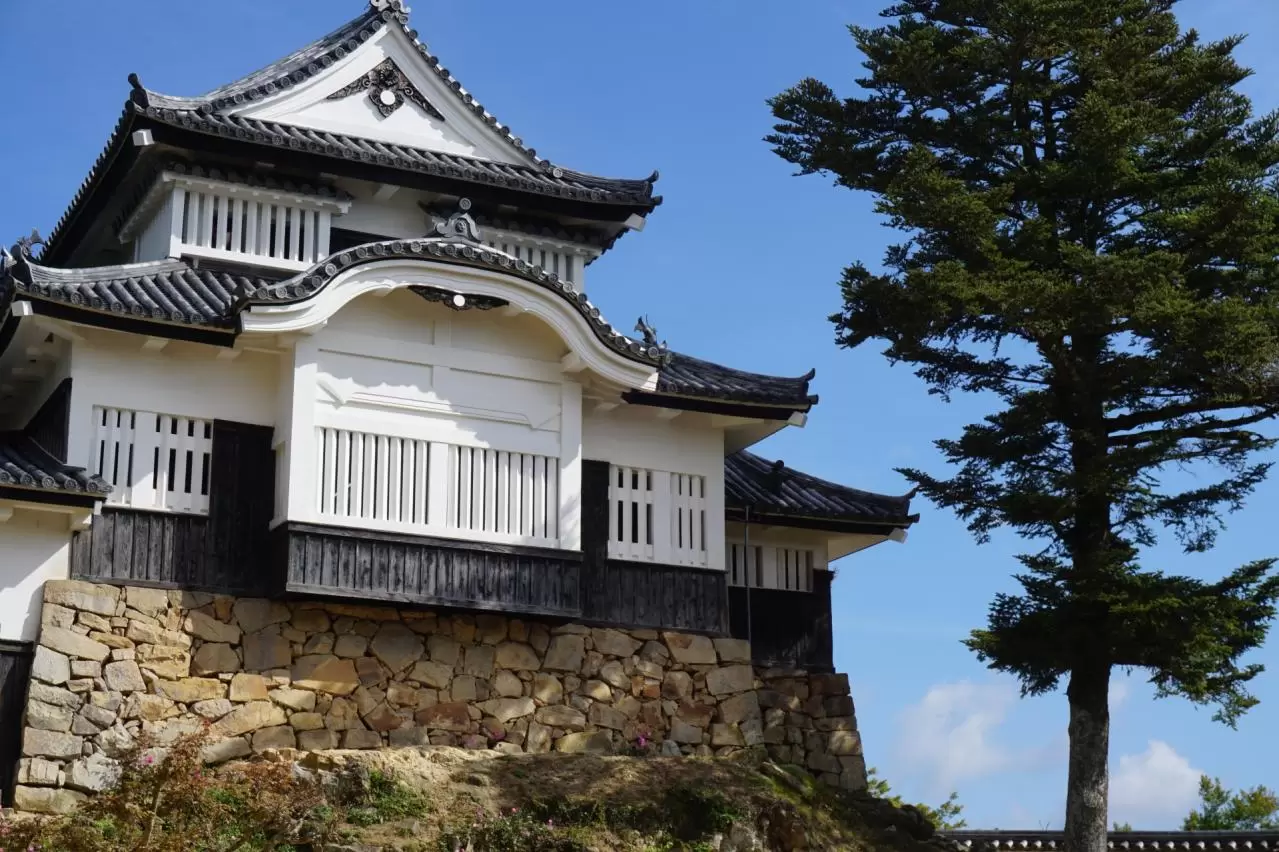
Bitchū Matsuyama Castle
Bitchū Matsuyama Castle Movies


Basic Information
- Spot Name
- Bitchū Matsuyama Castle
- Location
- 〒716-0004 1-1 Uchiyamashita, Takahashi City, Okayama Prefecture
- Access
- 10 minutes by taxi from Bitchu-Takahashi Station on the JR Hakubi Line, followed by a 20-minute walk from the 8th station.
- Parking
- Approximately 120 cars.
- Business Hours
- 9:00 AM to 5:30 PM (last admission), from October to March, it's open until 4:30 PM (last admission).
- Regular Holiday
- December 29th to January 3rd
- Fees
- Adults: 500 yen, Elementary and Junior High School Students: 200 yen
- Contact Information
- Phone Number:0866-22-1487
- Official Website
Map
Detailed Information
Bitchu Matsuyama Castle — The “Mountain Castle in the Sky” Floating Above a Sea of Clouds
Bitchu Matsuyama Castle, located in Takahashi City, Okayama Prefecture, is one of Japan’s most famous mountain castles. It is known as the only mountain castle in Japan with a surviving original keep. It is also one of Japan’s “12 Original Castle Keeps,” whose keeps were built before the Edo period and have survived to the present day, making it a castle of tremendous historical value.
The castle was built on the summit of Komatsuyama, one of the peaks of Mount Gagyu, at an elevation of 430 meters. Its formidable structure, which skillfully takes advantage of the mountain’s natural terrain, has earned it a reputation as an “impregnable castle.” In particular, its appearance surrounded by a sea of clouds from autumn through spring is extraordinarily dreamlike, and the castle has become nationally popular as the “Mountain Castle in the Sky.”
## Features of Bitchu Matsuyama Castle
### Japan’s Only Mountain Castle with a Surviving Original Keep
Japan currently has 12 original castle keeps whose main structures date back to before the Edo period. Bitchu Matsuyama Castle is the only mountain castle among them.
The keep is a two-tier, two-story structure standing approximately 11 meters tall. Although it is the smallest of the 12 original castle keeps, it is known as the keep built at the highest elevation—430 meters.
In addition to the keep,
- A two-story turret
- Parts of the earthen walls
have also survived. These structures have been designated Important Cultural Properties of Japan. The castle ruins are also designated as a National Historic Site.
### A Spectacular View: The “Mountain Castle in the Sky”
One of Bitchu Matsuyama Castle’s greatest attractions is its fantastical appearance floating above a sea of clouds.
From late September to early April, especially in the early mornings from October to November, a sea of clouds may form when conditions such as differences in temperature are favorable. Because the castle appears to float above the clouds, it is known as the “Mountain Castle in the Sky.”
The Bitchu Matsuyama Castle Unkai Observatory is a famous place to enjoy this spectacular view. Many photography enthusiasts and tourists visit early in the morning to capture the scenery.
### An Impregnable Castle Protected by Gigantic Rock Walls
Bitchu Matsuyama Castle is characterized by the high level of defense typical of a mountain castle.
Along the approach to the castle, gigantic rock walls more than 10 meters high have been built, blending the natural terrain with man-made stone walls. The structure made it difficult for enemies to launch an attack, and the castle became known as an “impregnable fortress.”
The mountain path is steep, allowing visitors to experience firsthand the defensive strength of a Sengoku-period mountain castle by walking along it.
## History of Bitchu Matsuyama Castle
### A Mountain Castle with Origins in the Kamakura Period
The history of Bitchu Matsuyama Castle began in the Kamakura period.
It is believed to have originated when Akiba Shigenobu, a local land steward, built a fort on Omatsuyama, one of the peaks of Mount Gagyu.
Mount Gagyu consists of four peaks:
- Omatsuyama
- Tenjin-no-Maru
- Komatsuyama
- Maeyama
During the Sengoku period, the castle expanded across the entire mountain.
Later, it was developed into an early modern castle centered on the present-day Komatsuyama area.
### Major Renovations During the Edo Period
The Bitchu Matsuyama Castle seen today was extensively renovated during the Edo period.
After Ikeda Nagayuki established the Matsuyama Domain in 1617, the Mizutani family became the castle lords. During the rule of Mizutani Katsumune, large-scale renovations were carried out with the permission of the shogunate.
Over approximately three years, beginning in 1681, the castle was developed as an early modern castle, giving the keep its present appearance.
At a time when building castles on flat land was the norm during the Edo period, it was extremely rare for a mountain castle to undergo such extensive renovations. This is another reason Bitchu Matsuyama Castle is particularly valuable.
### A Center of Bitchu Until the End of the Edo Period
After the Mizutani family, the
- Ando family
- Ishikawa family
- Itakura family
became the castle lords. The Itakura family, in particular, ruled the castle for many years, continuing until the Meiji Restoration.
Although many structures were lost following the Meiji government’s Castle Abolition Edict, the keep, turrets, earthen walls, and other features miraculously survived.
In 1950, the keep, the two-story turret, the eastern earthen wall of the Sannohira Turret, and other structures were designated Important Cultural Properties of Japan and have been carefully preserved to this day.
## Fierce Battles During the Sengoku Period
### A Battleground for Control of a Vital Transportation Hub
The Bitchu region, where Bitchu Matsuyama Castle is located, was an important transportation hub connecting the San’yō and San’in regions. As a result, many Sengoku-period warlords fought for control of the area.
The Ukita, Mori, and Mimura families fiercely competed for the region, and the castle lords changed many times.
### The Battle of Myojinji
In 1566, when Mimura Iechika was assassinated by an agent of Ukita Naoie, his son, Mimura Motonari, began a campaign of revenge.
The battle in 1567, in which he attacked Myojinji Castle, held by the Ukita side, became known as the Battle of Myojinji.
However, the Mimura army was defeated, and Bitchu Matsuyama Castle was temporarily seized as well. It was later recaptured with support from the Mori clan.
### The Bitchu War
Later, Mimura Motonari came into conflict with the Mori clan and sided with Oda Nobunaga, triggering the Bitchu War.
Following fierce attacks by the Mori army, Bitchu Matsuyama Castle became the scene of intense fighting. In the end, Mimura Motonari was defeated and took his own life.
After this battle, the Mori clan took control of the castle and proceeded with large-scale renovations.
## Highlights of Bitchu Matsuyama Castle
### Inside the Keep
Inside the keep, visitors can see features such as:
- Rooms designed for siege warfare
- A large hall with a sunken hearth
Although the keep is small, its practical structure is distinctive, and ingenious features typical of a mountain castle can be found throughout.
### The Eastern Earthen Wall of the Sannohira Turret
The eastern earthen wall of the Sannohira Turret is exceptionally valuable as a surviving earthen wall and has been designated an Important Cultural Property of Japan.
Its beautiful white-plastered appearance is one of the signature sights of Bitchu Matsuyama Castle.
### Koshikake-ishi
Along the mountain trail is a stone known as Koshikake-ishi, or the “Sitting Stone.”
According to local tradition, Oishi Kuranosuke, a famous figure from the story of the Forty-Seven Ronin, once sat on this stone. The site is regarded as a historic landmark.
### Sanjuro, the Cat Castle Lord
Bitchu Matsuyama Castle is also famous as the home of Sanjuro, its “cat castle lord.”
Sanjuro settled at the castle after the torrential rains that struck western Japan in 2018. His adorable appearance made him popular throughout Japan. Today, he is beloved by many visitors as the castle’s mascot cat.
## Selected as One of Japan’s Strongest Castles
On NHK’s *Japan’s Strongest Castle Special*, broadcast on January 2, 2025, Bitchu Matsuyama Castle was introduced as a “Spectacular Castle Recommended for the New Year” and selected as the “Strongest Castle” from among the seven castles featured on the program.
The castle was highly praised not only for its historical value, but also for its magnificent scenery and the imposing presence of a mountain castle.
Okayama Tourist Attractions
View List
Okayama Castle
Okayama Castle, also known as "Ujo" (Crow Castle), was built in 1597 by Ukita Hideie, a vassal of Toyotomi Hideyoshi. It features a unique three-story, six-floor asy...

Kurashiki Bikan Historical Quarter
Kurashiki Bikan Historical Quarter features an enchanting townscape with white-walled storehouses, earthen walls, and beautiful rows of willows, creating a perfect h...

Kurashiki Ivy Square
Kurashiki Ivy Square is a multi-use cultural facility located in the Kurashiki Bikan Historical Quarter. It has been renovated from the original headquarters of the ...

Ohara Museum of Art
The Ohara Museum of Art, established in 1930 by Kurashiki businessman Ohara Sozaburo, is Japan's first private Western art museum. It features globally renowned West...

Kibitsu Shrine
Kibitsu Shrine is known for its legends surrounding Kibitsuhiko no Mikoto and the ogre Ura, which are considered to be the prototypes of the Momotaro legend and asso...

Toy Kingdom
"Toy Kingdom" is a toy and play-themed park located in Tamano City, Okayama Prefecture. It features 18 toy pavilions filled with children's dreams, including Tomica ...

Korakuen Garden
Okayama Korakuen is one of Japan's most representative daimyo gardens from the Edo period, constructed by the Okayama domain lord Ikeda Tsunamasa. The construction b...

Washuzan Observation Deck
Washu Mountain Observatory is located near the summit of Washu Mountain within Setonaikai National Park and has been designated as a national scenic spot. There are ...