Kumano Hongu Taisha
Kumano Hongu Taisha Movies


Basic Information
- Spot Name
- Kumano Hongu Taisha
- Location
- 〒647-1731 1110 Hongu, Hongucho, Tanabe City, Wakayama Prefecture, Japan
- Access
- From Kii-Tanabe Station on the JR Kinokuni Line, take the Ryujin Bus heading to Hongu Taisha for 2 hours and 5 minutes, and get off at Hongu Taisha-mae.
- Parking
- Parking available
- Business Hours
- 8:00 AM to 5:00 PM (Closed, the Treasure Hall is open from 9:00 AM to 4:00 PM <Closed>)
- Contact Information
- Phone Number: 0735-42-0009
- Official Website
Map
Detailed Information
Kumano Hongu Taisha is a Shinto shrine located in Hongu Town, Tanabe City, Wakayama Prefecture, and is counted as one of the Kumano Sanzan—the three grand shrines of Kumano: Kumano Hongu Taisha, Kumano Nachi Taisha, and Kumano Hayatama Taisha. It is the head shrine of the numerous Kumano shrines found throughout Japan and has been deeply revered since ancient times as the center of Kumano faith. It is also registered as one of the component sites of the UNESCO World Heritage Site “Sacred Sites and Pilgrimage Routes in the Kii Mountain Range,” and is known as one of Japan’s most representative sacred places.
■ History and Origins
The exact date of Kumano Hongu Taisha’s foundation is unclear. According to legend, the deities were already enshrined here before Emperor Jimmu’s eastern expedition, and the shrine buildings are said to have been established in the 65th year of Emperor Sujin’s reign (traditionally dated to 33 BCE). Originally, the shrine stood at Oyunohara, located at the confluence of the Kumano, Otonashi, and Iwata Rivers. However, many of its buildings were swept away by a major flood in 1889. Subsequently, the three principal shrine buildings that survived the flood were relocated and transferred to the present site in 1891.
In ancient times, the shrine was known as Kumano-ni-Imasu Jinja, meaning “the shrine where the deity of Kumano resides.” It was so important that the name Kumano’s deity itself came to refer to Hongu. From the Nara period onward, it merged with Buddhism and came to be known as Kumano Gongen, giving rise to a unique form of faith in which Buddhist characteristics were attributed to the Shinto deities. Because Hongu originally consisted of three shrines—the Upper, Middle, and Lower Shrines—it was also called the “Kumano Sanz所 Gongen,” or the Three Kumano Gongen. Since twelve deities were enshrined there, it was also known as the “Kumano Junisho Gongen,” or the Twelve Kumano Gongen.
■ Myths and Legends
Many mythological origins are associated with Kumano Hongu Taisha.
The shrine is deeply connected with Ame-no-Hoakari-no-Mikoto, the ancestral deity of the Kumano Kuni no Miyatsuko family, which governed the Kumano region, as well as with Takakuraじ, his son, who is said to have played a role in Emperor Jimmu’s eastern expedition. Takakuraji presented Emperor Jimmu with the sacred sword Futsu-no-Mitama. In addition, Takamimusubi-no-Kami is said to have sent the Yatagarasu, a three-legged sacred crow, to guide the emperor to Yamato.
Another legend tells that during the reign of Emperor Sujin, three moons descended upon a giant tree at the former shrine site of Oyunohara. A divine oracle proclaimed that they were Ketsumimiko-no-Okami, the principal deity of Kumano, as well as Kumano-Fusumi-no-Okami and Hayatama-no-O-no-Okami. It is said that the shrine buildings were established based on this revelation.
■ Enshrined Deities and Blessings
At present, Kumano Hongu Taisha primarily enshrines the following deities:
・First Shrine: Kumano-Fusumi-no-Okami
・Second Shrine: Hayatama-no-Okami
・Third Shrine: Ketsumimiko-no-Okami (also known as Susanoo-no-Mikoto)
・Fourth Shrine: Amaterasu-Omikami
These deities are believed to bestow a wide range of blessings, including safe travel, abundant catches, family harmony, marital harmony, and longevity. They have been the object of deep devotion among people since ancient times.
■ Kumano Faith and Pilgrimages to Kumano
From the Heian period onward, Kumano Hongu Taisha developed greatly as the destination of the Kumano pilgrimage, or Kumano Mōde. Successive retired emperors, cloistered emperors, and aristocrats—including Emperor Uda—made repeated pilgrimages, sometimes more than one hundred times. During one pilgrimage, the poet Fujiwara no Teika recorded his emotion in the Meigetsuki, writing, “I could hardly restrain my tears,” conveying the depth of faith at the time.
From the Kamakura period onward, belief in Kumano spread among warriors and common people as well. The sight of large numbers of people traveling in procession to the shrine became so common that it was described as “the ants’ pilgrimage to Kumano.” One of the defining features of Kumano faith is its openness: people of every social status and gender were welcomed.
■ Grounds and Architecture
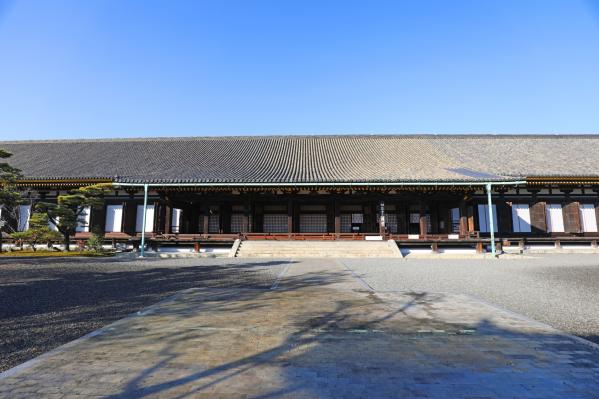
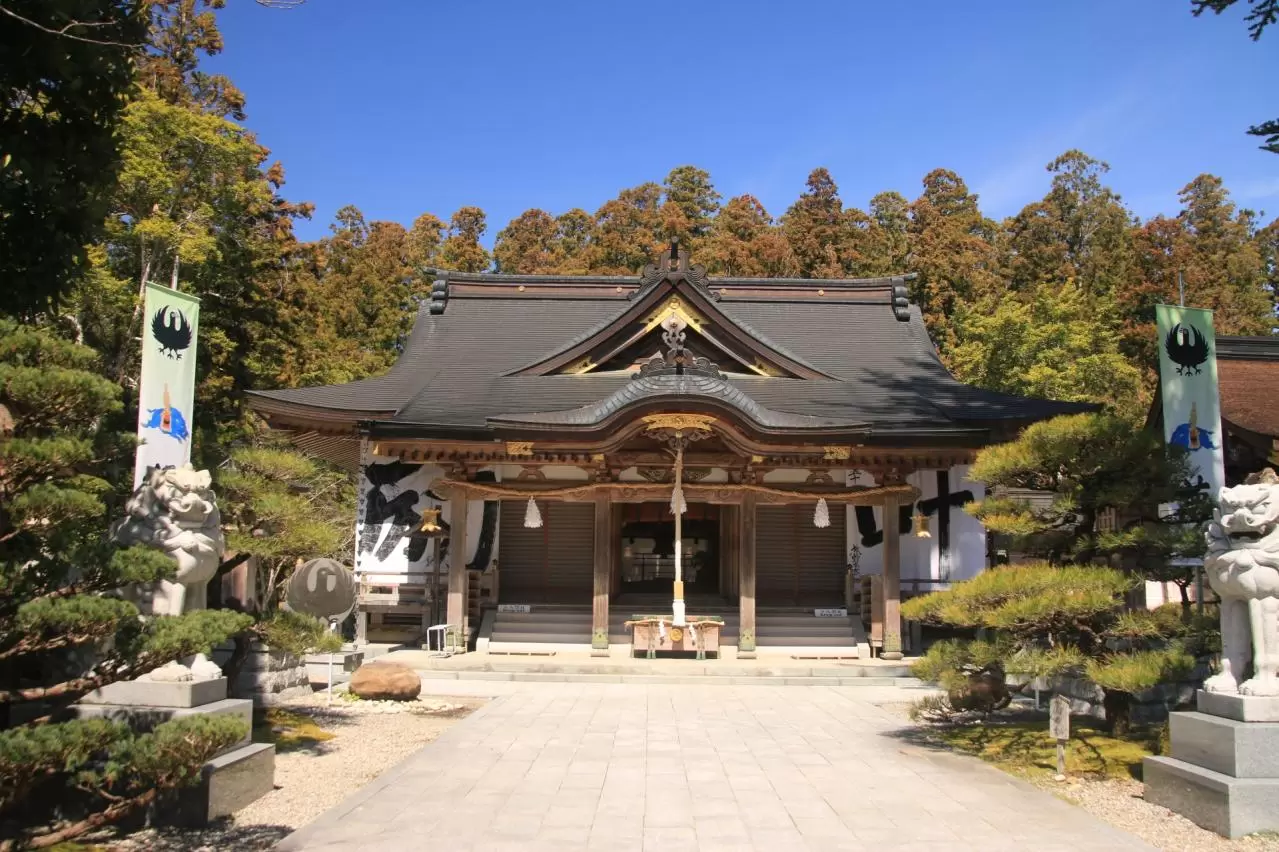
The present shrine buildings consist of the principal buildings that survived the great flood of 1889 and were relocated and reconstructed at the current site in 1891. They feature a dignified architectural style with cypress-bark roofing and have been designated Important Cultural Properties of Japan.
On both sides of the 158 stone steps leading to the main shrine stand rows of cedar trees, creating a sacred and tranquil atmosphere. After passing through the shrine gate, visitors encounter beautiful shrine buildings constructed in the traditional white-wood style, where they can sense the harmony between deep history and nature.
The shrine grounds also contain a treasure hall housing valuable artifacts, including the Iron Cauldron, which has been designated an Important Cultural Property of Japan.
■ Oyunohara and the Surrounding Area
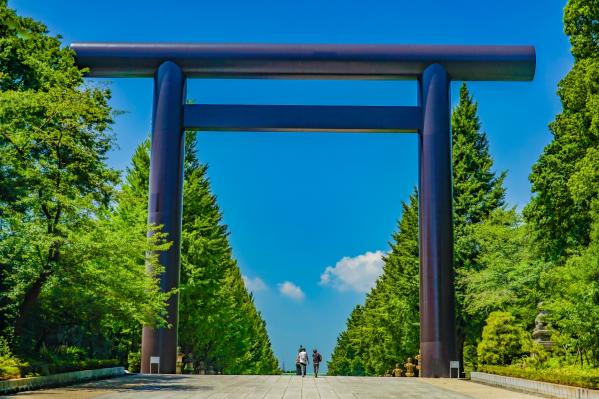
At Oyunohara, the former site of the shrine, stone shrines are still enshrined as sacred places, and one of Japan’s largest torii gates stands approximately 34 meters tall. The area is also known as a famous destination for viewing cherry blossoms and attracts many visitors in spring.
The surrounding area includes the World Heritage Kumano Hongu Museum, the Zuihōden facility featuring the Yatagarasu as its motif, and the hot spring resorts of Kawayu Onsen, Yunomine Onsen, and Wataze Onsen, collectively known as the Kumano Hongu Hot Spring Resort. Visitors can enjoy sightseeing in addition to paying their respects at the shrine.
■ Connection with the Pilgrimage Routes
Following the Nakahechi route, one of the most frequently traveled sections of the Kumano pilgrimage routes, pilgrims eventually arrive at Kumano Hongu Taisha, the final destination of their journey. It is said that Fushiogami-oji, a subsidiary shrine along the route, received its name because pilgrims who saw Hongu for the first time were so moved that they fell to their knees and prayed.
■ Conclusion
Kumano Hongu Taisha is one of Japan’s foremost sacred sites and has continued to attract worshippers from ancient times to the present day. It is a sacred space where mythology, history, and nature come together, as well as a symbol of a universal faith that welcomes everyone. Stepping into its grounds, surrounded by dignified shrine buildings and deep forests, visitors can experience the timeless history and mysterious spiritual power of this remarkable place.
Wakayama Tourist Attractions
View List
Kumano Nachi Taisha
Kumano Nachi Taisha is a shrine revered as one of the Kumano Sanzan, along with Kumano Hayatama Taisha and Kumano Hongu Taisha, and it is located on the slopes of Na...

Toretore Ichiba Nanki Shirahama
Toretore Market in Nanki Shirahama is one of the largest seafood markets in Western Japan, managed by the local Kata Fishing Cooperative. As a result, you can find e...

Shirarahama Beach
Shirarahama is a beautiful beach extending about 620 meters, and it is one of the most famous beaches in the Kansai region. Its name comes from the pure white sandy ...

Nachi Falls
Nachi Falls is a famous spot in Wakayama, recognized as one of Japan's three great waterfalls, boasting a height of 133 meters, a width of 13 meters at the mouth, an...

Kongōbu-ji
Kongōb номерji is the headquarters of the Kōyasan Shingon sect, and is a sacred site of Japanese Buddhism established by the Great Teacher Kūkai in the early Heian p...

Adventure World
Adventure World is a theme park that integrates a zoo, aquarium, and amusement park, themed around "Smile in Your Heart, Creating the Future Park." Visitors can expe...

Senjōji Temple
Chinjoh-jiki is a scenic spot in Wakayama, characterized by its expansive rock formation located at an elevation of about 200 meters. The sloping white rock face, wh...

Wakayama Castle
Wakayama Castle is an iconic castle that towers over Wakayama City, situated on Mount Torafusu. It was once referred to as "Oten su" in the Wakayama dialect. This ca...