Kinomiya Shrine
Kinomiya Shrine Movies


Basic Information
- Spot Name
- Kinomiya Shrine
- Location
- 〒413-0034 43-1 Nishiyama-cho, Atami City, Shizuoka Prefecture
- Access
- 3-minute walk from JR Ito Line Kinomiya Station.
- Parking
- Parking available.
- Business Hours
- 9:00 AM - 5:00 PM (last admission)
- Regular Holiday
- Open every day.
- Contact Information
- Phone Number:0557-82-2241
- Official Website
Map
Detailed Information
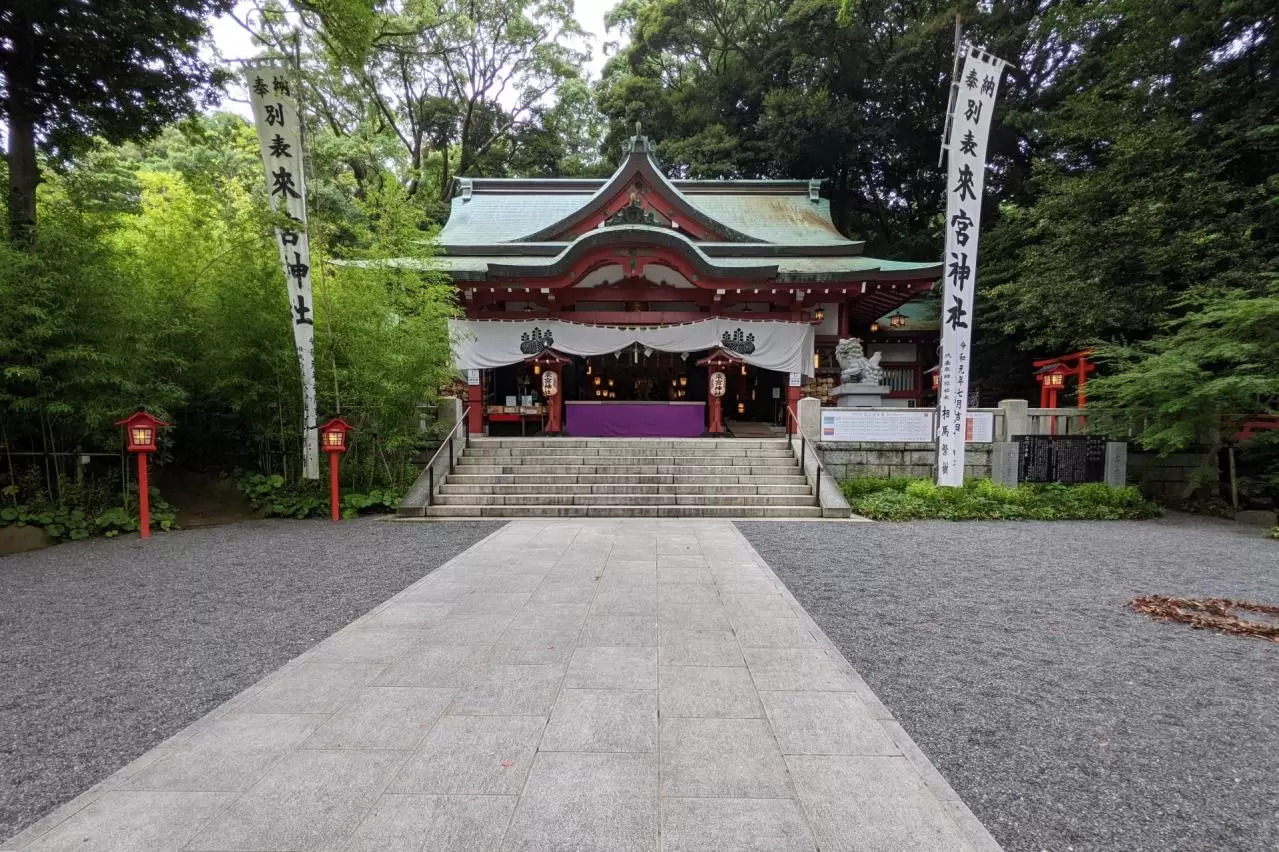
Kinomiya Shrine is located in Atami, Shizuoka Prefecture, and has long been revered as a shrine that invites good fortune and auspicious blessings.
It is widely visited by people hoping to “open the way for good luck” or “draw in a positive flow,” and is loved as one of Atami’s representative shrines.
It is also often visited by travelers to Izu, and is believed not only to protect the local area but also to safeguard travelers.
History and Origins
Kinomiya Shrine is said to have been founded about 1,300 years ago, around the year 701.
According to legend, on the 15th day of the sixth month of the lunar calendar, something resembling a sacred wooden image was caught in a fisherman’s net. As the fisherman wondered what it was, a child appeared and declared:
“I am Isotakeru-no-Mikoto. Enshrine me in a place with seven camphor tree hollows where the sound of the waves cannot be heard. Then I shall protect both the villagers and travelers.”
This divine message is said to mark the beginning of Kinomiya Shrine’s enshrinement at its present location.
It is also said that in the early Heian period, Sakanoue no Tamuramaro, known as a shogun who subdued the Emishi, prayed for victory before the shrine and enshrined branch deities in various places.
Today, it is especially notable for being revered as the head shrine of the 44 Kinomiya Shrines nationwide.
Enshrined Deities
Kinomiya Shrine enshrines several deities and is known for offering a wide range of blessings.
● Isotakeru-no-Mikoto
Known as the god of trees and nature conservation, he is the principal deity of Kinomiya Shrine.
Because he is said to have declared that the shrine should protect villagers and travelers when it was established in Atami, many visitors from Izu also come to worship here.
● Yamato Takeru no Mikoto
Regarded as a deity of valor and decisive action, he is said to bring blessings for victory and advancement in life.
● Ōnamuchi-no-Mikoto
Also known as Daikoku-sama, he is believed to grant blessings for prosperous business, health, and matchmaking.
The Nationally Designated Natural Monument, the Great Camphor Tree, Is the Main Highlight
One of the most important sights at Kinomiya Shrine is its sacred tree, the Great Camphor Tree.
This giant camphor tree is a Nationally Designated Natural Monument and is said to be over 2,000 years old, with some estimates placing it at around 2,100 years old.
● Overwhelming size and presence
Its trunk circumference is said to be about 24 meters (approximately 23.9 m), and standing before it is so awe-inspiring that one naturally wants to put one’s hands together in prayer.
It is also said that in a 1992 survey by the Environment Agency, it was recognized as the second-largest giant tree in Japan.
● Legends and blessings associated with the Great Camphor Tree
Because the tree radiates an extraordinary vitality, many visitors come to pray for longevity, freedom from illness, recovery from sickness, and good health.
One especially well-known belief is:
• Walking around the trunk once extends your lifespan by one year
• Walking around it while quietly holding a wish in your heart helps bring that wish into focus and make it come true
It is said that this is not merely “taking a walk,” but rather a quiet, prayerful circuit that helps calm the heart and clarify one’s desire.
Night Illumination: “the Kodama Project”
Kinomiya Shrine is popular not only in the morning and daytime, but also at night.
From around sunset, the precincts are illuminated under the “the Kodama Project,” with the Great Camphor Tree at the center.
About 160 soft lights, inspired by kodama, or tree spirits, create a dreamlike atmosphere همراه with the sound of the flowing river.
It offers a completely different expression from daytime and allows visitors to feel the shrine’s mystique even more deeply.
The illumination is said to run from sunset until around 11:00 p.m. (though it may vary depending on the season).
Annual Festival: “Kogashi Festival” (July 14–16)
Kinomiya Shrine holds its annual grand festival every year from July 14 to 16.
This festival is also called the “Kogashi Festival,” and is based on legends of Isotakeru-no-Mikoto and the deity’s favorite offering.
To the accompaniment of flutes and drums, tengu wearing geta sandals appear and scatter “mugi kogashi,” a roasted barley flour believed to be a favorite of the gods, making this a lively event prayed over for health and freedom from illness.
Enjoying the Grounds: Rest Area, Sweets, and Specialties
Another charm of Kinomiya Shrine is that visitors can take a break between prayers.
● Rest area / tea salon “Hoko”
“Hoko” is said to refer to the drum signal that announces the beginning of a ritual.
Here, you can enjoy shrine-related sweets such as “oshiruko with mugi kogashi” and “tachibana cider.”
The coffee is also made with specialty beans, reflecting a careful attention to quality.
● Famous “Kogashi Manju” and “Mugi Kogashi”
Within the grounds and nearby area, Japanese sweets connected to the shrine’s origins, such as “Kogashi Manju” and “Mugi Kogashi,” are also popular.
They are often chosen as souvenirs and make for lasting memories of the visit.
A Wide Variety of Omamori and Sacred Offerings
Kinomiya Shrine also offers a rich selection of omamori, including charming matchmaking charms.
Shizuoka Tourist Attractions
View List
Shizuoka Prefectural Mount Fuji World Heritage Center
The Fujisan World Heritage Center in Shizuoka Prefecture is a facility where visitors can learn about the history, culture, and nature related to the World Cultural ...

Mishima Skywalk
Mishima Skywalk is Japan's longest pedestrian suspension bridge, measuring 400 meters, and it opened in 2015. The bridge features a highly transparent mesh structure...

Fuji Safari Park
Fuji Safari Park is a safari park located at the foothills of Mount Fuji, consisting mainly of two areas: the Safari Zone and the Interaction Zone. In the Safari Zon...

MOA Museum of Art
The MOA Museum of Art is a representative museum of Atami, boasting a collection of approximately 3,500 items focusing on East Asian art, including paintings, callig...


Mihomatsubara (Hagoromo no Matsu)
Miho Matsubara is a scenic spot located on the Miho Peninsula protruding into Suruga Bay, registered as part of the UNESCO World Cultural Heritage site "Mount Fuji -...

Hamamatsu Castle
Hamamatsu Castle is one of the castles deeply rooted in Japanese history. Construction began in 1504, and Tokugawa Ieyasu entered the castle in 1570, spending 17 yea...

Numazu Deep Sea Aquarium
Numazu Deep Sea Aquarium is the only aquarium in Japan that showcases deep-sea creatures from Suruga Bay. The deepest part of Suruga Bay reaches 2,500 meters, making...