Shizuoka Prefectural Mount Fuji World Heritage Center
Shizuoka Prefectural Mount Fuji World Heritage Center Movies


![Mt.Fuji World Heritage Centre, Shizuoka 静岡県富士山世界遺産センター 靜岡縣富士宮市 [AI editing]](https://i.ytimg.com/vi/OVpdLhyUIzU/mqdefault.jpg)


Basic Information
- Spot Name
- Shizuoka Prefectural Mount Fuji World Heritage Center
- Location
- 〒418-0067 5-12 Miyamachi, Fujinomiya City, Shizuoka Prefecture, Japan
- Access
- About an 8-minute walk from JR Minobu Line "Fujinomiya Station"
About 10 minutes from "Shin-Fuji IC" on the new Tomei Expressway - Parking
- Please use the nearby paid parking facilities.
- Business Hours
- 9 AM to 5 PM (until 6 PM in August and September) *Last admission is 30 minutes before closing.
- Regular Holiday
- Every third Tuesday of the month, facility inspection day, year-end.
- Fees
- Adults: 300 yen (200 yen for groups)
Free for those under 15, over 70, and persons with disabilities. - Contact Information
- Phone Number:0544-21-3776
- Official Website
Map
Detailed Information
The Mt. Fuji World Heritage Center, Shizuoka, is a facility where visitors can learn about the World Cultural Heritage site “Mount Fuji—Object of Worship, Source of Art” from multiple perspectives, including history, culture, and nature. In response to Mount Fuji’s inscription as a World Cultural Heritage site in 2013, the center was developed as a base for preserving and passing on its value to future generations, and it opened in December 2017. Its purpose is to clearly convey the charm and significance of Mount Fuji to visitors from both Japan and overseas.
The center’s activities are built on four pillars: “preserve for a long time,” “convey in an enjoyable way,” “connect widely,” and “pursue deeply.” In addition to protecting and managing Mount Fuji’s universal value so it can be handed down to the next generation, the center offers opportunities to learn about Mount Fuji in an engaging way through exhibitions and information sharing. It also plays a broad role by creating exchanges in fields such as tourism, academia, and the arts, while furthering research to deepen scholarly knowledge.
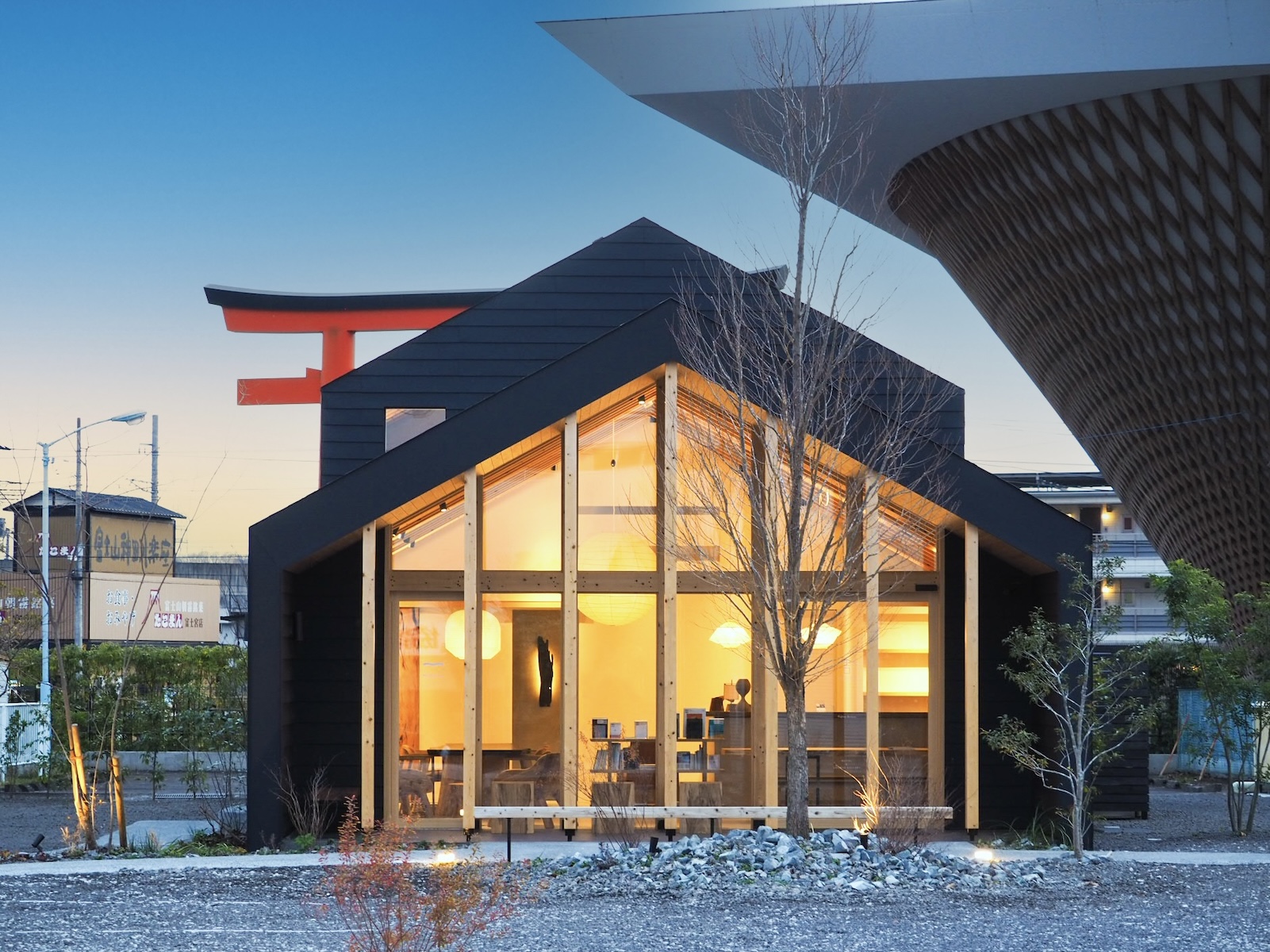
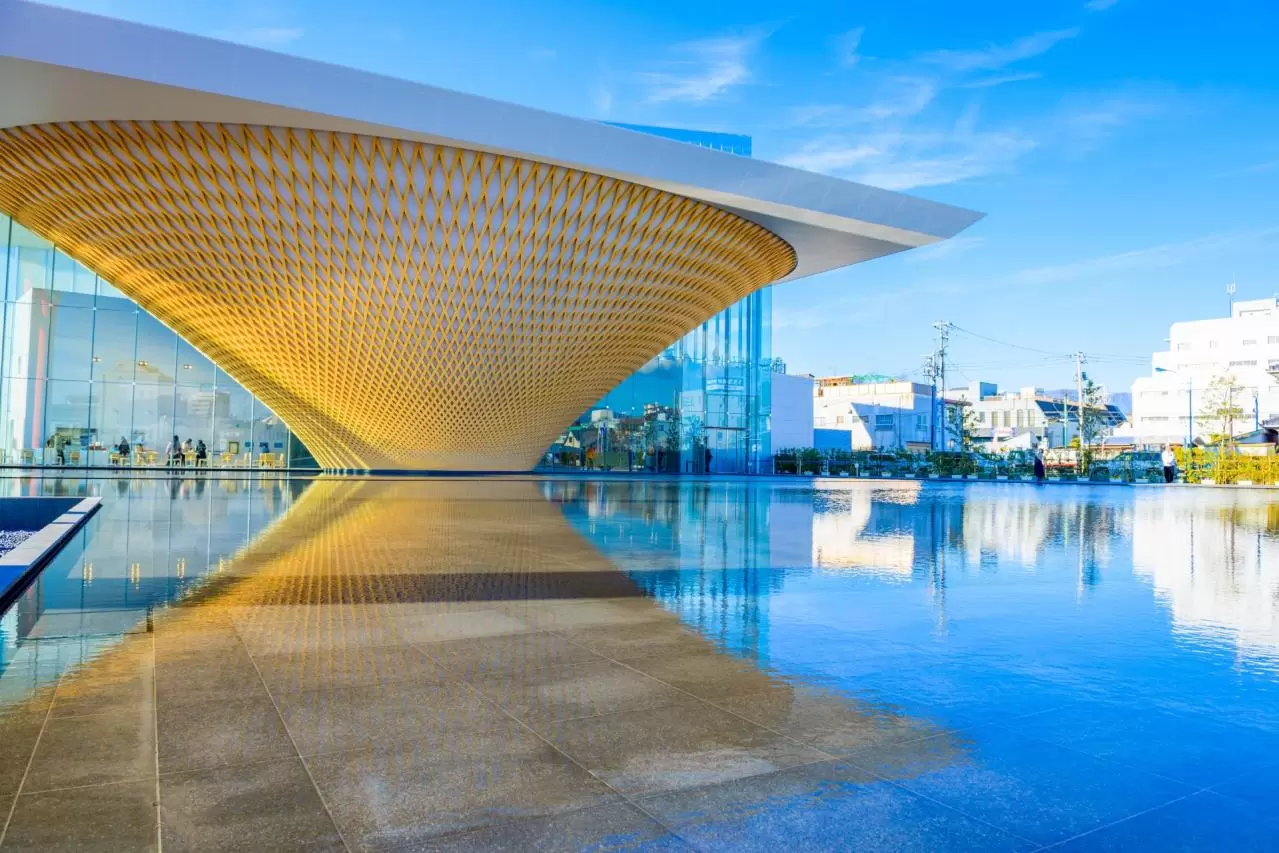
The facility is mainly composed of three buildings: the Exhibition Building, the North Building, and the West Building. Among them, the central Exhibition Building has a distinctive inverted conical shape wrapped in a wooden lattice, creating a striking appearance. This design was inspired by “upside-down Fuji,” and when reflected in the water basin in front of the building, it creates the image of Mount Fuji turned upside down. The wooden lattice on the exterior uses local Fujihinoki cypress, making it an architecturally notable building that makes use of regional natural resources.
Inside the Exhibition Building, there is a gentle 193-meter spiral slope running from the first to the fifth floor. As visitors ascend the slope, they can enjoy seasonal images projected on the walls as well as landscapes of the Mount Fuji climbing routes, allowing them to experience a simulated ascent of Mount Fuji. Rather than simply “viewing” the exhibits, the center is designed so that visitors can learn through experience, making it enjoyable for both children and adults without becoming boring.
The exhibition themes are also diverse, introducing Mount Fuji from perspectives such as “Nurturing Mountain,” “Beautiful Mountain,” “Raging Mountain,” “Sacred Mountain,” and “Inherited Mountain.” These exhibits present not only the mountain’s value as a natural environment, but also its history as an object of worship and its cultural influence as a motif in art. In addition, a video theater allows visitors to feel the appeal of Mount Fuji more deeply through powerful imagery, making for an exhibition layout that leaves a strong visual impression.
When visitors reach the top-floor exhibition space or observation hall, on clear days they can take in the real Mount Fuji filling the large windows. The view of Mount Fuji framed like a painting is one of the center’s greatest highlights. Visitors can experience the mountain’s changing expressions depending on weather and time of day up close, creating a special experience where learning and inspiration come together.
There is also an open café and museum shop on the first floor, where visitors can relax after enjoying the exhibits. The café offers Mount Fuji-shaped soft serve ice cream and light meals, making it a perfect place to take a break during your trip. The museum shop sells limited-edition goods and Mount Fuji-related items, making it a great place to look for souvenirs.
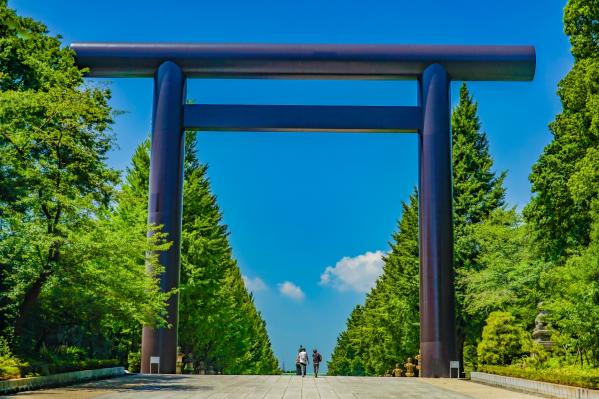
In the surrounding area, visitors can also find Fujisan Hongu Sengen Taisha, a shrine that enshrines Mount Fuji as its sacred object, and it can be visited on foot together with the center. The view of the large torii gate standing nearby is also popular as a photogenic spot, and it offers a deeper sense of the culture of Mount Fuji worship.
The Mt. Fuji World Heritage Center, Shizuoka is a valuable facility where visitors can not only “know” and “learn” about Mount Fuji, but also “experience” it through architecture and visual media. It is a recommended destination for tourists as well as for anyone who wishes to gain a deeper understanding of Mount Fuji, as it allows visitors to fully appreciate the mountain’s multifaceted value of nature, history, faith, and art.
Shizuoka Tourist Attractions
View List
Numazu Deep Sea Aquarium
Numazu Deep Sea Aquarium is the only aquarium in Japan that showcases deep-sea creatures from Suruga Bay. The deepest part of Suruga Bay reaches 2,500 meters, making...


MOA Museum of Art
The MOA Museum of Art is a representative museum of Atami, boasting a collection of approximately 3,500 items focusing on East Asian art, including paintings, callig...

Kinomiya Shrine
Kinuami Shrine has been revered as a deity of good fortune and auspiciousness for many years, and within its grounds stands the "Great Camphor Tree," a national natu...

Mishima Skywalk
Mishima Skywalk is Japan's longest pedestrian suspension bridge, measuring 400 meters, and it opened in 2015. The bridge features a highly transparent mesh structure...

Fuji Safari Park
Fuji Safari Park is a safari park located at the foothills of Mount Fuji, consisting mainly of two areas: the Safari Zone and the Interaction Zone. In the Safari Zon...

Hamamatsu Castle
Hamamatsu Castle is one of the castles deeply rooted in Japanese history. Construction began in 1504, and Tokugawa Ieyasu entered the castle in 1570, spending 17 yea...

Mihomatsubara (Hagoromo no Matsu)
Miho Matsubara is a scenic spot located on the Miho Peninsula protruding into Suruga Bay, registered as part of the UNESCO World Cultural Heritage site "Mount Fuji -...