Mishima Skywalk
Mishima Skywalk Movies


Basic Information
- Spot Name
- Mishima Skywalk
- Location
- 〒 411-0012 313 Sasahara Shinden, Mishima City, Shizuoka Prefecture, Japan
- Access
- About a 20-minute ride on the Tokai Bus from JR Tokaido Main Line "Mishima Station," get off at "Mishima Skywalk." Approximately 15 minutes from the Tomei Expressway "Numazu IC."
- Parking
- 400 vehicles
- Business Hours
- 9:00 AM to 5:00 PM
- Regular Holiday
- Open year-round.
- Fees
- Adults: 1,100 yen, Junior and senior high school students: 500 yen, Elementary school students: 200 yen.
- Contact Information
- Phone Number:055-972-0084
- Official Website
Map
Detailed Information
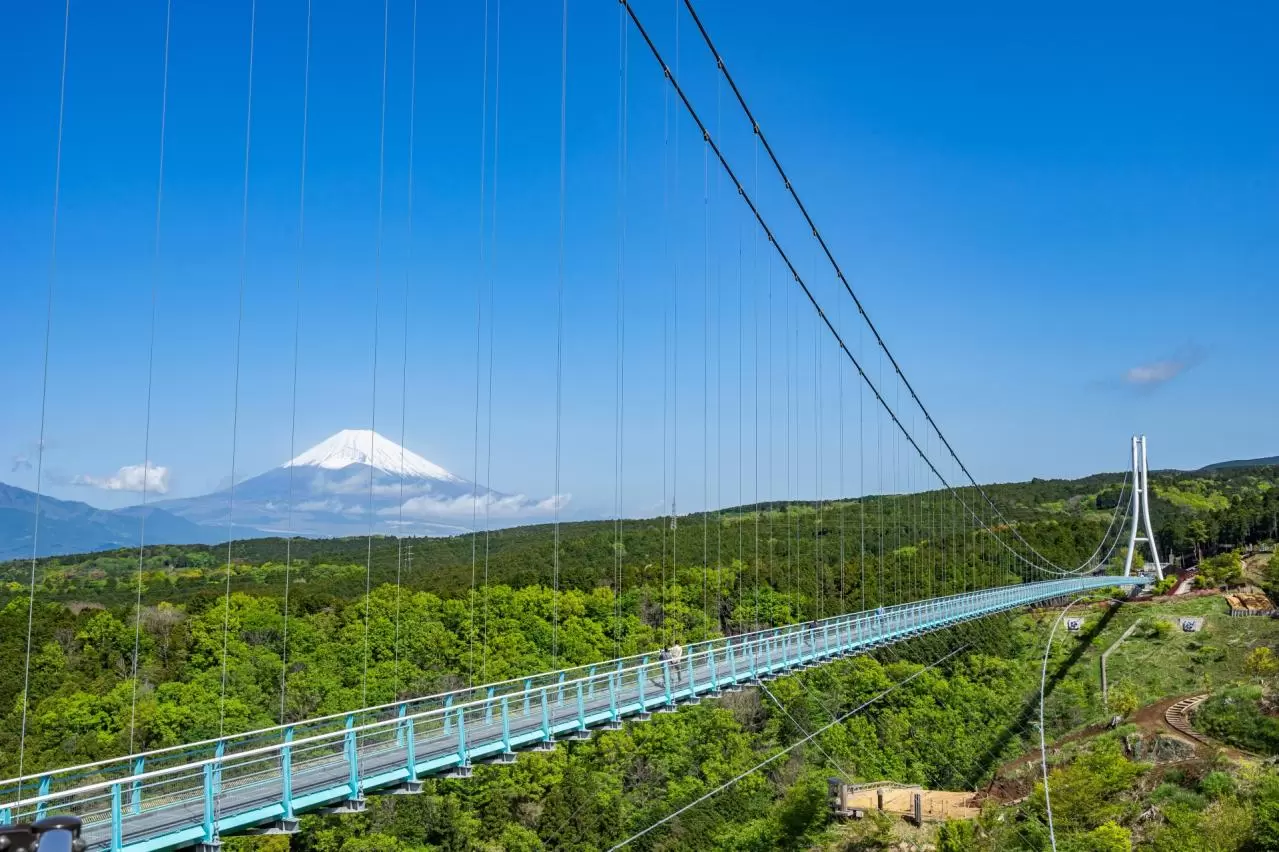
Mishima Sky Walk is a tourist attraction located on the western foothills of Hakone in Shizuoka Prefecture, and it proudly holds the title of Japan’s longest pedestrian suspension bridge at 400 meters in length. Opened in 2015 and built at an elevation of about 415 meters, it has become a popular spot where visitors can enjoy a sweeping panorama of nature from the bridge. With a height difference of about 70 meters down to the valley below, simply walking across the bridge offers both excitement and a sense of openness.
The bridge’s design features a highly transparent mesh structure, allowing clear views down to your feet and making the scenery feel even more dynamic. In addition to enhancing the view, safety has also been carefully considered: the bridge is designed to withstand earthquakes of magnitude 9-class, so visitors can cross with peace of mind.
The views from the bridge are breathtaking. Mishima Sky Walk is known as a scenic spot where you can simultaneously take in Mt. Fuji, Japan’s tallest mountain, and Suruga Bay, which is known as the deepest bay in Japan. On clear days, you may also be able to see the mountains of the Izu Peninsula, as well as the cityscapes of Mishima and Numazu, letting you fully enjoy nature as if taking a walk in the sky. Another major attraction is the chance to experience three of Japan’s “No. 1” features at once: the longest suspension bridge in Japan, Mt. Fuji as Japan’s highest mountain, and Suruga Bay as Japan’s deepest bay.
The park is divided into two areas centered around the suspension bridge, and it also offers a variety of facilities to visit between walks. In particular, the shop “Sky Garden” is striking for its decorative ceiling resembling a chandelier of flowers spread across the entire space, creating a glamorous setting in which to shop. Along with local specialty products, there is also a wide selection of Mt. Fuji-themed goods, making it a perfect place to look for souvenirs.
At the restaurant “Mori no Kitchen,” visitors can enjoy dishes made with Mishima’s local specialties and ingredients from the surrounding area. The menu is broad, including items such as curry and pancakes, and the restaurant also serves “Mishima croquettes,” a local B-grade gourmet dish, using an original recipe, making it well worth trying as part of your travel memories.
The appeal of Mishima Sky Walk is not limited to the scenery; it also stands out for its many hands-on activities. One of the most popular is the “Long Zip Slide,” a thrilling activity that lets you glide down a total of 560 meters in one exhilarating run. As you soar while looking out over the cityscape, the suspension bridge, and Mt. Fuji, a UNESCO World Heritage site, you can feel the wind and almost imagine yourself as a bird. You can also slide together with friends or family, which adds to both the excitement and enjoyment.
In addition, “Forest Adventure Mishima Sky Walk” offers a nature-immersive outdoor park from France that makes use of the forest as it is while minimizing environmental impact. Wearing a special harness, participants move between trees by crossing and climbing through the course, fully enjoying the spirit of adventure. Three courses are available—“Adventure,” “Canopy,” and “Kids”—so everyone from small children to advanced users can have fun.
Other activities include the “Segway Guided Tour,” which lets you explore the forest on an off-road Segway, and “Go-Go Buggy,” a wild course that takes advantage of the natural terrain. These experiences are ideal for those who want active fun. The Segway can be operated by shifting your weight, and a guide carefully teaches you how to ride, making it easy for beginners to try. While enjoying the forest, you can take in the sounds of birdsong and the breeze. There is also the “E-BIKE Trail Tour,” where you can ride an electric-assist mountain bike along mountain paths, and enjoy an up-and-down course with a guide.
As a general guideline, simply crossing the bridge and strolling around takes about 80 minutes, but combining activities allows you to spend even more fulfilling time there. From leisurely walking while admiring the spectacular views to fully enjoying zip lines and outdoor adventures, the attraction caters to a wide range of experiences, making it a satisfying destination for families, groups of friends, couples, and many other visitors.
Shizuoka Tourist Attractions
View List

Mihomatsubara (Hagoromo no Matsu)
Miho Matsubara is a scenic spot located on the Miho Peninsula protruding into Suruga Bay, registered as part of the UNESCO World Cultural Heritage site "Mount Fuji -...

Shizuoka Prefectural Mount Fuji World Heritage Center
The Fujisan World Heritage Center in Shizuoka Prefecture is a facility where visitors can learn about the history, culture, and nature related to the World Cultural ...

Fuji Safari Park
Fuji Safari Park is a safari park located at the foothills of Mount Fuji, consisting mainly of two areas: the Safari Zone and the Interaction Zone. In the Safari Zon...

Hamamatsu Castle
Hamamatsu Castle is one of the castles deeply rooted in Japanese history. Construction began in 1504, and Tokugawa Ieyasu entered the castle in 1570, spending 17 yea...

Kinomiya Shrine
Kinuami Shrine has been revered as a deity of good fortune and auspiciousness for many years, and within its grounds stands the "Great Camphor Tree," a national natu...

Numazu Deep Sea Aquarium
Numazu Deep Sea Aquarium is the only aquarium in Japan that showcases deep-sea creatures from Suruga Bay. The deepest part of Suruga Bay reaches 2,500 meters, making...

MOA Museum of Art
The MOA Museum of Art is a representative museum of Atami, boasting a collection of approximately 3,500 items focusing on East Asian art, including paintings, callig...