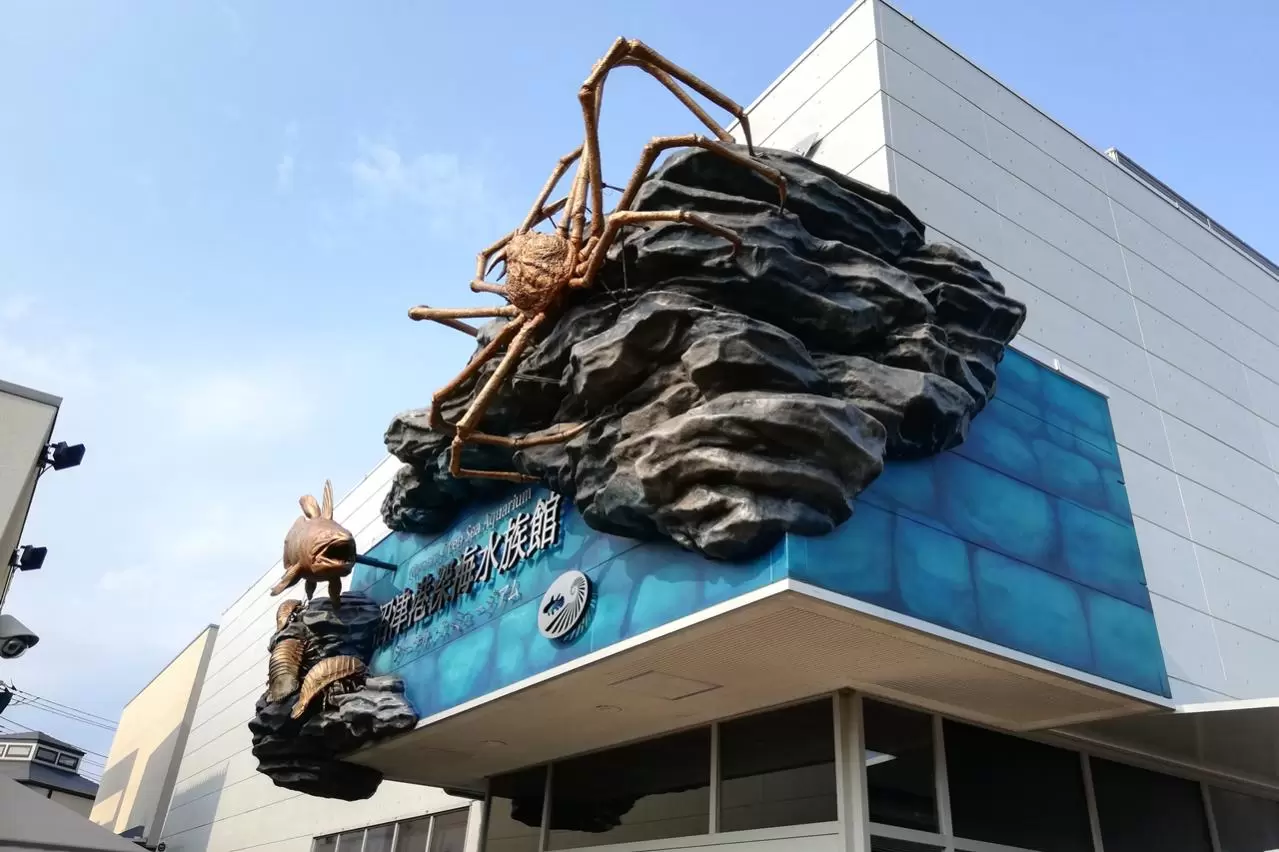
Numazu Deep Sea Aquarium
Numazu Deep Sea Aquarium Movies





Basic Information
- Spot Name
- Numazu Deep Sea Aquarium
- Location
- 〒410-0845 83 Senbon Minato-cho, Numazu City, Shizuoka Prefecture
- Access
- About 15 minutes by bus from the south exit of JR Tōkaidō Line "Numazu Station," get off at "Numazu Port."
Approximately 20-30 minutes from Tomei Expressway "Numazu IC." - Parking
- Please use the nearby paid parking facilities.
- Business Hours
- 10:00 AM to 6:00 PM (hours may vary during summer, winter, and busy seasons)
- Regular Holiday
- Open year-round.
- Fees
- Adults (high school students and above) 1,600 yen, Children (elementary and middle school students) 800 yen, Toddlers (4 years and older) 400 yen.
- Contact Information
- Phone Number: 055-954-0606
- Official Website
Map
Detailed Information
Numazu Deep Sea Aquarium is an aquarium in Numazu City, Shizuoka Prefecture, near Numazu Port, specializing in the exhibition of deep-sea creatures.
Suruga Bay, which stretches out before it, is known as Japan’s deepest bay, with its deepest point reaching 2,500 meters. Taking advantage of this geographical feature, the aquarium’s major attraction is that it constantly displays more than 100 species of deep-sea life, mainly from Suruga Bay.
The deep sea is a world where light does not reach and many mysteries remain, but this aquarium introduces strange and fascinating creatures in a way that is enjoyable and educational for both children and adults.
1. Highlight 1: The “Suruga Bay Big Tank,” where you can see deep-sea creatures from Suruga Bay
One of the main attractions inside the facility is the “Suruga Bay Big Tank,” which exhibits deep-sea creatures caught in Suruga Bay.
Against the backdrop of Suruga Bay, Japan’s deepest bay, visitors can observe deep-sea creatures up close that they would normally never be able to see by diving themselves, allowing them to experience the world of the deep sea.
2. Highlight 2: The “Deep Sea Planetarium,” where bioluminescent fish dance
A popular exhibit symbolizing the charm of deep-sea life is the area where bioluminescent fish swim.
In particular, the fantastical display of bioluminescent lanternfish shimmering like stars is so striking that it is called the “Deep Sea Planetarium.”
It is a memorable spot where visitors can visually appreciate bioluminescence, a trait that helps deep-sea creatures survive in the darkness.
3. The biggest highlight: the coelacanth exhibit (a globally rare display)
The biggest attraction at Numazu Deep Sea Aquarium is the exhibit of the coelacanth, often called a “living fossil.”
The coelacanth is an ancient fish believed to have existed for about 350 million years, and because it has survived across such a long span of time, it is known as a “living fossil.”
This aquarium presents coelacanths in an extremely rare format even by global standards, with a total of five specimens on display:
2 frozen specimens
3 taxidermy specimens
Because the frozen specimens are displayed in the condition they were in when captured, visitors have a valuable opportunity to observe details such as the inside of the mouth and the texture of the scales with a realism not available in ordinary specimens.
Furthermore, due to restrictions on capture under the Washington Convention, it is said that this is the only place in the world where frozen coelacanths can be displayed, making it a major point of interest.
In addition, the coelacanth exhibit area includes not only specimens but also swimming footage, internal organ specimens, and behind-the-scenes stories related to their discovery, creating a setup that allows for deeper learning.
4. A wide array of deep-sea exhibits filled with highlights (deep-sea creatures from around the world)
Inside the museum, not only Suruga Bay species but also unique deep-sea creatures collected from around the world are on display.
Many of these creatures have strange appearances and behaviors characteristic of deep-sea life, and the “Odd Creatures” corner offers plenty of exhibits that are fun to see.
Popular representative deep-sea species such as
giant isopods
dumbo octopuses
are sometimes exhibited as well, making this a must-visit spot for deep-sea enthusiasts.
In particular, dumbo octopuses may be displayed when they are caught during the bottom trawling season (around October to May).
5. Giant specimens and exhibits that let visitors experience the deep-sea environment
At Numazu Deep Sea Aquarium, not only living exhibits but also specimen displays that convey the scale of the deep sea are part of the attraction.
For example, there is a taxidermy specimen of the giant deep-sea shark known as the megamouth shark, which is about 5 meters long.
There is also a diorama recreating a seafloor hydrothermal vent, allowing visitors to learn about the special environment of the deep sea not only through its creatures but also through its habitat.
6. New area opened in July 2025: “Immersive Deep Sea World”
In July 2025, a new area called
“Immersive Deep Sea World”
is said to have opened.
This area expresses the mysterious world of the deep sea through video and artistic installations, offering a more hands-on, immersive way to enjoy it.
Taxidermy exhibits of megamouth sharks, frilled sharks, and oarfish
An area where visitors can enjoy the super-deep sea through interactive visuals
An imaginative deep-sea space designed to create a mysterious atmosphere
In this way, the experience expands from simply “seeing” the deep sea to “immersing oneself in” it.
7. The museum shop “Blue Jelly” is also popular
The museum also has a shop called “Blue Jelly,” where visitors can purchase goods inspired by deep-sea creatures.
There are plush toys and original products featuring popular deep-sea animals such as coelacanths, giant isopods, and dumbo octopuses, making souvenir shopping enjoyable as well.
Summary: A rare aquarium where visitors can experience the mysteries of the deep sea
Numazu Deep Sea Aquarium is a highly unique aquarium in Japan that specializes in deep-sea creatures, taking advantage of the environment of Suruga Bay, the deepest bay in Japan.
With more than 100 species of deep-sea life on display at all times, it offers attractions you can only experience here, including fantastical bioluminescent fish exhibits and the globally rare display of frozen coelacanths.
As a place where visitors can feel the unknown wonders and romance of the deep sea up close, it is an aquarium that can be enjoyed by a wide range of people, from children to adults.
Shizuoka Tourist Attractions
View List
Kinomiya Shrine
Kinuami Shrine has been revered as a deity of good fortune and auspiciousness for many years, and within its grounds stands the "Great Camphor Tree," a national natu...


Hamamatsu Castle
Hamamatsu Castle is one of the castles deeply rooted in Japanese history. Construction began in 1504, and Tokugawa Ieyasu entered the castle in 1570, spending 17 yea...

Shizuoka Prefectural Mount Fuji World Heritage Center
The Fujisan World Heritage Center in Shizuoka Prefecture is a facility where visitors can learn about the history, culture, and nature related to the World Cultural ...

MOA Museum of Art
The MOA Museum of Art is a representative museum of Atami, boasting a collection of approximately 3,500 items focusing on East Asian art, including paintings, callig...

Mihomatsubara (Hagoromo no Matsu)
Miho Matsubara is a scenic spot located on the Miho Peninsula protruding into Suruga Bay, registered as part of the UNESCO World Cultural Heritage site "Mount Fuji -...

Mishima Skywalk
Mishima Skywalk is Japan's longest pedestrian suspension bridge, measuring 400 meters, and it opened in 2015. The bridge features a highly transparent mesh structure...

Fuji Safari Park
Fuji Safari Park is a safari park located at the foothills of Mount Fuji, consisting mainly of two areas: the Safari Zone and the Interaction Zone. In the Safari Zon...


![HOTEL ARIA 沼津 [ ホテル アリア 沼津]](https://img.travel.rakuten.co.jp/share/HOTEL/20628/20628.jpg)