Sea of Japan Tank
The approximately 800-ton tank creates an impressive sense of the vast ocean.
AI Summary
This is an AI-generated summary. Please check the official information for opening hours, fees, and closed days.
This aquarium is a great place for families to enjoy marine life from the Sea of Japan and an impressive large tank at a relaxed pace.
One of the largest aquariums on the Sea of Japan coast, it is home to around 500 species and 20,000 animals. Highlights include the large-tank marine tunnel, dolphin shows, and penguin exhibits, with a mix of fun and learning. It is easy to reach by bus from Niigata Station and is also a good option for a rainy day.
The approximately 800-ton tank creates an impressive sense of the vast ocean.
Fish and rays swim overhead, creating the feeling of a walk beneath the sea.
Along with the shows, hands-on exhibits offer plenty to explore during your visit.
For a satisfying visit, start at the large tank, continue through the marine tunnel, then see the dolphin show and the penguin and seal exhibits.
Niigata City Aquarium Marinepia Nihonkai is one of the largest aquariums on the Sea of Japan side of the country, located along the Sea of Japan in Chuo Ward, Niigata City. It houses and displays more than 500 species and 20,000 aquatic creatures, making it a facility where visitors can enjoy a wide variety of aquatic life, with a focus on the natural environment and ecosystems of the Sea of Japan. It is also easily accessible from the city center, taking about 20 minutes by bus from Niigata Station, and is a popular destination for sightseeing and family outings.
Marinepia Nihonkai has a long history, beginning with the opening of the first “Niigata Municipal Niigata Aquarium” in 1967. Later, to commemorate the 100th anniversary of Niigata City’s municipal administration, the current Marinepia Nihonkai opened in 1990. In July 2013, it underwent a major renovation aimed at improving accessibility and enriching its exhibits, transforming it into an aquarium that is easier to explore and learn from. It has long been a beloved facility among Niigata residents.
The exhibits inside the aquarium are divided into about 10 zones, each themed around different aquatic environments connected to the Sea of Japan. In the zone recreating the Shinano River, which flows into Niigata, visitors can observe creatures adapted to environments changing from downstream to upstream, offering a close-up way to experience Niigata’s natural landscape. Outside, there is also “Niigata Field,” which recreates Niigata’s satoyama environment and is designed as a place where visitors can learn through contact with nature.
The aquarium’s biggest highlight is the “Sea of Japan Large Tank,” which holds about 800 tons of water. In a space filled with the sound of waves, fish that inhabit the shallow and offshore waters of the Sea of Japan are kept, and visitors can watch about 40 species, including blacktip reef sharks, humped parrotfish, amberjacks, and frigate tunas, swimming gracefully. The background changes about every 15 minutes, and under the right conditions, visitors can also enjoy a dreamlike atmosphere reminiscent of a Sea of Japan sunset. During the one to two daily commentary sessions, keepers explain not only the characteristics of the animals on display, but also how the waves are created and how water quality is managed.
At the “Marine Tunnel” running beneath the Sea of Japan Large Tank, visitors can watch fish and rays swimming overhead up close, creating the feeling of strolling through the ocean. This fantastical space is also popular as a date spot.
If you visit Marinepia Nihonkai, the dolphin show at “Dolphin Stadium” is a must-see. Held in a covered venue, it takes place year-round regardless of the weather, and visitors can enjoy dynamic jumps and perfectly synchronized performances with trainers. The show also includes easy-to-understand explanations about dolphin anatomy and ecology, making it enjoyable and educational for both children and adults. Seats near the front may get splashed, so it is recommended for those who want to experience the excitement up close.
At “Marine Safari – Pinniped Cove,” visitors can observe Steller sea lions and harbor seals swimming from underwater on the first floor and from above the tank on the second floor. During the twice-daily Steller sea lion feeding commentary, visitors can get a close look at aspects of the animals that are not usually seen, such as their large bodies when out of the water and their vocalizations.
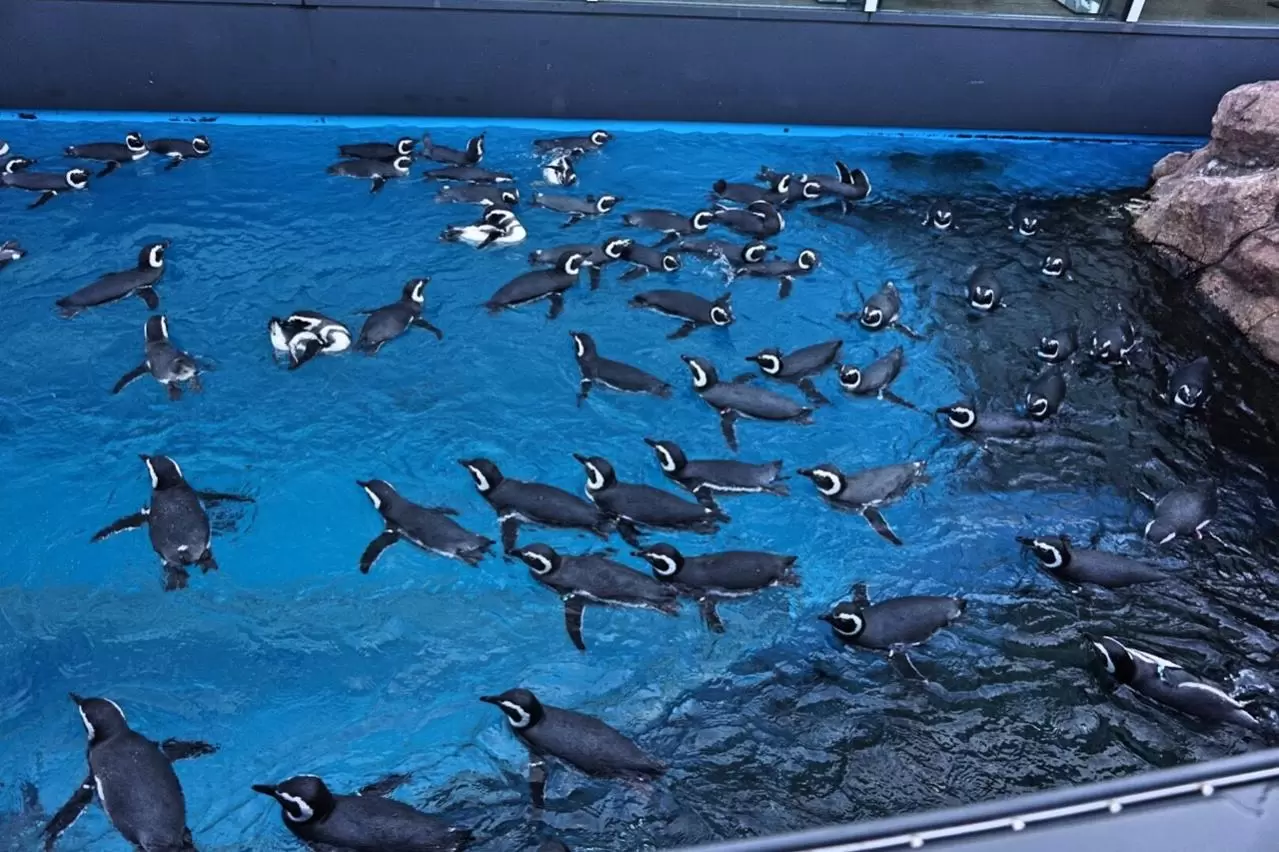
At “Penguin Coast,” endangered Humboldt penguins are kept, and visitors can observe them swimming as if flying through the water and building nests. Depending on the season, keepers also give ecology commentary at the Penguin Coast pool and the penguin promenade.
Inside the aquarium, “Marinepia Hall” features beautiful jellyfish displays, and many visitors stop to admire the enchanting space. In addition, there are hands-on exhibits such as “Hands-On Displays” and the “Rocky Shore Experience Tank,” allowing visitors to touch and learn directly, fulfilling the role of an educational facility as well.
The dining options inside and outside the facility are also part of its appeal. At the outdoor concession stand “Dolphin Jump,” popular snacks include the “Nodoguro Dog,” made with blackthroat seaperch, one of Niigata’s signature luxury fish. At the restaurant “UMINONE,” visitors can enjoy local Niigata specialties and dishes made with seafood, and playful menu items such as the “Seal Parfait” are also well received.
At the end of the visit, shopping for souvenirs at the museum shop “Marinepia Heart” is highly recommended. It offers exclusive Marinepia Nihonkai stuffed animals, sweets, and products inspired by Niigata’s famous confections, making it perfect for remembering your trip.
Niigata City Aquarium Marinepia Nihonkai is an aquarium where visitors can fully experience the charm of the Sea of Japan through impressive exhibits, detailed commentary, and hands-on programs. It is one of Niigata’s most popular attractions, and is recommended not only for families, but also for couples and adult travelers.
Yahiko Shrine is an ancient shrine that has long been revered as the first shrine of Echigo. Known affectionately as "Oyahiko-sama," it attracts over 200,000 visitor...
Sasakawa Nagare, located from Hamashinbo (Torigoeyama) in Murakami City, Niigata Prefecture, to Samukawa (Kitsuzaki), is a beautiful coastline boasting some of the b...
The Northern Culture Museum preserves and opens to the public the former grand residence of the Ito family, one of the most affluent farming families in Niigata. The...
Kiyotsu Gorge is one of Japan's three great gorges, alongside the Kurobe Gorge in Toyama Prefecture and Osu Valley in Mie Prefecture. This magnificent landscape was ...
Sado Gold Mine is a historical site that boasts a 400-year history as Japan's largest gold and silver mine. It was opened in 1601, and during the Edo period, it was ...
Hakusan Park is located in the center of Niigata City and was designated as one of Japan's first urban parks in 1873 (the sixth year of the Meiji era). In October 20...
Bijinbayashi is a beech forest about 100 years old, located in Matsunoyama, Tokamachi City. It was cut down for charcoal production at the end of the Taisho era, but...
Naena Falls is a spectacular waterfall selected as one of Japan's Top 100 Waterfalls, boasting a height of 55 meters. It flows over the Sekigawa River, which marks t...