One of Japan’s largest pedestrian suspension bridges
Its impressive length and height make crossing the bridge memorable in itself.

AI Summary
This is an AI-generated summary. Please check the official information for opening hours, fees, and closed days.
One of Japan’s largest pedestrian suspension bridges, with sweeping views over a gorge and reservoir—ideal for scenic outings, though not for everyone who dislikes heights.
Ryujin Suspension Bridge offers panoramic views of Ryujin Gorge and the reservoir below. Look through the viewing windows in the bridge floor for a dramatic view straight down, and enjoy scenery that changes with the seasons. Spring carp streamers and autumn foliage are especially popular.
Its impressive length and height make crossing the bridge memorable in itself.
Near the center of the bridge, you can look straight down at the water below for an extra thrill.
The atmosphere changes throughout the year, with spring carp streamers, summer wind chimes, and autumn foliage.
Take a bus from Hitachiota Station, cross the bridge, and take time to enjoy the surrounding views as well.
Ryujin Suspension Bridge is a pedestrian-only suspension bridge spanning Ryujin Gorge in Okukuji Prefectural Natural Park in Hitachiota City, Ibaraki Prefecture. Located above Ryujin Dam, which was created by damming the Ryujin River, the bridge boasts one of the largest scales in Japan for a bridge dedicated to pedestrians, with a total length of 446 meters (distance between anchorages) and a main span of 375 meters. About 100 meters above the lake surface, it offers spectacular views of the magnificent mountain ranges of the Yatakami and Abukuma Mountains, as well as the ever-changing beauty of the valley through the seasons. Opened in 1994, the bridge underwent its first repainting in about 12 years in 2025 and was renewed in a vivid blue appearance.
The bridge’s design places emphasis on both safety and harmony with the surrounding scenery. It uses a truss-stiffened structure capable of withstanding strong winds, and the main towers are designed in the shape of a dragon, inspired by the name Ryujin Gorge. The cables use large-diameter cables about 19 centimeters across, with each cable made from 1,159 strands of 5-millimeter piano wire bundled together, said to withstand tension of about 1,000 tons per cable. In addition, the anchorages securing the cables use about 5,000 cubic meters of concrete, and the bridge is engineered to safely accommodate 3,500 people at one time.
At the midpoint of the bridge, three acrylic “observation windows” allow visitors to look straight down at the surface of Ryujin Dam below. On the bridge, visitors can also experience a 100-meter-high bridge bungee jump, a rare activity even by global standards, attracting more than 10,000 participants each year. Beyond the suspension bridge stands the “Forest Spirit Bell” (Ryujin Carillon), which rings out three pure tones symbolizing love, hope, and happiness. In particular, the “Bell of Love” is designed to be pressed by two people at the same time, making it a popular spot for couples, families, and friends.
Ryujin Gorge also hosts a variety of seasonal events throughout the year. In spring, the “Ryujin Gorge Koinobori Festival” fills the gorge with about 1,000 carp streamers; in summer, the “Wind Chime Festival” features about 1,000 wind bells producing refreshing sounds; and in autumn, the “Autumn Leaves Festival” draws visitors as the entire gorge is enveloped in brilliant foliage. With souvenir shops, restaurants, the scenic Kamega-fuchi area, and hiking trails for nature walks nearby, it is one of Ibaraki Prefecture’s premier tourist destinations, where nature, culture, and hands-on experiences come together.
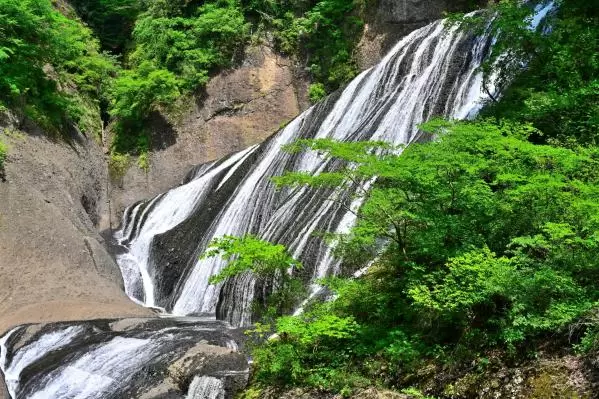
Fukuroda Falls is one of Japan's three major waterfalls, located in Daigo Town, Ibaraki Prefecture. It boasts a height of approximately 120 meters and a width of abo...
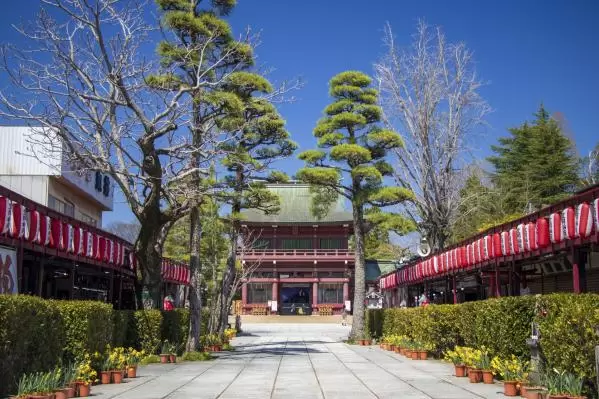
One of Japan's three major Inari shrines, Kasama Inari Shrine, is located in Ibaraki Prefecture and boasts a history of over 1,360 years since its establishment in 6...
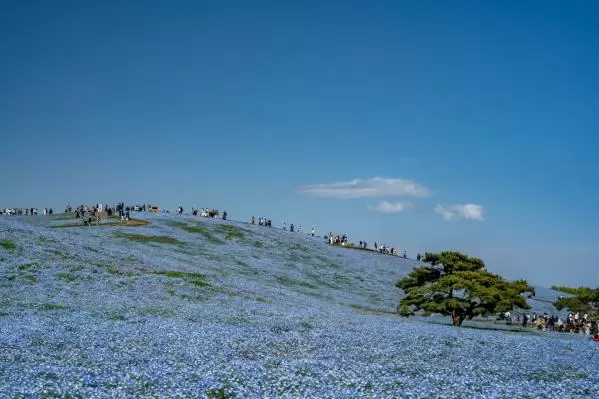
The National Hitachi Seaside Park is a magnificent park that spans approximately 215 hectares and captivates visitors with seasonal flowers throughout the year. In s...
The Museum Park Ibaraki Nature Museum is one of Japan's largest nature experience museums, situated by the "Sugao Swamp," one of the largest natural conservation are...
The JAXA Tsukuba Space Center, opened in 1972, is one of Japan's largest space development facilities. The vast grounds include research and development/testing faci...
Tsukuba Shrine is a historic shrine located on the slopes of Mount Tsukuba, a sacred peak in Tsukuba City, Ibaraki Prefecture, with a history of approximately 3,000 ...
Kairakuen is one of Japan's three famous gardens, alongside Kenrokuen in Kanazawa and Korakuen in Okayama. Opened in 1842 by the 9th lord of the Mito domain, Tokugaw...