Yamagata Prefectural Museum "Bunsokan"
Basic Information
- Spot Name
- Yamagata Prefectural Museum "Bunsokan"
- Location
- 〒990-0047 3-4-51 Hatagocho, Yamagata City, Yamagata Prefecture
- Access
- From JR Yamagata Station, take a city bus via City Hall and get off at City Hall Front, then a 1-minute walk. Approximately a 10-minute drive from Yamagata-Zao IC on the Yamagata Expressway.
- Parking
- 40 cars
- Business Hours
- 9:00 AM to 4:30 PM
- Regular Holiday
- First and third Mondays (the following day if it is a holiday), December 29 to January 3.
- Fees
- Free
- Contact Information
- Phone Number:023-635-5500
- Official Website
Map
Detailed Information
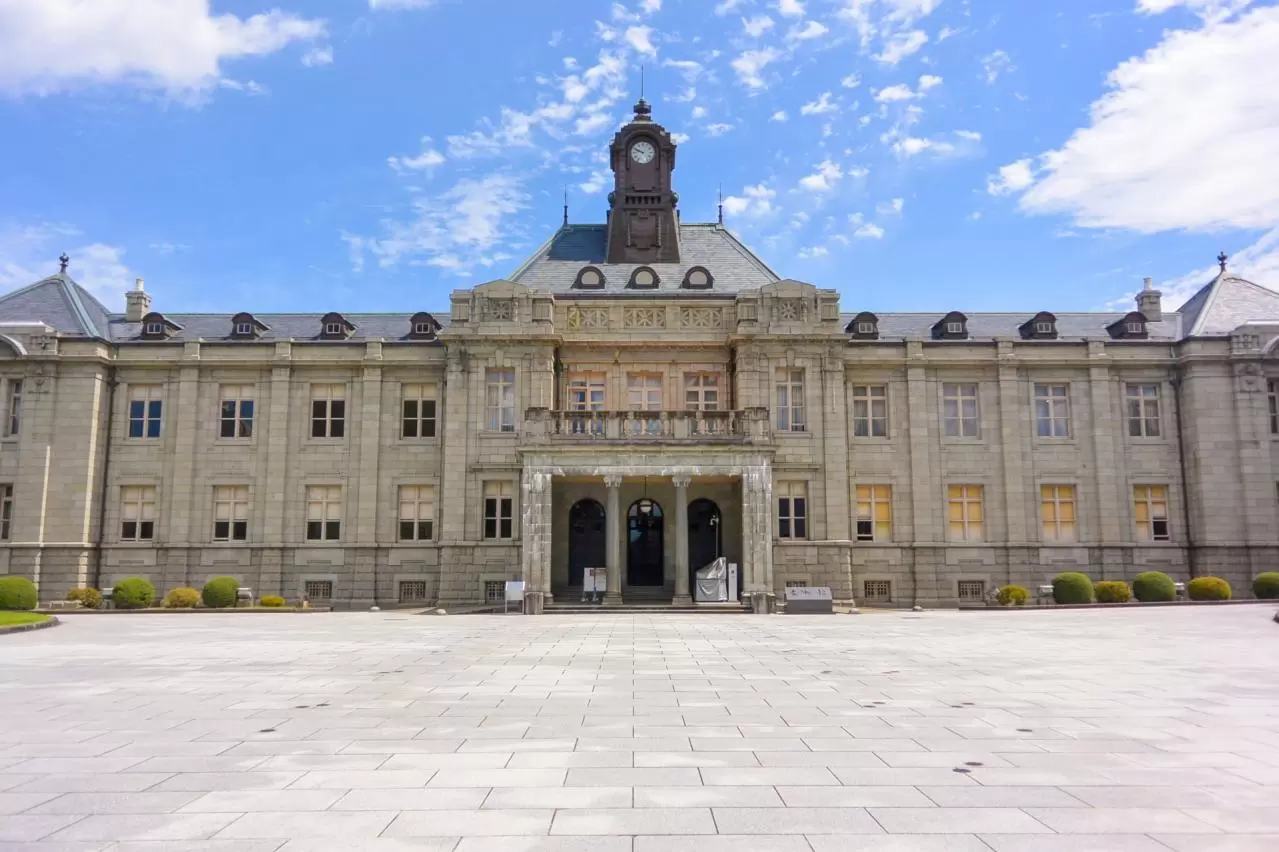
Yamagata Prefectural Museum “Bunshōkan” is a historic building constructed in 1916 as the former Yamagata Prefectural Office and Prefectural Assembly Hall. Built of brick in a style based on the English Renaissance Revival, it is distinguished by its stately stone-clad exterior and imposing clock tower. It served as the center of Yamagata Prefecture’s politics and administration until 1975, after which it was preserved as a cultural property. Designated an Important Cultural Property of Japan in 1984, it underwent a ten-year restoration project and has been open to the public as the “Yamagata Prefectural Museum” since October 1995. Today, it is a landmark symbolizing Yamagata City and can be visited free of charge.
Architectural Features
Exterior and Clock Tower
The former prefectural office is a three-story brick building, while the former prefectural assembly hall is a partly two-story brick structure, and the two are connected by a corridor. The exterior walls are covered with stone cladding, giving the building a solemn presence.
The clock tower, one of Bunshōkan’s most iconic features, is said to be the second oldest still operating clock tower in Japan, after the Sapporo Clock Tower. The weight that drives the pendulum is still manually wound by a clockmaker once every five days, and it has continued keeping time for more than 100 years.
Interior and Decorations
Inside the building, luxurious decorations remain throughout, allowing visitors to fully experience the atmosphere of Western architecture. The entrance hall is adorned with marble columns and stained glass, and the staircase railings and landings feature delicate designs inspired by laurel wreath motifs. The ceiling of the former main hall (now an auditorium) has been restored with plaster ornamentation, incorporating Yamagata specialties such as safflower and cherries into the design. In addition, parquet floors and carpets made in Yamagata reflect local culture and add to the charm.
Historical Background
The present-day Yamagata Prefecture was established in 1876, and the following year the first prefectural office was built under the leadership of the first prefectural governor, Michiaki Mishima. However, it was destroyed in the Great Fire of Yamagata in 1911, and reconstruction began in 1913. The current Bunshōkan was completed in 1916. The construction cost is said to have been 400,000 yen, equivalent to about one-quarter of the prefecture’s total annual budget at the time, making it a project carried out with great pride and ambition.
The prefectural assembly hall was used for concerts and exhibitions between legislative sessions, also serving a role similar to a public hall. Records show that when Emperor Shōwa visited in 1947, he waved to the people of the prefecture from the office building’s balcony.
Restoration and Current Use
A large-scale restoration project was carried out over ten years from 1986, faithfully recreating the building based on historical construction methods. Today it is open to the public as “Yamagata Prefectural Museum Bunshōkan,” with exhibition rooms introducing Yamagata’s history and culture, a video hall about the restoration work, and galleries.
The assembly hall of the former prefectural assembly building is still used for concerts, theater performances, and local events, making it a venue for diverse cultural activities. The courtyard and the governor’s office are also known as filming locations for the films Rurouni Kenshin: Kyoto Inferno and The Legend Ends, making this a spot that combines historical value with modern appeal.
How to Enjoy Your Visit
Admission is free, and guided tours by volunteer guides are available. Walking through the building while listening to expert explanations deepens one’s understanding of its architecture and history.
Photography is also allowed inside, so visitors can capture the luxurious interiors and the atmosphere of the Taishō era.
Yamagata Prefectural Museum “Bunshōkan” is a stately English Renaissance Revival building from the Taishō period that has played a central role in Yamagata’s politics and culture. With its grand exterior and refined decorations, it has been preserved and restored as an Important Cultural Property, and now serves as a hub for conveying Yamagata’s history and culture. Visitors can appreciate details such as the clock tower, stained glass, and plaster ornamentation, while also enjoying concerts and exhibitions, making it a symbolic spot in Yamagata City where history and the present resonate together.
Yamagata Prefectural Museum "Bunsokan" Movies


Yamagata Tourist Attractions
View List

Honma Museum of Art
Honma Art Museum was established in 1947 as Japan's first private art museum after World War II, based on the honma family's villa "Seienkaku" and the garden "Tsurum...

Risshaku-ji (Yamadera)
Hojusan Risseiji, commonly known as Yamadera, is one of Japan's renowned spiritual sites. Founded in the second year of the Jōgan era (860) by the third head of the ...

Uesugi Shrine
The Uesugi Shrine, established at the ruins of Yonezawa Castle, enshrines Uesugi Kenshin, regarded as the strongest warlord of the Sengoku period. It is known as a p...

Ginzan Onsen
Ginzan Onsen is a charming hot spring resort that feels like stepping back in time, characterized by its retro scenery. Traditional wooden ryokans (inns) line both b...

Yonezawa Uesugi Museum
The Yonezawa Uesugi Museum is located on the site of the main keep of Yonezawa Castle and houses valuable cultural assets related to the Uesugi family. Adjacent to t...

Zao Ropeway
Zao Ropeway is located in Zao Onsen, Yamagata City, and offers visitors and outdoor enthusiasts beautiful nature throughout the four seasons. It starts from the Zao ...