Flowers change with the seasons
Highlights range from tulips, lilies, and cosmos to seasonal illuminations.
AI Summary
This is an AI-generated summary. Please check the official information for opening hours, fees, and closed days.
One of Japan’s largest flower parks, where you can enjoy seasonal blooms and views of Mount Daisen at a leisurely pace.
The spacious grounds feature flower fields, a greenhouse, and covered walkways, with something different to see each season. The covered routes make it a good option on rainy days, and it suits visitors who enjoy flower photography or a relaxed stroll. The park takes on a very different atmosphere during its evening illumination season.
Highlights range from tulips, lilies, and cosmos to seasonal illuminations.
A covered observation walkway makes the park less dependent on good weather.
Flower fields and mountain views come together in expansive, scenic photo opportunities.
Focus on Flower Hill and the observation walkway, then add the greenhouse and European Garden if you have time.
▶ Flower Hill
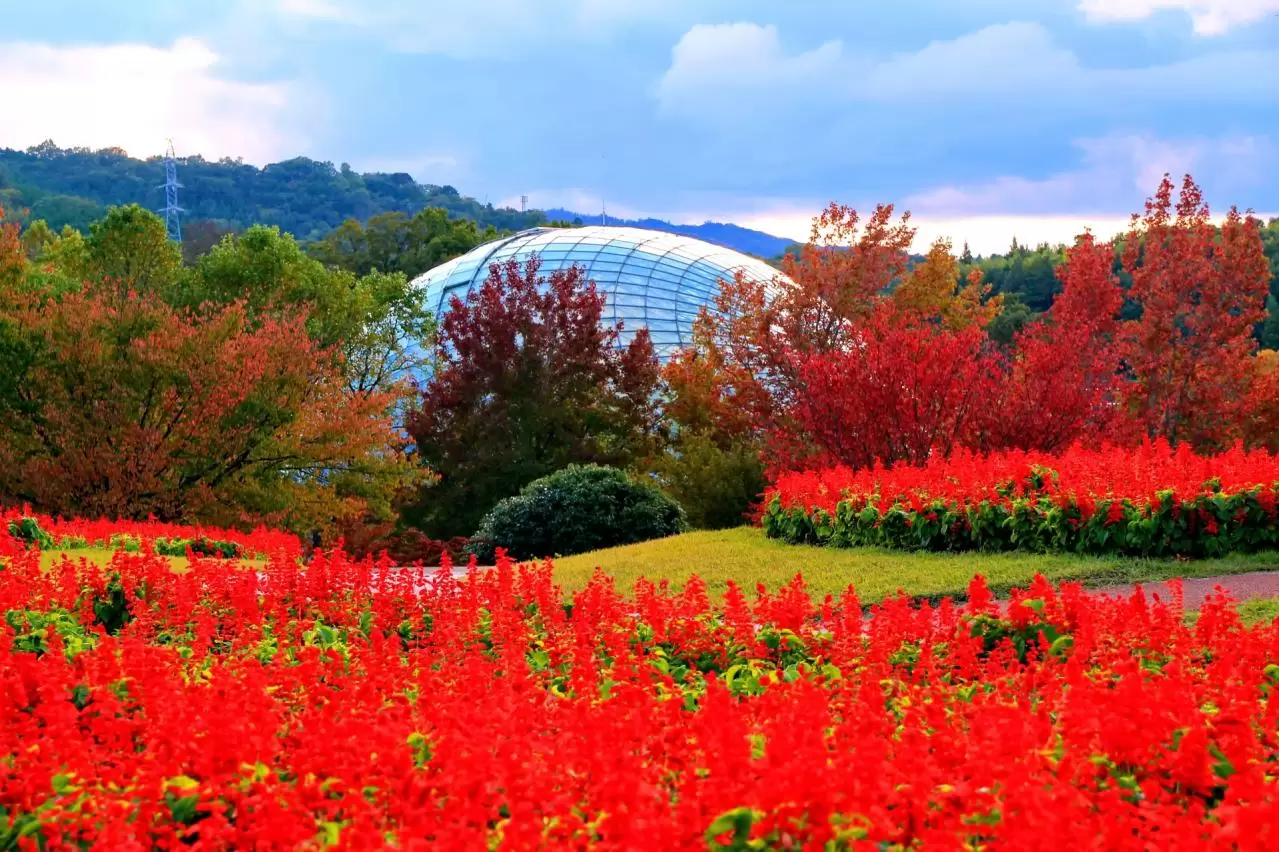
With the majestic Mt. Daisen as a backdrop, this gently rolling 10,000㎡ flower field is the park’s most popular photo spot throughout the year. In spring, pansies, violas, and Iceland poppies bloom; in summer, marigolds; and in autumn, vivid red Salvia splendens spreads like a carpet across the entire hill—an absolutely breathtaking sight. Please enjoy Flower Hill in every season.
▶ Flower Valley (Keukenhof Corner)
Tottori Hanakairo has an exchange relationship with the world-famous Dutch flower paradise, Keukenhof Park. In Flower Valley, where you can leisurely stroll along a path beside a flowing stream and surrounded by large trees, there is a Dutch-style flower bed designed by Mr. Koster, former director of Keukenhof, as proof of that connection. In spring, tulips of many colors, including red and yellow, brighten the area, evoking a distant “Dutch spring.” In summer, the vibrant Sanvitalia can be seen even from above the corridor, and in autumn you can enjoy the colorful foliage of trees such as Euonymus alatus.
▶ Lily Hall (East Building)
Lilies are the main flower of Tottori Hanakairo. This rare spot offers carefully adjusted blooming so that these graceful lilies can be displayed all year round. Their stunning beauty is enough to leave visitors simply gazing in admiration, while their sweet fragrance fills the entire hall.
From May to August, we also host the “Species Lily Relay Display,” featuring wildflowers native to Mt. Daisen and 15 species of native Japanese lilies in sequence. The exhibition hall is also used as a venue for art exhibitions and seasonal flower displays.
▶ Herb Garden
More than 90 kinds of herbs can be seen here, including chamomile in spring, lavender and mint in summer, lemongrass in autumn, and rosemary in winter.
A carpet of thyme spreads across the garden floor, releasing a refreshing scent with every step.
Natural aromatic fragrances envelop visitors and offer a relaxing moment of peace. Enjoy being soothed by the scents, or touch the herbs directly and spend your time however you like.
▶ Cedar Hall
Located in a beautiful cedar forest, this wooden, single-story building has the feel of an open-air classroom with just a roof and pillars.
It is frequently used for outdoor learning activities such as woodworking classes and nature observation, allowing people to become familiar with forests and timber while deepening their knowledge.
It can also accommodate small groups for dining.
▶ Observation Corridor
This covered 1-km-long corridor gives Tottori Hanakairo its name.
As you walk along it, you can view the park’s rolling landscape from many different angles, with changing scenery that keeps the stroll interesting. One viewing point overlooking Flower Valley is an impressive 30 meters above ground!
Because the corridor is flat, it is easy for everyone from children to the elderly to enjoy the park.
And since it is covered, you can walk around in any weather without an umbrella, even on rainy days.
Handmade benches created by students from Yonago National College of Technology are placed along the corridor, allowing you to sit and relax while enjoying the flowers.
▶ European Garden
A European-style garden with a lily-shaped central fountain and symmetrically arranged geometric flower beds.
Inside this carefully maintained garden, colorful flowers such as spring tulips, early-summer salvia, summer zinnia, and autumn yellow cosmos bloom in abundance, creating a striking contrast with the Flower Dome at the center.
You can also enjoy around 1,000 rose bushes of approximately 200 varieties, and on the north side of the garden is the “Climbing Rose Forest,” which beautifully showcases climbing roses in three dimensions. You can also experience the fragrance of English roses up close.
Events such as concerts are held irregularly on the stage at the back of the garden.
▶ Cherry Blossom Plaza
Located at the farthest end of the park, Cherry Blossom Plaza is home to a little-known but spectacular cherry blossom viewing spot.
The park’s proud rows of Somei Yoshino cherry trees can be enjoyed in early April, and a cherry blossom festival is held every year in the first week of April.
From late March to mid-April, visitors can see 230 cherry trees of 24 varieties bloom one after another. On the adjacent lawn, you can spread out a sheet, enjoy a boxed lunch, or have fun with recreation—please enjoy a wonderful cherry blossom viewing experience.
▶ Autumn Foliage Garden
Designed and supervised by Paul Smither, a leading figure in natural garden design.
This garden on the east side of the park is imagined as being covered in autumn leaves from head to toe.
In addition to autumn, you can also enjoy ajuga in spring, oakleaf hydrangea in early summer, Japanese anemone in autumn, and Christmas roses in early spring.
▶ Floating Flower Beds
On a 40-meter-diameter pond where medaka fish and carp swim gracefully, seasonal flowers planted in a lattice pattern are wonderfully romantic. It offers visitors a fantastical scene, as if the flowers were blooming on the water itself. You can also take a walk over the pond. The carp are especially popular with children.
▶ Mist Garden
A mist-like fountain spraying from the center offers a cool and refreshing atmosphere.
The flower beds, featuring spring tulips and violas, summer celosia and globe amaranth, and autumn-to-winter pansies, are designed so that the entire garden forms a beautiful flower-petal shape when viewed from above.
About 220 hanging baskets, including tower-style and suspended types, are also on display, allowing you to enjoy flowers in three dimensions.
▶ Flower Train
Departing from the plaza in front of the West Building, this train slowly makes a full loop around the park while introducing the main highlights.
As you ride along, gently swaying in the train and taking in the flowers at a relaxed pace, you will experience a kind of wonder different from walking through the park. It will guide you into a fairy-tale world!
▶ Flower Dome
The indoor temperature is maintained so that it never falls below 15°C, even in winter. Amid lush tropical and subtropical plants such as the royal palm and traveler’s palm, more than 500 orchids and rare foliage plants brighten the interior.
The beauty of orchids, renowned as the queen of flowers, is sure to draw deep sighs of admiration.
Also inside the dome, soft-serve ice cream made with Tottori-grown 20th Century pears is available for 400 yen. Enjoying this local specialty is a classic part of the visit.
Flower-themed workshops are also held here from time to time.
▶ Ancient Path of Hometown
As you enjoy a stroll surrounded by greenery and breathe in plenty of fresh negative ions, beautiful flowers such as dogtooth violets, eria orchids, and Japanese lilies reveal their elegant charm.
▶ Jungle Dome (South Building)
A glass greenhouse in the shape of an egg, filled with tropical and subtropical plants. The first and second floors are connected by a gentle slope, allowing visitors to observe plants native to South America and tropical/subtropical regions in three dimensions.
Highlights of this greenhouse include the sagaribana, a flower that blooms only at night during the summer and falls by morning, and the jade vine, which blooms from winter through around Golden Week.
You will also be soothed by the sweet fragrance of orchids upon entering the South Building. Please be sure to stop by.
▶ Orchard and Perennial Garden (Grace Garden)
The “Orchard and Perennial Garden (Grace Garden)” was developed jointly with Hanakairo as a commemorative project for the 40th anniversary of the Tottori Prefecture Landscaping and Construction Association. Within its 3,000-square-meter area, 108 perennial varieties, 16 fruit tree varieties, and 8 tree varieties are planted, allowing visitors to enjoy the changing seasons and the growth of the plants.
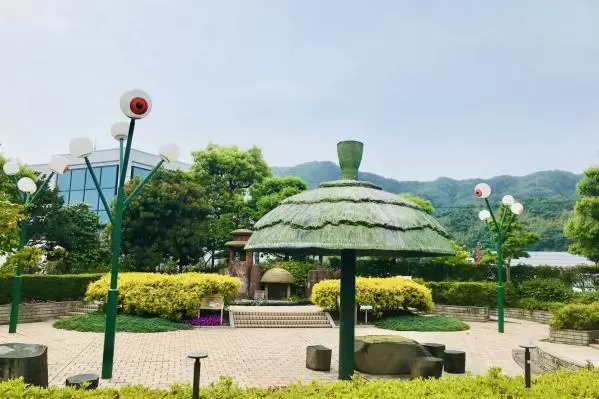
Mizuki Shigeru Road is a street that stretches approximately 800 meters from Sakai Minato Station to the Mizuki Shigeru Memorial Museum, established in 1993. In 2018...
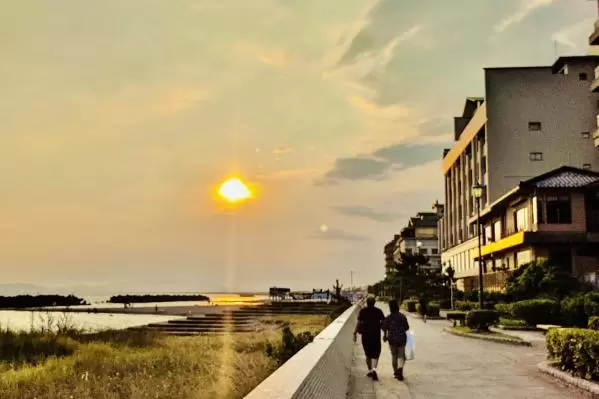
Kaike Onsen is a beautiful seaside hot spring area located on the northern side of Yonago City in Tottori Prefecture, facing the Japan Sea. Known as "Shio no Yu" or ...
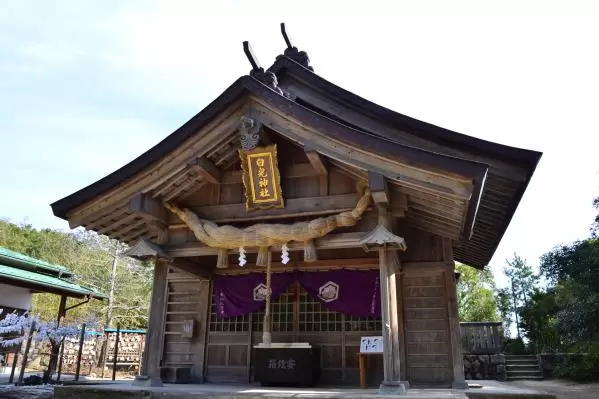
Shirataki Shrine is dedicated to the "White Rabbit of Inaba," which connects the great deity Okuninushi no Mikoto of Izumo and the princess Yagami of Inaba. It is kn...
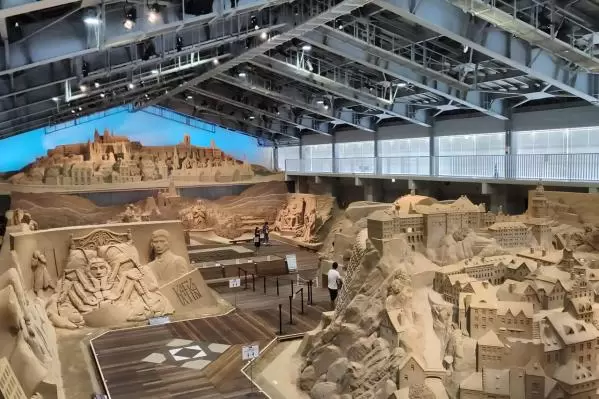
The "Sand Museum" at Tottori Sand Dunes is the world's first museum dedicated to sand sculptures. With the concept of "World Travel Through Sand," sand sculptures ar...
The Tottori 20th Century Pear Memorial Hall, known as "Nashikko-kan," is Japan's only museum dedicated to pears, located within the Kurayoshi Park Square in Kurayosh...
The Uradome Coast Island Cruising Tour is a scenic cruise that explores the popular tourist attraction, Uradome Coast, in Iwami Town. Uradome Coast is known for its ...
Daisen Makiba Milk no Sato is a popular spot located within Daisen Ranch, offering breathtaking views of the majestic Daisen Mountain and the Sea of Japan. Visitors ...
The Tottori Sand Dunes boast an astonishing landscape shaped by the beauty of wind and nature. The dunes, which constantly change shape due to the wind, create natur...