Saitama Stadium 2002
Saitama Stadium 2002 Movies


![埼玉スタジアム2002公園 PR動画 [20周年記念ver. ]](https://i.ytimg.com/vi/ORYeyS9S2DE/mqdefault.jpg)


Basic Information
- Spot Name
- Saitama Stadium 2002
- Location
- 〒336-0967 2-1 Misono, Midori Ward, Saitama City, Saitama Prefecture, Japan
- Access
- [Train] About a 15-minute walk from Saitama Rapid Railway "Urawa Misono" Station.
[Car] Approximately 10 minutes from the Tohoku Expressway "Urawa" IC. - Parking
- Main parking lot with a capacity of 500 vehicles.
- Contact Information
- Phone Number:048-812-2002
- Official Website
Map
Detailed Information
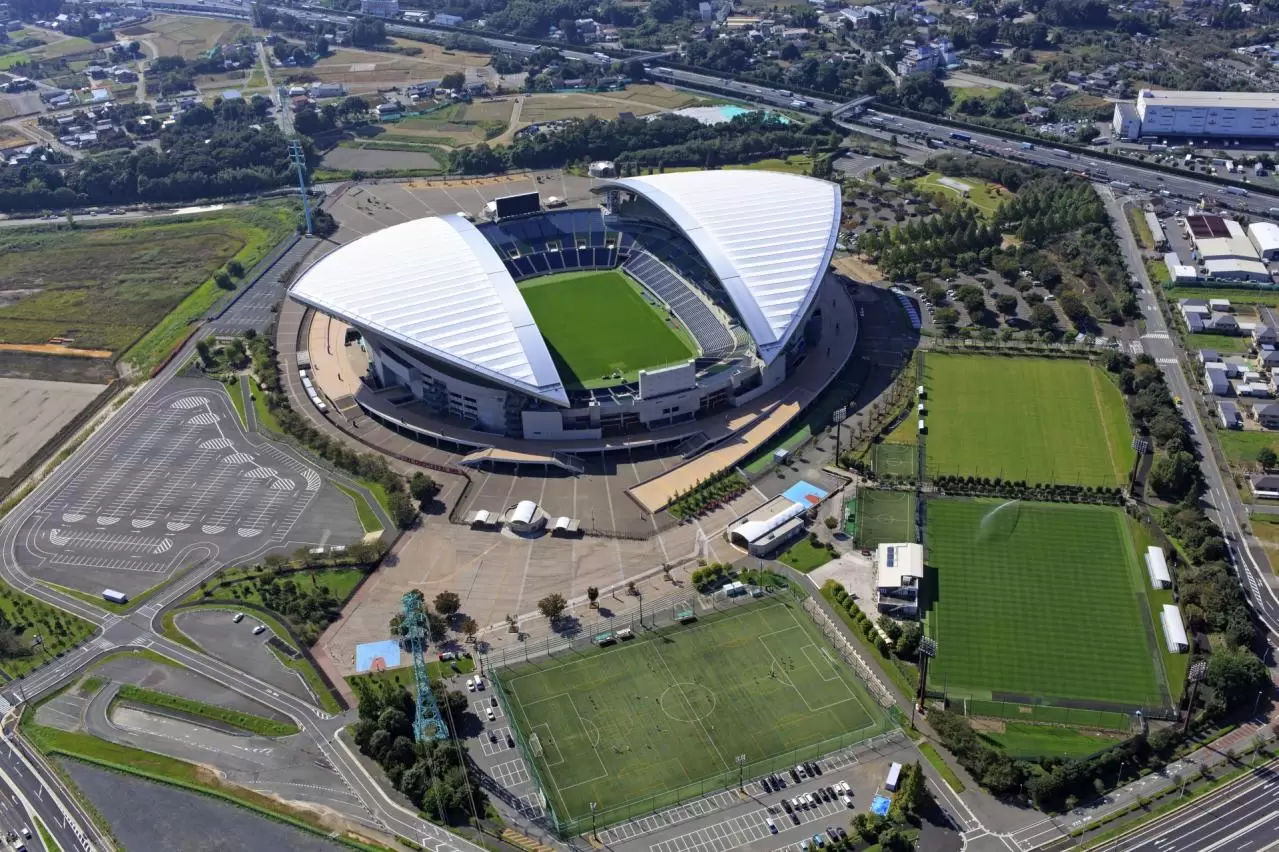
Saitama Stadium 2002 is Japan’s largest soccer-specific stadium, located in Midori Ward, Saitama City, Saitama Prefecture. Completed in July 2001 and opened in October of the same year, it was built as one of the main venues for the 2002 FIFA World Cup Korea/Japan. With a seating capacity of 63,700, it is the largest soccer-only stadium in Japan and one of the largest in Asia (ranked around third). It is also widely known as the home stadium of the J.League’s Urawa Red Diamonds (Urawa Reds).
Background and History
Saitama Stadium 2002 was developed by Saitama Prefecture in preparation for the 2002 FIFA World Cup Korea/Japan.
It was completed in July 2001 and opened in October of the same year. During the 2002 World Cup, it hosted a total of four matches: three group-stage matches and one semifinal.
In particular, the semifinal between Germany and South Korea drew global attention and thrilled soccer fans around the world.
After the tournament, the stadium continued to be used as the home ground of Urawa Reds, as well as a venue for Japan national team matches, AFC Champions League games, and major domestic and international competitions such as the National High School Soccer Championship.
It was also used as one of the soccer venues for the Tokyo 2020 Olympics, and before the Games, the entire pitch was relaid and the facilities were renovated to meet international standards.
Structure and Features
Saitama Stadium 2002 was designed as a soccer-specific stadium, so it has no running track, allowing spectators to sit very close to the pitch and enjoy an immersive viewing experience. Fans can feel the intensity of the players’ movements and the excitement of the match up close.
• Capacity: 63,700 (all-seater)
• Structure: Steel frame reinforced concrete construction (roofed stands)
• Pitch: Natural grass field (international match standards)
• Large video screens: Two giant screens, each 10 m high and 20 m wide, display replays and goal scenes in real time
• Lighting: High-powered lighting system suitable for night matches
The roof is designed to cover about 60% of the seating area, balancing openness with comfort.
The stadium’s overall design features a graceful, streamlined exterior inspired by the motif of “wings soaring into the future,” and it has been highly praised architecturally.
Saitama Stadium 2002 Park
The stadium is the central facility of Saitama Stadium 2002 Park, a vast site covering about 30 hectares.
The park is equipped with sports facilities centered on soccer and serves as a place of relaxation for local residents and visitors.
• Sub-fields: 3 fields (2 natural grass, 1 artificial turf)
• Futsal courts: 2
• Multipurpose open spaces: including Mominoki Plaza and Chibikko Plaza
• Walking paths and green areas: Flowers bloom throughout the seasons, and the park is popular with joggers and walkers
In addition to soccer and futsal practice, it is widely used as a community-oriented comprehensive park for picnics, local events, walking competitions, and more.
Main Uses and Events
Throughout the year, Saitama Stadium 2002 hosts many matches and events centered on soccer.
• J.League official matches (Urawa Reds home games)
• International tournaments such as the AFC Champions League
• Japan national team matches (SAMURAI BLUE)
• National High School Soccer Championship finals and semifinals
• Various concerts and local events (held seasonally)
During these events, many visitors come from both Japan and abroad, and the area around the stadium is filled with excitement.
Role in the Tokyo Olympics
During the Tokyo 2020 Olympic and Paralympic Games, Saitama Stadium 2002 was used as a major venue for soccer.
Before the Games, the entire natural grass pitch was replaced and the locker rooms and spectator facilities were renovated, transforming it into a comfortable and safe stadium that met world-class standards.
Appeal and Connection to the Community
Saitama Stadium 2002 is not only a stage for international sporting events, but also a familiar and beloved facility for local residents.
The spacious park area is popular as a place of relaxation for families, runners, and soccer enthusiasts.
It also plays an important role as a base for promoting local sports, including tournaments for local schools and club teams.
Saitama Stadium 2002 is Japan’s largest soccer-specific stadium and one of the world’s leading venues of its kind.
From the 2002 FIFA World Cup to the present day, it has been the site of many historic moments, including international tournaments, J.League matches, and the Olympics.
Combining an immersive viewing experience, excellent facilities, and a lush park environment, this stadium continues to be loved by many as a place where soccer and people connect.
# Zoo and botanical gardens, aquariums, farms #Amusement park/Theme park #Commercial facilities/Complex facilities
Saitama Tourist Attractions
View List
Tobe Yanson Akebono Children's Forest Park
The thoughts of the Finnish fairy tale author Tove Jansson are scattered throughout the park. It is an enchanting spot that evokes the world of her representative wo...

Kadokawa Musashino Museum
The "KADOKAWA Musashino Museum" is a landmark of "Tokozaawa Sakura Town," known as one of Japan's largest hubs for pop culture, located in Tokorozawa City, Saitama P...

Tokorozawa Aviation Memorial Park
Tokorozawa Aviation Memorial Park is a vast public park, approximately 50 hectares in size, established on the site of Japan's first airport. Inside the park, there ...

The Railway Museum
The Railway Museum opened on October 14, 2007, in Omiya, Saitama, as the main project commemorating the 20th anniversary of JR East. In 2018, the South Building was ...

Nagatoro Iwadatami
Nagatoro is located in the Chichibu district of Saitama Prefecture and is particularly famous for the "Nagatoro Iwadatami," a popular tourist destination. The Iwadat...

Seibu Enyu Park
Seibu-en Yuenchi is a long-established amusement park located in the Sayama Hills of Tokorozawa City, Saitama Prefecture, and has been cherished by many people since...

Kawagoe Hikawa Shrine
Kawagoe Hikawa Shrine is a historic shrine that is said to have been founded about 1500 years ago during the Kofun period, in the 2nd year of Emperor Kinmei (541 AD)...