Nagatoro Iwadatami
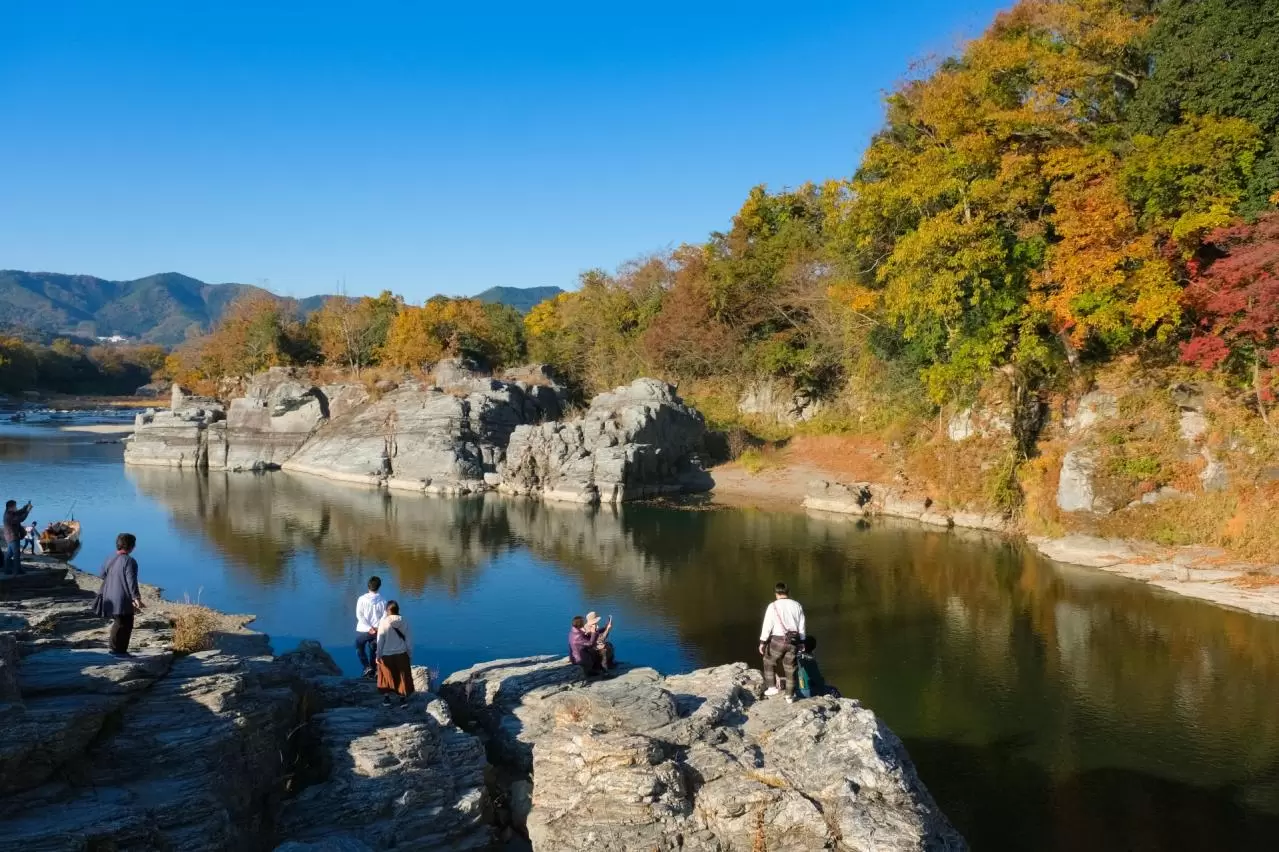
The Nagatoro Iwadatami is part of a geological zone called the Sanbagawa belt and is characterized by "gneiss" and "jointing" formed from schist. This geological phenomenon occurred approximately 85 to 66 million years ago, revealing metamorphic rocks shaped by pressure and heat. The Iwadatami is also referred to as the "Window to the Earth," making it a valuable location to observe rock structures deep beneath the surface.
The surrounding area offers seasonal attractions, with activities such as rafting on the Arakawa River and enjoying natural shaved ice being particularly popular. The Arakawa has sections known as "Toro," where the water pools in a striking blue color, which is the origin of the name "Nagatoro." The Iwadatami itself displays a variety of faces throughout the seasons, with Yukiyanagi blooming in spring and Wisteria in summer.
Nagatoro Iwadatami is conveniently accessible, located just a short distance from Nagatoro Station on the Chichibu Line. Visitors can also partake in activities such as canoeing, kayaking, and rafting. Furthermore, the area was designated as a scenic spot and natural monument in 1924, and collecting rocks and plants is prohibited. The designated area extends from Obanohashi Bridge to Takasagobashi Bridge, where many people enjoy the beauty of nature.
Nagatoro Iwadatami Movies


![[秩父観光]宝登山神社、宝登山ロープウェイ、長瀞岩畳、蝋梅](https://i.ytimg.com/vi/vbW-10yQAik/mqdefault.jpg)

Basic Information
- Spot Name
- Nagatoro Iwadatami
- Location
- 〒369-1300 Nagatoro, Chichibu-gun, Saitama Prefecture
- Access
- About a 7-minute walk from Chichibu Railway Chichibu Line "Nagatoro Station."
- Parking
- None
- Business Hours
- Nagatoro Line River Cruise
9:00 AM to around 4:00 PM
*From March 10 to March 17 and from November 24 to December 4, the hours are 10:00 AM to 3:00 PM.
*Hours may be shortened depending on the situation. - Fees
- Nagatoro Line River Cruise Fee
Adults (middle school age and older): 2,000 yen
Children (3 years and older): 1,000 yen - Contact Information
- Phone Number:0494-66-3311
- Official Website
Map
Detailed Information
Nagatoro Iwadatami in Saitama Prefecture is a natural work of art, where a beautiful ravine and dramatic rock formations create a stunning landscape. Said to be the birthplace of Japanese geology, its distinctive terrain known as “Iwadatami” stretches out like a painting. Massive rocks of various shapes are surrounded by a river, and on the opposite bank rises a rock wall several tens of meters high called the “Chichibu Red Cliffs.”
The rocks of Iwadatami are crystalline schist, formed by being pushed up from deep underground. Spanning about 80 meters in width and 600 meters in length, their surface forms a square, tatami-like pattern. These rocks were created by global-scale crustal movements that occurred deep within the earth, and they are also described as a “window into the Earth.”
Nagatoro Iwadatami is a place where you can enjoy scenery that changes with the seasons: cherry blossoms in spring, river play in summer, colorful leaves in autumn, and snowy landscapes in winter. Throughout the year, it offers a variety of expressions. Here, you can feel nature up close while enjoying activities such as river rafting and canoe tours.
Especially popular is the “Nagatoro Line Kudari.” This is a sightseeing boat ride that takes you down the Arakawa River flowing through Nagatoro Gorge. There are three courses, each offering a different perspective on the beauty of nature. Along the way, you can see the massive Iwadatami, the steep Chichibu Red Cliffs, and even naturally formed bowl-shaped potholes—true works of natural sculpture.
The surrounding area is also rich in attractions such as Nagatoro Onsen and Nagatoro Shrine, and you can enjoy delicious dishes made with local ingredients. From peaceful strolls while feeling the breath of nature to active outdoor experiences, this is a spot where every visitor can enjoy it in their own way—a perfect place to fully appreciate Japan’s beautiful natural scenery.
Saitama Tourist Attractions
View List
Kawagoe Hikawa Shrine
Kawagoe Hikawa Shrine is a historic shrine that is said to have been founded about 1500 years ago during the Kofun period, in the 2nd year of Emperor Kinmei (541 AD)...

Moomin Valley Park
Moomin Valley Park is a theme park located by Lake Miyazawa in Hannō City, Saitama Prefecture, where visitors can experience the Nordic worldview. It is part of the ...

Saitama Super Arena
Saitama Super Arena is a multifunctional arena equipped with one of the world's largest movable systems. It has four modes: Stadium, Main Arena, Community Arena, and...


Shibusawa Eiichi Memorial Hall
The Shibusawa Eiichi Memorial Museum was established on November 11, 1995, to convey the achievements of Shibusawa Eiichi, often referred to as the "Father of Modern...

Hitsujiyama Park
Hitsujiyama Park is located on the eastern side of Chichibu City and in spring, the "Shibazakura Hill" is covered with a beautiful carpet of flowers, attracting many...

Tokorozawa Aviation Memorial Park
Tokorozawa Aviation Memorial Park is a vast public park, approximately 50 hectares in size, established on the site of Japan's first airport. Inside the park, there ...

Toki no Kane (Bell of Time)
The symbol of Kawagoe, the "Toki no Kane" (Bell of Time), is a historic bell tower that rises above the town's traditional warehouse-style buildings. It was founded ...