Iowa World Kagosima Aquarium
Iowa World Kagosima Aquarium Movies


Basic Information
- Spot Name
- Iowa World Kagosima Aquarium
- Location
- 〒892-0814 3-1 Honkoshinmachi, Kagoshima City, Kagoshima Prefecture
- Access
- From JR Kagoshima Chuo Station, take a bus to Kagoshima Kotsu Sakurajima Pier (in front of Kagoshima Aquarium) for 15 minutes, and get off at the last stop which is right there. It takes about 20 minutes from the Kyushu Expressway "Satsuma Yoshida IC" or "Kagoshima Kita IC."
- Parking
- Parking available
- Business Hours
- 9:30 AM to 5:00 PM (Closed at 6:00 PM)
- Regular Holiday
- Four days from the first Monday in December.
- Fees
- Adults (high school students and above) 1,500 yen, Children (elementary and junior high school students) 750 yen, Preschoolers (4 years and older) 350 yen.
- Contact Information
- Phone Number:099-226-2233
- Official Website
Map
Detailed Information
Io World Kagoshima City Aquarium, located in the Honkō District of Kagoshima Port in Honkōshinmachi, Kagoshima City, Kagoshima Prefecture, is one of the largest aquariums in Kyushu. It occupies an exceptional location overlooking magnificent Sakurajima across Kagoshima Bay, also known as Kinko Bay. Inside, approximately 10,000 specimens representing around 800 species are displayed, with a focus on creatures inhabiting the seas around Kagoshima.
The aquarium’s main theme is “The Romantic Kuroshio Route.” Kagoshima Prefecture stretches approximately 600 kilometers from north to south and encompasses a wide range of marine environments, from temperate seas to subtropical waters. The aquarium presents the creatures that inhabit each environment in a variety of tanks, including the waters around the Nansei Islands, which are strongly influenced by the Kuroshio Current; Kinko Bay, which has a close relationship with volcanic activity; and the deep sea off the coast of Kagoshima.
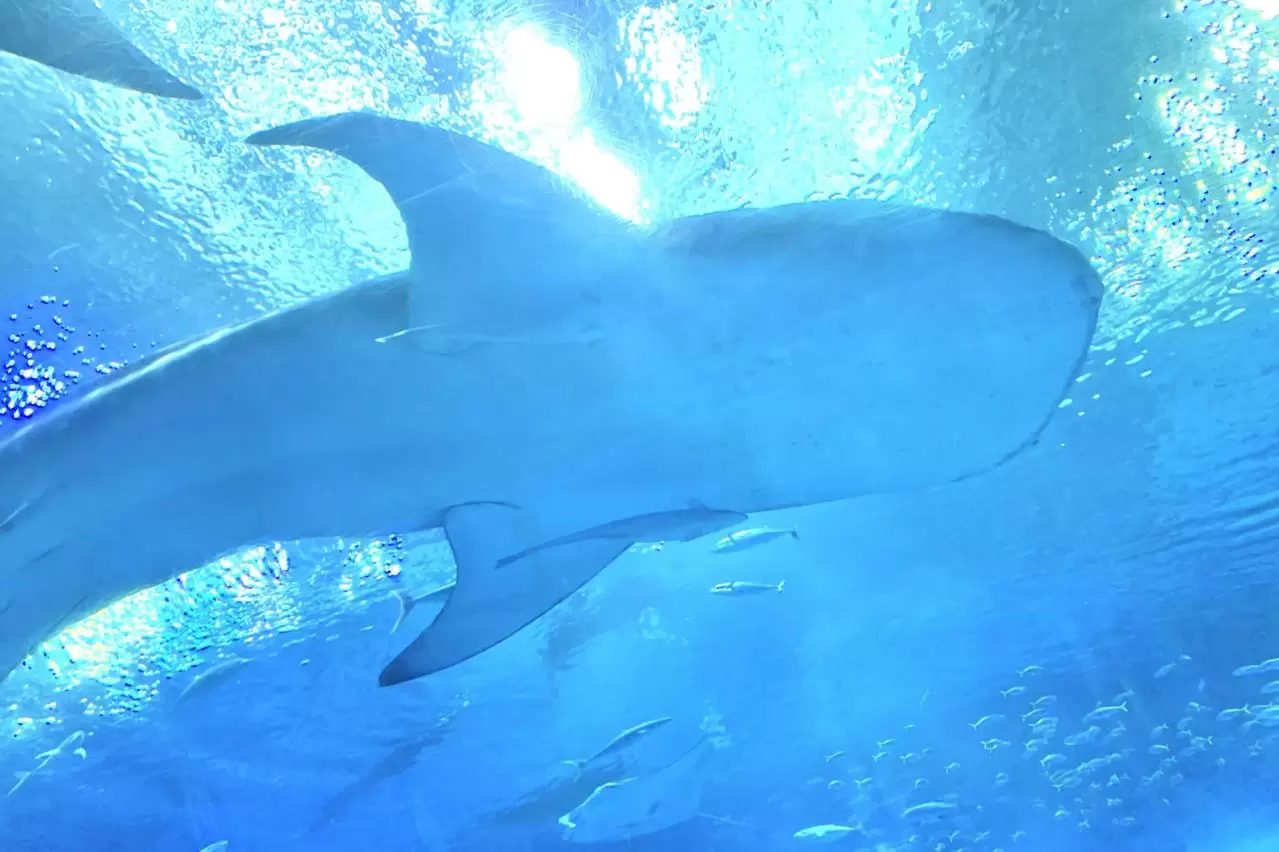
One of the aquarium’s signature exhibits is the “Kuroshio Large Tank,” which contains approximately 1,500 cubic meters of water. It is the largest tank in the aquarium and displays creatures closely associated with the Kuroshio Current, including whale sharks, bonito, Indian mackerel, bluefin trevally, rays, and various sharks. The sight of schools of migratory fish swimming among large fish is especially impressive, giving visitors the sensation of observing the sea from within the Kuroshio Current.
The whale shark is the star of the Kuroshio Large Tank and the largest fish species in the world. It is said that some individuals can grow to around 20 meters in length. Although whale sharks have enormous bodies and large mouths, they are known to be relatively gentle toward humans.
Whale sharks mainly eat zooplankton and small fish. They open their mouths wide, take in seawater together with their food, and filter out the food using specialized organs in their gills. Depending on the schedule, visitors may be able to watch the whale shark feeding in the Kuroshio Large Tank, accompanied by explanations about the powerful way it draws in its food.
Kagoshima Aquarium accepts small whale sharks caught in fixed fishing nets in Kagoshima Prefecture with the cooperation of local fishermen. All whale sharks kept at the aquarium are given the nickname “Yūyū,” even when one individual is replaced by another.
The aquarium keeps young whale sharks in the Kuroshio Large Tank and returns them to the sea after preparing them for release into the wild, before they reach approximately 5.5 meters in length. This approach is known as the “Kagoshima Method.” Rather than keeping continuously growing whale sharks in a tank for an extended period, the method displays them only while they are small enough to swim comfortably, after which they are returned to the natural sea.
Before release, the whale sharks undergo preparations in offshore pens and other facilities. These preparations may include changing their diet and confirming that they can chase and eat live fish on their own. In some cases, transmitters and recording devices are attached to the individuals being released to study their migration routes, swimming depths, water temperatures, and other information. A major feature of Kagoshima Aquarium is that it conducts not only exhibitions but also whale shark conservation and ecological research.
“The Seas of the Nansei Islands” introduces the warm-water environments extending across Kagoshima Prefecture’s southwestern islands, including the Amami Islands. Visitors can observe colorful tropical and subtropical fish, as well as vibrant underwater scenery created by living corals.
The waters around mainland Kagoshima and those around the Nansei Islands differ in water temperature, ocean currents, seabed conditions, and other factors, so the species inhabiting them also vary considerably. The Nansei Islands exhibit helps visitors understand how coral reefs provide food and shelter for many creatures and support rich ecosystems.
The aquarium also has extensive exhibits introducing the sea of Kinko Bay. Kinko Bay has a close connection with volcanic activity and contains a variety of environments, from shallow waters to great depths. In its shallow areas live corals and sea anemones that harbor microscopic algae called zooxanthellae within their bodies. From winter through spring, underwater forests of seaweed, including Sargassum and hijiki, also develop.
Seabeds rich in coral and seaweed provide hiding places and nursery grounds for small fish, crustaceans, and other creatures. Through these exhibits, visitors can learn that Kinko Bay is not only a scenic destination for viewing Sakurajima but also a rich sea inhabited by a wide variety of organisms.
“The Deep Sea of Kagoshima” introduces creatures living in the deep waters around Kagoshima, including Kinko Bay. The deep sea is a unique environment where sunlight barely reaches, water temperatures are low, and organisms are exposed to high water pressure. Because food is also limited, the creatures living there have body shapes and lifestyles that differ from those of animals in shallow waters. The exhibit area uses dim lighting to create an extraordinary atmosphere, giving visitors the sensation of actually descending into the deep sea.
One creature that represents the unusual seabed environment of Kinko Bay is the “Satsuma tubeworm.” Satsuma tubeworms inhabit the seabed near volcanic vents in the Wakamiko Caldera at the northern end of Kinko Bay. They are recognizable by the red, gill-like structures that protrude from their tubes.
Satsuma tubeworms have neither mouths nor digestive tracts. Symbiotic bacteria living inside their bodies use hydrogen sulfide and other substances to produce organic matter, from which the tubeworms obtain nutrients. Their method of acquiring nutrition differs greatly from that of ordinary animals, making them valuable organisms that demonstrate how ecosystems can exist in places untouched by sunlight.
The “Jellyfish Corridor,” an enchanting space, is also popular. The waters around Kagoshima, including Kinko Bay, are home to a diverse range of jellyfish, from temperate to subtropical species, and are sometimes called a “treasure trove of jellyfish.”
The Jellyfish Corridor displays species that can be collected and kept at the aquarium during each period of the year. Since the species on display vary depending on the season and the conditions of their care, visitors may encounter different jellyfish depending on when they visit. Their graceful forms drifting slowly through the water under the lights are beautiful, allowing visitors to observe the delicate bodies and movements of jellyfish in detail. Touch panels also provide information about jellyfish anatomy and ecology.
The “Nudibranch Research Center” is a rare exhibition and research area, even by international standards, dedicated to nudibranchs, which are popular for their beautiful colors and charming forms. Nudibranchs are mollusks related to sea snails, but in many species the shell becomes smaller or disappears completely as they mature.
Many nudibranchs have such vivid colors that they are known as “jewels of the sea.” They display a wide variety of colors and patterns, including red, blue, yellow, and purple. These colors are not merely beautiful; in some cases, they warn surrounding animals that the nudibranch contains toxins or irritants, while in other cases they help the animal blend into its surroundings.
The food they eat and the ways they protect themselves vary by species, and the detailed ecology of many nudibranchs remains unknown. At the Nudibranch Research Center, the aquarium conducts research into care methods and investigates aspects of their ecology that have yet to be clarified, in addition to displaying them. The species on display vary depending on the season and the conditions of their care.
The aquarium also has a tank displaying arapaima from the Amazon River basin in South America. Arapaima are among the world’s largest freshwater fish, with large individuals exceeding two meters in length. They have an organ that enables them to breathe air and are known for regularly rising to the water’s surface to take in air.
When observing the tank, visitors can watch not only the fish swimming but also their behavior as they rise to the surface. In principle, on Saturdays visitors may be able to watch the arapaima being fed, accompanied by explanations from an aquarist.
Kagoshima Aquarium also offers a variety of hands-on events and educational programs. One of the best-known is “Dolphin Time,” held in the dolphin pool. Rather than simply presenting jumps by bottlenose dolphins, the program introduces their swimming abilities, body structure, ability to distinguish sounds, and communication through experiments and explanations.
The current concept is “Kagosui Radio: The Dolphin Question Room,” in which staff answer questions submitted by visitors while conducting experiments. Visitors can learn in an entertaining way how dolphins understand their surroundings underwater and interact with one another.
Other programs include “Seal Time,” during which visitors can observe harbor seals being fed; feeding explanations featuring the whale shark and the fish in the Kuroshio Large Tank; and “Aqua Lab,” in which aquarists take turns introducing the fascinating behaviors and ecological mysteries of different creatures each day.
The aquarium may also offer guided tours in which staff explain the tanks and fish, as well as behind-the-scenes tours of areas normally closed to visitors, including the water-purification facilities. Guided tours are generally held on weekdays, while behind-the-scenes tours are generally offered on Saturdays, Sundays, and public holidays. However, they may be canceled during busy seasons or periods of heavy congestion. Since the times, capacity, and registration procedures may change, visitors should check the information provided on the day of their visit.
Outside the aquarium is the “Dolphin Canal,” which is directly connected to Kinko Bay. This section of the natural sea is approximately 275 meters long and covers around 7,000 square meters. It is divided into three areas: north, central, and south.
The dolphins go out into the canal, where they spend their time swimming freely, playing, and training. Visitors may also see behaviors that differ from those observed in the indoor dolphin pool, such as the dolphins chasing fish living in the canal. Depending on the season, creatures other than dolphins, including dolphinfish and ocean sunfish, may also be displayed there.
Outdoor programs introduce behaviors displayed by wild dolphins, and special viewing periods are provided for observing dolphins swimming freely in the canal. The Dolphin Canal is a free area that can be viewed without an aquarium admission ticket. However, the dolphins are not always in the canal, and exhibits or programs may be changed or canceled depending on sea conditions and the dolphins’ health.
QR codes are installed throughout the aquarium, allowing visitors to access explanations and videos about the creatures. When scanned with a smartphone or other device, they provide information in Japanese, English, Simplified Chinese, Traditional Chinese, and Korean, along with fascinating videos about the animals.
Images and videos help visitors gain a deeper understanding of body structures and behaviors that may be difficult to grasp simply by looking at the tanks. Searching for the QR codes scattered throughout the aquarium adds a game-like element that can make the exhibits enjoyable for both adults and children.
The observation hall and the aquarium’s restaurant offer views of Kinko Bay, Kagoshima Port, Sakurajima, and other landmarks. The opportunity to take a break while enjoying Kagoshima’s magnificent scenery during a visit to the exhibits is another attraction unique to this aquarium. At the museum shop, visitors can purchase sweets, stationery, stuffed animals, and original merchandise featuring aquarium creatures such as whale sharks and dolphins.
The aquarium is normally open from 9:30 a.m. to 6:00 p.m., with last admission at 5:00 p.m. During Golden Week, Saturdays and Sundays during the summer vacation period, and the Obon holiday season, the aquarium holds a “Night Aquarium,” extending last admission to 8:00 p.m. and closing time to 9:00 p.m.
At night, the tanks are switched to night mode, and the lighting and atmosphere inside the aquarium differ from those during the day. Visitors may be able to observe fish resting and creatures that become active after dark, allowing them to see behaviors that are not visible during daytime hours. Since the dates vary from year to year, visitors should check the official website before visiting.
As of September 2026, the regular admission fee for visitors residing outside Kagoshima City is 2,000 yen for high school students and older, and 1,000 yen for elementary and junior high school students. Residents of Kagoshima City are eligible for local resident rates. By presenting identification or another document confirming their address, high school students and older can enter for 1,500 yen, while elementary and junior high school students can enter for 750 yen.
The aquarium is generally closed for four days beginning on the first Monday of December, while it remains open as usual during the New Year holiday period. Admission fees, opening hours, and closing days may change in the future.
From Kagoshima-Chuo Station, take City Tram Route 2, get off at Suizokukanguchi, and walk for approximately eight minutes. By local bus, get off at Kagoshima Suizokukan-mae. Kagoshima Station is approximately a 15-minute walk away. Visitors arriving by car can use nearby prefectural parking lots, including Prefectural Parking Lots No. 1, No. 2, and No. 3. Since the area may be crowded on holidays, during long weekends, and throughout the summer vacation period, public transportation can be a convenient option.
Io World Kagoshima City Aquarium is more than simply a facility where visitors can see large marine animals. It is a place where people can learn about Kagoshima’s diverse seas—including the Kuroshio Current, the Nansei Islands, Kinko Bay, and the deep sea—through animal exhibits, research, educational explanations, and hands-on events.
From the power of the Kuroshio Large Tank and the remarkable abilities of dolphins to the delicate beauty of jellyfish and nudibranchs, Kinko Bay’s volcanic seabed environment, the mysteries of deep-sea creatures, and the scenery overlooking Sakurajima, visitors can experience Kagoshima’s natural environment from many different perspectives. The aquarium is a leading tourist and educational attraction in Kagoshima, recommended not only for families traveling with children but also for adults interested in marine life and natural environments.
Kagoshima Tourist Attractions
View List
Ohama Seaside Park
Oohama Seaside Park is a nature-rich park located in Minamisatsuma City, Kagoshima Prefecture. This park, which combines the beautiful coastline of the southern coun...

Meisho Sengannen
Sengan-en is a villa built by Shimizu clan's 19th generation leader, Mitsuhisa, in the first year of Manji (1658). It is a grand feudal lord's garden designed with S...

Jomon Sugi
Jomon Sugi is the most famous giant tree among the Yakusugi trees located on Yakushima Island in Kagoshima Prefecture, with an estimated age ranging from 2,170 to 7,...

Yurigahama Beach
Yurigahama is a beautiful sandy beach created by nature, located in Yakushima Town, Kagoshima Prefecture. The approximately 8 km long stretch of white sand consists ...

Kirishima Shrine
Kirishima Shrine is a shrine located in Kirishima City, Kagoshima Prefecture, dedicated to Ninigi-no-Mikoto, the central figure in the myth of the descent of the hea...

Sakurajima
Sakurajima is a composite active volcano known as a symbol of Kagoshima, featuring two main peaks: Kitadake (North Peak) and Minamidake (South Peak). Standing at 1,1...

Chiran Peace Museum
Chiran Peace Museum is located in Minamikyushu City, Kagoshima Prefecture, and serves as a facility to convey the history of the special attack units that launched f...

Saigo Takamori Statue
The statue of Saigo Takamori, a great figure born in Kagoshima, stands proudly near the top of Shiroyama. Saigo is well-known as a prominent leader of the Meiji Rest...