A rich collection of Ryoma materials
See original letters and other materials that offer insight into Ryoma’s life and character.

AI Summary
This is an AI-generated summary. Please check the official information for opening hours, fees, and closed days.
Explore the final years of the samurai era through Ryoma’s letters and exhibits, with sweeping views from nearby Katsurahama.
Learn about Sakamoto Ryoma and Japan’s final samurai era through his letters and other historical materials. Hands-on exhibits make the museum accessible even if you’re new to the subject. Located in Katsurahama Park, it also offers views of the Pacific and photo opportunities.
See original letters and other materials that offer insight into Ryoma’s life and character.
Videos and models help make the final years of the samurai era approachable for first-time learners.
Enjoy views of Katsurahama and the Pacific, with photo opportunities both inside and outside the museum.
Explore the museum first, then round out your visit with a walk through Katsurahama Park and along the nearby coast.
The Kochi Prefectural Sakamoto Ryoma Memorial Museum is located in Katsurahama Park in Urado, Kochi City, Kochi Prefecture. It is a museum dedicated to collecting and exhibiting materials related to Sakamoto Ryoma, a prominent figure of the late Edo period. The museum opened on November 15, 1991, Ryoma’s birthday, with the aim of conveying to future generations his achievements, character, and ideas, as well as the important role he played in the dawn of modern Japan. To address the aging of the facilities and enhance its exhibition and research functions, a new building was constructed and the main building renovated beginning in 2016. The museum reopened in April 2018, the 150th anniversary of the Meiji Restoration. Today, it is one of Kochi Prefecture’s leading historical and cultural institutions, attracting many tourists and history enthusiasts from Japan and around the world.
The museum can be described as a “gateway to Ryoma,” offering an accessible introduction to his life, the history of the late Edo period, and Japan’s journey toward modernization. Its collection includes one of the country’s largest holdings of materials related to Sakamoto Ryoma. In particular, it is renowned for possessing and exhibiting more original letters handwritten by Ryoma than any other museum in Japan. For this reason, it is also known as the “Hall of Ryoma” and is highly regarded as a leading center for Ryoma research. Some of Ryoma’s letters express his earnest efforts to broker the Satsuma–Choshu Alliance and bring about the transfer of political power to the emperor, while many others contain warm and personal messages to his family and friends. These letters offer visitors a glimpse not only of Ryoma the great reformist, but also of his more human and approachable side.
The permanent exhibition in the new building presents Ryoma’s life against the backdrop of his times. Through valuable historical documents, videos, models, and other materials, visitors can gain a vivid understanding of the history of the late Edo period. The exhibition clearly explains Ryoma’s role in the birth of modern Japan, including his efforts to broker the Satsuma–Choshu Alliance, promote the return of political power to the emperor, and support the activities of the Kaientai naval trading company. Other highlights include a pistol believed to be the same model as one used by Ryoma and a statue of Sakamoto Ryoma created by Sakai-da Kakiemon XII, a renowned master craftsman.
The main building focuses on interactive exhibits, using videos, animations, restored models, and other features to make learning about the late Edo period and Ryoma’s journey enjoyable. Highlights include a restored model of the Omiya inn, where Ryoma was assassinated, as well as displays combining old photographs with illustrations. The exhibits are designed to be easy to understand even for visitors with little knowledge of history and for children.
Special and temporary exhibitions are held throughout the year, exploring a wide range of themes in depth, including not only Ryoma but also the history of the late Edo and Meiji Restoration periods and the history of the Tosa Domain. Lectures, courses, and various events led by historians are also held, providing numerous opportunities to learn more about Sakamoto Ryoma and the history of the late Edo period. As a result, the museum remains popular as a place where visitors can discover something new each time they return.
The museum features the “Sea-View Gallery” and a rooftop observation area, offering sweeping views of Katsurahama and the magnificent horizon of the Pacific Ocean. The breathtaking scenery of blue sea and sky evokes the landscape Ryoma himself may have gazed upon, creating a special space where history and nature come together. On the rooftop, visitors can enjoy the view while feeling the sea breeze, and the beautiful sunsets are also particularly popular.
Near the exit of the main building stands the life-size “Shaking Hands Ryoma” statue, a popular photo spot where visitors can take pictures as if they were shaking hands with Ryoma. Life-size statues of Ryoma and other photo opportunities can also be found throughout the museum, and many visitors take memorable photographs during their visit.
Because the museum is located within Katsurahama Park, it can easily be visited together with nearby attractions such as the Sakamoto Ryoma Statue, Katsurahama Beach, and the Kochi Prefectural Katsurahama Aquarium. The opportunity to enjoy both a historical tour and beautiful coastal scenery is another major attraction.
The Kochi Prefectural Sakamoto Ryoma Memorial Museum is one of Japan’s leading museums dedicated to Sakamoto Ryoma. Through an extensive collection of materials, videos, and interactive exhibits, it presents his achievements, character, and ideas in an accessible way. With the largest collection of Ryoma’s original handwritten letters in Japan, as well as numerous valuable historical documents and special exhibitions, the museum offers visitors the chance to gain a deeper understanding of Ryoma’s life and the turbulent era of the late Edo period. With its spectacular views of the Pacific Ocean, interactive displays, and many photo spots, it is one of Kochi Prefecture’s most popular tourist attractions, recommended not only for history enthusiasts but also for families and visitors encountering Sakamoto Ryoma for the first time.
Katsurahama is a representative tourist spot in Kochi Prefecture, known since ancient times as a famous moonlit location celebrated in the "Yosakoi Bushi" folk song....
Kitagawa Village's "Monet's Garden Marmottan" is a beautiful garden that is the only official recreation of the Impressionist painter Claude Monet's garden located i...
Ryugadō is one of Japan's representative limestone caves, formed over approximately 175 million years, with a total length of around 4 kilometers. It is located in K...
Cape Ashizuri is located at the southernmost tip of Shikoku, offering a panoramic view of over 270 degrees from its observation deck. Situated at the tip of the Ashi...
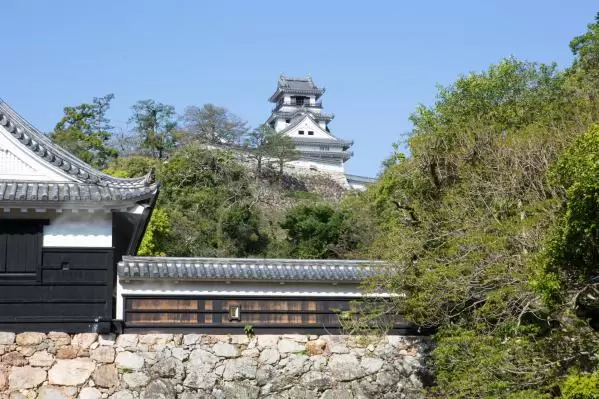
Kochi Castle was built due to the achievements of Yamauchi Kazutoyo in the Battle of Sekigahara, when Tokugawa Ieyasu awarded him the whole of Tosa in 1601, marking ...
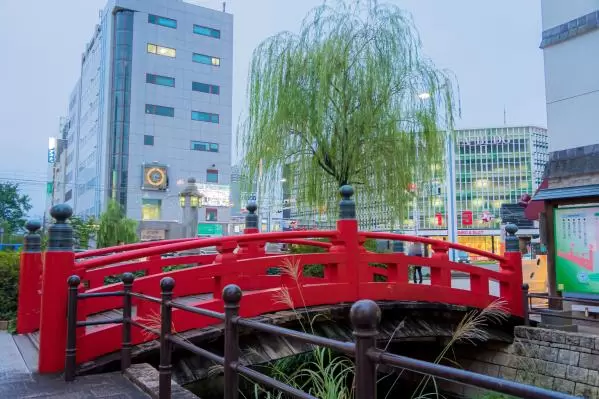
Harimaya Bridge is a sightseeing spot in Kochi, celebrated in the "Yosakoi Bushi" song, and is the setting for the love story of the monk Junshin and his daughter Ou...
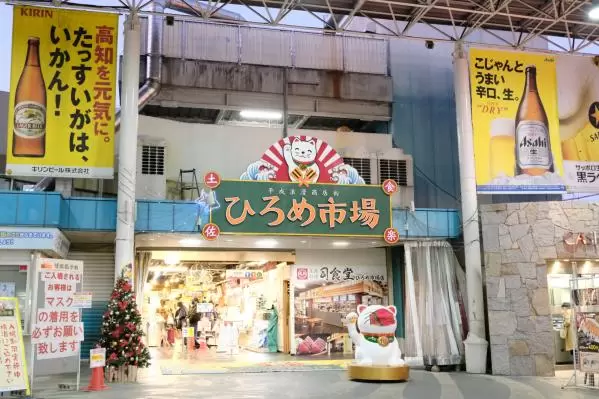
Hirome Market is located in the heart of Kochi City, just a 2-minute walk from Kochi Castle. Opened in 1998, this market is named after "Hiroto Fukao Banken," a high...
Sada Shinkai Bridge is the longest and most downstream sunken bridge spanning the Shimanto River in Kochi Prefecture, with a length of approximately 300 meters. This...