Treasures connected to Kyoto
See a high-quality collection of cultural artifacts, mainly spanning the Heian through Edo periods.
AI Summary
This is an AI-generated summary. Please check the official information for opening hours, fees, and closed days.
A rewarding museum for anyone who wants to explore Kyoto’s cultural heritage, with striking architecture and gardens—just check current exhibitions and closure information before you go.
This specialist museum features paintings, sculpture, crafts and other cultural treasures connected to Kyoto, mainly from the Heian to Edo periods. Explore the exhibitions in the Heisei Chishinkan, then admire the imposing exterior of the Meiji Kotokan and the gardens. Special exhibitions are also a highlight, but exhibition changes and construction may affect what you can see, so check ahead.
See a high-quality collection of cultural artifacts, mainly spanning the Heian through Edo periods.
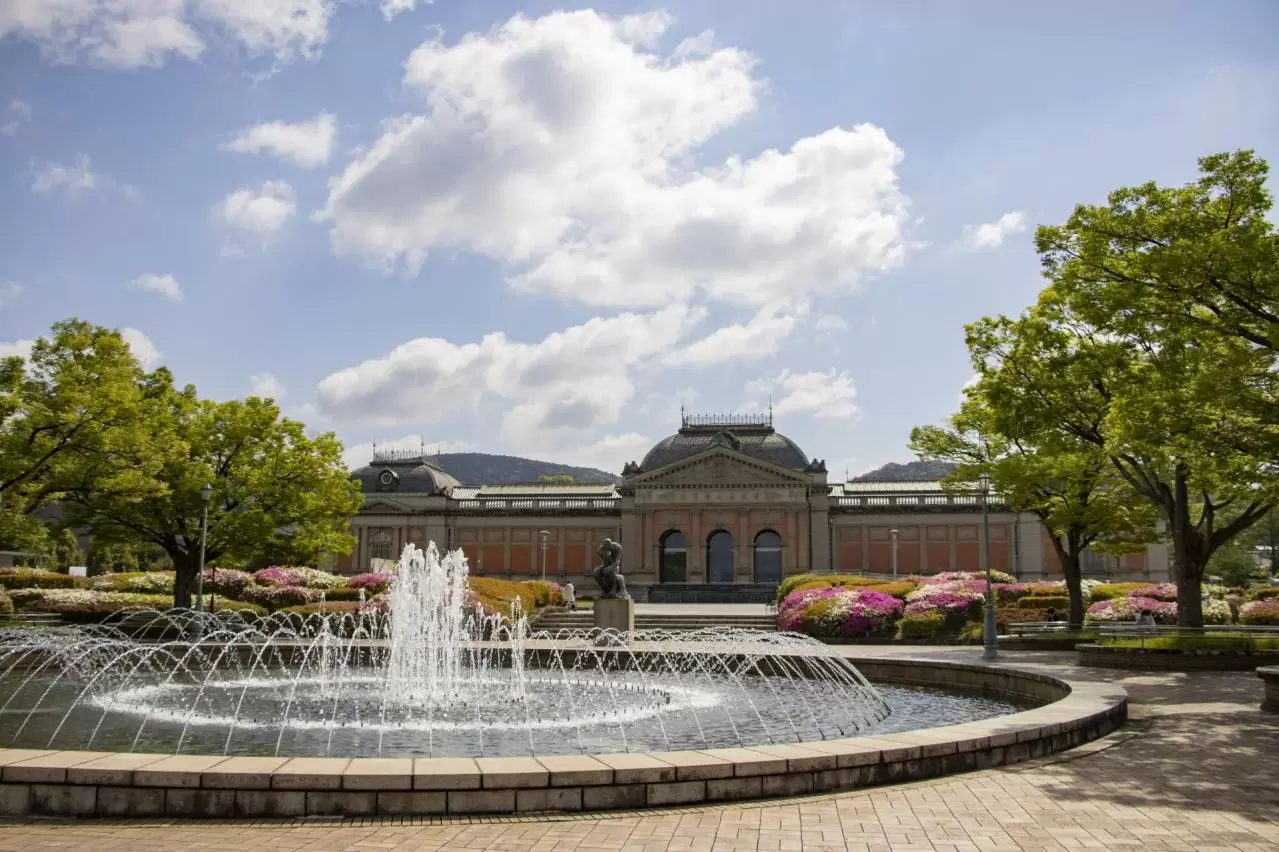
The red-brick Meiji Kotokan makes a striking contrast with the refined, modern Heisei Chishinkan.
The grounds feature Rodin’s The Thinker and seasonal scenery, while special exhibitions add another reason to visit.
Start with the permanent and special exhibitions in the Heisei Chishinkan, then take your time exploring the gardens and the exterior of the Meiji Kotokan.
Kyoto National Museum (abbreviated as “Kyohaku”) is one of Japan’s leading museums specializing in cultural properties. It opened in 1897, in the Meiji era, as the “Imperial Kyoto Museum.” It houses approximately 14,600 cultural assets, mainly works of art and archaeological materials connected to Kyoto from the Heian period through the Edo period. Through the four pillars of exhibition, conservation, research, and public outreach, it contributes to the understanding and transmission of Japanese culture.
Museum Architecture and Facilities
Kyohaku features two buildings that symbolize different eras: the “Meiji Kotokan” and the “Heisei Chishinkan,” each with its own distinctive appeal.
The “Meiji Kotokan” is a Western-style red-brick building designed by court architect Tohaku Katayama. Its design incorporates elements of French Renaissance and Baroque styles while adding a distinctly Japanese delicacy. Inside, an entrance hall, a central hall, and 11 exhibition rooms are arranged symmetrically, and the building is highly regarded as a work of museum architecture. It is currently closed for the development of an earthquake-isolation renovation plan, but its magnificent exterior blends beautifully into the Higashiyama landscape and is popular as a photo spot.
Meanwhile, the “Heisei Chishinkan,” which opened in 2014, was designed by world-renowned architect Yoshio Taniguchi and combines a Japanese sense of spatial composition with modern functionality. Its simple, refined exhibition spaces, based on straight lines, are equipped with seismic isolation structures, state-of-the-art air-conditioning and lighting systems, and the latest audiovisual equipment, allowing visitors to view cultural properties in comfort. The building also includes a lobby and a restaurant overlooking the garden, making it a relaxing place for visitors.
In addition, the grounds include a garden with works such as Auguste Rodin’s The Thinker, as well as stone Buddhist statues and stone lanterns, creating a space where visitors can enjoy strolling and appreciating the scenery amid seasonal flowers.
Characteristics of the Collection
The cultural properties held by Kyoto National Museum are mainly on loan from temples, shrines, and former merchant or samurai residences, and a particularly high proportion of them are National Treasures and Important Cultural Properties. The collection spans a wide range of genres, including paintings, calligraphy, sculpture, crafts such as ceramics and lacquerware, textiles, metalwork, archaeological materials, and historical documents.
Representative works include the National Treasure Nirvana Painting from the late Heian period, the National Treasure Testament Written by Jien, also known as Jichie Daishi Ryōgen, by the eminent Tendai Buddhist priest Ryōgen, the National Treasure Wooden Standing Statue of Kannon from the early Heian period, the Important Cultural Property Color-overglaze Quail-Shaped Incense Burner by Ogata Kenzan, and the Important Cultural Property Tri-colored Glazed Jar, an item brought from China during the Tang dynasty. All of these are extremely important works for understanding Japanese art and East Asian culture.
Exhibitions, Research, and Educational Initiatives
At the Heisei Chishinkan, the exhibits are changed four to six times a year, with around 800 items on display at any given time. The exhibitions are organized by era, theme, and technique, so that visitors can discover something new with every visit. Special exhibitions, held about twice a year, include large-scale displays gathering National Treasures and masterpieces in one place, as well as shows that make use of original curatorial themes. In recent years, exhibitions such as Master Ganjin and Toshodaiji Temple and KAMON: Japanese Design—Family Crests attracted considerable attention.
In its research activities, the museum conducts scientific studies of Buddhist art, emaki picture scrolls, and other cultural properties in cooperation with temples and shrines in Kyoto and Nara. In its conservation and restoration workshops, specialists in lacquerware, textiles, and paper materials work together to ensure the long-term preservation of cultural properties.
The museum is also committed to education and outreach. In 2019, it formulated the “Invitation to Kyoto Plan.” Prompted by the ICOM Kyoto Conference, this initiative aims to create a “museum friendly to everyone” by promoting universal design and multilingual support, improving convenience and inclusivity for visitors.
In addition, the museum offers a variety of digital content, including VR content that allows visitors to experience the interior of the Meiji Kotokan online, “Kyohaku Garden Navi,” which uses AR technology to explain outdoor exhibits, and essay manga by manga artist Gregori Aoyama.
Visitor Information and Highlights
Because exhibitions at the Heisei Chishinkan change frequently, it is recommended that visitors check the official website in advance for the exhibition schedule. The interior of the Meiji Kotokan is currently closed to the public due to earthquake-isolation renovations, but its red-brick exterior and the Higashiyama scenery make it an ideal place for viewing and photography.
In the garden grounds, Rodin’s The Thinker stands quietly among flowers that bloom throughout the seasons, soothing the hearts of visitors. At dusk, the area may be illuminated, creating an enchanting atmosphere.
The museum shop and restaurant are also well stocked, offering Kyoto-style souvenirs such as stationery inspired by cultural properties, wagashi sweets, and fragrance items. In the glass-walled restaurant, visitors can relax while looking out over the Higashiyama landscape.
Kyoto National Museum is a cultural center unique to Kyoto, where a stately red-brick building from the Meiji era and a minimalist, sophisticated building of the 21st century coexist. Its exhibitions offer the moving experience of standing face to face with real cultural properties, and through research, conservation, and education, it is dedicated to passing on Japanese culture to future generations.
As the essence of beauty, faith, and daily life nurtured by Kyoto, the ancient capital of a thousand years, Kyoto National Museum will surely continue to inspire and educate many people as a place that connects this richness to the future. When visiting Kyoto, be sure to stop by this treasure house of history and culture and encounter Japanese beauty that transcends time and space.
The Togetsukyo Bridge, which connects Arashiyama and Sagano, is a bridge rich in history and charm, spanning the Katsura River. The first bridge was built by the mon...
Amanohashidate is a special scenic spot located in Miyazu Bay, facing the Sea of Japan in the northern part of Kyoto Prefecture. It is one of the "Three Views of Jap...
Fushimi Inari Taisha is the head shrine of approximately 30,000 Inari shrines located in Kyoto. It is believed that the deity Inari was enshrined here in the 4th yea...
Kinkaku-ji, officially known as Rokuon-ji, is a temple located in the northwest of Kyoto City, famous for its distinctive pavilion called the "Golden Pavilion" cover...
Heian Shrine was established in 1895 to commemorate the 1100th anniversary of the relocation of the capital to Heian-kyo, with Emperor Kanmu as its deity. Located in...
Ginkaku-ji, officially known as Jishō-ji, is located in the Sakyo Ward of Kyoto City and is affiliated with the Rinzai school of the Shokoku-ji sect. Originally buil...
Kennin-ji Temple, founded in 1202 by the Zen master Eisai, is the oldest Zen temple in Kyoto and serves as the head temple of the Kennin-ji branch of the Rinzai sect...
Yasaka Shrine, commonly known as "Gion-san," is widely cherished. This shrine is particularly significant as the head shrine of the approximately 2,300 Yasaka Shrine...