Toyama Glass Art Museum
Toyama Glass Art Museum Movies


![富山市ガラス美術館と元祖富山ブラック「大喜」と延命地蔵の水と新世界 The Grass Art Museum (52 Places to Go in 2025) [富山県富山市] Toyama](https://i.ytimg.com/vi/t5p5nkLC1Vc/mqdefault.jpg)


Basic Information
- Spot Name
- Toyama Glass Art Museum
- Location
- 〒930-0062 5-1 Nishimachi, Toyama City, Toyama Prefecture, Japan
- Access
- From Toyama Station, take the city tram circular line for about 12 minutes and get off at "Grand Plaza-mae," then walk for about 2 minutes.
From Toyama Station, take the tram heading to "Minami-Toyama Ekimae" for about 12 minutes and get off at "Nishimachi," then walk for about 1 minute.
About 20 minutes by car from Toyama IC on the Hokuriku Expressway (via National Route 41).
Get off at "Nishimachi" on the Toyama Chitetsu bus, and it's right there; if you get off at "Sogawa," it's about a 4-minute walk.
From Toyama Airport, take the Chitetsu bus (Toyama Airport Line) and get off at "Sogawa," then walk for about 4 minutes. - Parking
- Please use the nearby paid parking lot.
- Business Hours
- 9:30 AM to 6:00 PM (until 8:00 PM on Fridays and Saturdays)
- Regular Holiday
- 1st and 3rd Wednesdays, New Year's holidays (December 29 to January 1)
- Fees
- Permanent exhibition: General and university students 200 yen, group 170 yen, free for high school students and younger.
- Contact Information
- Phone Number: 076-461-3100
- Official Website
Map
Detailed Information
The Toyama Glass Art Museum is a museum centered on contemporary glass art, located in the central urban area of Toyama City, Toyama Prefecture. It opened on August 22, 2015, and was created as the culmination of urban development aimed at making Toyama a “City of Glass.” The museum is housed in TOYAMA Kirari, a mixed-use complex designed by a team led by the world-renowned architect Kengo Kuma, and the building itself has the appeal of a work of art. Through exhibitions of contemporary glass art, it serves as a cultural hub that showcases the expressive potential and beauty of glass materials to audiences in Japan and abroad.
1. Background of “Toyama, the City of Glass”
Toyama came to be known as the “City of Glass” because of “Toyama’s medicine peddling,” one of the city’s traditional industries. Medicine peddling has flourished in Toyama for more than 300 years, creating strong demand for glass bottles used to hold medicines. In particular, from the Meiji era through the Taisho era, the production of glass medicine bottles rapidly developed as a related industry.
At that time, Toyama held one of the top shares of glass bottle production in Japan, and before the war there were more than ten glass factories with melting furnaces centered around the area near Toyama Station. These factories became an important industry supporting Toyama Prefecture’s economy and contributed greatly to regional development.
Based on this historical background, Toyama City has been promoting “city-building through glass” since 1985. With the aim of fostering glass culture, it has long worked to train glass artists, support production, and develop exhibition facilities. As a result of these efforts, the Toyama Glass Art Museum opened in 2015.
2. Architectural Features (TOYAMA Kirari)
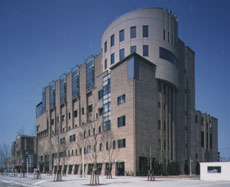
TOYAMA Kirari, where the Toyama Glass Art Museum is located, is a mixed-use facility designed by a team led by architect Kengo Kuma. Its exterior is composed of about 1,000 panels of different materials, including aluminum, glass, and white granite, and is inspired by the slopes of the Tateyama Mountain Range, a symbol of Toyama. The appearance of the building changes depending on the weather and the viewing angle, giving the impression of a single massive work of art.
Inside, the space from the second to the sixth floor features an open, diagonally atrium-like structure designed to maximize natural light. In addition, louvers made from cedar produced in Toyama Prefecture are placed on the walls and partitions, creating a space that combines innovative design with the warmth of wood.
The building also extensively uses aluminum and glass, two of Toyama Prefecture’s key industries, making it an architecture that symbolizes the region’s industry and culture. This fusion of art, architecture, and natural materials gives visitors a strong sense of Toyama’s identity.
3. Exhibitions
The Toyama Glass Art Museum hosts both permanent and special exhibitions centered on contemporary glass art. The displays are regularly rotated, so visitors can encounter new works each time they come.
(1) Glass Art Garden (6th floor)
On the sixth floor, the permanent exhibition “Glass Art Garden” features installation works created by Dale Chihuly, a master of contemporary glass art, and his studio. Five Chihuly works are on display in the museum, allowing visitors to enjoy a vividly colored and fantastical space.
One representative work is “Toyama Persian Ceiling.” The ceiling is covered with colorful glass pieces, creating a dreamlike atmosphere as if gazing up at light from the bottom of the sea.
Other distinctive and powerful works include “Toyama Reeds,” whose forms evoke plants, and “Toyama Mille Fiori,” inspired by the Italian term for “a thousand flowers.” Also on display is “Toyama Float Boat,” modeled after an actual boat once used on the Jinzū River. These works, inspired by Toyama’s nature and culture, are among the museum’s signature exhibits.
(2) Collection Exhibition (4th floor)
On the fourth floor, a collection exhibition presents glass artworks collected over many years by Toyama City. Focusing mainly on contemporary glass works from the 1950s onward, the exhibition introduces pieces made using a wide variety of expressive techniques.
Because the works are regularly changed, visitors can enjoy different displays each time they visit. Even when using glass as a material, the exhibition features a range of expressions, including sculptural forms and works that make use of light reflections.
(3) Special Exhibitions (2nd–3rd floors)
On the second and third floors, special exhibitions are held to introduce contemporary glass works from Japan and abroad, as well as various forms of artistic expression. Since the contents change according to the theme, visitors can experience the diverse possibilities of glass art.
In addition, about 50 works by glass artists associated with Toyama are displayed on the walls of the exhibition rooms and inside the library. Known as the “Glass Art Passage,” these installations allow visitors to enjoy glass art throughout the entire building.
4. A Hub of Toyama’s Glass Culture
Toyama is home to institutions that support glass culture, such as the Toyama Glass Art Institute, which trains glass artists, and the Toyama Glass Studio, which supports production activities. Along with these facilities, the Toyama Glass Art Museum plays an important role as a center for promoting glass culture.
Toyama City is known as one of the world’s leading glass culture cities, with all three functions of artist training, production support, and artwork exhibition. At the heart of this city is the Toyama Glass Art Museum.
5. Café and Relaxing Space
On the second floor of the museum is FUMUROYA CAFÉ. This Japanese-style café, produced by Fumuroya, a long-established maker of Kaga fu, offers not only standard items such as coffee but also a wide variety of sweets and light meals made with fu.
Because the Toyama City Library is located in the same building, visitors can also relax in the café while reading a book borrowed from the library. It is a space where guests can spend a calm and pleasant time while lingering over the impressions left by the museum visit.
6. Conclusion
The Toyama Glass Art Museum is a museum that symbolizes Toyama’s glass culture, deeply connected to the region’s history and industry. Its Kengo Kuma-designed architecture, contemporary glass artworks from Japan and abroad, and exhibitions that reflect local culture come together to offer visitors a new artistic experience.
With special exhibitions, a café, and a library, it is more than just a museum for viewing art; it is also a cultural facility where visitors can enjoy a leisurely time. If you visit Toyama, this is a highly recommended museum where you can experience the charm of glass art and Toyama’s culture.
Toyama Tourist Attractions
View List
Kurobe Gorge
The Kurobe Gorge is a magnificent V-shaped canyon located within the Chubu Sangaku National Park and is listed among Japan's three major gorges and one of the 100 hi...

Tateyama Kurobe Snow Festival
The "Tateyama Kurobe Alpine Route," which runs through the Northern Alps with peaks rising over 3,000 meters, is known for its spring event, the internationally reno...

Kurobe Dam
The Kurobe Dam is one of Japan's largest dams and is often referred to as "the great undertaking of the century" due to its scale and the difficulty of its construct...
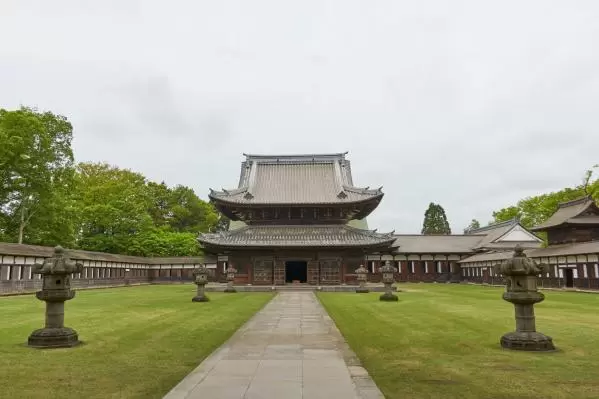
Kokuhō Kōkōzan Zuiryūji
Takaokayama Zuiryuji is the temple dedicated to Maeda Toshinaga, the second head of the Kaga Maeda clan and the founder of Takaoka. It was established by Maeda Toshi...

World Heritage Ainu Village of Traditional Housebuilding
The World Heritage Site "Aikura Gassho-zukuri Village" is a beautiful place that preserves Japan's original scenery. It features gassho-zukuri buildings that date ba...
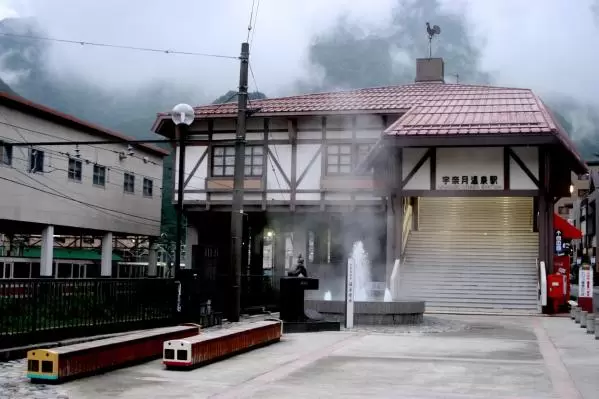
Unazuki Onsen
"Unazuki Onsen" is a renowned hot spring resort located at the entrance of the Kurobe Gorge in Toyama Prefecture, which opened in 1923. Once an uninhabited plateau c...

Mikurigaike
Mikuri Lake, with its clear and beautiful surface, is a symbol of Murodou and is regarded as the most beautiful volcanic lake in the Northern Alps. This lake, formed...

Fugan Ungekan Suikoen
Togigawa Canal Park, surrounded by the Togigawa Canal, is a lush waterside space located about a 9-minute walk from Toyama Station. From the observation tower of the...