Take-da Shrine
Basic Information
- Spot Name
- Take-da Shrine
- Location
- 〒400-0014 2611 Kobuchu-cho, Kofu City, Yamanashi Prefecture, Japan
- Access
- Take the Yamanashi Kotsu bus bound for Takeda Shrine from JR Kofu Station for 8 minutes, and get off at the last stop, which is right there.
- Parking
- 150 spaces
- Business Hours
- The grounds are open freely (Treasure Hall: 9:30 AM - 4:00 PM, last admission at 4:30 PM).
- Regular Holiday
- Irregular holidays.
- Fees
- Adults: 300 yen
Children: 150 yen - Contact Information
- Phone Number: 055-252-2609
- Official Website
Map
Detailed Information
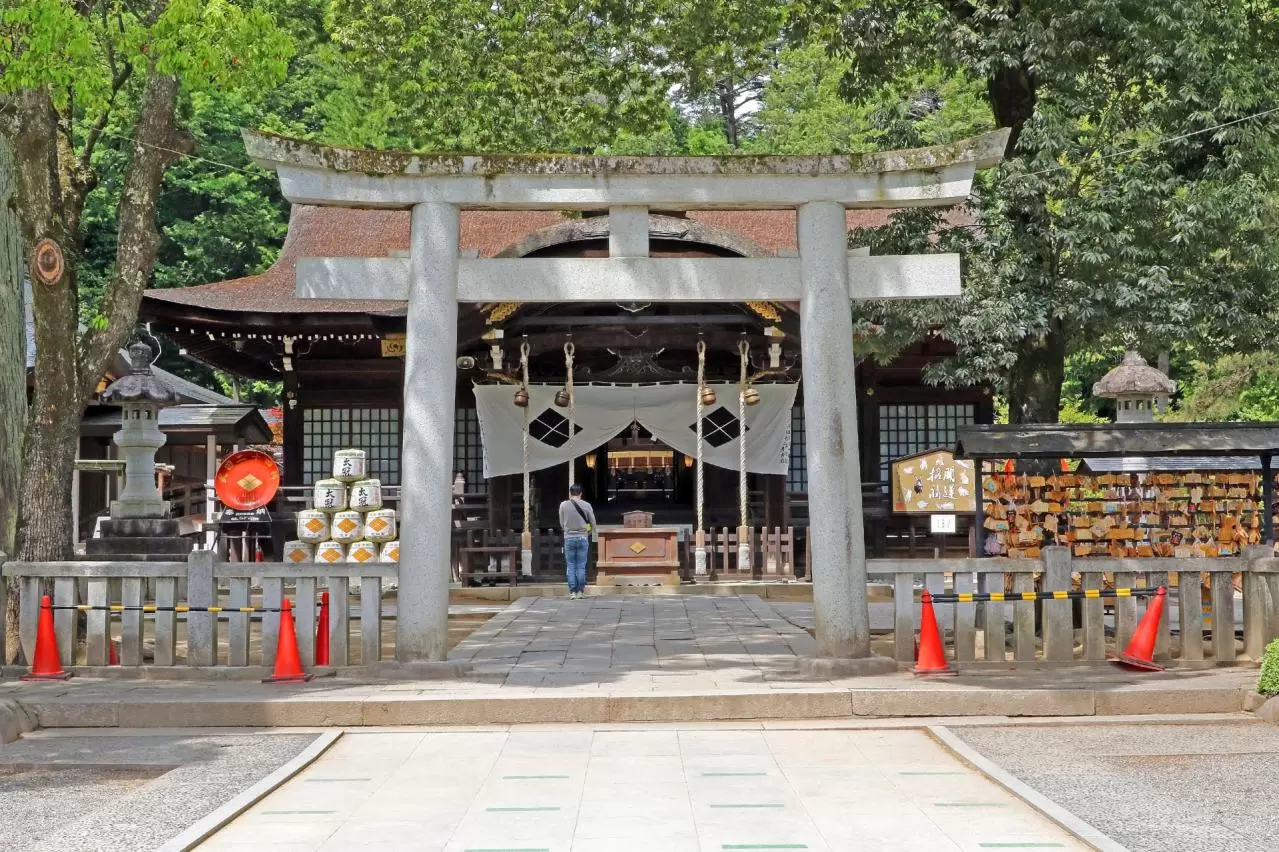
Takeda Shrine is a shrine dedicated to Lord Takeda Shingen, known as one of the great military commanders of Kai Province, and is located in Furufuchu-machi, Kofu City, Yamanashi Prefecture. This site is the former grounds of Tsutsujigasaki Residence, where the three generations of the Takeda clan of Kai—its first lord, Takeda Nobutora; second lord, Takeda Shingen; and third lord, Takeda Katsuyori—resided for more than 60 years as the center of provincial governance during the Warring States period. The ruins of this residence were designated a National Historic Site in 1940.
Takeda Shrine was founded on this historic site in 1919, in order to pass down Lord Shingen’s legacy to future generations for eternity.
The Life and Achievements of Takeda Shingen
Takeda Shingen was born in 1521 at Ishimizuji Yōgai Castle, located behind what is now Takeda Shrine. After becoming the ruler of Kai Province at the age of 21, he engaged in numerous battles over the course of about 30 years, achieving outstanding military success and earning renown as one of the most distinguished commanders of the Warring States period.
At the same time, Lord Shingen was not merely a warlord, but also an outstanding statesman and administrator. In particular, through flood-control projects, he carried out river improvements represented by the “Shingen Embankment,” working to protect farmland from flooding and improve agricultural productivity. He also devoted great effort to unifying systems of weights and measures and promoting commerce, thereby achieving stability and development in his domain.
For these reasons, Lord Shingen was deeply revered by the people of his territory and is still affectionately called “Shingen-san” in Yamanashi Prefecture, where he continues to be remembered as a local hero. On April 12, 1573, he passed away at the age of 53 in Komaba, Shinshu, while still midway toward his aspiration of advancing to Kyoto.
The Background to the Founding of Takeda Shrine
In 1915, upon the accession of Emperor Taisho, Lord Shingen was posthumously awarded the Junior Third Rank before his grave. This prompted a growing movement among the people of the prefecture to honor his legacy, leading to the establishment of the public-private “Takeda Shrine Construction Association.”
With donations of many offerings, the shrine buildings were completed in 1919, and on April 12, the anniversary of Lord Shingen’s death, the first annual festival was solemnly held. Since then, Takeda Shrine has received deep reverence as the guardian shrine of Kai Province. In 1999, the shrine marked its 80th anniversary, and various commemorative projects were carried out, including the construction of the prayer hall “Ryowaden.”
The Grounds and Their Historical Value
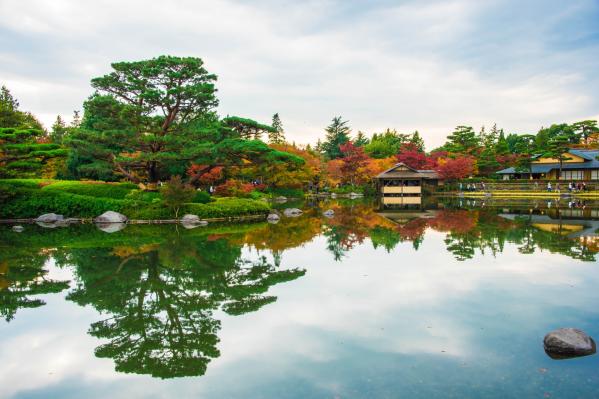
Within the grounds of Takeda Shrine, moats, earthen ramparts, stone walls, and old wells that convey the atmosphere of the Warring States period still remain, giving the site high historical value as a first-class castle residence ruin. In addition, during the shrine’s founding, hundreds of species of trees were donated from various parts of the prefecture, allowing visitors to enjoy beautiful scenery throughout the seasons.
On the grounds are the “Princess’s Well,” from which clear water still springs, and the rare “Three-Needle Pine,” both of which are cherished by many worshippers as power spots. The Three-Needle Pine is especially said to bring financial fortune when kept close, as it turns golden and sheds its leaves in autumn, and has three needles per cluster rather than the usual one.
Treasure Hall and Cultural Properties
In the Treasure Hall, located to the right rear of the worship hall, are displayed items such as the nationally designated Important Cultural Property, the tachi sword inscribed “Ichi,” as well as armor, helmets, and swords associated with the Takeda clan, preserving to this day the prosperity and martial power of the Kai Takeda family. Through these valuable materials, visitors can feel close to the history of the Warring States period and the culture of the Takeda clan.
Blessings and Belief
The blessing for which Takeda Shrine is especially famous is “victory luck.” Inspired by Lord Shingen, who was famed for his prowess in battle, it is believed that worshippers may receive blessings not only for success in contests and competitions, but also for spiritual victory—such as “winning in life itself” and “conquering oneself.”
Moreover, because of Lord Shingen’s achievements in promoting agriculture, commerce, and industry, he is also worshipped as a deity of industry and economics, and many visitors come praying for business prosperity, good fortune, and protection from misfortune. As a ruler who governed with exceptional political skill, he is also deeply revered by those engaged in public affairs.
Annual Events and Cultural Activities
Every year on April 12, the anniversary of Lord Shingen’s death, the annual festival and a portable shrine procession are held. Since 1966, the “Shingen Festival,” a city festival honoring Lord Shingen, has been held on a weekend in early April, becoming one of Kofu’s major events.
At the “Koyo Buno-den,” a Noh-style stage that serves as the kagura hall, performances of Noh and dedications of traditional martial arts are held, playing an important role as a venue for promoting traditional culture.
Takeda Shrine continues to convey the great achievements and noble character of Takeda Shingen to the present day, and stands as Kofu’s foremost shrine where history, culture, and faith are united. While feeling the spirit of the Warring States period, it remains a beloved destination for many people seeking victory, good fortune, and spiritual support.
Take-da Shrine Movies


Yamanashi Tourist Attractions
View List
Oshino Hakkai
Once, the area that is now Oshino Village was a lake. After numerous volcanic activities from Mount Fuji, the water gradually receded between the foothills of Fuji a...

Fuji-Q Highland
Fuji-Q Highland is a large amusement park located in Fujiyoshida City, Japan, famous nationwide for its thrilling attractions and haunted houses. Particularly notabl...

Kawaguchiko Music Forest Museum
The Kawaguchiko Music and Forest Museum is located near the beautiful Lake Kawaguchi and boasts the largest collection of music boxes and automatic instruments in th...


Fujimoto Skoryzote
At the Fujikyu Highland Resort in Yamanashi Prefecture, the "Fuji Shibazakura Festival" is held annually from mid-April to late May, featuring 500,000 clusters of sh...

Kiyosato Terrace
Kiyosato Terrace is a café terrace with the concept of "a prime seat at an altitude of 1,900 meters." Located in the summit area of Sun Meadows Kiyosato, it offers s...

Kawaguchiko
Kawaguchiko, one of the Fuji Five Lakes, is registered as a component of the World Heritage Site of Mount Fuji and has the longest shoreline among the lakes. The lak...

Arajukuyama Sengen Park
Shin kura yama Sengen Park is a breathtaking spot located in Fujiyoshida City, Yamanashi Prefecture. Situated halfway up Shin kura yama, visitors can enjoy a panoram...