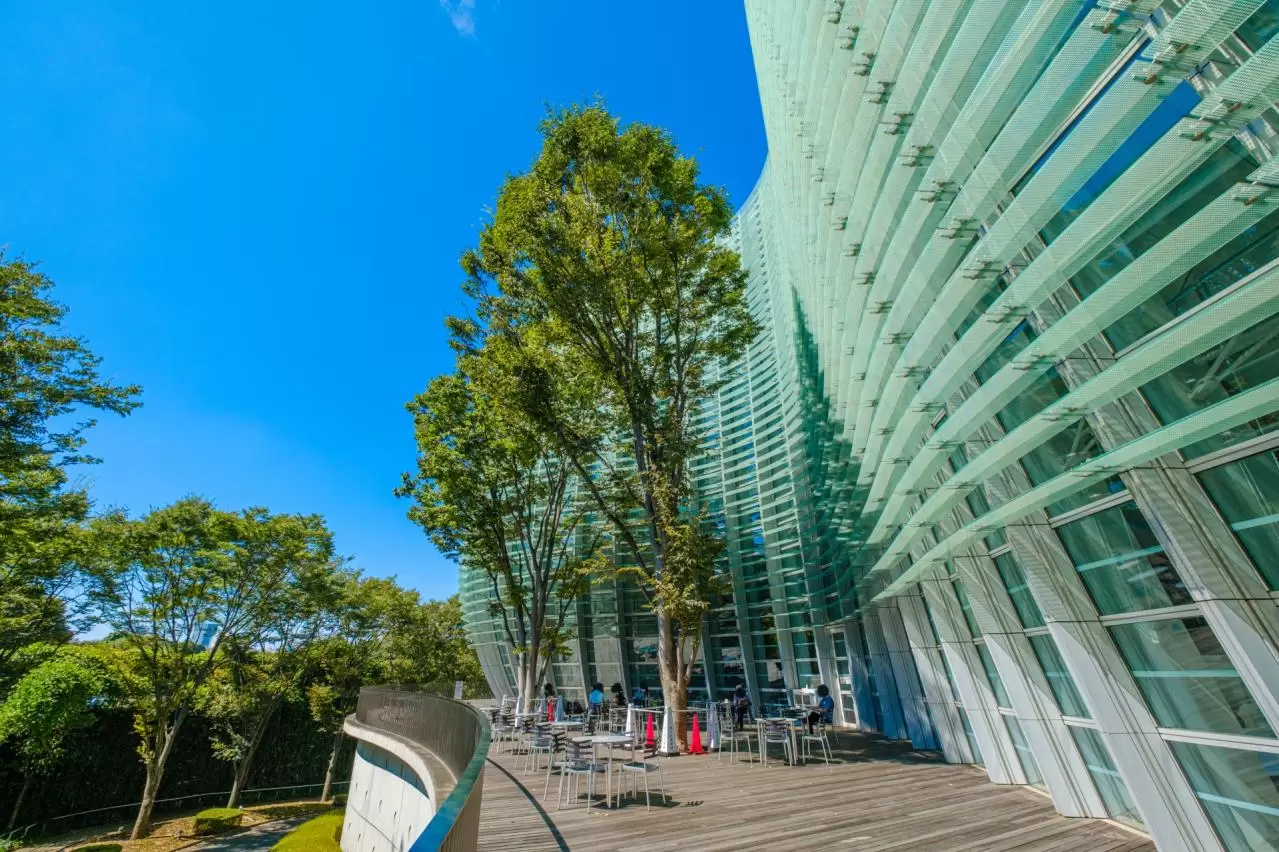
The National Art Center, Tokyo
One unique aspect of this museum is that it does not have its own collection. Instead, it hosts a wide variety of special exhibitions and open-call exhibitions in one of the largest exhibition spaces in Japan, spanning 14,000 square meters. The museum also engages in diverse activities such as providing venues for art organizations, collecting, displaying, and providing art-related materials, and implementing educational outreach programs.
The National Art Center, Tokyo serves as a forward-thinking space that offers diversity and inclusivity through "art," fitting for an international city like Tokyo. It carries a mission to contribute to the creation of new culture from a perspective of mutual understanding and coexistence through art.
Through these multifaceted activities, the National Art Center goes beyond the role of a mere museum, strongly establishing itself as an art center. Visitors from both inside and outside the country can encounter new art and engage with a variety of values and cultures in this vibrant space.
Basic Information
- Spot Name
- The National Art Center, Tokyo
- Location
- 〒106-8558 7-22-2 Roppongi, Minato City, Tokyo, Japan
- Access
- Directly connected to Exit 6 of Nogizaka Station on the Tokyo Metro Chiyoda Line, towards Aoyama Cemetery.
Approximately a 5-minute walk from Exit 4a of Roppongi Station on the Tokyo Metro Hibiya Line.
Approximately a 4-minute walk from Exit 7 of Roppongi Station on the Toei Oedo Line. - Parking
- No parking available.
- Business Hours
- 10:00 AM to 5:30 PM (last admission at 6:00 PM), on Fridays and Saturdays during special exhibitions until 7:30 PM (last admission at 8:00 PM)
- Regular Holiday
- Every Tuesday (open if it falls on a national holiday or substitute holiday, and closed the following weekday)
- Fees
- Admission is free.
*Viewing fees will be determined for self-organized exhibitions and co-sponsored exhibitions.
*The fees for open-call exhibitions vary depending on the art organizations. - Contact Information
- Phone Number:050-5541-8600
- Official Website
Map
The National Art Center, Tokyo Movies


Tokyo Tourist Attractions
View List
Aqua City Odaiba
Aqua City Odaiba is a large shopping complex set in an excellent location facing Tokyo Bay. Adjacent to Odaiba Seaside Park, it offers views of the Statue of Liberty...

The National Museum of Western Art
The National Museum of Western Art is the only national museum in Japan dedicated to Western art, located within Ueno Park in Tokyo. It opened in 1959 and was design...

Mitaka no Mori Ghibli Museum
The Ghibli Museum, Mitaka is situated within Inokashira Park in Mitaka City, Tokyo, and offers a chance to experience the world of Studio Ghibli. Opened in 2001 unde...

Ueno Ameyoko Shopping Street
Ueno Ameyoko Shopping Street is one of Japan's premier shopping streets, stretching about 500 meters between Ueno Station and Okachimachi Station, featuring around 4...

Imperial Palace
The Imperial Palace, located in Chiyoda, Tokyo, features a vast area that includes the "Fukiage Palace," where the Emperor resides, as well as the palace itself and ...

Yomiuri Land
Yomiuriland offers a variety of attractions, including the thrilling roller coaster "Bandit," a large Ferris wheel, and the new Ferris Wheel "SKY-GO-LAND." In the su...

Nedzu Museum
The Nezu Museum was established in 1941 (Showa 16) to preserve and display ancient Japanese and East Asian art collected by businessman Kaichiro Nezu (1860-1940). Th...

Shibuya Scramble Crossing
Shibuya Scramble Crossing is one of the iconic landmarks of Tokyo, where more than 1,000 people are said to cross at once during peak hours. This intersection, leadi...