Rock formations stretching for about 2 km
Rocks shaped by the sea and wind create a striking, one-of-a-kind landscape.
AI Summary
This is an AI-generated summary. Please check the official information for opening hours, fees, and closed days.
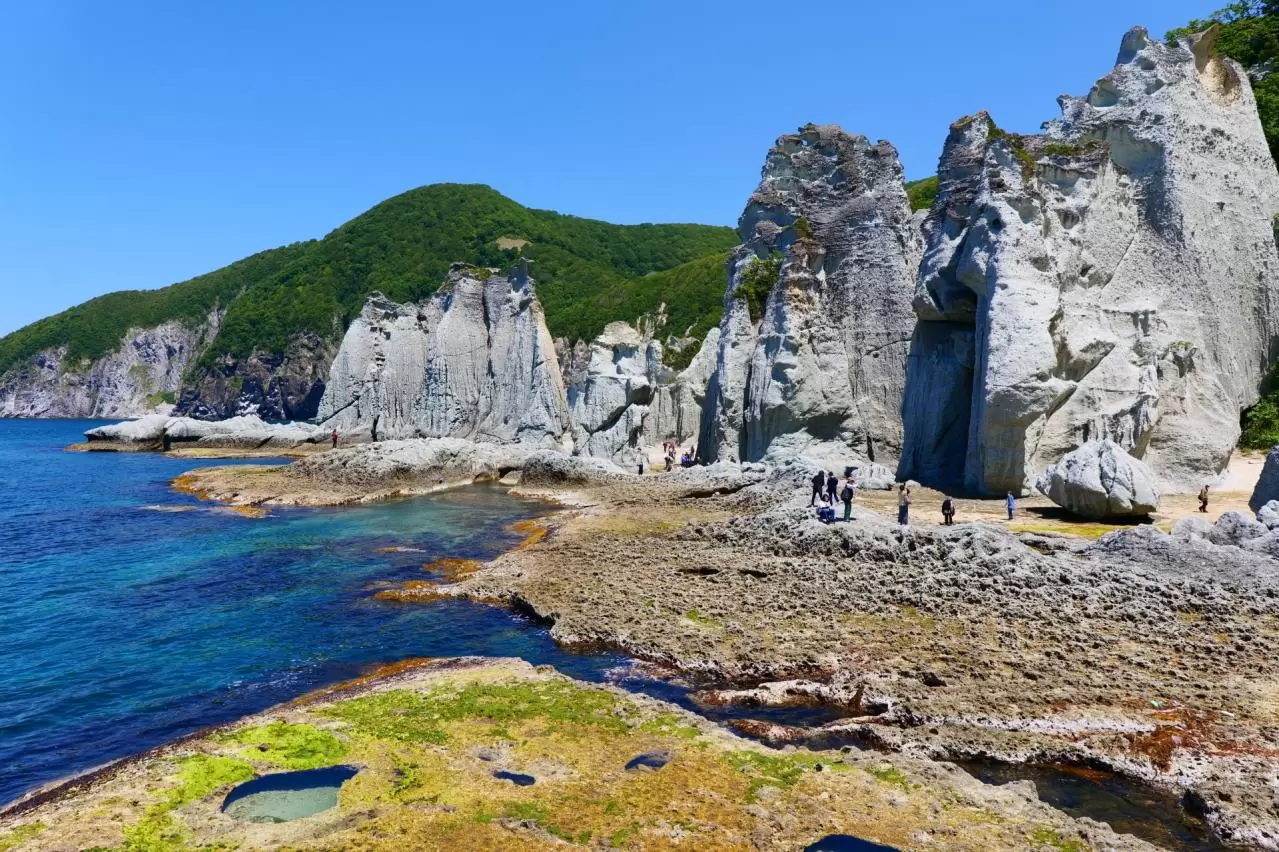
A spectacular, remote coastline on the Shimokita Peninsula, where sea-carved rock formations stretch for about 2 km.
Hotokegaura in Sai Village, Aomori, is known for its striking shoreline of pale green and white rock formations. Take the walking trail down for a closer look, or enjoy the panoramic view from a sightseeing boat, which typically operates from late April to around October. Comfortable walking shoes are recommended; the scenery can vary with the weather and sea conditions.
Rocks shaped by the sea and wind create a striking, one-of-a-kind landscape.
Walk down the trail to get close, or take a boat for a view of the coastline as a whole.
Distinctive names such as Five Hundred Arhats and Kannon Rock add another point of interest.
Drive to the parking area and take the trail down to the coast; if time allows, follow up with a sightseeing boat ride for a panoramic view.
Butsugahama, located in Sai Village on the west coast of Japan’s Shimokita Peninsula in Aomori Prefecture, is one of Japan’s premier scenic spots, known for its overwhelming scale and mysterious landscape. Stretching for about 2 kilometers, its row of white-green unusual rock formations creates a dreamlike atmosphere reminiscent of paradise.
■ How the Landscape Was Formed and Its Features
The rocks of Butsugahama are composed of tuff, a type of rock formed from consolidated volcanic ash, and are believed to have been created by submarine volcanic activity about 4 million years ago. Over the long years, waves and wind and rain have worn away the rock surfaces, producing uniquely sculpted, almost carved forms that leave a strong impression on visitors.
In addition, the severe winter cold causes water seeping into the rocks to freeze and expand, creating cracks on the surface and further shaping the unusual rock formations.
This landscape was designated a national natural monument in 1941, and it is now also recognized as part of the Shimokita Geopark. As you walk along the coast, you may even hear the sound of rocks collapsing, allowing you to feel that nature is still shaping the land to this day.
■ A Mysterious Place Where Buddhism and Legends Live On
Many of the unusual rocks scattered across Butsugahama have Buddhist-inspired names such as “Gohyaku Rakan,” “Kannon Rock,” “Nyorai’s Neck,” and “Gokuraku Beach.” Each rock’s name reflects an image associated with Buddhism and is deeply connected to local legends and beliefs.
There is also a theory that the place name “Butsugahama” comes from “hotoke” (Buddha) and “uta,” an Ainu word meaning beach, and records from the Edo period show that it was once written as “Butsuuda.”
This area was once spoken of as “a place where the dead stop on their way to the afterlife, or on their return,” and it has long been worshipped as “the gateway to paradise.” Even today, there is a small roadside shrine on the coast dedicated to a Jizo statue that washed ashore, and it is carefully protected by local people.
■ Access and Ways to Enjoy the Spectacular Views
The scenery of Butsugahama can be enjoyed both by land and by sea.
◎ Access on Foot
Following Route 338 toward Sai, you will arrive at a parking area located at an elevation of about 100 meters. From there, a maintained walking path leads you down to Butsugahama Coast in about 15 minutes. Since the return trip is uphill, it is wise to allow about 30 minutes. Some sections are somewhat steep, so comfortable walking shoes and a drink are recommended.
At the end of the path, a vast expanse of pure white giant rocks opens up before you, and their scale is truly striking. Among them, Hokakeiwa Rock stands about 36 meters high and is especially eye-catching. At low tide, you can also descend to the white-sand beach known as Gokuraku Beach, where the contrast between the emerald-green sea and the unusual rocks is breathtakingly beautiful, almost like another world.
◎ Access by Sightseeing Boat
From April through October, sightseeing boats and cruise boats operate from Sai Port, Wakinosawa Port, Aomori Port, and other locations, allowing you to enjoy a panoramic view of Butsugahama from the sea. In particular, the view of the unusual rock formations from the deck is impressive, and you can also appreciate the dramatic cliff faces that are not visible from land.
From around May to July, dolphins may also pass through the area, and if you are lucky, you may be able to observe them from the boat. Some routes also offer shore landings and guided tours, allowing you to learn more deeply about the nature and history of Butsugahama.
◎ View from the Observatory
If you continue by car from Butsugahama toward Fukuura, you will find an observation point known as the Butsugahama Parking Area. From here, you can take in a sweeping bird’s-eye view of the entire group of unusual rocks, making it a great choice for those who want to enjoy the scenery without worrying about footing.
■ Seasonal Highlights
In summer, the contrast between the deep blue, crystal-clear sea and the white-green rocks is at its most vivid, creating a tropical-like landscape. On clear days, the water is so transparent that you can even see fish swimming beneath the surface with the naked eye, giving the area the feel of a natural paradise.
In winter, on the other hand, rough waves continue to carve the rock faces, helping to shape their forms further. The calmness of snow and rock together wraps the area in a solemn, serene atmosphere, making this season another worthwhile time to visit.
Butsugahama is a magnificent work of art created by the earth’s long history and the workings of nature, and it is deeply connected to Buddhist thought and local beliefs—truly a “living landscape.”
Butsugahama changes little by little with each visit, showing different faces in every season. Standing on its quiet coast, you will likely forget the passage of time and feel as though your mind is being cleansed by nature itself. Why not come and visit this place with an open heart?
"The Nebuta House Wa Rasse" in Aomori City is a facility where visitors can experience the charm of the Nebuta Festival throughout the year. Opened in 2011 and locat...
The "Aomori Gyosai Center," located just a 5-minute walk from Aomori Station, is a historic market known locally as "Furukawa Market" with over 40 years of history. ...
Hirosaki City Apple Park spans approximately 9.7 hectares and features 80 varieties of apple trees with a total of 2,300 trees. From early August to mid-November, vi...
The Sannai-Maruyama Site is located in Aomori Prefecture and is designated as a national special historic site as one of Japan's largest Jomon period settlement site...
Sukayu Onsen is a traditional hot spring area with a history of about 300 years, located on the slopes of Mount Hakkoda. It is particularly famous for its large mixe...
The Aomori Museum of Art features a design that merges Jomon and modern styles with its pure white exterior. Designed by architect Jun Aoki, it draws inspiration fro...
Aomori Prefectural Tourist Center ASPAM serves as an information hub for tourism and local products in Aomori Prefecture, showcasing the魅力 of the region to visitor...