Gangarā-no-Tani
Gangarā-no-Tani Movies


Basic Information
- Spot Name
- Gangarā-no-Tani
- Location
- 〒901-0616 202 Maekawa, Tamagusuku, Nanjo City, Okinawa Prefecture, Japan
- Access
- From Naha Bus Terminal, take bus numbers 83 or 54 and get off at Tamagusuku-dōmae bus stop, then it's a 2-minute walk.
Approximately 30 minutes from Naha Airport.
About 10 minutes from the Okinawa Expressway "Hanaebaru Minami IC." - Parking
- 100 cars
- Business Hours
- Phone reception hours: 9:00 AM to 5:30 PM
Tour departure times: ① 10:00 AM ② 12:00 PM ③ 2:00 PM ④ 4:00 PM
Cave Cafe: 9:00 AM to 4:00 PM - Regular Holiday
- Open year-round.
- Fees
- Adults: 2,500 yen, Students: 1,500 yen (Student ID required)
- Contact Information
- Phone Number: 098-948-4192
- Official Website
Map
Detailed Information
Gangala Valley, located in Tamagusuku-Maekawa, Nanjo City, Okinawa Prefecture, is a naturally rich valley formed when limestone caves that existed hundreds of thousands of years ago collapsed. Surrounded by the subtropical forests of southern Okinawa Island, the site is dotted with enormous banyan trees, sacred caves, and archaeological sites bearing traces of ancient human life. Across its vast grounds of approximately 14,500 tsubo—about 47,900 square meters—lies a unique natural environment shaped over countless years. It is known as a valuable tourist destination where visitors can experience both Okinawa’s natural beauty and the history of humankind. To protect the natural environment and cultural assets, the valley can only be visited on a guided tour led by a professional guide and booked in advance. Visitors can enjoy a special experience that feels like an exploration of an ancient world.
Gangala Valley was formed hundreds of thousands of years ago. In the past, the area was home to limestone caves formed from Ryukyu limestone. Over the course of many years, the ceilings of the caves collapsed, creating the valley landscape seen today. Subtropical plants then flourished throughout the valley, forming a unique ecosystem. Enormous rock walls, stalactites, and the remains of caves can still be seen, allowing visitors to sense the long history of the Earth. At the bottom of the valley, gentle sunlight filters through the trees, while birdsong and the sound of leaves swaying in the breeze fill the air. Integrated with the surrounding natural environment, the mysterious scenery offers an appeal quite different from Okinawa’s more typical seaside tourist destinations.
A major feature of Gangala Valley is that, in addition to its natural beauty, it contains important archaeological sites that provide insight into the lives of ancient people. In southern Okinawa Island, the remains of humans from the Paleolithic period, known as the Minatogawa people, who are believed to have lived approximately 20,000 years ago, have been discovered. Gangala Valley has attracted attention as an important area for understanding the lives of Paleolithic people, including the Minatogawa people. However, it has not been confirmed that the Minatogawa people themselves lived within the valley. Archaeological excavations are being conducted in the valley to clarify the lives and culture of ancient people, and pottery, human remains, and ornaments have been discovered. These artifacts provide valuable clues to the long history of the people who lived in Okinawa.
One site attracting particular attention is Bugei-do Cave, located within the valley. Bugei-do is a cave archaeological site believed to have been used by ancient people as a place for living and other activities. Excavations have uncovered pottery dating back approximately 7,000 years and human remains dating back approximately 2,500 years. Human remains accompanied by shell ornaments have also been found, and these discoveries are important materials for understanding the lives and burial customs of people at that time. At the Sakitari Cave Site, also located within Gangala Valley, a fishhook made from a processed sea snail shell and dating back approximately 23,000 years was discovered. It attracted attention as the world’s oldest fishhook. In addition, shell tools and ornaments, as well as traces of crabs believed to have been used as food, have been found. These discoveries provide valuable evidence that Paleolithic people in Okinawa lived by making use of the sea and the natural resources around them.
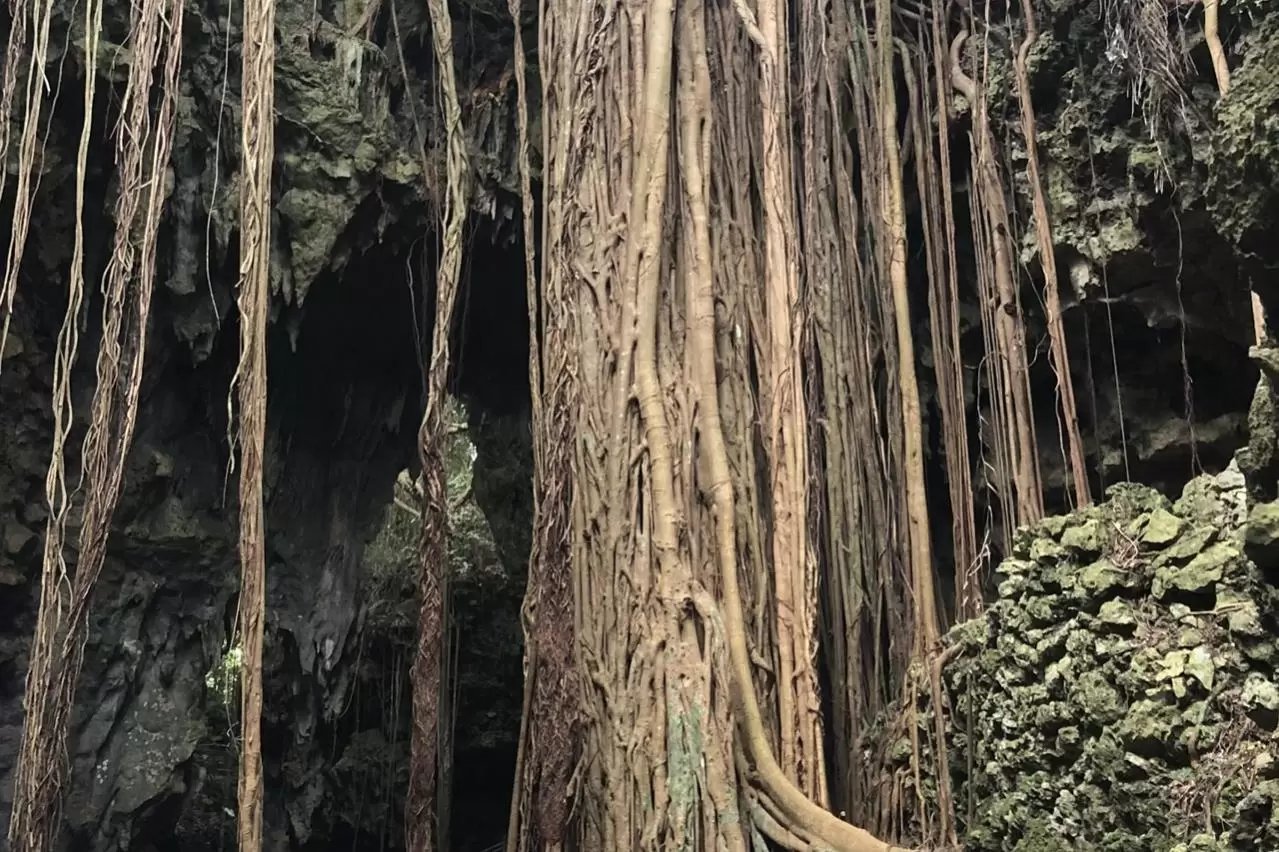
One of Gangala Valley’s most famous attractions is the Ufushu Banyan. This enormous banyan tree is estimated to be approximately 150 years old and reaches a height of about 20 meters. It is known as a symbolic presence in the valley. Its long aerial roots hang down from the top of a cliff and grow toward the ground, creating a distinctive appearance as if giant pillars were supporting the forest. The banyan is an evergreen tree of the fig family that grows naturally throughout Okinawa. When its aerial roots extending from the branches reach the ground, they gradually thicken and grow into structures resembling trunks. Subtropical plants flourish around the Ufushu Banyan, and its overwhelming presence and mysterious surroundings fascinate visitors to Gangala Valley. It is also a popular photo spot where visitors can experience the vitality of nature up close.
The valley is also home to sacred caves where local people have offered prayers since ancient times. The most representative are Ikiga Cave and Inagu Cave. In the Okinawan language, “ikiga” means man and “inagu” means woman. These caves have been cherished as places of worship associated with childbirth, the flourishing of descendants, good marriages, and safe deliveries. Ikiga Cave contains a stalactite reminiscent of a male symbol, and it is said that people have visited the cave since ancient times to pray for children and the growth of life. Inagu Cave, meanwhile, has been revered as a place for prayers related to women. It is said that people came to worship at these caves not only from Okinawa Island but also from the outlying islands. They continue to convey Okinawa’s unique spiritual culture, in which sacred power is found in natural formations.
Visitors can learn about the valley’s precious natural environment, history, and culture through guided nature tours led by professional guides. The tour covers approximately one kilometer and takes about one hour and 20 minutes. While walking through the subtropical forest and listening to the guide’s explanations, visitors see enormous banyan trees, caves, and archaeological sites where excavations are being conducted. Rather than simply viewing the scenery, learning about the characteristics of the plants, the formation of the valley, the lives of ancient people, and the beliefs passed down through the local community enables visitors to gain a deeper understanding of Gangala Valley’s appeal. Because the route includes stairs, slopes, and paths that follow the natural terrain, comfortable walking shoes and easy-to-move-in clothing are recommended.
CAVE CAFE, located at the tour’s starting point, is another attraction unique to Gangala Valley. This café space makes use of a natural limestone cave, with a huge rock ceiling overhead and the coolness and silence characteristic of a cave. The cave is also known as the Sakitari Cave Site, where Paleolithic artifacts have been discovered, giving it both natural beauty and archaeological significance. CAVE CAFE is generally a special space available only to participants in the Gangala Valley guided tour before the tour begins; visitors without a tour reservation cannot use it as an ordinary café. Concerts and private events are sometimes held inside the cave, and its distinctive atmosphere, which preserves the natural terrain as it is, is one of the pleasures of visiting Gangala Valley.
Gangala Valley is approximately a 30- to 40-minute drive from Naha Airport, making it easy to visit together with other destinations in southern Okinawa Island. Nearby are tourist facilities such as Okinawa World, where visitors can experience Okinawa’s natural environment and history. The valley can only be visited as part of a guided tour, and advance reservations are required. Same-day reservations may be possible if spaces are available, but early booking is recommended for those who wish to join at a preferred time. To protect the natural environment and cultural assets, independent exploration and entry into areas outside the designated routes are not permitted. Tour times, prices, and the conditions for using the café may change, so it is important to check the official website for the latest information before visiting.
Gangala Valley is a special place where hundreds of thousands of years of natural processes intersect with the lives and beliefs of people that have continued since ancient times. Its many attractions include a subtropical forest dominated by enormous banyan trees, caves where people prayed for the birth of life, and archaeological sites preserving traces of ancient humans. Exploring the valley with a professional guide allows visitors to deepen their understanding of Okinawa’s natural environment, human history, and unique spiritual culture. It is an ideal destination for those who want to enjoy a mysterious side of Okinawa distinct from its beaches, as well as for anyone interested in nature, archaeology, or history.
Okinawa Tourist Attractions
View List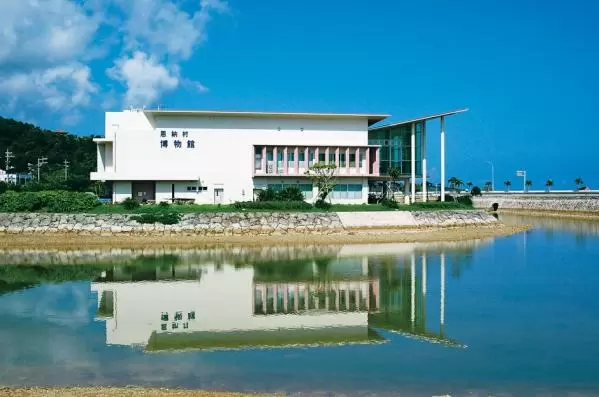
Onna Village Museum
The museum that conveys the unique history, culture, and lifestyle of Onna Village is divided into three zones: the folk exhibition "Life in Onna," the video theater...

Kokuei Okinawa Memorial Park and Ocean Expo Park
The Okinawa Commemorative National Government Park and Ocean Expo Park was established in 1976 to commemorate the Okinawa International Ocean Exposition held in 1975...

Okinawa Churaumi Aquarium
Okinawa's Sea - Experience rich nature and cultural history, as well as interaction with dolphins at the Ocean Expo Park. One of the popular spots in the park is the...

Kabira Bay
Kabira Bay is located in the northwest of Ishigaki Island and is one of Okinawa's top scenic spots. It features a beautiful landscape with crystal-clear emerald gree...
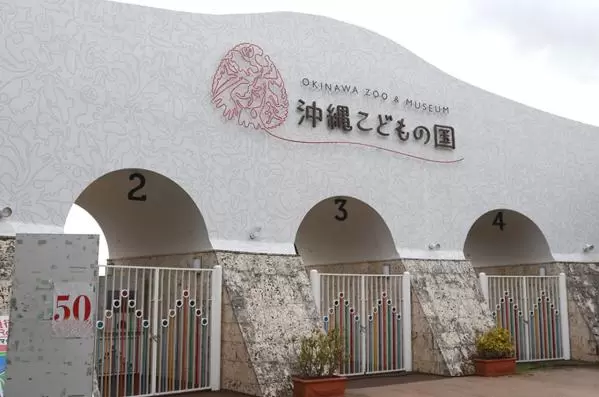
Okinawa Zoo & Museum
Okinawa Children's Country is a family-oriented leisure facility located in Okinawa City, Okinawa Prefecture. Opened in 1970, this facility features a diverse range ...

Miha American Village
Mihama American Village is a popular resort town located in central Okinawa. It features colorful buildings and a Ferris wheel that recreate an American street scene...

Naki-jin Castle Ruins
Nakijin Castle Ruins is a historic site built as the residence of the king of the northern kingdom during the time of the Three Kingdoms of Okinawa. It is located in...
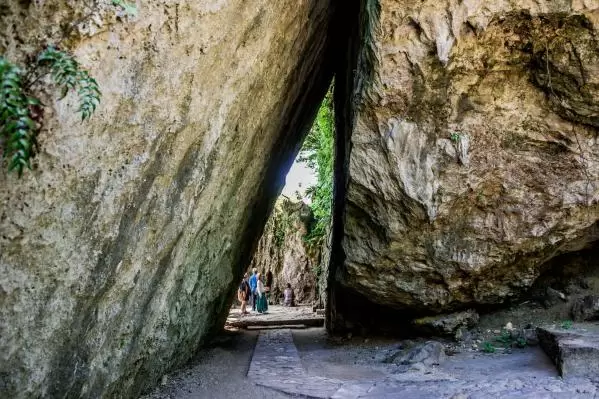
Seifa Utaki
Seifa Utaki is the most sacred site of the Ryukyu Kingdom and was registered as a UNESCO World Heritage Site as part of the "Sites of Japan's Meiji Industrial Revolu...