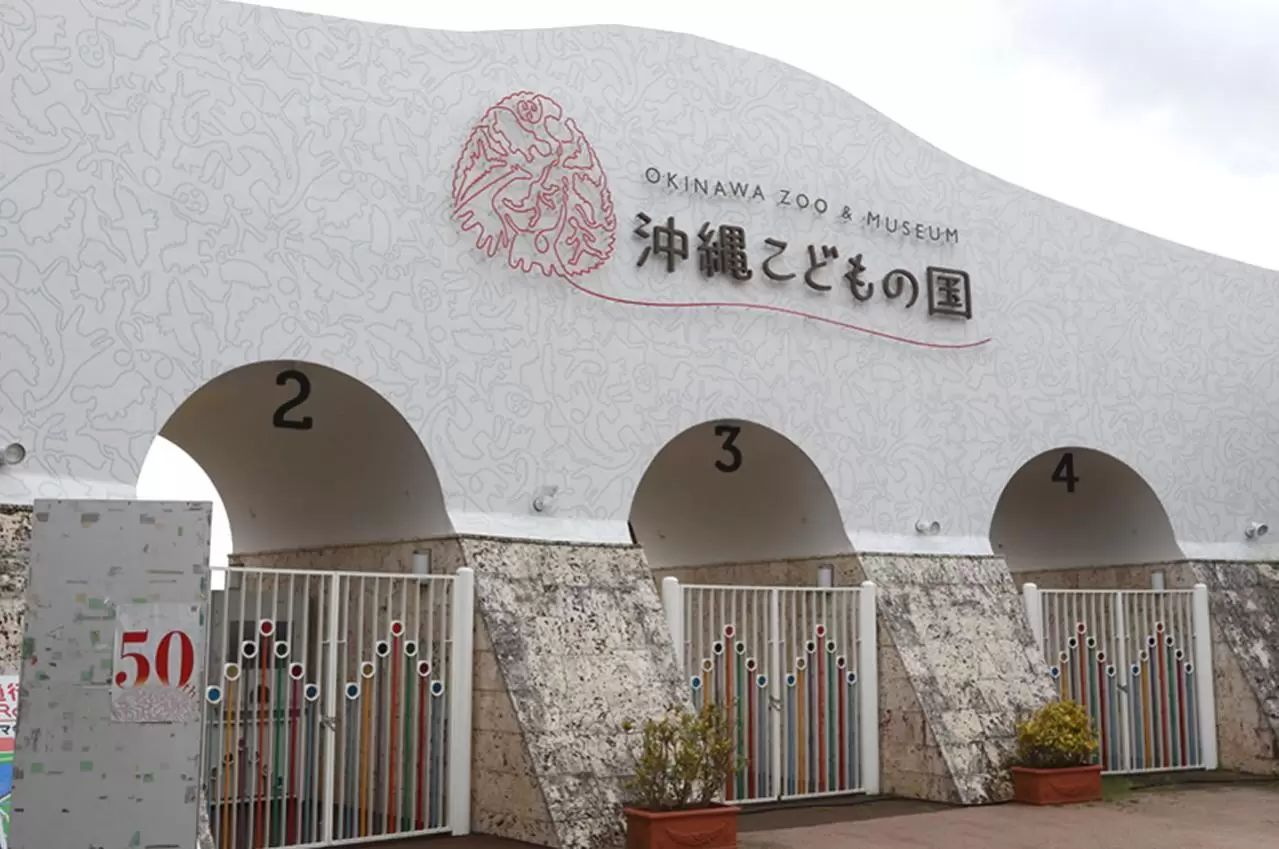
Okinawa Zoo & Museum
In the zoo area, around 200 species of animals are housed, particularly showcasing native Okinawan animals and those from tropical regions. Visitors can enjoy a variety of animals, from large species like lions, elephants, and giraffes to rare birds and reptiles. Interaction experiences with the animals and feeding sessions are also popular among visitors.
The amusement park area offers numerous attractions that young children can enjoy, such as merry-go-rounds, ferris wheels, and mini trains, providing fun for the whole family. Special events and shows are held throughout the seasons, allowing visitors to discover new ways to enjoy the park each time they visit.
In the natural park area, expansive greenery provides a perfect setting for strolls and picnics. The park features well-maintained walking paths where guests can relax while enjoying seasonal flowers and plants. Additionally, there are plenty of nature experience programs designed for children, providing opportunities to learn and play in a natural environment.
The Wonder Museum area hosts exhibits related to science and art, featuring hands-on experiences that are popular among children. Interactive displays and workshops stimulate creativity and curiosity among visitors.
Okinawa Children's Country is attractive for its diverse facilities and rich activities that everyone in the family can enjoy, and it continues to be loved by local communities and tourists alike. If you visit Okinawa, be sure to stop by!
Okinawa Zoo & Museum Movies


Basic Information
- Spot Name
- Okinawa Zoo & Museum
- Location
- 904-0021 5-7-1 Huya, Okinawa City, Okinawa Prefecture, Japan
- Access
- Drive 2 km towards Kuniya on National Route 330 from Okinawa Minami IC on the Okinawa Expressway.
- Parking
- Parking capacity: 700 vehicles
- Business Hours
- Weekdays: 9:30 AM to 5:30 PM (Admission until 4:30 PM)
Weekends and holidays: 9:30 AM to 9:00 PM (Admission until 8:00 PM)
*Operating hours may change during special events. - Regular Holiday
- Every Tuesday. *If Tuesday is a holiday, we will operate as usual, and the following Wednesday will be closed.
- Fees
- ■Admission Fee
Ages 16 and up: 1000 yen
Ages 15 and under: Free
■Annual Pass
Ages 16 and up: 4000 yen
Student discount (high school students, vocational school students, university students, etc.): 2000 yen
*To apply for the student discount, a student ID must be presented. - Contact Information
- Phone Number:098-933-4190
- Official Website
Map
Detailed Information
Okinawa Zoo & Museum is a comprehensive leisure and educational facility located in Goya, Okinawa City, Okinawa Prefecture. Centered around a zoo and the hands-on museum Wonder Museum, it first opened on May 5, 1970, during the period when Okinawa was under U.S. administration, as part of a project undertaken with Okinawa’s eventual reversion to Japan in mind. With a long history, it is widely loved as one of the leading family-friendly tourist attractions in central Okinawa Island. Visitors can encounter animals from around the world as well as creatures unique to Okinawa, learn through hands-on exhibits about science and art, enjoy nature walks, participate in activities introducing Okinawan traditional culture, and have fun with children’s playground equipment and rides. More than simply a zoo or playground, the facility provides opportunities for children to develop their curiosity and creativity and to think about the connections between animals, people, and nature. It is also known as Japan’s southernmost comprehensive zoo and offers enjoyable learning experiences for visitors of all ages, from children to adults.
Since opening in 1970, Okinawa Zoo & Museum has developed as a facility dedicated to nurturing children’s dreams and supporting their healthy growth. In 2014, it adopted the goal of becoming “Japan’s Most Unique Zoo” and began working to create exhibits where animals could live in environments closer to their natural habitats, devise ways for visitors to observe animal behavior from various perspectives, and expand its hands-on programs. The facility’s logo embodies the idea that “people,” “animals,” and “nature” are connected as equals, represented by a design in which a single line links them all. In addition to observing animals, visitors can learn about their lifestyles and natural environments and deepen their understanding of the importance of life and biodiversity. A variety of initiatives continue to be developed with this purpose in mind.
The zoo area at the heart of the facility houses and displays approximately 150 species of mammals, birds, reptiles, fish, and other animals. The number and variety of animals may change depending on breeding programs, transfers, facility improvements, and other circumstances. Nevertheless, visitors can encounter a wide range of creatures, from large animals such as lions, elephants, giraffes, and hippopotamuses to monkeys, bears, birds, and rare animals native to the islands of Okinawa. The exhibit areas are designed according to the habitats and characteristics of the animals, allowing visitors to observe where they live, what they eat, and how they behave. Seeing animals up close makes it possible to appreciate their size, movements, and expressions in ways that books and videos cannot convey. Programs such as keeper talks and opportunities to watch the animals being fed are also available, allowing visitors to deepen their understanding of the animals while having fun.
One of the distinctive exhibits at Okinawa Zoo & Museum introduces animals native to the “Ryukyu Arc.” The Ryukyu Arc refers to the chain of islands extending from the area around Tanegashima and Yakushima in Kagoshima Prefecture through the Amami Islands, Okinawa Islands, Miyako Islands, and Yaeyama Islands to Yonaguni Island. Over many years, these islands have developed unique natural environments, and each island is home to distinctive plant and animal species. Focusing on the natural environments and biodiversity of the Ryukyu Arc, Okinawa Zoo & Museum introduces visitors to wild animals and native livestock living on these islands. This is an important exhibit for understanding Okinawa’s natural environment, and one of its greatest attractions is the opportunity to see creatures that are rarely found in zoos on Japan’s main islands. Visitors can also learn how the ecosystems of the islands have developed over long periods of time and why it is important to protect their endemic plants and animals.
Among the animals associated with the Ryukyu Arc, the Okinawa flying fox is one that deserves special attention. The Okinawa flying fox is a subspecies of the Ryukyu flying fox and lives on Okinawa Island and neighboring islands. Unlike the small bats with which people are generally familiar, it feeds on fruit, flowers, leaves, and other plant matter. It has a distinctive appeal, including large eyes, an endearing face, and an impressive appearance when it spreads its wings. Visitors may be able to observe it hanging upside down from branches or wrapping its body in its wings. Mothers also have the habit of carrying their young as they move about, so during the breeding and parenting season, visitors may sometimes observe the behavior of mothers and their offspring together. Flying foxes contribute to the maintenance and reproduction of forests by dispersing plant seeds and pollinating flowers. Learning about this ecology helps visitors appreciate how the wild animals living on Okinawa’s islands have adapted to their respective environments.
Primates from various parts of the world are also popular attractions in the zoo. Mandrills, in particular, are memorable for their vivid red and blue faces, distinctive coloring, and powerful physiques. Native to tropical forests in Africa, mandrills are highly social animals known to live in groups. By observing their expressions, movements, and interactions with one another, visitors can learn about primate social behavior and the diversity of animal behavior. The zoo also introduces a variety of other primates, including common squirrel monkeys, which are small and highly active. Common squirrel monkeys inhabit forests in Central and South America, and highlights include watching them move quickly among tree branches and interact with members of their group. By taking the time to observe the animals’ natural behavior, visitors can learn about differences in their lifestyles and ecological characteristics. Because the animals on display may change depending on their care and other circumstances, visitors who wish to see a particular animal are advised to check the official website in advance.
“Umanchu Hiroba” is an area where visitors can become familiar with Okinawa’s native livestock. Here, they can encounter the Yonaguni horse, a traditional Okinawan horse, and island goats, which have long been closely connected with local life. The Yonaguni horse is a small native breed originating on Yonaguni Island in Okinawa Prefecture. In the past, it played an important role in supporting people’s lives through agricultural work and the transportation of goods. Its relatively small and approachable appearance makes it a valuable animal for learning about Okinawa’s traditional livestock culture. At the zoo, hands-on programs such as feeding the native horses allow visitors to feel close to the animals. Horse-riding experiences may also be offered, although the details and availability can change, so visitors are encouraged to check in advance. Feeding experiences with island goats may also be available, allowing visitors to observe the animals eating at close range and feel their warmth while developing a respect for life. Encountering Okinawa’s native livestock is not only an enjoyable way to interact with animals but also a valuable opportunity to learn about Okinawa’s traditional agriculture and way of life.
“Satoyama Labyrinth” is an exhibit area designed to evoke Japan’s traditional satoyama landscapes. Surrounded by trees, its pathways and natural spaces create the feeling of exploring a forest while observing the animals. Satoyama refers to environments formed through the interaction of people and nature over many years, consisting of a combination of forests, grasslands, farmland, and other areas. This area introduces animals associated with Japanese forests and satoyama, including bears, foxes, and raccoon dogs. It is designed so that visitors can observe the animals from various angles as they move among the trees, search for food, and rest. Learning about the behavior of animals living in nature can encourage visitors to think about the relationship between people and wildlife and the importance of protecting the natural environment. Comparing the physical characteristics and behaviors of forest animals also helps visitors learn how each species has adapted to its surroundings.
“Herbivore Ashibinaa” is a popular area where visitors can observe large herbivores such as giraffes, hippopotamuses, and elephants. The Okinawan word “ashibinaa” means “playground,” and the spacious area offers an impressive view of these animals. Reticulated giraffes are characterized by their long necks and legs and beautiful net-like markings. Visitors can observe them eating leaves from high branches. Hippopotamuses are striking for their large bodies and short legs, but they are also known for spending long periods in the water, where their movements differ from those on land. Indian elephants are distinguished by their long trunks and large bodies. Watching them skillfully grasp food or investigate objects around them with their trunks offers a sense of their intelligence and delicate movements. Observing large animals at close range can be an especially memorable experience for children. By learning about differences in the animals’ food and living environments, visitors can understand that even herbivores possess different characteristics and habits.
The lion exhibit is another major highlight of Okinawa Zoo & Museum. In addition to ordinary lions, the zoo has also housed white lions, known for their distinctive white coats. White lions are not a separate species from ordinary lions; rather, they are lions whose pale coat color results from a genetic characteristic. At Okinawa Zoo & Museum, the white lions Seram and Rhythm, donated by Tohoku Safari Park, have been well known. At the lion exhibit, visitors can observe the animals’ powerful physiques, sharp gazes, and imposing movements, experiencing the presence of wild carnivores. Comparing white lions with normally colored lions also provides an opportunity to learn that individuals within the same animal species can display a variety of differences. The individual animals on display and the areas from which they can be viewed may change depending on their care and other circumstances.
For visitors who wish to gain a deeper understanding of the animals, keeper-led educational programs are highly recommended. Okinawa Zoo & Museum offers programs such as “Arinkurin Time,” which introduces the characteristics and ecology of animals, and “Kuwacchii Time,” which allows visitors to watch the animals being fed. “Arinkurin” is an Okinawan expression meaning “this and that” or “various things,” while “kuwacchii” means “a feast” or “delicious food.” During these programs, keepers explain the animals’ diets, habits, personalities, and daily behaviors, introducing aspects of their appeal that visitors may not notice during ordinary viewing. Watching the animals actually eat also helps visitors understand how feeding methods and the use of different body parts vary from species to species. For example, watching an elephant grasp food with its trunk or a giraffe use its long tongue to eat leaves offers fascinating insight into animal anatomy. Because the program times and featured animals may vary from day to day, visitors are advised to check the official website or other sources before visiting for the best experience.
Another major attraction at Okinawa Zoo & Museum is the hands-on museum known as Wonder Museum. It is recognized as the first children’s museum established in Okinawa Prefecture and is a place where children can learn about science, art, and the wonders of everyday life through play. Rather than simply viewing exhibits as in a conventional museum, visitors learn through interactive displays that invite them to touch, move, and experiment. The museum features hands-on exhibits incorporating three elements—science, philosophy, and art—allowing children to explore familiar mysteries involving light, sound, color, shape, and movement. By thinking for themselves, engaging in trial and error, and making new discoveries, children can naturally develop scientific thinking and creativity. The museum also emphasizes viewing things from different perspectives and expressing one’s ideas freely. As a result, it offers more than the acquisition of knowledge: it provides the joy of thinking and the excitement of discovery.
Wonder Museum also hosts a variety of workshops and creative activities in addition to its exhibits. Through craft projects, science experiments, and art-related activities, children can enjoy learning by working with their own hands. For example, making objects from familiar materials or investigating how natural phenomena work gives children opportunities to connect what they learn at school with real-world experiences. Another appealing feature is that children are not limited to finding a predetermined answer; they can use their own ideas and creativity in their projects. Exhibits are available for children of different ages and interests, allowing families to think together and share discoveries. The museum not only serves as a place that can spark an interest in science and art but also plays an important role in fostering children’s independence and spirit of inquiry.
In addition to the zoo and Wonder Museum, the grounds include facilities where children can play actively. Ride Park offers attractions such as a train, carousel, and miniature cars that even young children can enjoy, providing a different kind of fun from exploring the zoo. The types of rides and usage requirements may change, but the area is well loved as a place where families can enjoy themselves together. Splash Park is an area where visitors can enjoy water play and playground equipment depending on the season. During hot weather, water activities using fountains are particularly popular, offering outdoor fun that makes the most of Okinawa’s warm climate. Swing Park also features swings and resting areas, giving children a place to move freely and play at their own pace.
“Fisherman’s Deck” is another unique experiential facility at Okinawa Zoo & Museum. Here, visitors can try fishing at a stocked fishing pond, allowing children to discover the fun of fishing and learn about interacting with living creatures. Some of the fish caught are used as food for the animals, providing an opportunity to think about food chains and the connections among living things. Through fishing, children can become interested in how fish move and live underwater, while also enjoying the challenge of trying different approaches and figuring things out for themselves. Such hands-on activities offer discoveries that cannot be gained by merely observing animals and help foster children’s curiosity and willingness to take on challenges. Because the operating status, admission fees, and age requirements for the facility may change, visitors are advised to check in advance.
“Furusato-en” is a place of particular interest for visitors who wish to experience Okinawa’s nature, history, and traditional culture. It consists of traditional Okinawan houses relocated and restored from the late Meiji period to the early Taisho period, offering insight into historical homes and everyday life. The grounds contain three nationally registered tangible cultural properties: the Main Building of the Former Kuba Family Residence at Okinawa City Furusato-en, the Himpun of the Former Kuba Family Residence at Okinawa City Furusato-en, and the Machifuru of the Former Hirata Family Residence at Okinawa City Furusato-en. Together, they form a valuable site preserving Okinawa’s traditional architectural culture. Traditional Okinawan houses incorporated a variety of adaptations to accommodate the hot, humid climate and natural conditions such as typhoons, including measures related to ventilation, roof construction, and the arrangement of buildings. A himpun, for example, is a privacy wall placed near the entrance to a residence that helps block the view from outside. A machifuru is a facility associated with a traditional pig latrine and conveys aspects of former everyday customs. Touring these historic homes allows visitors to learn how the people of Okinawa developed the wisdom to live in harmony with their natural surroundings.
Exploring the nature-rich grounds is another enjoyable way to experience Okinawa Zoo & Museum. Greenery spreads throughout the property, with trees, flowers, ponds, and other natural features offering a different kind of appeal from the zoo exhibits. Depending on the season and time of day, visitors may also be able to observe wild birds and insects living on the grounds. Okinawa has a subtropical climate and is home to plants and creatures that differ from those found on Japan’s main islands. By paying attention to the shapes of plants, the colors of leaves, and the songs of birds while walking through the grounds, visitors can make many discoveries in the surrounding natural environment. Looking beyond the animals kept in the zoo and noticing the creatures living freely in nature can lead to a deeper understanding of connections within ecosystems and the importance of protecting the natural environment. A leisurely walk along the tree-lined paths is also a pleasant way for families to spend time together while enjoying nature.
Okinawa Zoo & Museum hosts seasonal events and special programs throughout the year. These may include animal-learning events, nature experiences, craft classes, cultural activities, and other programs in which children can participate while having fun. The facility also holds NIGHT ZOO events, which allow visitors to observe the animals after dark. A major attraction is the opportunity to experience animal behavior and the atmosphere of the grounds in ways that differ from the daytime. Visitors may be able to watch nocturnal animals becoming active, for example. Observing animals that often rest during the day can help visitors learn about their daily rhythms and differences in behavior. A nighttime zoo has a quiet and distinctive atmosphere, offering a special experience unlike an ordinary daytime visit. However, the dates, viewing hours, featured animals, and participation requirements may vary depending on the season, so visitors are advised to check the official website in advance.
Okinawa Zoo & Museum is not only a fun place for children to play but also an educational facility where they can learn about the importance of life and the relationship between people and the natural environment. At the zoo, visitors can think about biodiversity, animal ecology, and the conservation of wildlife. At Wonder Museum, they can experience the joy of making new discoveries through science and art. Furusato-en offers the chance to learn about Okinawa’s history and traditional way of life, while the natural surroundings provide lessons about familiar ecosystems. Facilities such as Ride Park and Splash Park also allow children to enjoy themselves while being physically active. The opportunity to enjoy all these different experiences in one place is one of the unique attractions of Okinawa Zoo & Museum. From young children and elementary school students to teenagers and adults, visitors of different ages and interests can find their own ways to enjoy the facility, making it a popular destination for creating shared family memories.
With encounters with approximately 150 species of animals, opportunities to observe Okinawa’s unique creatures and native livestock, keeper talks and hands-on programs, science and art experiences at Wonder Museum, children’s rides and water activities, historic traditional houses, and nature walks, Okinawa Zoo & Museum is a comprehensive leisure facility filled with diverse attractions. Since opening in 1970, it has continued to develop as a place that nurtures children’s dreams and curiosity while conveying the importance of animals, people, and nature living together. Its greatest appeal is that families can enjoy a full day while learning about Okinawa’s rich natural environment and distinctive culture. When visiting central Okinawa Island, it is a recommended destination not only for families traveling with children but also for anyone interested in animals, nature, or science.
#Traditional culture experience # Zoo and botanical gardens, aquariums, farms #Amusement park/Theme park #Science Museum, Observatory, Planetarium #park
Okinawa Tourist Attractions
View List
Yonaha Maehama Beach
Yonaha Maehama Beach, located on the eastern side of Miyako Island, features a stunning 7 km stretch of pure white sand and the emerald green waters known as "Miyako...

Kabira Bay
Kabira Bay is located in the northwest of Ishigaki Island and is one of Okinawa's top scenic spots. It features a beautiful landscape with crystal-clear emerald gree...

Kokuei Okinawa Memorial Park and Ocean Expo Park
The Okinawa Commemorative National Government Park and Ocean Expo Park was established in 1976 to commemorate the Okinawa International Ocean Exposition held in 1975...
Okinawa Churaumi Aquarium
Okinawa's Sea - Experience rich nature and cultural history, as well as interaction with dolphins at the Ocean Expo Park. One of the popular spots in the park is the...
Onna Village Museum
The museum that conveys the unique history, culture, and lifestyle of Onna Village is divided into three zones: the folk exhibition "Life in Onna," the video theater...

Kourijima / Teenuhama / Tokeihama
Kouri Island is a beautiful small island located in the northern part of Okinawa mainland, surrounded by emerald green waters. The Kouri Ohashi Bridge opened in 2005...

Miha American Village
Mihama American Village is a popular resort town located in central Okinawa. It features colorful buildings and a Ferris wheel that recreate an American street scene...