Cape Hedo
Cape Hedo Movies


Basic Information
- Spot Name
- Cape Hedo
- Location
- 〒847-0404 947 Hato, Chinzei-cho, Karatsu City, Saga Prefecture
- Access
- From Karatsu Station on the JR Chikuhi Line, it's a 5-minute walk to the Karatsu Bus Center. Take the Showa Bus bound for Hado Misaki for 50 minutes, get off at the final stop, and walk for 5 minutes. It takes 70 minutes by car from the Nagasaki Expressway Taku Interchange.
- Parking
- Approximately 330 cars.
- Business Hours
- Free exploration
- Contact Information
- Phone Number:0955-53-7155
- Official Website
Map
Detailed Information
Hado Misaki is a small cape in Hado, Chinzei-cho, Karatsu City, Saga Prefecture, extending into the Genkai Sea from the tip of the Higashi-Matsuura Peninsula. It is known for its magnificent scenery, where expansive lawns, blue seas, and islands scattered across the Genkai Sea create a sense of openness. The cape is also part of Genkai Quasi-National Park. In addition to being selected as one of the “100 Best Beaches in Japan,” it has been certified as a satellite site of the “Lover’s Sanctuary Project,” making it one of the most representative scenic destinations in the Karatsu and Yobuko area.
Around the cape are Hado Misaki Beach, a campground, walking trails, an underwater observation tower, and shops selling grilled turban shells. Visitors can enjoy much more than simply strolling while gazing out at the sea; the area offers a wide range of activities, including swimming, camping, fishing, underwater observation, and sampling local seafood. It is a resort area that appeals to a wide range of generations, from families and groups of friends to couples enjoying a scenic drive.
One of Hado Misaki’s greatest attractions is the view of the Genkai Sea from the tip of the cape. With few obstacles blocking the view, clear days reveal a landscape in which the blue sea and sky seem to merge into one. From the surrounding waters, visitors can see islands such as Kakara Island, Matsushima, and Kabe Island, as well as boats traveling across the sea. Walking across the lawns in the sea breeze, visitors can experience the distinctive sense of openness created by a cape jutting out into the Genkai Sea.
The scenery is said to be particularly beautiful at dusk. The western sky is dyed red and orange, while the setting sun casts a long reflection across the surface of the sea. Since the position of the sunset and the colors of the sky change depending on the season and weather, visitors can encounter a different landscape each time they come. As a renowned sunset-viewing spot—and because it is also known as “Heart Cape”—Hado Misaki is especially popular with couples.
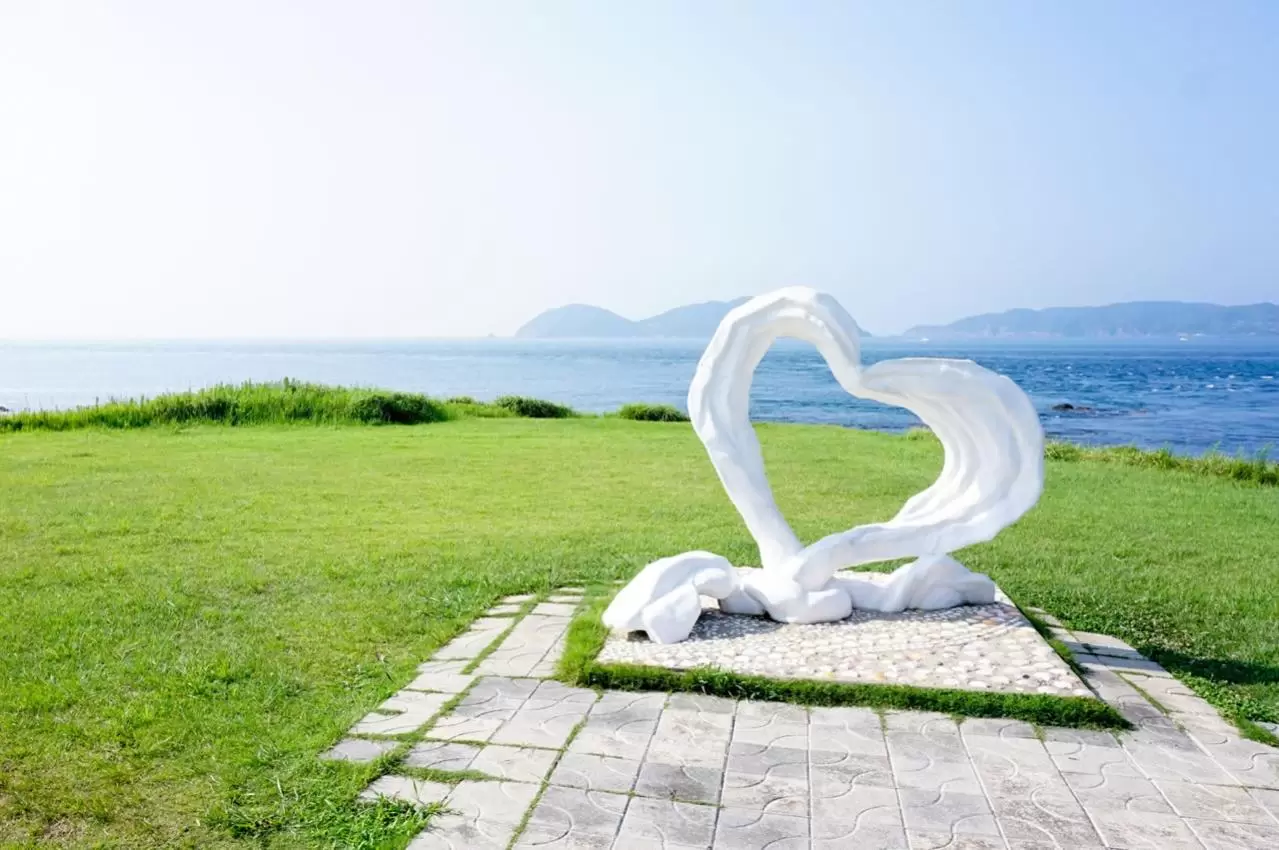
A white heart-shaped monument stands on the lawn plaza. It is designed so that visitors can view the sea and sunset through the opening in its center, making it one of Hado Misaki’s most iconic photo spots. Couples can take commemorative photos standing in front of the monument or framing the horizon within the heart, creating memorable images unique to Hado Misaki.
One facility that should not be missed at Hado Misaki is the Karatsu City Genkai Underwater Observation Tower, located offshore from the cape. The facility opened in December 1974 and is considered the only underwater observation tower on the Sea of Japan side of Japan. It is connected to the land by a pier approximately 86 meters long, allowing visitors to walk across the sea toward the tower. The combination of the white tower and blue sea is striking, and visitors can enjoy magnificent views of the Genkai Sea even while crossing the pier.
The underwater observation tower is approximately 20 meters high and 10 meters in diameter. Its underwater section contains an observation room located about 7 meters below the surface. At the end of the stairs, the underwater observation room has 24 viewing windows through which visitors can observe fish swimming outside, seaweed growing among the rocks, shellfish, and other marine life in its natural environment. Unlike a conventional aquarium, where creatures are kept in tanks, the tower’s greatest feature is that it allows visitors to look directly into the actual underwater world of the Genkai Sea.
The waters around Hado Misaki are influenced by warm ocean currents and are home to a diverse variety of fish and seaweed. Official tourism information describes the area as a marine zone where warm and cold currents meet, and tropical fish may occasionally appear depending on the season. Visitors are advised that around 30 species of fish can be observed throughout the year, including damselfish, striped beakfish, black sea bream, and parrotfish.
Visitors can also observe seaweed such as arame and Sargassum swaying underwater, as well as shellfish attached to the rocky surfaces. The types and number of fish visible, as well as underwater visibility, vary according to water temperature, tidal currents, waves, and weather conditions. On some days, the water is clear and many fish gather, while on others, waves reduce visibility. Each visit offers the chance to see a different aspect of the natural sea.
From the tower’s deck above the water, visitors can look out over the islands of the Genkai Sea and the horizon. After observing fish underwater, stepping out onto the deck allows visitors to experience both the world beneath the sea and the open ocean above it, giving them a deeper appreciation of the richness of Karatsu’s marine environment. However, strong sea winds may occur on the pier and deck, so visitors should take care to prevent hats and belongings from being blown away.
Following renovation work, the Genkai Underwater Observation Tower reopened on April 1, 2024. In addition to the existing underwater windows, which allow visitors to observe natural fish and seaweed, the renewed facility features 360-degree video projections using the walls of the observation room, along with lighting and three-dimensional sound effects. By combining natural underwater observation with audiovisual presentations, the facility now offers an immersive experience that makes visitors feel surrounded by the sea.
The underwater observation tower is normally open from 9:00 a.m. to 6:00 p.m. from April through September, and from 9:00 a.m. to 5:00 p.m. from October through March. It is generally open year-round, but may close during severe weather for safety reasons. On days when the sea is rough or a typhoon is approaching, it is important to check the latest operating status before setting out. Since admission fees and hours may change, visitors are advised to check the official website of the Genkai Underwater Observation Tower before their visit.
One specialty visitors should be sure to try at Hado Misaki is the famous grilled turban shell, known as sazae no tsuboyaki. Several shops line the area near the parking lot, serving freshly grilled turban shells piping hot. The aroma of the sea rises from the shells as they are cooked over the fire, while the savory soy sauce seasoning and pleasantly chewy meat provide a delicious taste of the ocean.
In addition to turban shells, the shops may offer seafood such as overnight-dried squid, abalone, and oysters, depending on the season and availability. The simple atmosphere, with staff grilling the seafood right in front of customers, is part of the appeal, and the shops are popular places to take a break after enjoying the sea views. The items available, prices, and business days vary by shop and season, so visitors should check locally.
Hado Misaki Beach, located near the cape, is known for its clear water and relatively calm waves. It is sometimes described as an artificial beach, and during summer it becomes lively with families and others enjoying swimming. Since the beach’s operating period, the presence of lifeguards, and the availability of facilities such as showers may vary from year to year, it is important to check the local information before entering the water.
At Hado Misaki Campground, visitors can enjoy outdoor activities surrounded by the sea and greenery. Tent sites and other facilities are available, offering a variety of ways to stay depending on the layout and amenities of each area. Visitors can watch the sunset, spend the evening listening to the sound of the waves, and feel the breeze blowing from the Genkai Sea the following morning—an experience unique to a seaside cape. It is recommended to check the official website or other sources in advance for information about reservations, facilities, fees, and operating periods.
The coastline and rocky areas are also known as fishing spots, but waves and winds in the Genkai Sea can change suddenly depending on the weather. Visitors must stay out of restricted areas, wear life jackets, and check sea conditions in advance. Even when sightseeing or taking photographs, it is important not to approach wet rocks or cliff edges carelessly and to use designated walking paths and viewing areas.
Around the beach, visitors can also see stone statues and monuments commemorating exchanges with Jeju Island in South Korea. They evoke the stone-statue culture of Jeju Island, where such figures have traditionally been cherished as local guardian deities, and provide an opportunity to reflect on the geographical and cultural connections between Karatsu and the Korean Peninsula across the sea.
South of Hado Misaki lies the site of Nagoya Castle, built by Toyotomi Hideyoshi as a base for the Japanese invasions of Korea during the Bunroku and Keicho eras. Numerous encampment sites used by feudal lords who gathered from across Japan remain around the castle ruins. The Nagoya Castle ruins and some of the encampment sites have been designated National Special Historic Sites. At the Saga Prefectural Nagoya Castle Museum, visitors can learn about the history of the castle and its relationship with East Asia at the time. Since the site is relatively close to Hado Misaki, visitors can combine the area’s magnificent natural scenery with a tour of Momoyama-period history.
By car, Hado Misaki can be reached in approximately 40 minutes from central Karatsu. By public transportation, visitors can take a Showa Bus from the Oteguchi Bus Center in Karatsu City, get off at the Hado Misaki bus stop, and walk approximately five minutes. However, bus services are limited, and timetables and routes may change. Those using public transportation should check the departure and return times in advance. Parking is available in the surrounding area, although some lots charge a fee.
Hado Misaki is more than just a scenic spot for admiring the beautiful sea. It is a comprehensive tourist destination where visitors can observe wild fish at the underwater observation tower, enjoy the local specialty of grilled turban shells, stroll across lawns and along walking trails, and take part in swimming and camping. Nearby attractions such as the Nagoya Castle ruins and Yobuko also make the area ideal for combining nature, history, and local food culture in one trip.
From the daytime views of the blue Genkai Sea and its islands to the sunset turning the horizon red, the fish swimming beyond the underwater windows, and the savory aroma of grilled turban shells drifting from the shops, Hado Misaki allows visitors to experience the charms of the seaside with all five senses. It is a scenic destination that should be included in any visit to Karatsu and is recommended for both families and couples.
Saga Tourist Attractions
View List
Hiyono Sato Okuwatayama
The secret kiln village of Okawauchi-yama is located in Imari City, Saga Prefecture, and was known during the Edo period as the official kiln of the Nabeshima family...

Rainbow Pine Grove
Niji no Matsubara is one of Japan's three great pine forests, stretching approximately 4.5 km along the coastline of Karatsu City in Saga Prefecture, and it has been...

Takeo City Library and Historical Museum
Takeo City Library and Historical Museum is a new-style facility operated by Culture Convenience Club (CCC), integrating a library, bookstore, and cafe. Since its re...

Nanatsugama
Nanatsugama is a scenic spot in the Kanmon Straits designated as a national natural monument. It features a magnificent natural formation created by the erosion of b...

Yutokuhinari Shrine
Yutoku Inari Shrine is located in Kashima City, Saga Prefecture, and is counted among the three great Inari shrines of Japan, along with Fushimi Inari and Kasama Ina...

Karatsu Castle
Karatsu Castle is a historic castle located in Karatsu City, Saga Prefecture, Japan. This castle was built by Terasawa Shimanokami Hirotaka, a retainer of Toyotomi H...

Mifuneyama Rakuen
Mifuneyama Rakuen is a magnificent garden located in Takeo City, Saga Prefecture, created by Lord Nabeshima Shige Yoshin 1845. Spanning a vast area of 150,000 tsubo,...

Yoshinogari Historical Park
Yoshinogari Historical Park is a national park where visitors can experience Japan's Yayoi period, located on about 54 hectares of beautiful hills straddling Kanzaki...