Ohori Park
A walking path of about 2 km surrounds the pond, offering opportunities for jogging, cycling, and birdwatching. At the center island, there is a vermilion floating hall, which serves as a symbol of the park. At night, it is illuminated, creating a magical atmosphere. There are also cafés and restaurants nearby, making it a great place for shopping and dining.
Designed to resemble West Lake in Hangzhou, Ohori Park is filled with seasonal flowers and greenery, and migratory birds can also be spotted. The park features three islands: Yanagijima, Matsushima, and Ayamejima, all connected by bridges. As a natural paradise within the city, the park is cherished by many for its culture, history, and recreational opportunities.
Ohori Park Movies


Basic Information
- Spot Name
- Ohori Park
- Location
- 〒810-0051 1-2 Ohori Park, Chuo-ku, Fukuoka City, Fukuoka Prefecture, Japan
- Access
- Just a short walk from Ohorikoen Subway Station.
5-minute walk from "Kuromon" bus stop,
5-minute walk from "Ohorikoen" bus stop. - Parking
- Regular cars: 103 vehicles
- Business Hours
- Free admission, boat rides from 11:00 AM to 5:30 PM (last entry, on weekends and holidays, starts at 10:00 AM).
Illumination hours: daily from 6:00 PM to 10:00 PM (from April to September, 7:00 PM to 10:00 PM). - Regular Holiday
- Open every day.
- Fees
- Free
- Contact Information
- Phone Number:092-741-2004(大濠・西公園管理事務所)
- Official Website
Map
Detailed Information
Ohori Park, located in Chuo Ward, Fukuoka City, Fukuoka Prefecture, is one of Japan’s leading waterfront parks. Situated in the heart of the city, it is a representative urban park of Fukuoka where visitors can experience abundant nature, history, and culture. It lies almost at the center of Fukuoka City, west of the ruins of Fukuoka Castle, now known as Maizuru Park, and covers a total area of approximately 398,000 square meters. About 226,000 square meters of this area is occupied by a large pond. Thanks to its beautiful waterfront scenery, the park is beloved by residents and tourists alike as an “oasis in the city.” It is also conveniently located, about a five-minute walk from Ohori Park Station on the Fukuoka City Subway and only about four minutes by subway from Tenjin Station.
The history of Ohori Park dates back to the early Edo period. The area was originally known as Kusagae, an inlet connected to Hakata Bay. During the Keicho era, when Nagamasa Kuroda, the first lord of the Fukuoka domain, constructed Fukuoka Castle, part of the inlet was used as the castle’s outer moat. Later, development of the area as a park began in connection with the 1927 Tōa Industrial Exposition, and in 1929, it opened as Ohori Park, operated by Fukuoka Prefecture. In 2007, it was registered by the Japanese national government as a Registered Monument under the Law for the Protection of Cultural Properties, in the category relating to places of scenic beauty. The park is therefore also recognized for its significant historical and cultural value.
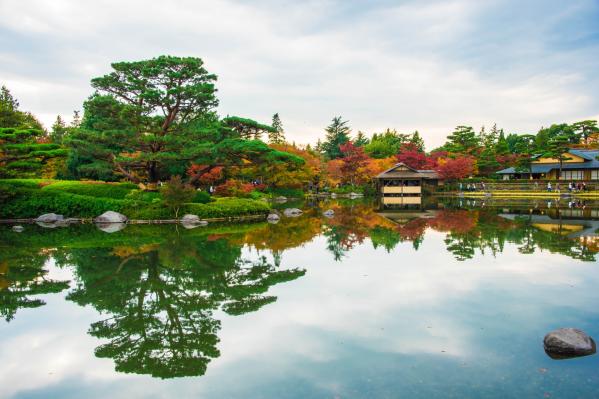
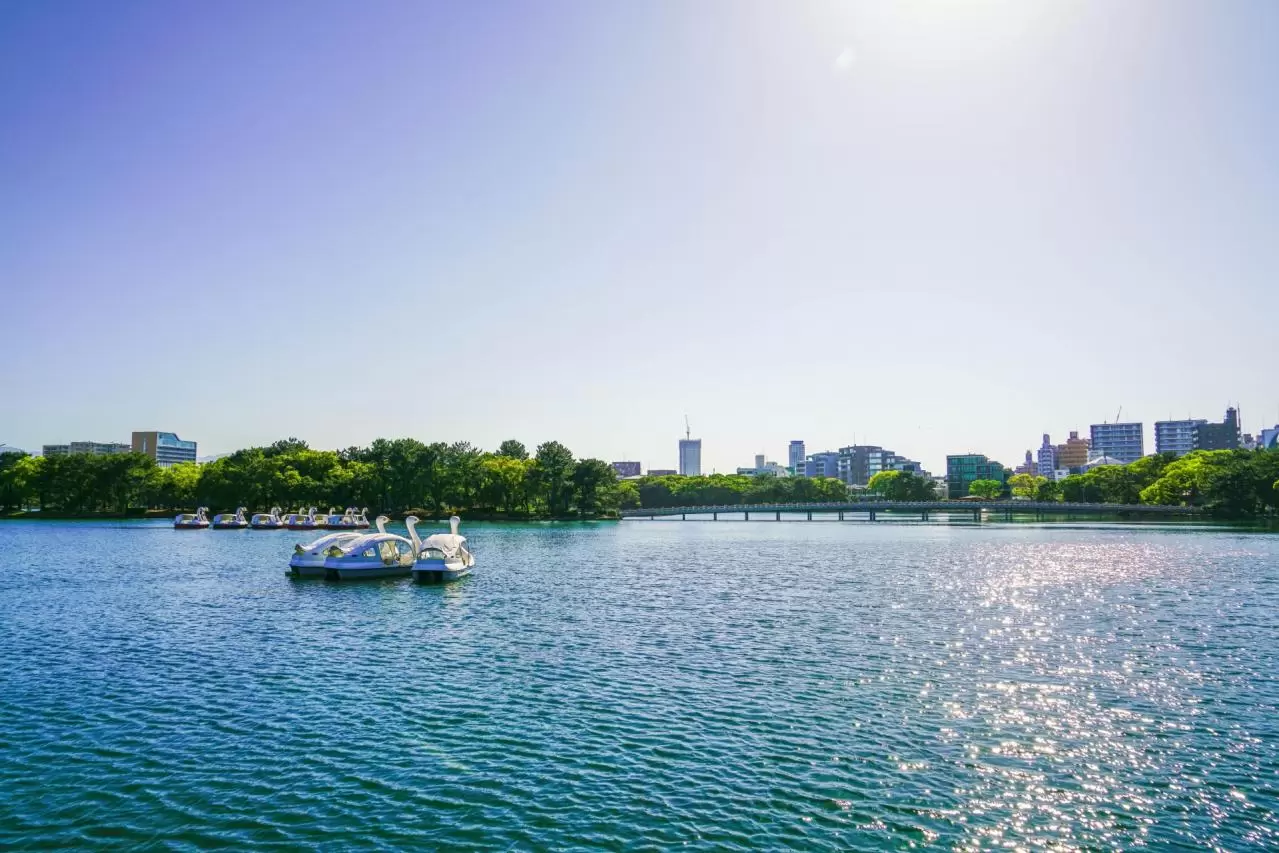
The park’s greatest attraction is its expansive pond and the approximately two-kilometer promenade that encircles it. In the center of the pond is an island connected by four bridges, allowing visitors to enjoy the scenery from the water’s edge as they cross from one side to another. The vermilion Ukimi-do Pavilion, standing along the pond, is one of Ohori Park’s most iconic sights and attracts many visitors who come to take photographs. The view of the pond and the surrounding cityscape from Kangetsu Bridge is also beautiful and is regarded as one of the park’s signature landscapes.
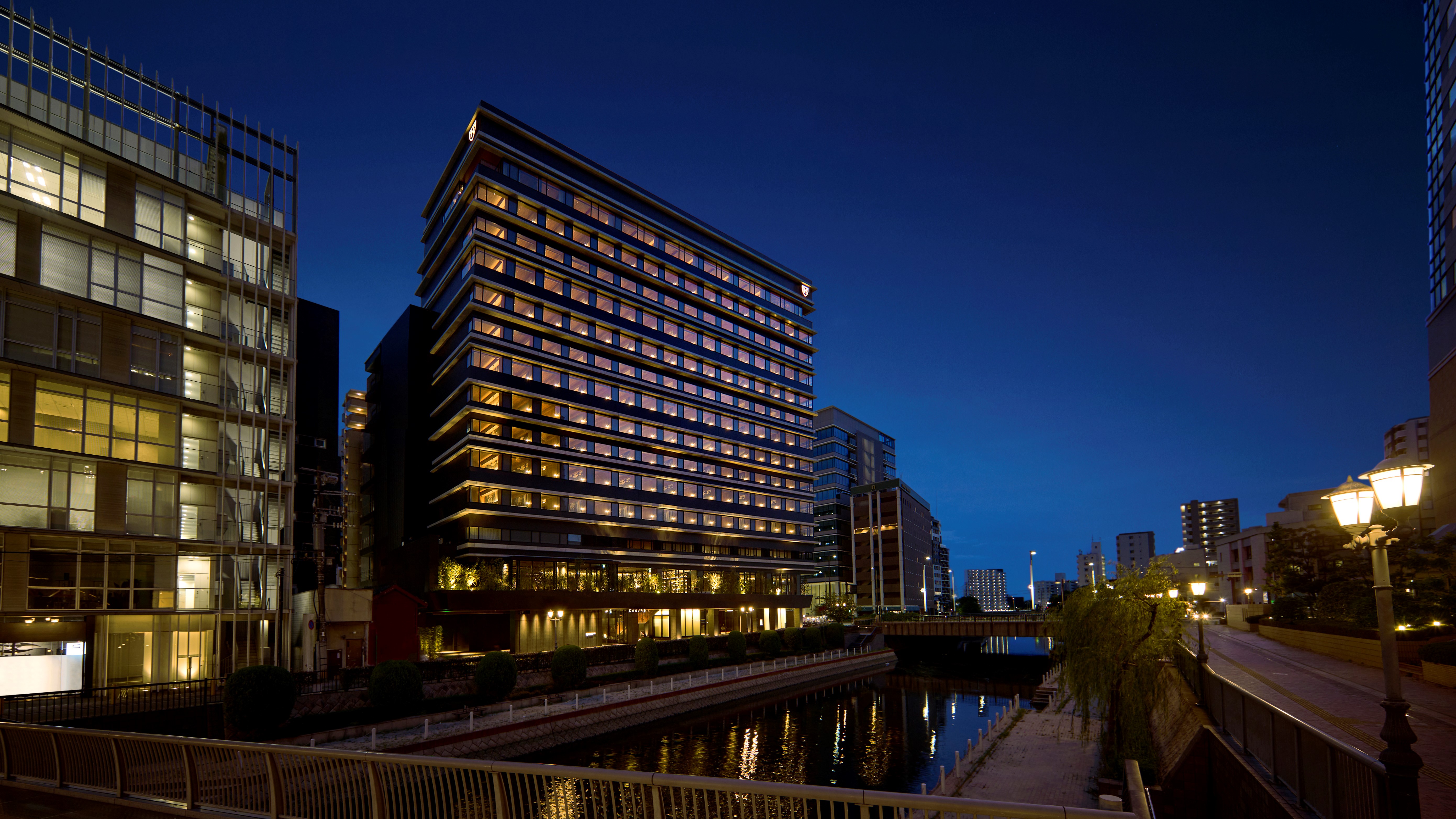
At night, the waterfront and trees on the eastern side of the central island are illuminated, creating a fantastic scene as the lights reflect on the surface of the water. The park takes on a calm atmosphere that differs from its refreshing daytime scenery, making it an ideal place for an evening or nighttime stroll.
The path around the pond is a popular route for walking, jogging, and cycling. The park’s pathways are designed separately for walking, jogging, and cycling, allowing visitors to use them comfortably according to their preferred activity. Surrounded by flowers and trees that change with the seasons, the park offers beautiful natural scenery throughout the year, including cherry blossoms and azaleas in spring, fresh green foliage, and colorful autumn leaves. Depending on the season, visitors can also observe a variety of wild birds, including ducks and herons, and birdwatching is a popular pastime in the park.
Boating is another popular activity at Ohori Park. At the boathouse, visitors can rent swan-shaped pedal boats and rowboats, enjoying a leisurely ride while taking in the scenery from the water. The view of the Ukimi-do Pavilion and the lush greenery from the pond offers a different charm from the scenery seen along the promenade.
The park also features children’s playgrounds and is popular with families. The playground on the east side is known as “Kujira Park,” or “Whale Park,” because it has a large whale-shaped play structure. It is especially popular with children who want to run around and be active. The playground on the west side is affectionately called “Donguri Park,” or “Acorn Park,” and features play equipment suitable even for younger children. With play areas designed for different age groups, families can enjoy spending a relaxing time together.
Numerous cultural facilities are located within and around the park. At the Fukuoka Art Museum, visitors can view a wide range of works, including modern and contemporary art as well as antiques. At the Ohori Park Noh Theater, they can experience traditional Japanese performing arts such as Noh and Kyogen. The opportunity to enjoy art and culture alongside a stroll through nature is another major attraction of Ohori Park.
The Ohori Park Japanese Garden was created to commemorate the park’s 50th anniversary and opened in 1984. Covering approximately 1.2 hectares, it was designed as a traditional Japanese garden featuring a landscaped pond and strolling paths around a central garden. The grounds include a large pond garden, a dry landscape garden, a sukiya-style teahouse, waterfalls, and carefully arranged stonework, creating a beautiful landscape that incorporates traditional Japanese gardening techniques. The garden is particularly atmospheric during the seasons of fresh greenery and autumn foliage.
Facilities for dining and relaxation can also be found in and around the park. The Ohori Park Boathouse includes dining establishments where visitors can enjoy a meal or take a break while looking out over the waterfront. Another popular stop during a walk through the park is Ohori Terrace: Yame Tea, Japanese Garden, and More, where guests can enjoy Yame tea and dishes made with ingredients from Kyushu.
Ohori Park is said to have been designed with the scenery of West Lake in Hangzhou, China, a famous scenic destination, as its inspiration. Its harmonious blend of beautiful water and greenery is one of its greatest charms. Adjacent to the historic ruins of Fukuoka Castle, the park is beloved by residents and tourists as an urban destination where nature, history, culture, art, and recreation can all be enjoyed in one place.
Whether taking a stroll while admiring the scenery of the changing seasons, enjoying sports or a boat ride, visiting cultural facilities, or relaxing at a café, visitors can spend their time in many different ways at Ohori Park. It is one of Fukuoka’s most representative attractions and a must-visit destination for anyone sightseeing in the city.
Fukuoka Tourist Attractions
View List
BOSS E・ZO FUKUOKA
In July 2020, "BOSS E・ZO FUKUOKA" opened next to the Fukuoka PayPay Dome. This seven-story facility is known for its breathtaking attractions and state-of-the-art e...

Kyushu National Museum
The Kyushu National Museum is the fourth national museum in Japan, following those in Tokyo, Kyoto, and Nara. It opened in 2005 in Dazaifu City, Fukuoka Prefecture. ...

Senbutsu Limestone Cave
The Senbutsu Cave is a magnificent cave located in Hiraodai, Kitakyushu, and it has been designated as a national natural monument. This cave was formed by the erosi...

Fukuoka Tower
Fukuoka Tower reopened entirely on February 1, 2019, and stands at an impressive height of 234 meters, making it the tallest seaside tower in Japan. It serves as a s...

Uminonakamichi Seaside Park
Located in the Higashi Ward of Fukuoka City, the Uminonakamichi Seaside Park is a vast national park covering approximately 350 hectares, where visitors can enjoy se...

Sakurai Futamigaura
Sakurai Futamigaura is located in Itoshima City, Fukuoka Prefecture, and is a beautiful scenic spot within the Genkai Quasi-National Park. Known as "Futamigaura of t...

Marine World Uminonakamichi
"Marine World Uminonakamichi," which reopened in 2017, is an aquarium themed around the seas of Kyushu. It features over 30,000 marine organisms from 350 species, re...

Mojiko Retro
Moji Port Retro is an attractive district in Kitakyushu City. This port town, which flourished from the Meiji era to the early Showa period, was once counted among J...