One of Japan’s Three Scenic Views
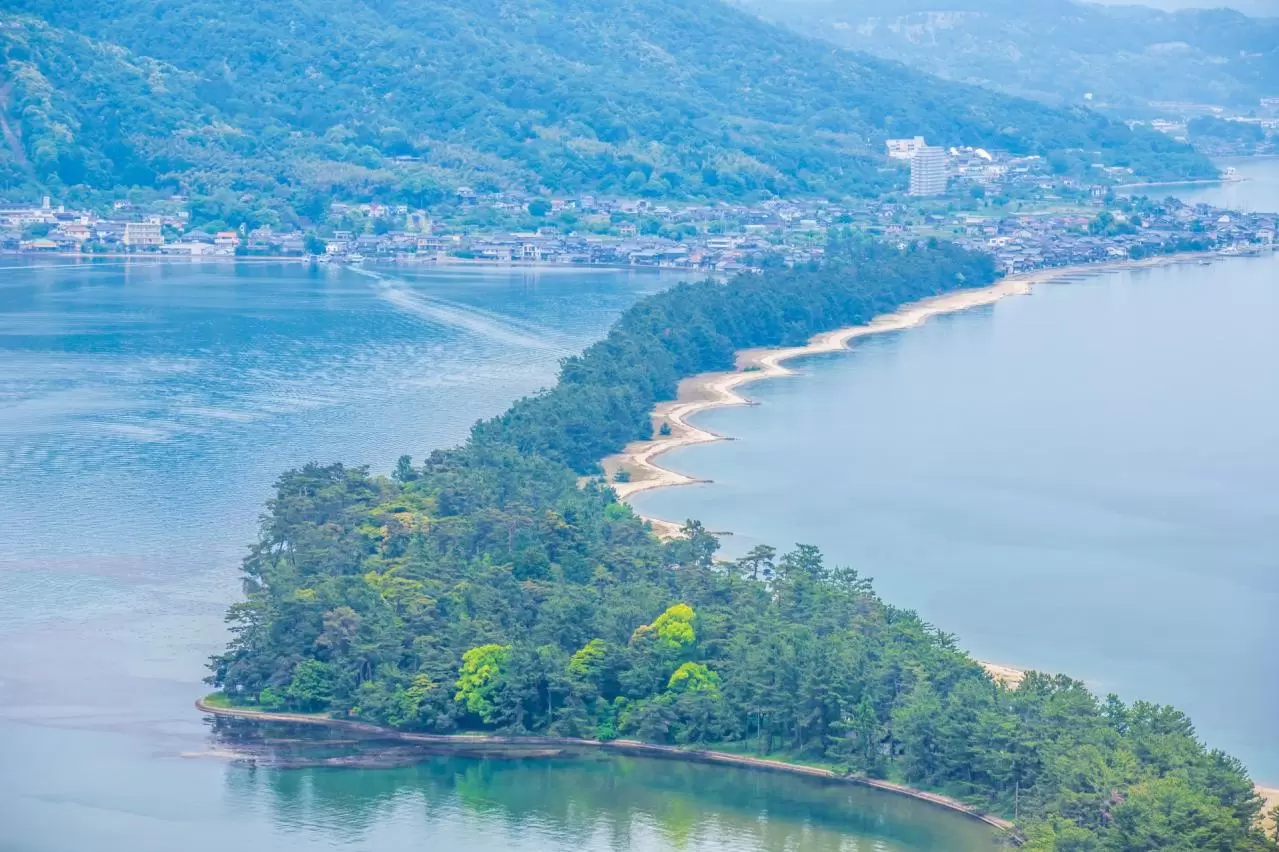
Take in the distinctive sight of a pine-covered sandbar reaching out across the sea.
AI Summary
This is an AI-generated summary. Please check the official information for opening hours, fees, and closed days.
One of Japan’s Three Scenic Views, Amanohashidate is a stunning sandbar lined with pine trees, famous for the upside-down view known as matanozoki.
Stretching about 3.6 km across Miyazu Bay in northern Kyoto Prefecture, Amanohashidate is a scenic sandbar of white sand and pine trees. Enjoy the view from an observation point or try matanozoki, then explore on foot or by bicycle and take in the area’s historic and mythological atmosphere.
Take in the distinctive sight of a pine-covered sandbar reaching out across the sea.
From an observation point, bend forward and look at the scenery upside down for a different perspective.
Walk along the sandbar and discover sights such as bridges and natural spring water along the way.
Start near Amanohashidate Station, explore the area, enjoy matanozoki from an observation point, then walk along the sandbar to experience the changing scenery.
Amanohashidate is a Special Place of Scenic Beauty located in Miyazu Bay on the Sea of Japan in northern Kyoto Prefecture. Along with Matsushima in Miyagi Prefecture and Miyajima in Hiroshima Prefecture, it is widely known as one of Japan’s Three Scenic Views. This sandbar stretches about 3.6 kilometers in length and ranges from roughly 20 to 170 meters in width. Around 6,700 pine trees grow along it, creating a beautiful landscape of white sand and green pines. This unusual landform was formed naturally over many years by the accumulation of sediment carried by ocean currents and by the Noda River, which originates in Mount Oeyama.
The name “Amanohashidate” comes from its appearance, which resembles a “bridge to heaven.” It also appears in ancient mythology, and there is a legend that it was formed from the Heavenly Floating Bridge used by Izanagi, the deity of creation, to travel between heaven and earth. This place, where mythological romance and natural beauty come together, continues to captivate many visitors.
How to Enjoy Amanohashidate
There are many ways to enjoy Amanohashidate. The view from the observation points is especially spectacular. Among them, the famous “matanozoki” is a unique way of viewing the scenery by bending over and looking at Amanohashidate upside down through your legs, making the heavens and earth seem reversed so that it appears like a dragon ascending to the sky.
Main Observation Points and Their Appeal
Kasamatsu Park (Shoryukan)
Located on the northern side of Amanohashidate, halfway up Mount Nariai, this observation point is called “Shoryukan,” or “Rising Dragon View,” because Amanohashidate appears like a dragon rising into the sky. It is also known as the birthplace of “matanozoki,” and the panoramic view from the observatory is dramatic. Along the cable car line, about 100 cherry trees bloom in spring, making it a famous spot for cherry blossom viewing.
Amanohashidate View Land (Hiryukan)
This observation facility is on the summit of Mount Monju on the southern side of Amanohashidate. It features a Ferris wheel and amusement rides, making it a leisure spot that can be enjoyed by everyone from children to older visitors. The view of Amanohashidate from here is called “Hiryukan,” or “Flying Dragon View,” because it looks like a dragon soaring through the sky.
Sesshukan Observation Rest Area
This observation point offers a landscape similar to the one depicted in the National Treasure “Amanohashidate View” by Sesshu, a Muromachi-period monk-painter. The sight of the sandbar stretching in a straight line is magnificent, and the sunset view is especially breathtaking. The site has only a simple rest area, allowing visitors to quietly enjoy nature.
Activities to Connect with Nature
Amanohashidate can be crossed on foot in about 50 minutes one way, or by bicycle in about 20 minutes. Along the way is the unusual Kaisen-kyo Bridge, which rotates 90 degrees when a boat passes through, attracting many tourists’ attention.
There are also mysterious spots such as Isoshimizu, a famous spring of fresh water that contains no salt despite being located near the sea, and Hashidate Myojin. Pine-lined paths with benches and rest areas are well maintained, making it an ideal setting for a leisurely stroll.
Seasonal Charm and Events
Amanohashidate is a place where visitors can enjoy beautiful scenery throughout the year. In summer, the white-sand beach is crowded as a swimming area. Since 2015, from early July to around mid-October each year, the beach and the area around Kaisen-kyo Bridge are illuminated, creating a fantastical nighttime landscape.
In August, events such as the Miyazu Toro Nagashi Fireworks Festival and “Amanohashidate Beach Light-Up: Flame Bridge” are held, drawing large numbers of tourists.
A Scenic Site Rich in History and Literature
Amanohashidate has long appeared in literary works, and the following waka poems have been composed about it:
“Was it a road the gods used in ancient times? Amanohashidate that stretches into the clouds”
“Because the road over Oeyama and Ikuno is so far, I have not yet even seen letters—Amanohashidate”
The park also contains a poem monument erected when Emperor Showa visited, as well as a monument bearing verses by the literary couple Yosano Hiroshi and Yosano Akiko, showing that this scenic place was cherished by many cultural figures.
A Scenic Spot Selected for Numerous Top 100 Lists
Thanks to its natural beauty and cultural value, Amanohashidate has been selected for many of Japan’s “Top 100” lists, including:
Japan’s Three Scenic Views
Japan’s 100 Best Pine Trees
Japan’s 100 Best White Sand and Green Pine Landscapes
Japan’s 100 Best Roads
Japan’s 100 Best Beaches
100 Famous Springs (Isoshimizu)
Japan’s 100 Best Historic Parks
100 Beautiful Historic Landscapes of Japan
Japan’s 100 Best Geosites
Tōfuku-ji is the head temple of the Rinzai sect of Zen Buddhism, founded in 1236 by Kujō Tadayoshi, with its main hall completed in 1255. It is counted among the fiv...
Kyoto Imperial Palace is a place of great importance in Japanese history and culture. This vast area is located within the Kyoto Gyoen in the city center of Kyoto, c...
Shimogamo Shrine (officially known as Kamo Mioya Shrine) is located in the Sakyo Ward of Kyoto City and is registered as a World Heritage site as part of the "Cultur...
Kyoto Tower was built as a "major center for industry, culture, and tourism," with the purpose of "contributing to the development of Kyoto City." Completed in the s...
Toji Temple (official name: Kyo-o Gokokuj), is the only existing structure from the Heian-kyo period and is registered as a UNESCO World Heritage Site. Founded two y...
The Kyoto Railway Museum, opened in 2016, is one of the largest railway museums in Japan, designed to be a fun and educational facility with the theme of "see, touch...
Ginkaku-ji, officially known as Jishō-ji, is located in the Sakyo Ward of Kyoto City and is affiliated with the Rinzai school of the Shokoku-ji sect. Originally buil...
Yasaka Shrine, commonly known as "Gion-san," is widely cherished. This shrine is particularly significant as the head shrine of the approximately 2,300 Yasaka Shrine...