See an original castle keep
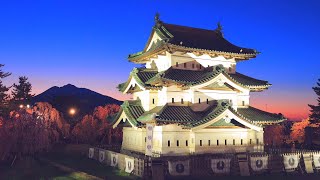
Known as Japan’s northernmost surviving original keep, it offers a tangible sense of the castle’s history.
AI Summary
This is an AI-generated summary. Please check the official information for opening hours, fees, and closed days.
Known for its original keep and cherry blossoms, Hirosaki Castle combines historic walks with beautiful seasonal scenery.
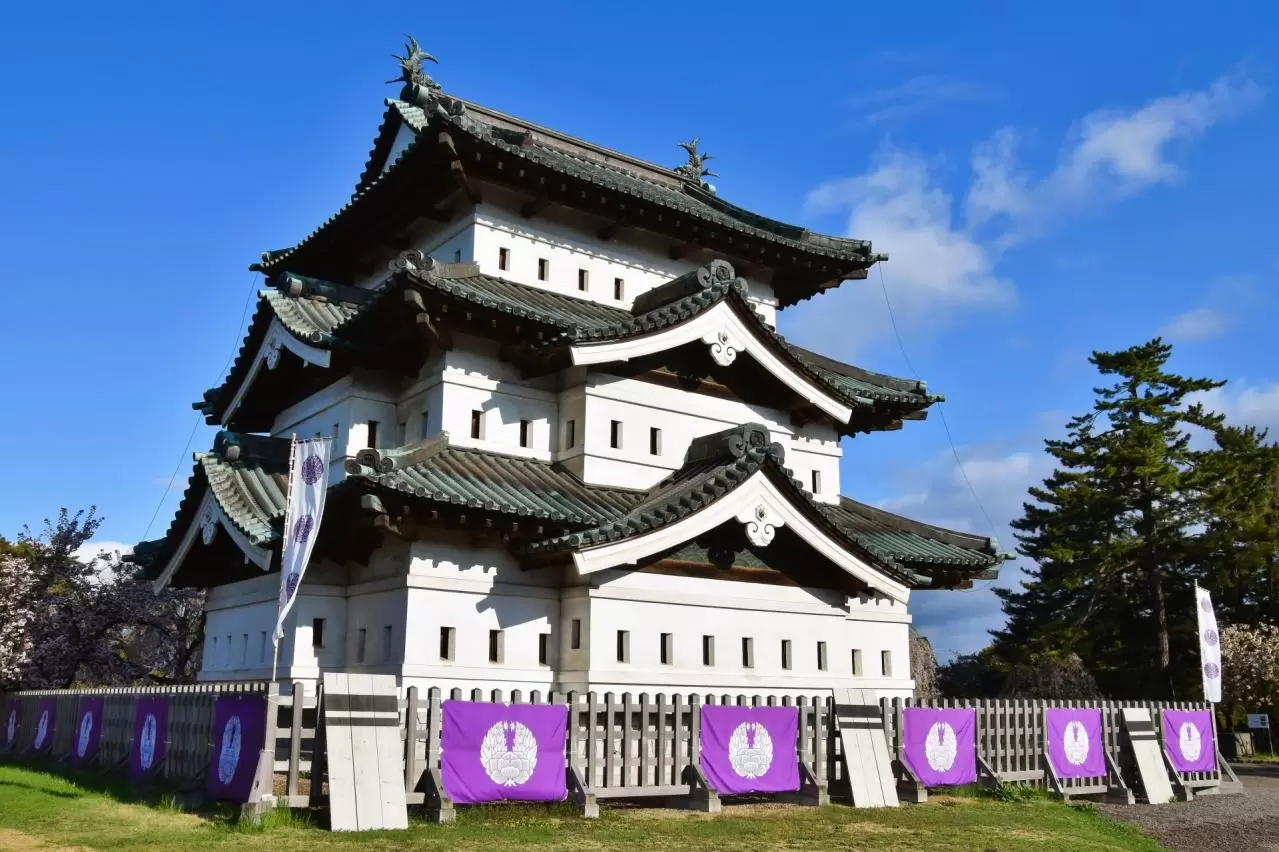
Hirosaki Castle is known as Japan’s northernmost castle with an original keep. Set at the heart of Hirosaki Park, it offers a chance to enjoy history and nature together. The cherry blossoms are especially famous, while autumn foliage and winter snow add seasonal appeal. It’s a great fit for castle enthusiasts; allow extra time during busy periods.
Known as Japan’s northernmost surviving original keep, it offers a tangible sense of the castle’s history.
During the Hirosaki Cherry Blossom Festival, the combination of blossoms and castle scenery is especially memorable.
Autumn foliage and winter snow create a changing atmosphere throughout the year.
Head from Hirosaki Station to the park, see the keep and moats, then visit nearby gardens if you have time.
In 1588, Tsugaru Tamenobu, the first lord of the Hirosaki Domain, achieved independence from the Nanbu clan, his former overlord, and unified the Tsugaru region.
Thereafter, Tamenobu decided to build a new castle in order to govern Tsugaru, and selected the present-day site of Hirosaki. This is said to have taken place in 1603. At that time, the area was known by its former name, Takaoka (Takaoka / Takaoka-).
▶ Castle Construction Plan
The castle construction project made little progress, and Tamenobu died in Kyoto in 1607 before seeing it completed.
His son and second lord, Nobuhira, inherited his father’s wishes and completed Takaoka Castle in 1611. At the time of completion, a five-story keep towered over the castle. The stone walls now known as the site of the Honmaru Mishin Yagura once served as the keep’s stone foundation.
However, in 1627, this five-story keep was destroyed by fire. The following year, the old name Takaoka was changed to Hirosaki, reportedly with the intention of warding off evil.
▶ The Keep That Led to the Present Day
After that, Hirosaki Castle remained for a long time without a keep. This is said to be because the shogunate did not grant the Hirosaki Domain permission to build a new one.
The existing three-story keep was built in 1810 during the rule of the ninth lord of the Hirosaki Domain, Nobuoki. It is said to have been newly constructed after dismantling the Honmaru Tatsumi Yagura, which had stood at its present location.
The reason the shogunate granted permission to build a new keep is generally thought to be that, a few years earlier, the Hirosaki Domain had been assigned to guard Ezochi (present-day Hokkaido) and was recognized for its achievements, and also because Russian ships were sailing through the Tsugaru Strait at the time, making defense of the area necessary.
It is also said that this building was merely a substitute for a keep and was called a “Gosan-kai Yagura” at the time.
▶ The Present Keep
Although the year of construction is relatively recent, it retains older architectural features: there are no iron doors on the east and south sides facing the moat, only arrow slits; the first and second stories have projecting central sections; and gabled dormers and stone-dropping openings are installed.
In addition, while the first story has a floor plan of 5 ken by 6 ken, each successive story from the second and third becomes one ken smaller, and it is said that when viewed from the Ninomaru side, the use of gabled dormers and loopholes was intended to make the keep appear larger and more imposing.
On the other hand, the north and west sides facing the inside of the Honmaru have neither gables nor loopholes, and the windows are made larger to allow more light in. As an extant keep built during the Edo period, it is the only one in the Tohoku region, and although modest in scale, it is considered one of the representative keeps in Japan.
Now relocated to the temporary keep foundation, it mainly exhibits materials related to the moving of Hirosaki Castle’s keep. Admission is free for viewing, but separate admission to the Honmaru is required.
The Oirase Stream is a two-star tourist attraction in the Michelin Green Guide, featuring a breathtaking 14 km stretch of stream. Everywhere you walk, you are captiv...
"The Nebuta House Wa Rasse" in Aomori City is a facility where visitors can experience the charm of the Nebuta Festival throughout the year. Opened in 2011 and locat...
Tsugaru Han Neputa Village is a facility where you can fully experience Tsugaru culture, including the attractions of the Hirosaki Neputa Festival. It features impre...
The Hakkoda Ropeway is a stunning spot to enjoy the magnificent nature of the Hakkoda Mountains. Since its opening in October 1968, it continues to attract visitors ...
Lake Towada is a magnificent and beautiful caldera lake, featuring an expansive panorama that reflects the seasonal landscapes like a mirror on its tranquil surface....
Hirosaki City Apple Park spans approximately 9.7 hectares and features 80 varieties of apple trees with a total of 2,300 trees. From early August to mid-November, vi...
The Aomori Museum of Art features a design that merges Jomon and modern styles with its pure white exterior. Designed by architect Jun Aoki, it draws inspiration fro...
Tsuru-no-Mai Bridge in Aomori Prefecture is a 300-meter-long, the longest wooden triple-arch bridge in Japan. It spans the beautiful Tsugaru Fujimi Lake, reflecting ...