Manzamo
Manzamo Movies


Basic Information
- Spot Name
- Manzamo
- Location
- 〒904-0411 Onna, Onna Village, Okinawa Prefecture
- Access
- 90 minutes by car (regular road) from Naha Airport
20 minutes by car (regular road) from Yaka IC on the Okinawa Expressway
15 minutes on foot from Onna Village Office bus stop
Stopping buses: Route 20 Nago Nishi Line (Okinawa/Ryukyu), Route 120 Nago Nishi Airport Line (Okinawa/Ryukyu) - Parking
- Available
- Business Hours
- 8 AM to 7 PM
- Regular Holiday
- Open year-round.
- Fees
- Manzamo Surrounding Activation Facility: Admission fee is 100 yen per person (same for adults and children).
- Contact Information
- Phone Number: 098-966-8080
- Official Website
Map
Detailed Information
Cape Manzamo is a scenic landmark located in Onna Village, Kunigami District, Okinawa Prefecture. It is characterized by sheer cliffs made of Ryukyu limestone and a vast grassy plateau. Situated on a cape facing the East China Sea along the western coast of Okinawa Island, it is known for its spectacular scenery, where a massive rock wall resembling an elephant’s trunk meets a cobalt-blue sea. As one of Okinawa’s most representative natural attractions, Cape Manzamo offers a beautiful contrast of blue skies, crystal-clear waters, white surf, and green grasslands on clear days. In addition to its distinctive landforms created by nature over many years, the site is also notable for its history inherited from the era of the Ryukyu Kingdom and its valuable plant communities. Recognized for its outstanding natural landscape, Cape Manzamo has been designated a Place of Scenic Beauty by Okinawa Prefecture and has become a popular destination visited by many tourists from Japan and abroad.
The name “Manzamo” is associated with the history of the Ryukyu Kingdom. It is said that in 1726, when King Shō Kei, the 13th king of the Second Shō Dynasty of the Ryukyu Kingdom, visited Onna, he saw the grassland spreading across the cape and praised it by saying that it was “large enough for ten thousand people to sit upon.” This is said to have given the site the name Manzamo. “Manza” means a place spacious enough for many people to sit, while “mo” is an Okinawan word meaning an open field or grassland. In other words, the name Manzamo conveys the meaning “a grassland broad enough for everyone to sit.” Today, an expansive grassy plateau still stretches across the cape, allowing visitors to experience the magnificent natural scenery that is said to have impressed the Ryukyu king.
The landforms of Cape Manzamo were formed from Ryukyu limestone, a type of rock characteristic of Okinawa. Ryukyu limestone was created when the remains of calcareous organisms such as coral and shellfish accumulated on the seafloor and solidified over a long period of time. Later, limestone plateaus uplifted by crustal movements were eroded by waves, wind, and rain, creating the steep cliffs and distinctive rock formations seen today. The cliffs at Cape Manzamo reach approximately 20 meters in height, with waves from the East China Sea breaking below. The lower sections of the rock walls have been carved away by the action of the waves over many years, allowing visitors to observe dynamic landforms created by the forces of nature. This landscape, shaped by the sea and the land over an immense span of time, is also fascinating from the perspective of Okinawa’s geology and natural environment.
One of the most famous features symbolizing Cape Manzamo is its elephant-trunk-shaped rock formation. The rock wall near the tip of the cape has a section projecting toward the sea that resembles an elephant’s long trunk, and it is therefore known as the “Elephant’s Trunk.” Viewed from the scenic promenade, the formation appears as though a giant elephant is extending its trunk into the sea. This natural sculpture is beloved as one of Cape Manzamo’s most iconic photography spots. Set against the blue sea, the rock has a powerful presence and appears frequently in Okinawan tourism brochures and travel guides. The shadows on the rock and the color of the sea change depending on the viewing angle and time of day, allowing visitors to enjoy a different expression of the landscape each time they visit.
The beauty of the East China Sea viewed from Cape Manzamo is another major attraction. On clear days, the shallow waters near the shore shine emerald green, gradually changing from vivid blue to deep cobalt blue farther offshore. The color of the sea varies depending on the underwater terrain, water depth, and the angle of the sunlight, creating a beautiful natural gradient. The waves crashing against the cliffs and sending up white spray are also impressive, and the contrast between the calm surface of the sea and the rugged rock walls leaves a strong impression. On days when the air is clear, it may be possible to see the coastline around Nago Bay, the mountains of the Motobu Peninsula, and even Ie Island in the distance to the north. Inland, Mount Onna, a prominent mountain in Onna Village, rises above the landscape, allowing visitors to enjoy both coastal and mountain scenery.
Cape Manzamo is also known as a beautiful place to watch the sunset. Because it is located on a west-facing coast overlooking the East China Sea, visitors can watch the sun sink toward the sea in the evening. The sea, which glows bright blue during the day, becomes tinged with gold and orange toward sunset, creating a fantastical scene in which the sky and sea seem to merge. As the sun approaches the horizon, the shadows on the cliffs deepen, creating a calm atmosphere quite different from that of the daytime. Although the appearance of the sunset varies depending on the weather and season, sunsets on clear days are particularly beautiful and popular with photographers and visitors who come to enjoy the scenery. Daytime is recommended for those who want to appreciate the contrast between the blue sea and grassland, while evening is ideal for those seeking a romantic view. However, the outdoor viewing area at the scenic site is available only until sunset, so visitors hoping to see the sunset should arrive with sufficient time to spare.
Cape Manzamo is important not only for its beautiful scenery but also as a natural environment where valuable plants grow. The top of the cape supports plants adapted to harsh conditions, including strong sea winds, salt-laden air, and dry limestone soil. Representative plants include Hanakomi-kanboku, Okinawa violet, Okinawa rose moss, and Hime-suikazura, which together form a plant community unique to Okinawa. The “Manzamo Limestone Plant Community” where these plants grow has been designated a Natural Monument of Okinawa Prefecture and is protected as a scientifically valuable natural environment. The landscape of Cape Manzamo itself has also been designated a Place of Scenic Beauty by the prefecture; both designations were made on May 12, 1972. It should be noted that the Natural Monument designation applies to the plant community, not to every individual plant growing there.
The plant community at Cape Manzamo is characterized by the unique ecosystem it has developed amid the harsh natural conditions of the coast. On the limestone plateau, which is exposed to strong salt winds and direct sunlight, conditions for plant growth are limited. As a result, plants adapted to this environment have survived, preserving distinctive vegetation not found in other regions. If visitors freely enter the grassland, they may damage valuable plants and soil, so it is important to use the designated promenade when sightseeing. Visitors are expected to enjoy the scenery while protecting the natural environment by refraining from picking plants or entering restricted areas.
A scenic promenade has been developed at Cape Manzamo so that visitors can safely enjoy the cape’s landscape. As they walk along the promenade, visitors can view the elephant-trunk-shaped rock wall, the East China Sea, and the expansive grassy plateau from various angles. With few tall buildings obstructing the view, the area offers an expansive, open landscape. The promenade is relatively short and can usually be completed on foot in about 10 minutes, but visitors who wish to take photographs and fully appreciate the scenery should allow approximately 20 to 30 minutes. The promenade has also been designed with accessibility in mind, allowing people of many ages to enjoy the scenery. However, winds can become strong near the cliffs, and the ground may be slippery on rainy days, so comfortable walking shoes are recommended. Visitors should also be careful not to cross safety railings or approach hazardous rocky areas.
On October 2, 2020, the Manzamo Area Revitalization Facility opened with the aim of improving visitor convenience and revitalizing the local community. The facility includes shops selling Okinawan specialties and souvenirs, restaurants, rest areas, and restrooms. It is a convenient place to look for Okinawan foods and handicrafts or enjoy a meal during a sightseeing trip. A free observation deck is also located on the third floor, offering views of the coastline around Cape Manzamo and the area around Mount Onna. Exhibits introducing the nature and history of Cape Manzamo are also available inside the facility, allowing visitors not only to enjoy the scenery but also to deepen their understanding of the region’s culture and natural environment.
An admission fee of 100 yen per person is required to visit the scenic area of Cape Manzamo. The fee is the same for adults and children, while preschool children may enter free of charge. The admission fee covers entry to the scenic area, including the promenade; the shops, restaurants, and third-floor observation deck at the Manzamo Area Revitalization Facility can be used without paying this fee. The facility and the outdoor viewing area have different operating hours, and the outdoor viewing area is open only until sunset. Since fees, opening hours, and available facilities may change, visitors are advised to check the official information before traveling. Parking is also available nearby, making the site easily accessible by rental car or sightseeing bus.
From Naha Airport, Cape Manzamo can generally be reached by car in approximately one to one and a half hours using the Okinawa Expressway and other roads. One possible route is to travel from the Yaka Interchange on the Okinawa Expressway toward Onna Village, although travel times vary depending on traffic conditions. Onna Village, where Cape Manzamo is located, is known as one of Okinawa Island’s leading resort areas. The surrounding area features beautiful beaches, large resort hotels, and coastlines where visitors can enjoy diving and snorkeling. Manza Beach is located nearby and offers swimming and a variety of marine activities. Onna Village also has tourist facilities where visitors can experience Okinawan traditional culture and nature, making Cape Manzamo a popular stop along drives from central to northern Okinawa Island. Since the scenic site can be explored in a relatively short time, it is well suited to visiting together with other attractions in the area.
Cape Manzamo is one of Okinawa’s foremost scenic destinations, where the history of the Ryukyu Kingdom harmonizes with the island’s magnificent natural beauty. Its many attractions include the expansive grassland said to have been praised by King Shō Kei, the sheer cliffs shaped like an elephant’s trunk, the crystal-clear waters of the East China Sea, and the valuable plant community designated as a Natural Monument. The vivid colors of the sea on clear days and the fantastical scenery at sunset leave a lasting impression on visitors. Offering the chance to experience both the grand sculptural beauty created by Okinawa’s natural forces and the culture nurtured throughout its long history, Cape Manzamo is a must-visit destination for anyone traveling in Okinawa.
Okinawa Tourist Attractions
View List
Okinawa World (Cultural Kingdom, Gyokusendo)
Okinawa World is a tourist spot where you can enjoy the natural beauty, culture, and history of Okinawa all at once. Among its attractions, the Tamatsukuri Cave, whi...
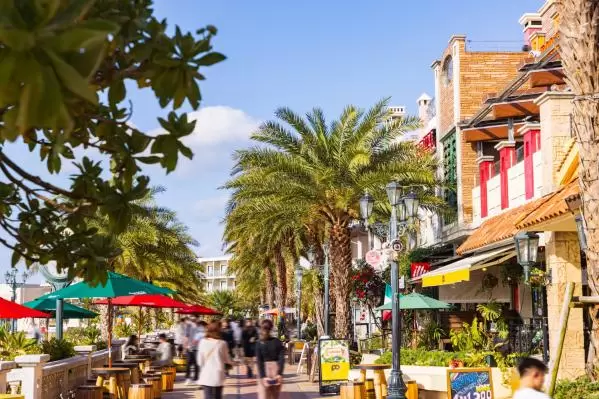
Miha American Village
Mihama American Village is a popular resort town located in central Okinawa. It features colorful buildings and a Ferris wheel that recreate an American street scene...
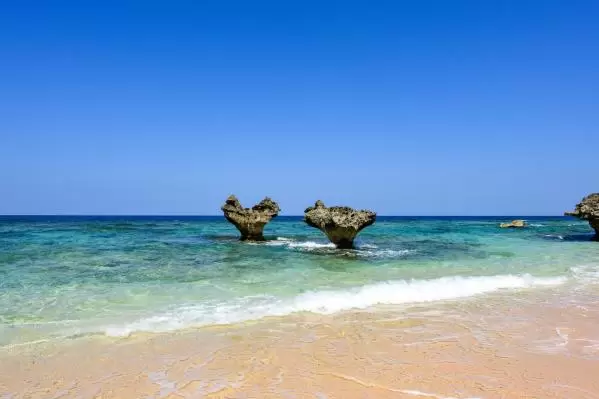
Kourijima / Teenuhama / Tokeihama
Kouri Island is a beautiful small island located in the northern part of Okinawa mainland, surrounded by emerald green waters. The Kouri Ohashi Bridge opened in 2005...
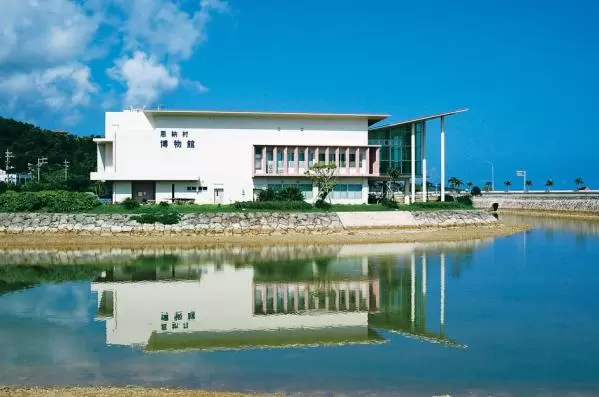
Onna Village Museum
The museum that conveys the unique history, culture, and lifestyle of Onna Village is divided into three zones: the folk exhibition "Life in Onna," the video theater...
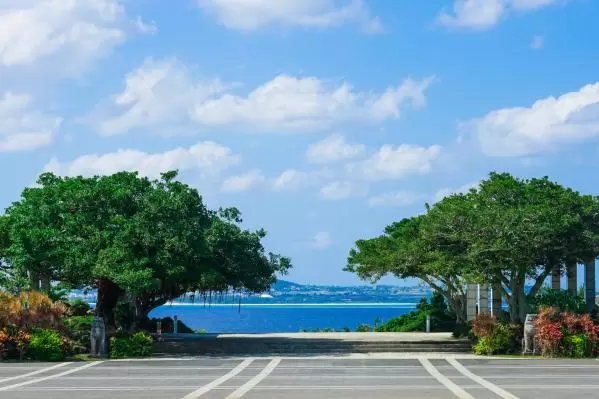
Kokuei Okinawa Memorial Park and Ocean Expo Park
The Okinawa Commemorative National Government Park and Ocean Expo Park was established in 1976 to commemorate the Okinawa International Ocean Exposition held in 1975...
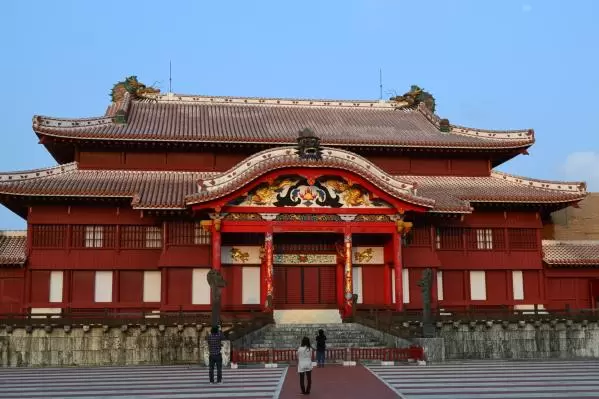
Shurijo Castle Park
Shuri Castle Park is a historical park centered around Shuri Castle, which is a symbol of the Ryukyu Kingdom. Although part of it, including the main hall, was destr...
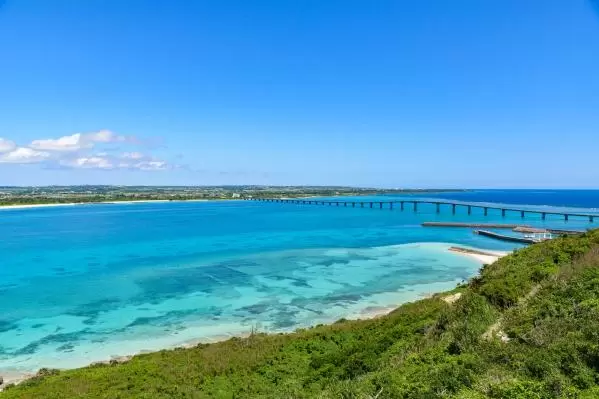
Ryugujo Observatory
The three-story observatory designed to resemble the Dragon Palace is located on a hill in Kurima Island. In front of it is Maehama Beach, and to the left and right,...
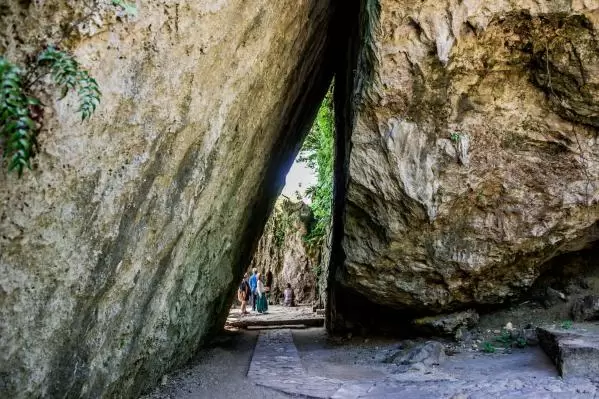
Seifa Utaki
Seifa Utaki is the most sacred site of the Ryukyu Kingdom and was registered as a UNESCO World Heritage Site as part of the "Sites of Japan's Meiji Industrial Revolu...