Shurijo Castle Park
Shurijo Castle Park Movies


Basic Information
- Spot Name
- Shurijo Castle Park
- Location
- 〒903-0811 1-2 Kinjocho, Shuri, Akebono-cho, Naha City, Okinawa Prefecture
- Access
- From Yui Rail "Shuri Station," it's about a 15-minute walk, or you can take a bus to "Shuri Castle Mae" and walk about 1 minute.
Continue straight on Prefectural Route 29 towards Shuri.
From Naha Airport, head towards National Route 331 to reach the center of Naha City. - Parking
- 100 cars
- Business Hours
- April to June, October to November (free area) 8:00 AM - 7:30 PM
July to September (free area) 8:00 AM - 8:30 PM
December to March (free area) 8:00 AM - 6:30 PM - Regular Holiday
- The first Wednesday of July and the following day.
- Fees
- Adults: 400 yen, Junior high and high school students: 300 yen, Children (elementary and middle school students): 160 yen, Free for children under 6 years old.
- Contact Information
- Phone Number:098-886-2020
- Official Website
Map
Detailed Information
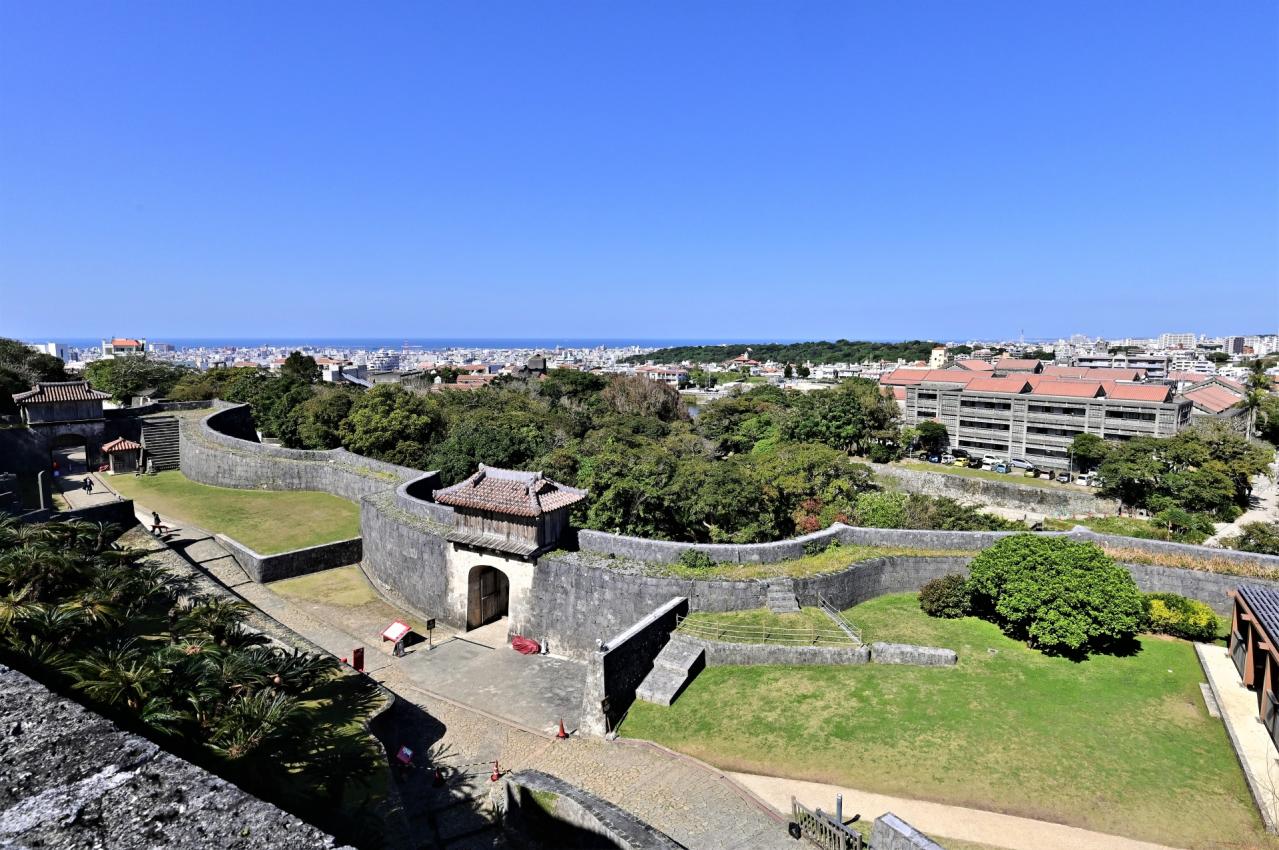
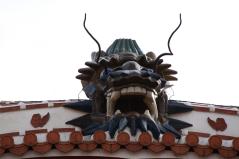
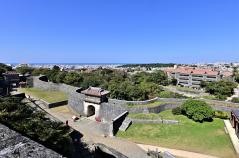
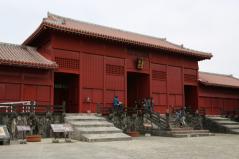
Shurijo Castle Park is a historic park centered around Shurijo Castle, the former royal castle of the Ryukyu Kingdom, located in Kinjo-cho, Shuri, Naha City, Okinawa Prefecture. The park is home to numerous cultural properties and historic sites that convey the history of the Ryukyu Kingdom, including the ruins of Shurijo Castle, once the political, diplomatic, and cultural center of the kingdom, as well as Shureimon Gate, the Sonohyan-utaki Ishimon Stone Gate, the ruins of Enkakuji Temple, Enkan Pond, and Ryutan Pond. The park is characterized by vividly vermilion buildings and stone walls with elegant curves, symbolizing the unique Ryukyuan culture that developed while incorporating elements of Chinese and Japanese architectural traditions. In December 2000, the ruins of Shurijo Castle were registered as part of the UNESCO World Heritage Site “Gusuku Sites and Related Properties of the Kingdom of Ryukyu.”
Shurijo Castle was built on a gently elevated hill overlooking central Naha and is surrounded by walls made of stacked Ryukyu limestone. Although the exact date of its construction is unknown, it is believed to have been used as a castle by around the 14th century. When Sho Hashi unified the three kingdoms of Okinawa in 1429, the castle began to play an important role as the royal castle of the Ryukyu Kingdom. Later, during the reign of King Sho Shin of the Second Sho Dynasty, the castle was expanded and improved. The Ryukyu Kingdom continued for approximately 450 years until 1879, and Shurijo Castle served not only as the residence of the king but also as the center of politics, diplomacy, and state ceremonies. The distinctive culture that flourished through exchanges with China, Japan, Korea, and countries in Southeast Asia is strongly reflected in the architecture and decorations of Shurijo Castle.
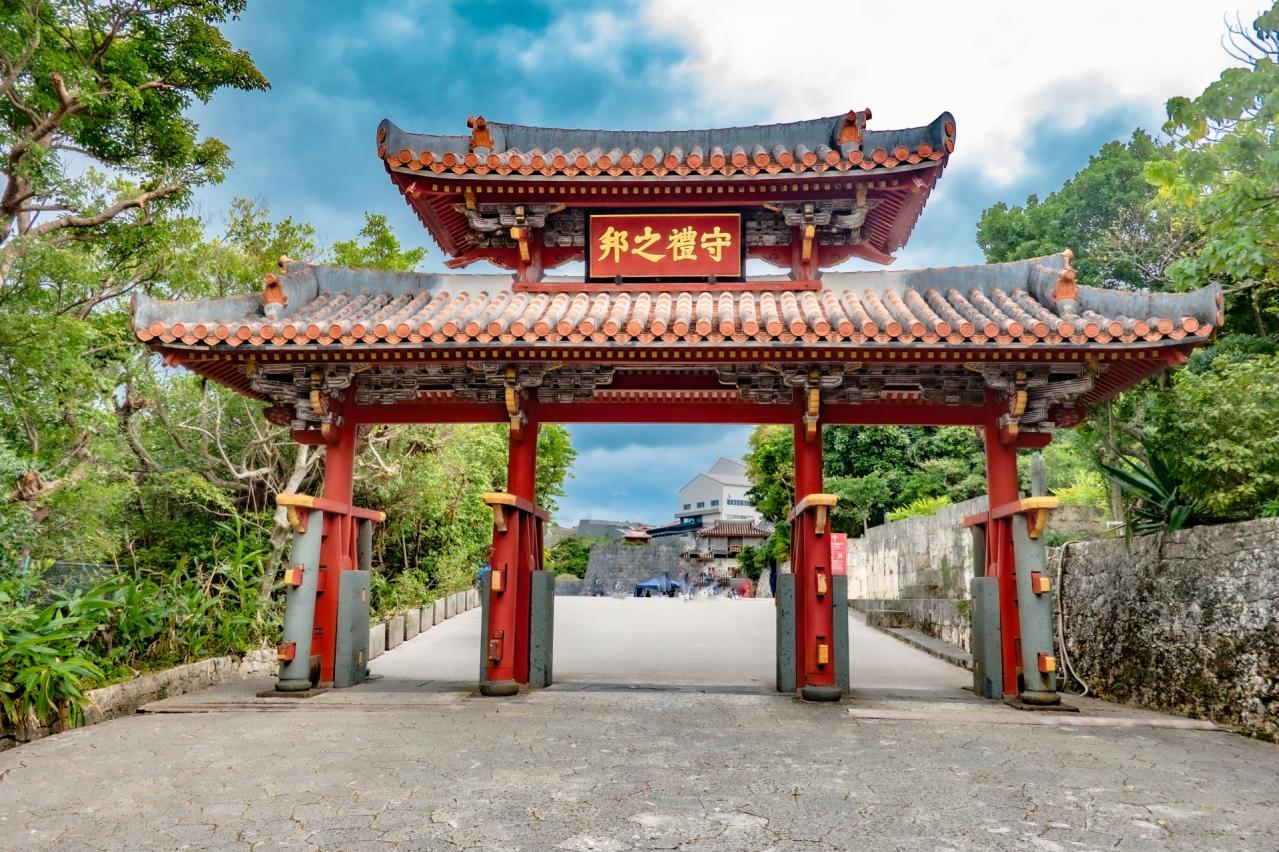
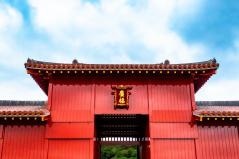
One of the main attractions of Shurijo Castle Park is Shureimon Gate. It is said to have been built in the first half of the 16th century during the reign of King Sho Sei and was reconstructed in 1958 after being destroyed during the Battle of Okinawa. The gate is distinguished by its red-tiled roof and graceful Chinese-style architecture. A plaque inscribed with the words “Shurei no Kuni,” meaning “A Land of Propriety,” hangs in the center. These words express the idea that Ryukyu was a country that valued courtesy and etiquette. Shureimon is also popular as a photo spot and is regarded as one of the symbols of Okinawa.
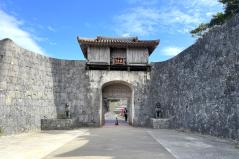
Near Shureimon is the Sonohyan-utaki Ishimon Stone Gate. Built in 1519 during the reign of King Sho Shin, this stone gate stands at a sacred site where prayers were offered for the king’s safety when he traveled outside the castle. It was not a gate intended for ordinary passage, but rather a structure from which people worshipped the sacred area behind it. Its finely crafted stonework, modeled after a wooden structure, is one of its distinguishing features. After being damaged during the Battle of Okinawa, it was restored in 1957. In 1972, it was designated an Important Cultural Property of Japan, and in 2000, it was registered as part of the World Heritage Site.
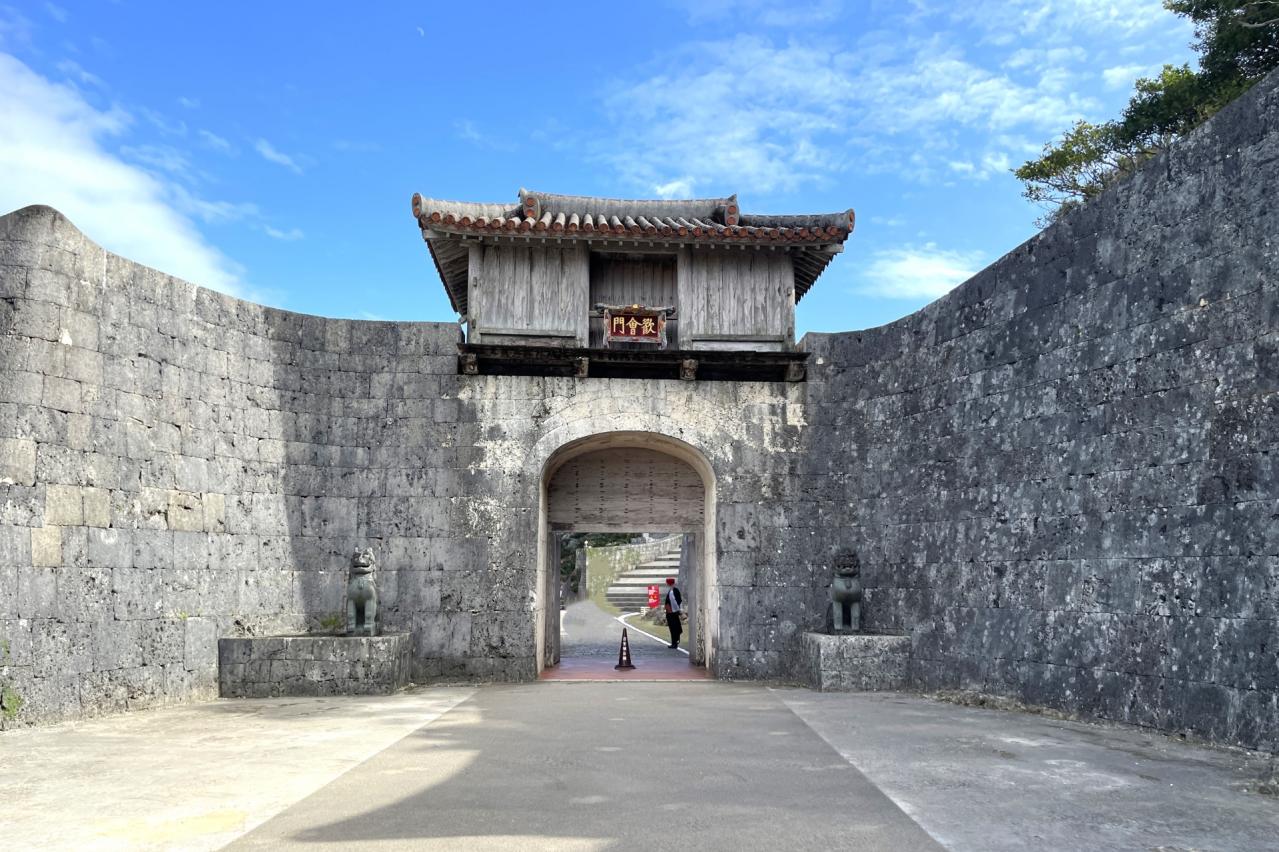
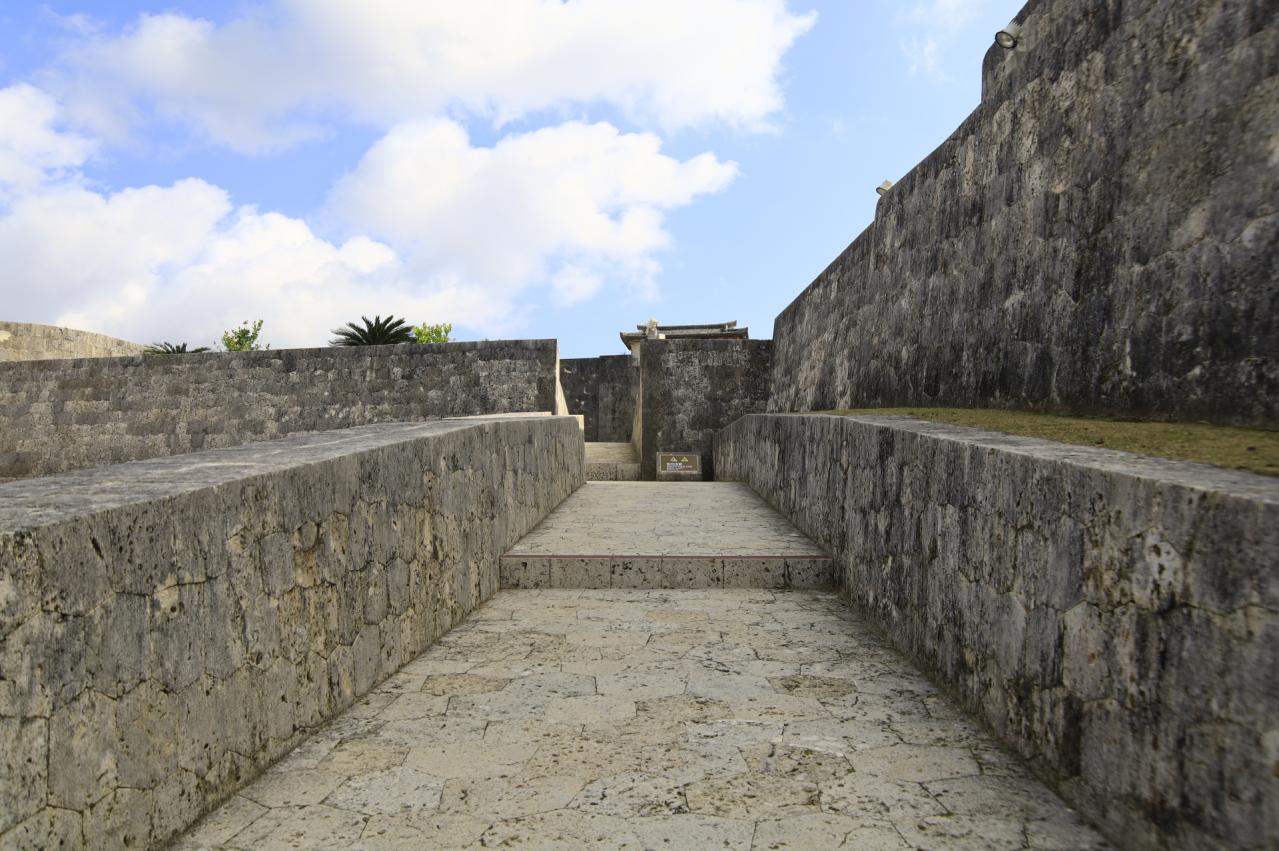
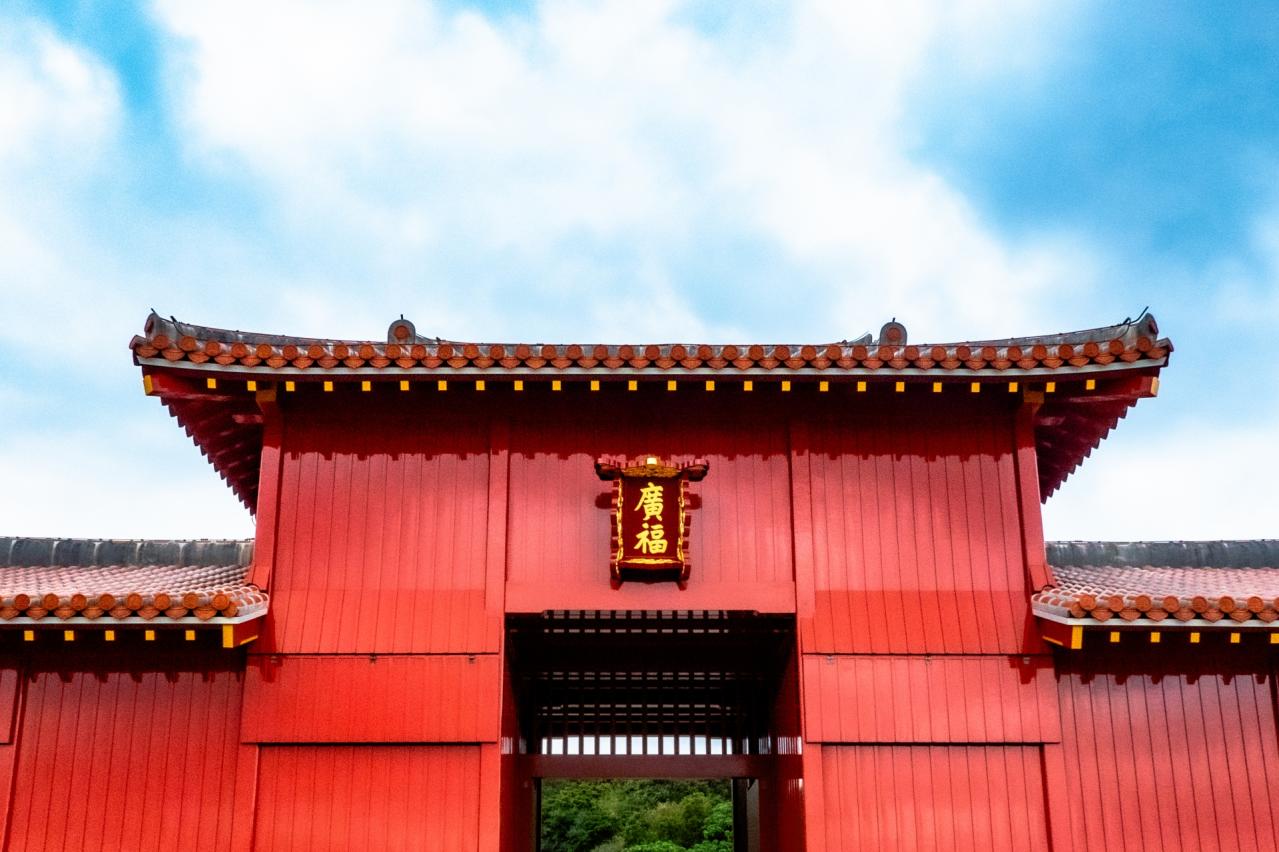
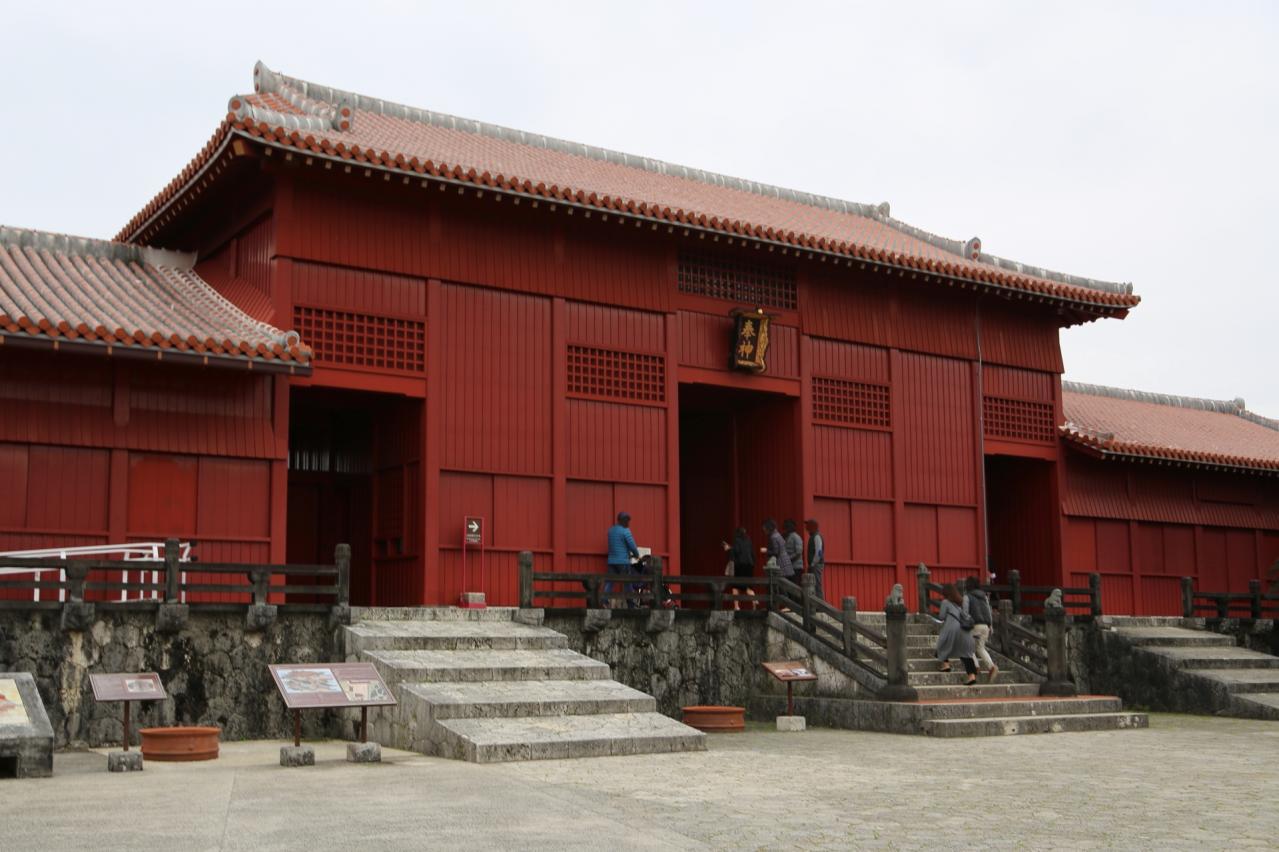
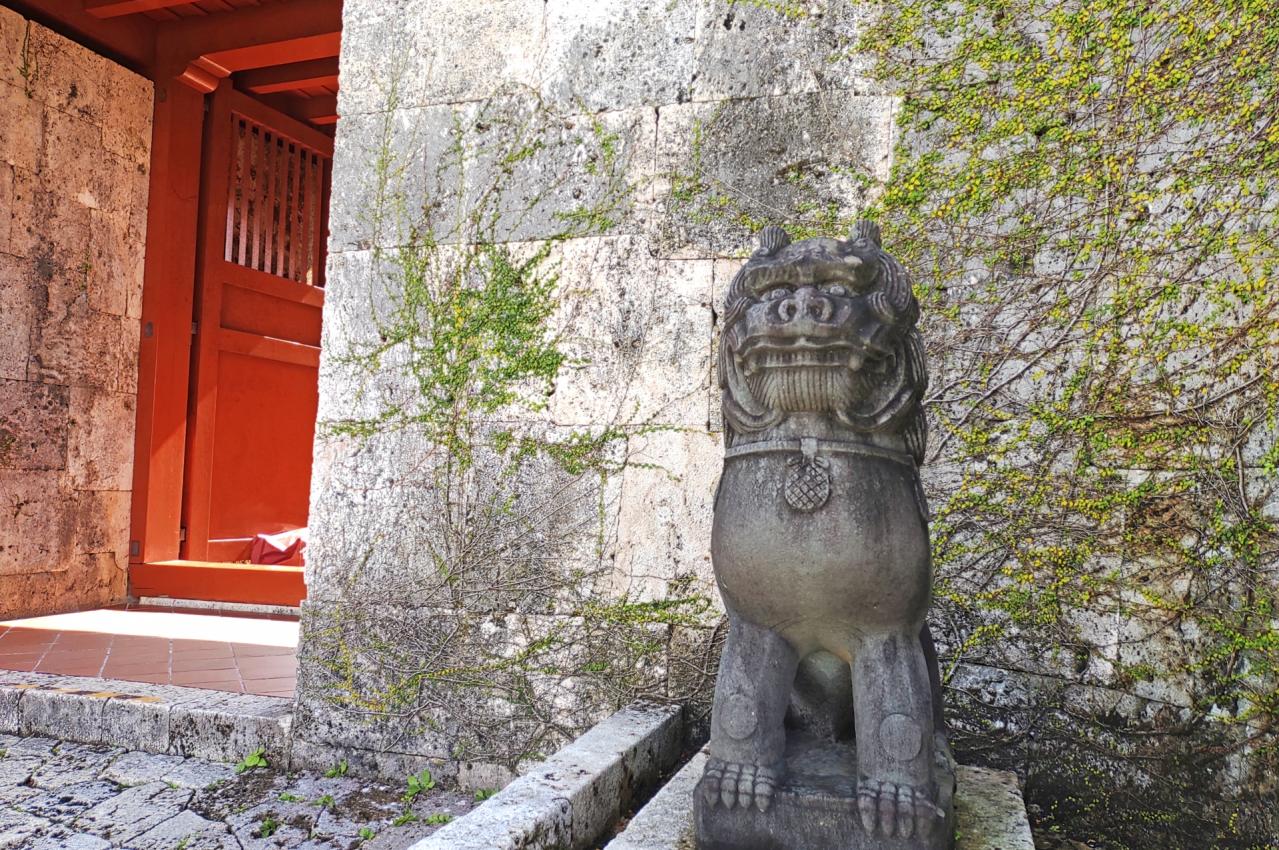
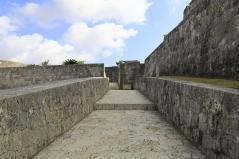
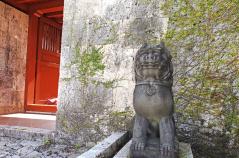
Within the castle grounds are a succession of historic gates, including Kanshaimon Gate, Zuishinmon Gate, Roukokumon Gate, and Kofukumon Gate. Kanshaimon, the first main gate, is guarded by shisa statues believed to ward off evil. Near Zuishinmon is the Ryuhiju Fountain, where water flows from the mouth of a dragon. Roukokumon is known as the place where the time was once announced using a water clock. Walking along the curved castle walls and stone steps allows visitors to experience at close hand the Ryukyu Kingdom’s outstanding stonework techniques and castle architecture.
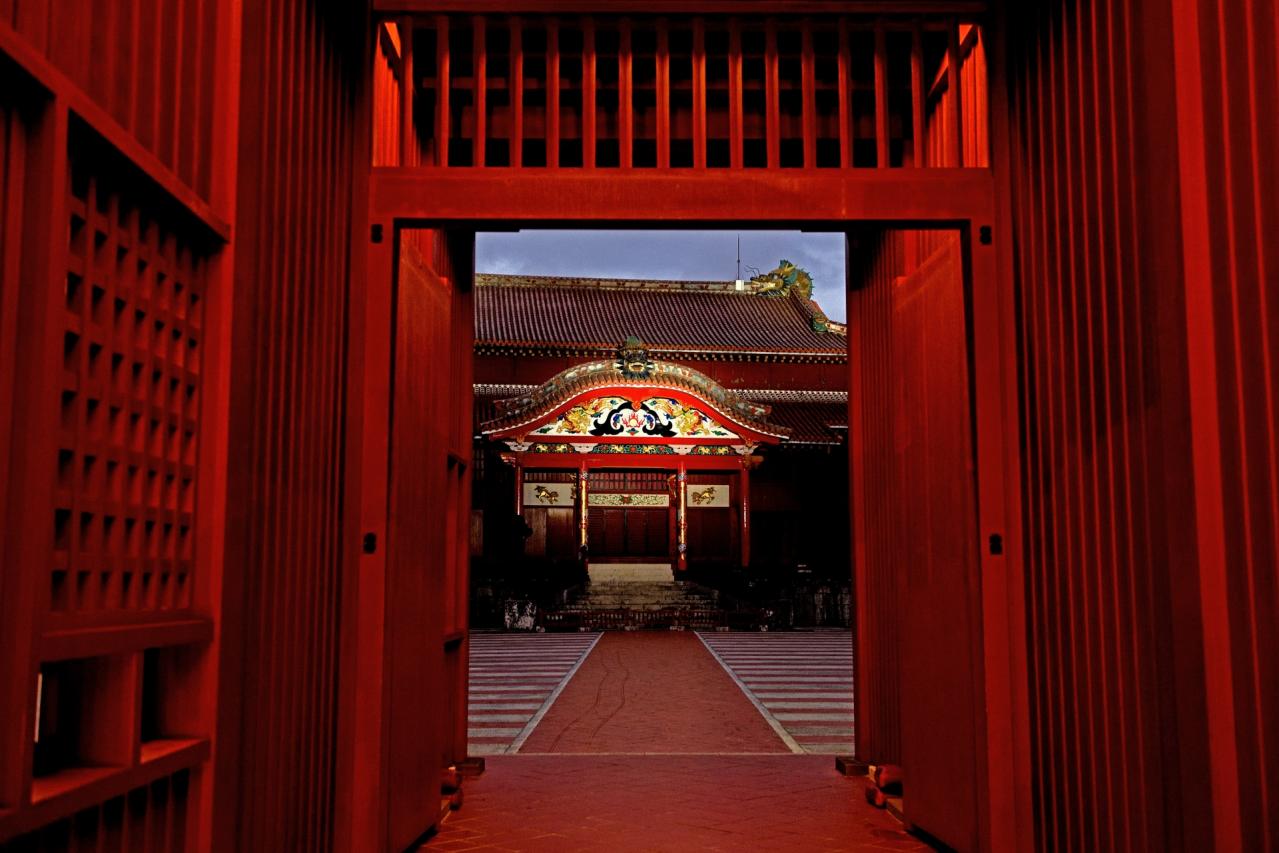
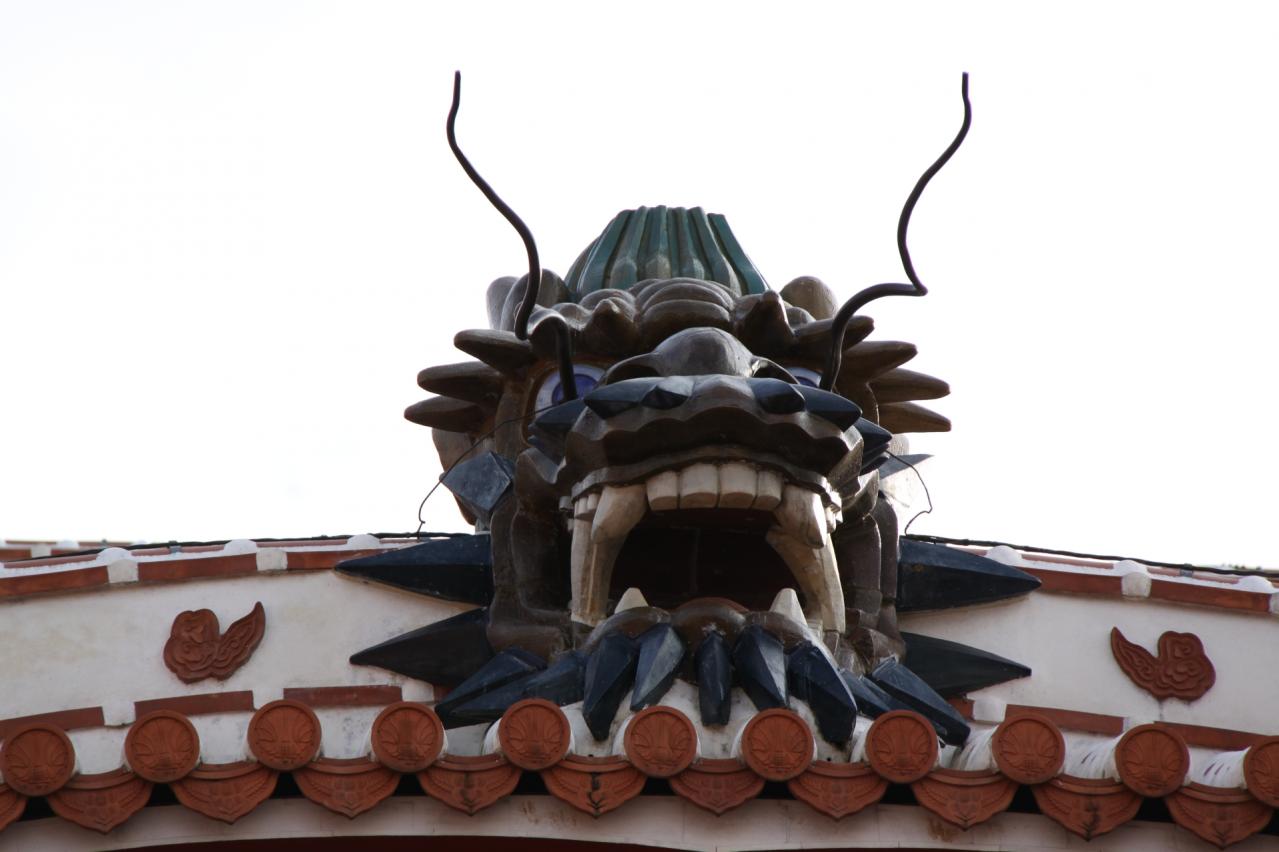
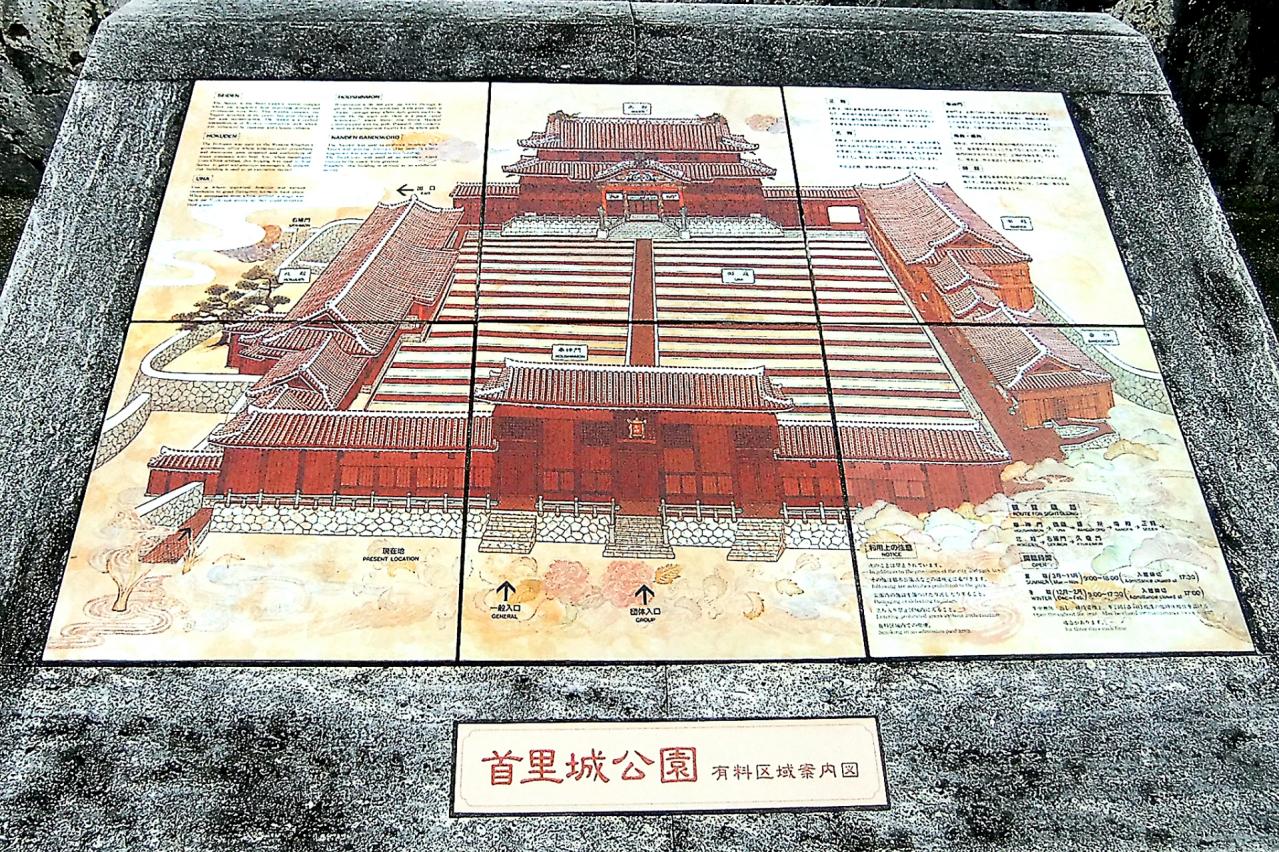
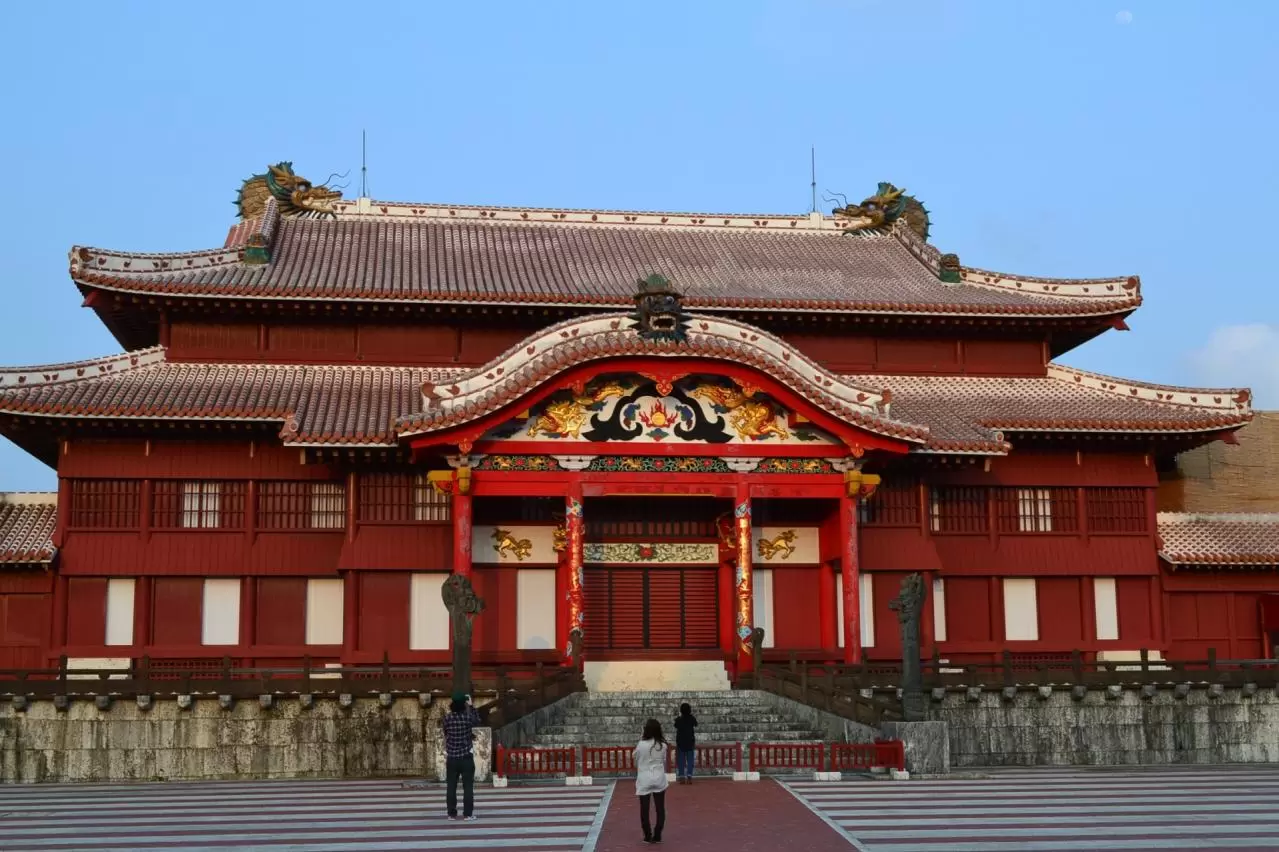
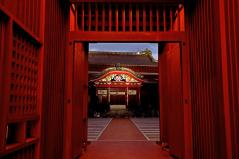
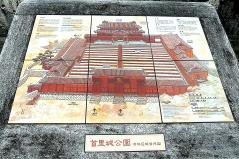
Located at the heart of Shurijo Castle, the Una is a plaza where ceremonies related to the king’s accession and other important state events were held. At the front stood the Seiden, or Main Hall, distinguished by its vermilion exterior and dragon decorations. The Hokuden, or North Hall, and Nanden, or South Hall, were arranged on either side. The Seiden served as the center of the kingdom’s politics and rituals. The Hokuden was used for administrative affairs and diplomacy with China, while the Nanden was used for ceremonies and other matters related to relations with Japan. The arrangement of these buildings offers insight into the political system and diplomatic culture of the Ryukyu Kingdom.
Throughout its long history, Shurijo Castle suffered repeated damage from fires and wars. During the Battle of Okinawa in 1945, many of its buildings were destroyed. However, following postwar surveys and restoration projects, the main facilities were reconstructed in 1992, and Shurijo Castle Park was opened. On October 31, 2019, however, another fire destroyed the Seiden, Hokuden, Nanden, and other buildings. Since then, restoration work has proceeded with support from both Japan and overseas, and the paid area reopened to the public in June 2020.
The restoration project emphasizes “visible reconstruction,” allowing visitors to observe the restoration process. Efforts are also being made to pass Ryukyuan architectural culture on to future generations by introducing traditional wooden construction techniques, lacquerwork, and the production of red roof tiles. Restoration of the Seiden is underway with completion targeted for autumn 2026, and it is scheduled to open to the public from noon on November 23 of the same year. Visitors are expected to need advance reservations for a specific date and time to tour the interior of the Seiden. Since the areas open to visitors, reservation procedures, admission fees, and other details may change, visitors are advised to check the official website before their trip.
There are also many fascinating historic sites around Shurijo Castle Park. Ryutan Pond is an artificial pond said to have been created in the 15th century. It was once used for events welcoming envoys from China, among other purposes. Nearby Enkan Pond features Benzaitendo Hall, which stands on an island in the pond, and the stone bridge and waterside scenery create a beautiful landscape. The ruins of Enkakuji Temple are the remains of a temple associated with the royal family that was founded by King Sho Shin at the end of the 15th century. They are a valuable historic site conveying the Buddhist culture of the Ryukyu Kingdom.
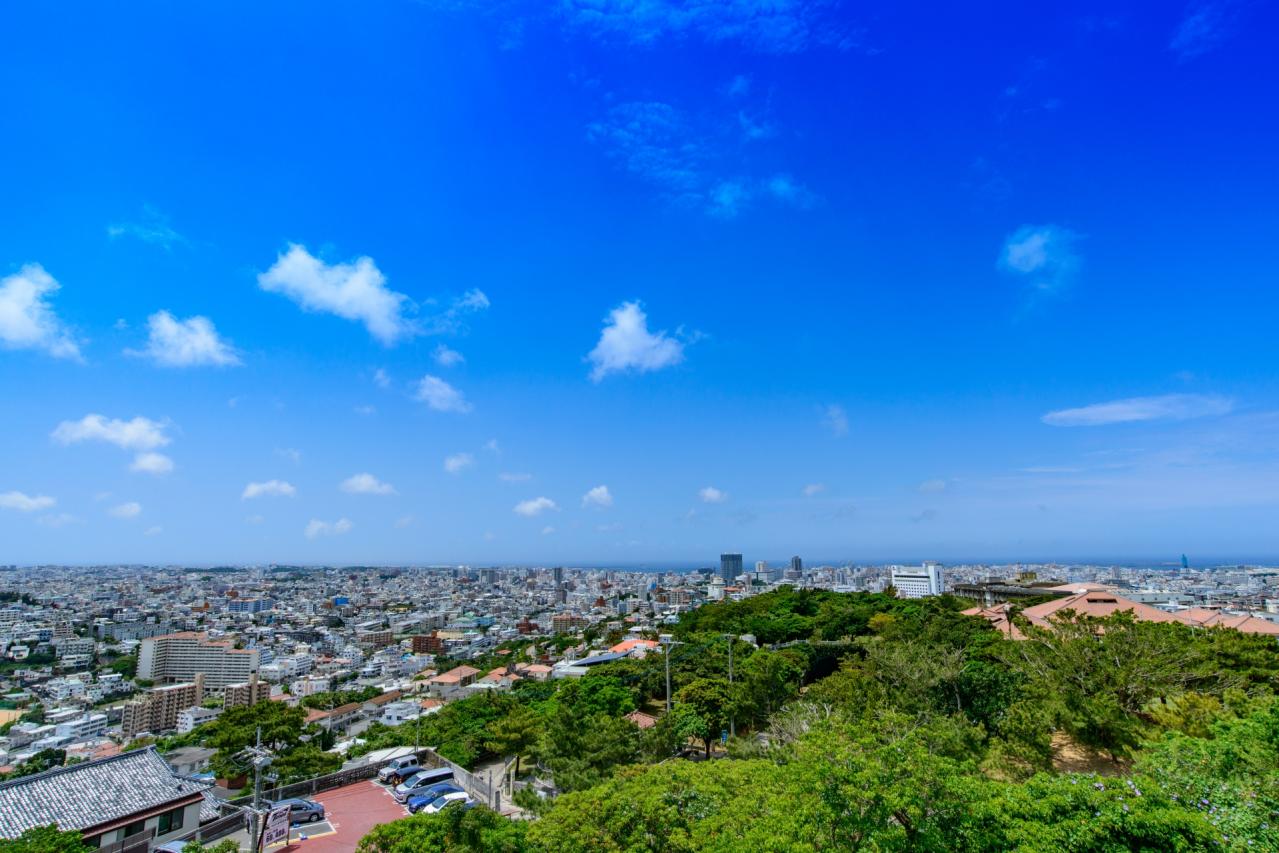
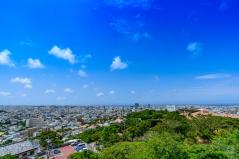
The park is divided into free and paid areas. Shureimon, the Sonohyan-utaki Ishimon Stone Gate, and the castle gates can be visited in the free area. The paid area includes the Una and exhibitions related to the restoration project. From Agari no Azana, an observation point on the eastern side of the castle, visitors can enjoy panoramic views of central Naha and the surrounding hills, gaining a sense of why Shurijo Castle was built on elevated ground. The park’s rest center, Shuri-Muikan, includes information facilities, seating areas, dining facilities, and shops, making it a convenient base for exploring the park.
Shurijo Castle Park is a valuable historic park that conveys the prosperity of the Ryukyu Kingdom and Okinawa’s distinctive culture to the present day. By visiting the castle ruins registered as a World Heritage Site, the beautiful castle gates, and the cultural properties in the surrounding area, visitors can deepen their understanding of Ryukyuan history, beliefs, and architectural techniques. Another major attraction is the opportunity to sense the dedication of the people working to pass this culture on to future generations after the Battle of Okinawa and the 2019 fire. The park is highly recommended not only for those interested in history and architecture but also for anyone wishing to enjoy Okinawa’s culture and beautiful scenery.
Okinawa Tourist Attractions
View List
Okinawa Churaumi Aquarium
Okinawa's Sea - Experience rich nature and cultural history, as well as interaction with dolphins at the Ocean Expo Park. One of the popular spots in the park is the...
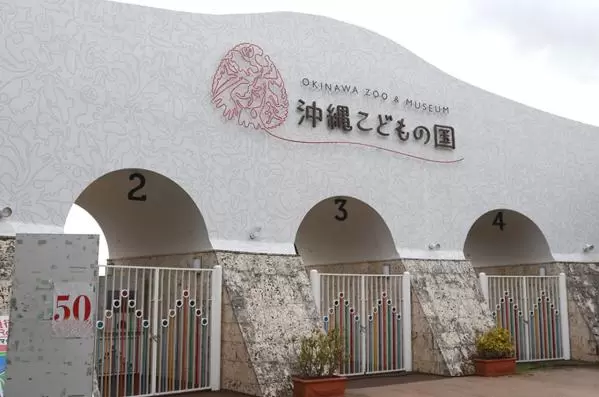
Okinawa Zoo & Museum
Okinawa Children's Country is a family-oriented leisure facility located in Okinawa City, Okinawa Prefecture. Opened in 1970, this facility features a diverse range ...
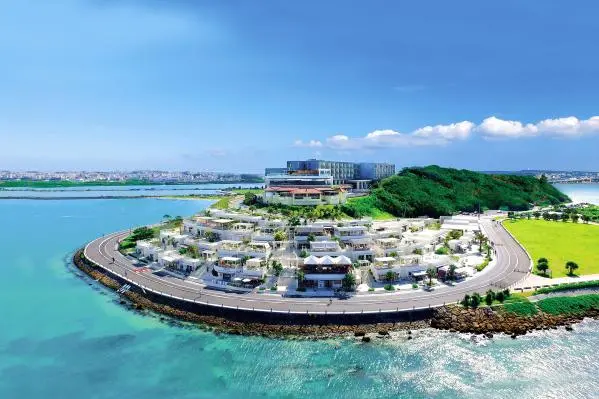
Senagajima Umikajitourasu
Senaga Island Umikaji Terrace is an island resort located on Senaga Island, connected by a road through the sea from Okinawa Main Island. Opened in 2015 and renovate...

Kabira Bay
Kabira Bay is located in the northwest of Ishigaki Island and is one of Okinawa's top scenic spots. It features a beautiful landscape with crystal-clear emerald gree...

Kourijima / Teenuhama / Tokeihama
Kouri Island is a beautiful small island located in the northern part of Okinawa mainland, surrounded by emerald green waters. The Kouri Ohashi Bridge opened in 2005...

Okinawa World (Cultural Kingdom, Gyokusendo)
Okinawa World is a tourist spot where you can enjoy the natural beauty, culture, and history of Okinawa all at once. Among its attractions, the Tamatsukuri Cave, whi...
Zakimi Castle
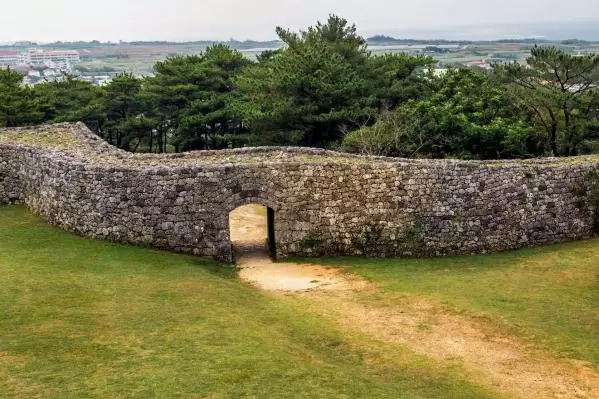
Zakimi Castle, located in Yomitan Village, Okinawa Prefecture, is a castle (gusuku) from the Ryukyu Kingdom era. This castle was built in the 15th century by Gozamar...

Naki-jin Castle Ruins
Nakijin Castle Ruins is a historic site built as the residence of the king of the northern kingdom during the time of the Three Kingdoms of Okinawa. It is located in...